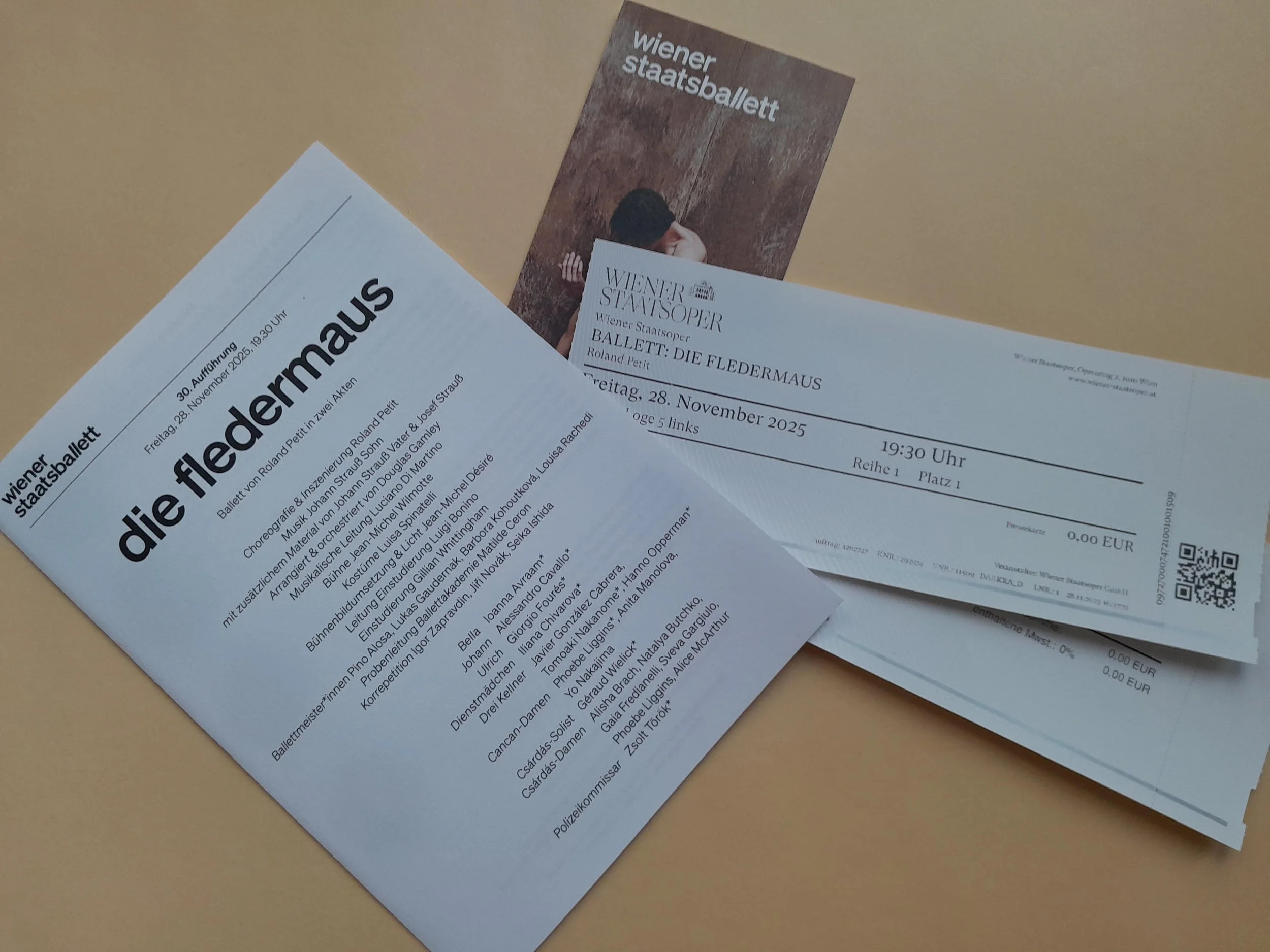
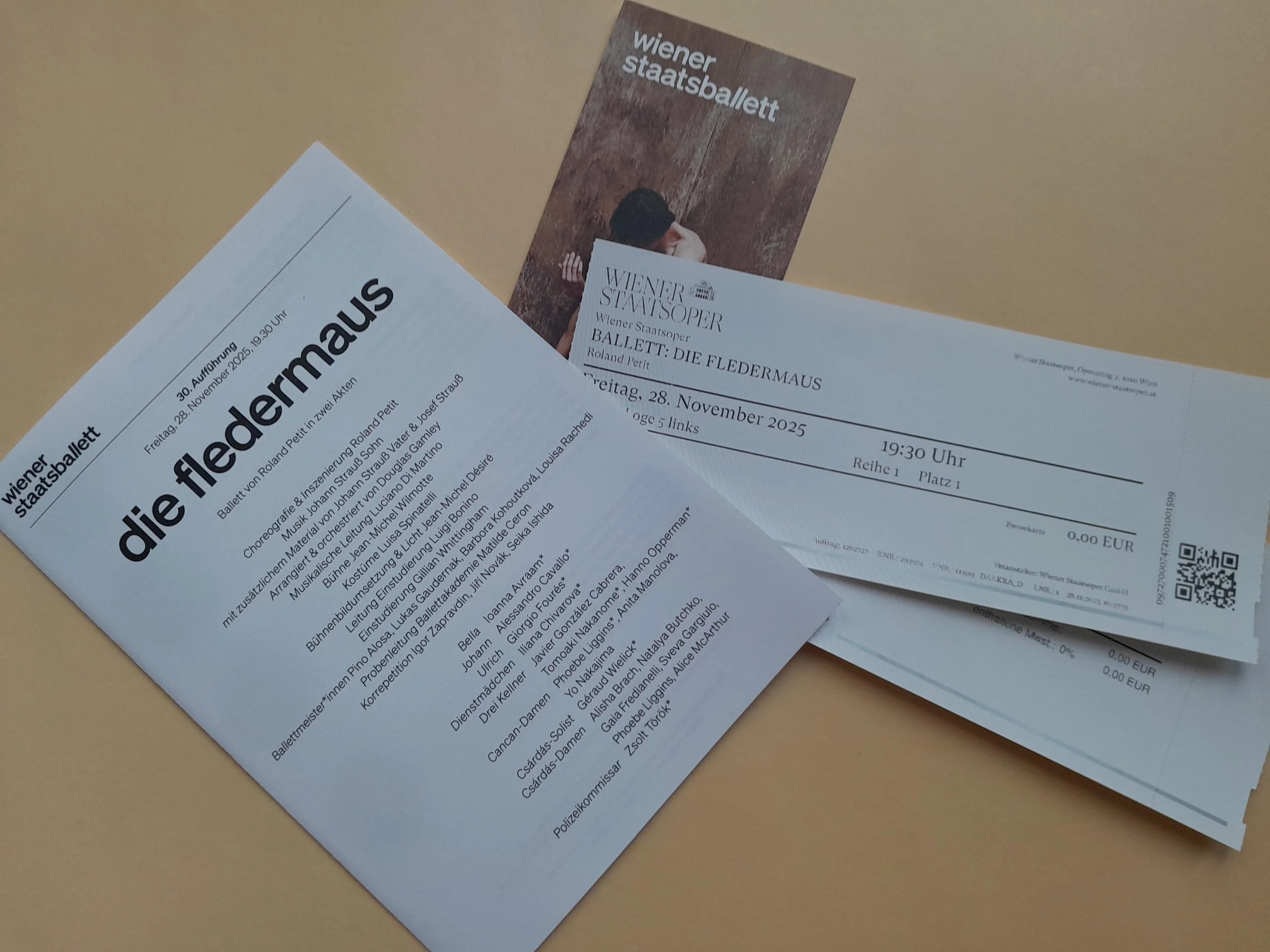
Die Fledermaus (La chauve-souris), revisited: Vienna State Ballet (Wiener Staatsballett), November 28th, 2025.
Die Fledermaus (La chauve-souris), revisited: Vienna State Ballet (Wiener Staatsballett), November 28th, 2025: Ioanna Avraam brings down the House.
Copyright: Ricardo Leitner / attitude
A short note before we start:
It is wonderful and reassuring to witness the Opera House fully sold out again. I made a point of looking at the tickets' sales on the internet. And there were, as in the past years, no tickets sold at the last minute for „banana prices“. This is good News (Also for the taxpayers!).
One of the nice (and extremely interesting) things in a critic's work is the possibility of being able to compare performances and see how characters „grow up“ inside a dancer's body, and how they mature with the passing of time. Of course, this is all connected to a certain inner life (and how important it is), lots of reflection, research, and, if I may say so, all this combined with a deep reverence and respect for the work being executed. All this helps immensely to find the truth in the character, which will be later (after the steps are learned) in true movements. Yes, the truth of the movements. Not an „imitation“ of what they should be. As a strong believer in the so-called „bio Rhythm“, I do believe that every day in a dancer's life is different (because it depends on so many factors) and there is also the status quo of the physicality aspects. That's a fact.
But this is not all.
Another very nice (and also very interesting) point for a critic is to witness different casts, different group combinations and be able to see (and feel) other „readings“ and interpretations of roles and/or parts. It is like „mixing the cards for a new round in a card game “ as the combination possibilities of the numerous elements, personalities, and even technical fortitudes that compose a piece are infinite! It is also a beautiful way of getting to know the company better – a dancer in a studio is not the same as a dancer on stage – and I am not only thinking of the paying audience when I write that.
Copyright: Ashley Taylor / Vienna State Ballet
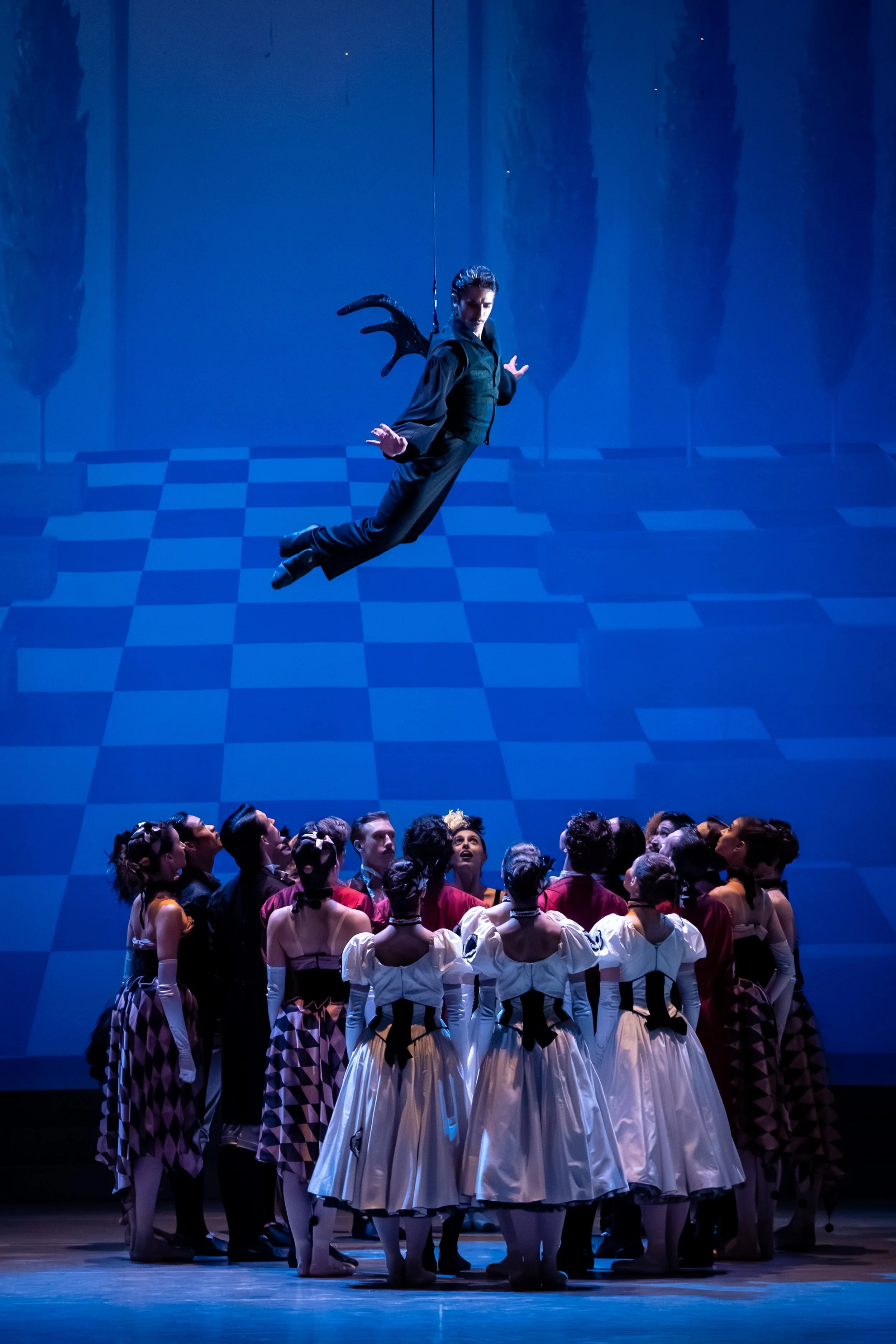
Here I must pay tribute to Mr Luigi Bonino: In his youth an extremely gifted dancer of the Ballet de Marseille (He, Ganio and Gil were my favourites), where he created many a role of the Roland Petit's repertoire (and also „Ulrich“, who is one of the „inhabitants“ of „La chauvre.souris“), is the main responsible for the dancer's coaching in this „come-back“ of the ballet to the Vienna State's Ballet repertoire. To this very successful revival.
It is quite perceptible that Mr Bonino does not put dancers either in a corset or in a straight-jacket in their portrayal and interpretation of the roles. He „allows“ a certain liberty in the construction of the characters. Nobody is the „same“ as another person; everyone has their own personality, and the translation of these characteristics into the dance language is what makes things interesting.
Of course, a critic has to be very atentive while watching these different displays of emotions, conotations, accentuations of certain movements, even if the choreography is strictly the same.
The choreography is (and should be) „frozen“.
(A short note for your understanding: I don't mean this in a bad way. It is quite important that a written choreography remains „faithful“ to the original – it is a sign of respect not only to the choreographer but to Art itself. Many of the „great“ and “eternal” ones as MacMillan, Ashton, Robbins, Balanchine, Petit himself, Ailey, Tudor, Béjart, Cranko and many others, are not among us anymore, but, luckily for us, their work continues incessantly to be presented. Therefore, Trusts, Institutions, and Foundations were created to preserve and protect the body of work, style, points of view etc.
There are a few things that really annoy me, but „liberties“ taken with existing choreographies don't appeal to me in any way.
I shall not write about this special „revival“ and its choreography, scenery, costumes, staging, etc. It would be a senseless repetition of my last critique – it is easier for you, after reading this piece either to scroll down to the critique that I wrote last 25th and was published on the 26th or to click on
To yesterday's performance and cast:
Even if this turns out to be commonplace, I cannot resist and have to mention that the Company has been (probably) working very hard, as it is seen in the unison performances of the Corps de Ballet. To my way of thinking, this has less to do with rehearsals but with the professional level of daily training.
The company is on a marvellous (and challenging in every aspect) „Yellow Brick Road“ heading to the (“merry, old”) Land of Oz.
Copyright: Ashley Taylor / Vienna State Ballet
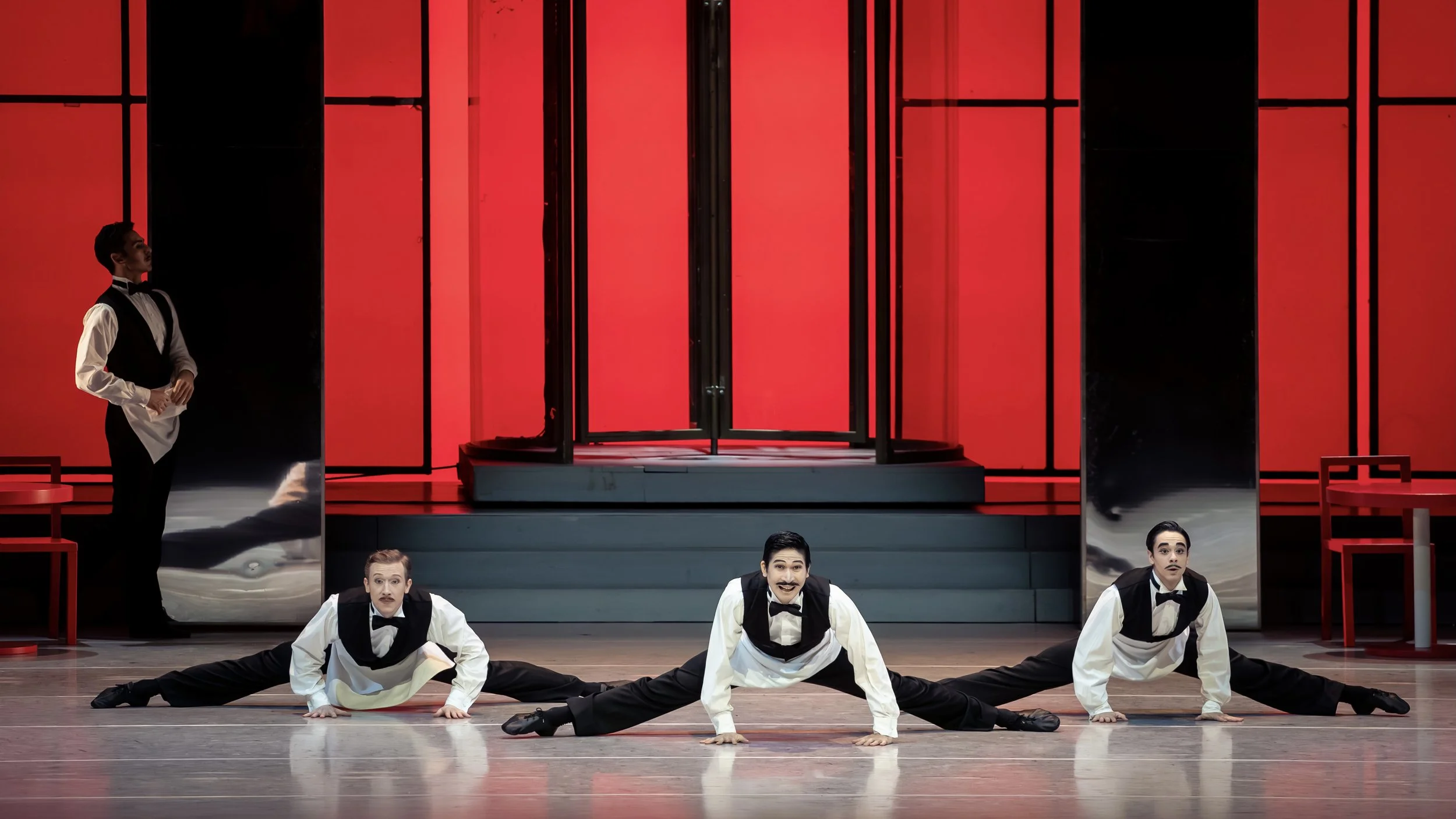
The three waiters (Javier González Cabrera, Tomoaki Nakanome and Hanno Oppermann) were energetically connected and really, as I say, 150km / hour, even though their main „trio“ happens quite early in the course of the evening. Their energy was high. Led by Tomoaki Nakanome, whose energy was so present that you could nearly touch it and who did a great job. I must add that Mr Oppermann surprised me. Gone are the days of the more timid, somehow “verklampt” dancer. Bravo for this (big) step ahead!
Copyright: Ashley Taylor / Vienna State Ballet
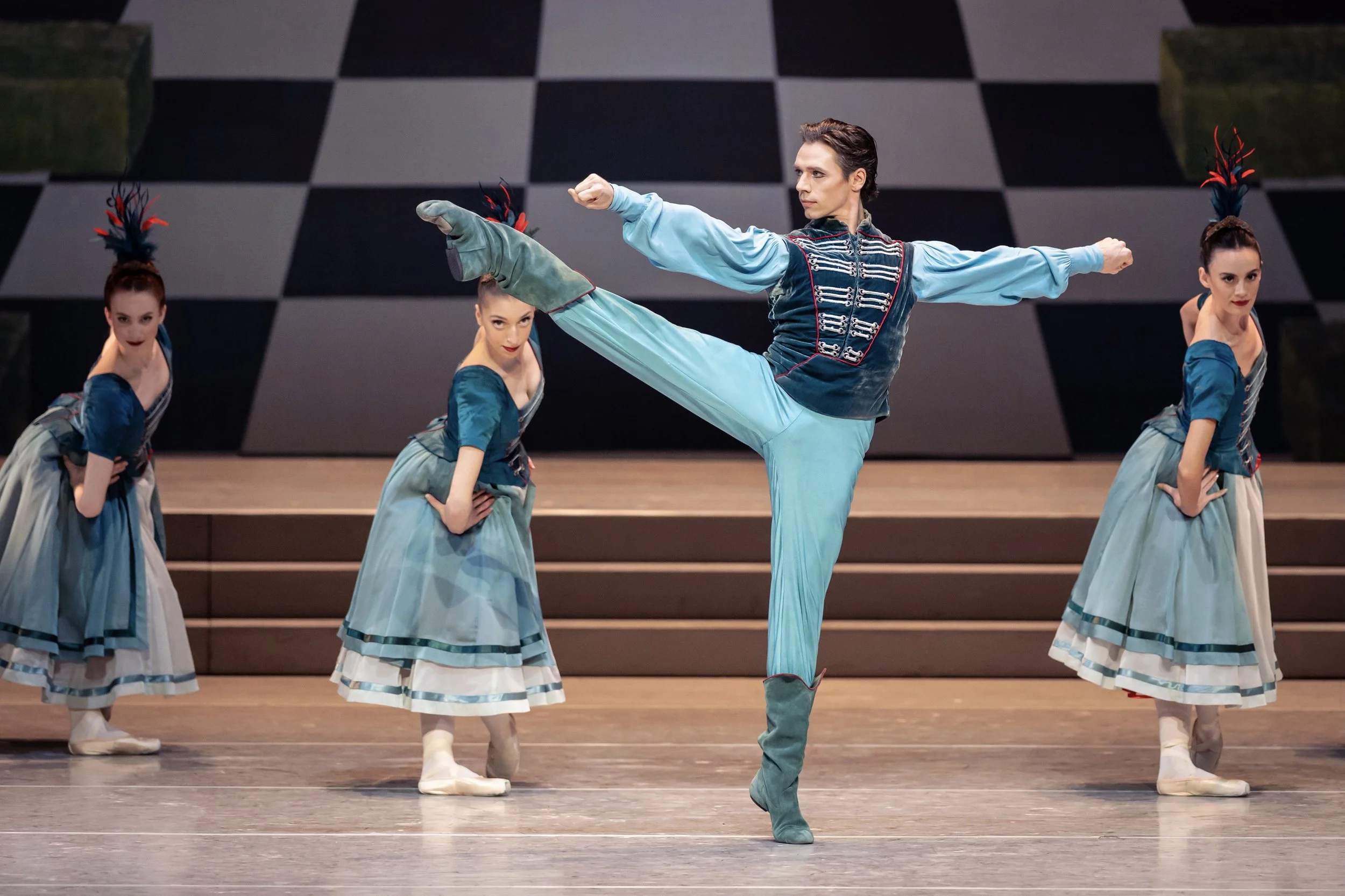
Having seen the Ballet just a few days ago, during the „Csárdás“, I could concentrate more on two dancers, Natalya Butchko and Gaia Fredianelli. Precision, very defined Croisés, Effacés, and Ecartés (of which the choreography partly consists), which indicate „good schooling“, and I like that. The attention given to „small“ details that make all the difference at the “final product“. It was also good to see Géraud Wielick's versality once more proven. Technically good, a dancer that makes me always think of „a naughty boy“, this time serious and, let's be honest, arrogant (Especially at the way he looks at Ulrich).
Iliana Chivarova, a lovely dancer, was a bit strained as the Maid, who happens to be a very rich character that presents the dancer with innumerable comic and vivacious possibilities to shine. Somehow, there was no projection into the auditorium. Sitting in a box on the first level, I felt nothing. She didn't „make it“ up to my seat. There is still work to do on the character’s presentation.
Copyright: Ashley Taylor / Vienna State Ballet
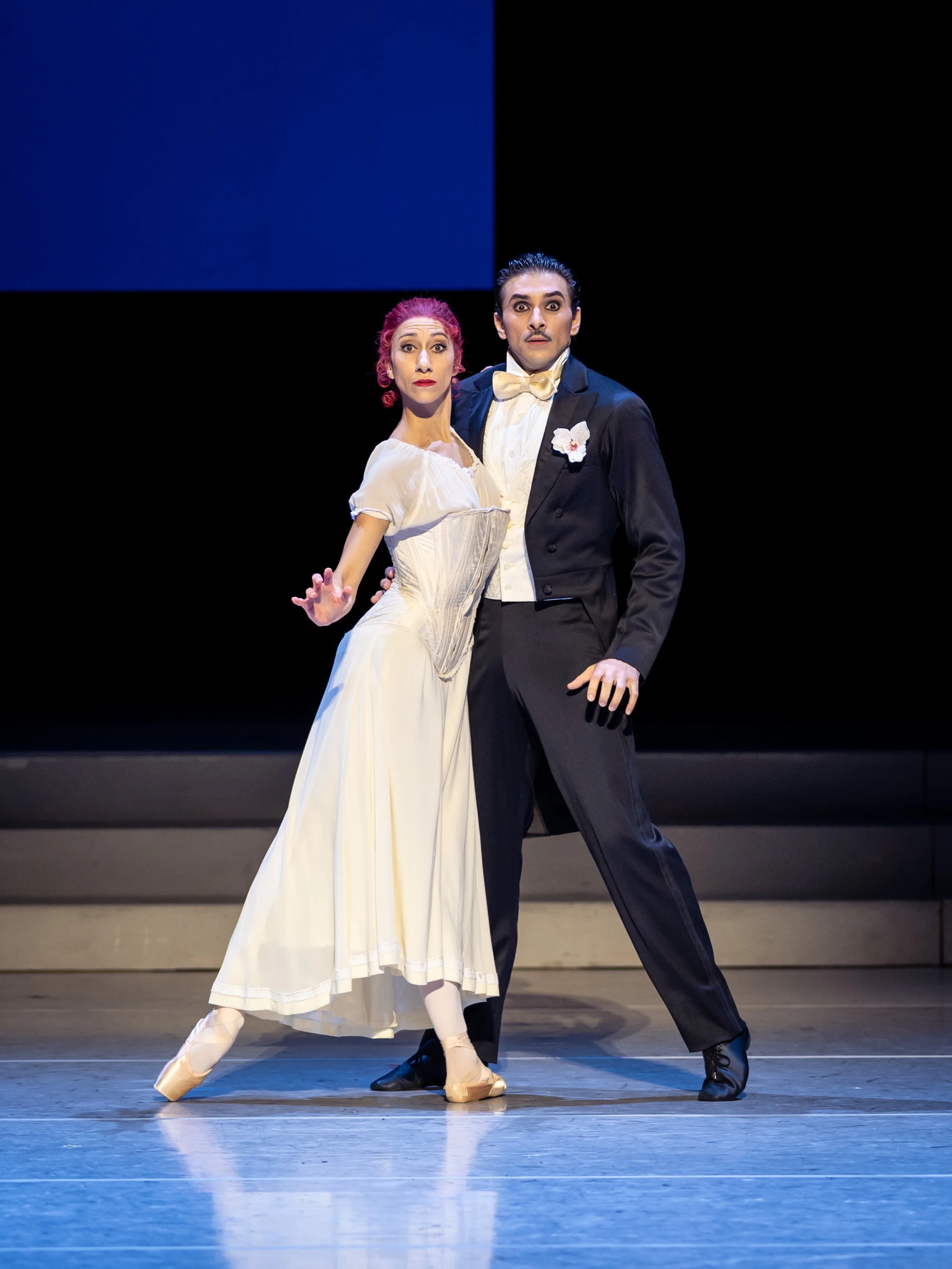
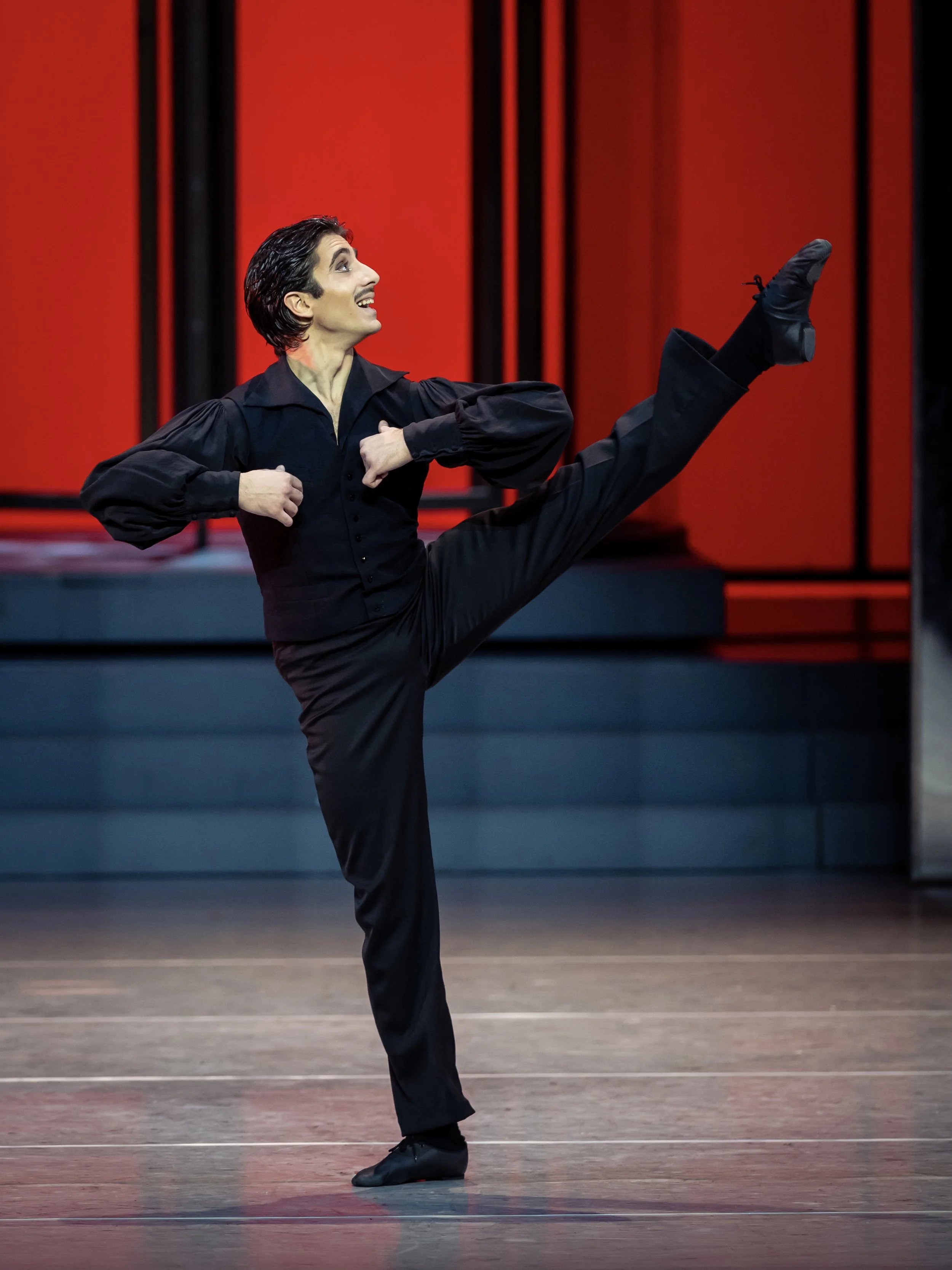
Giorgio Fourés, a dancer whose career I have been following for quite some time, was somehow „possessed“ by Ulrich's ghost. Somewhere I read, many years ago, that it was believed that all characters, as ghosts, inhabit the theatres – that is why, when all were gone after the show, there used to be (overnight) always a light illumination on stage. For the Theatre Ghosts. I have heard that Broadway still keeps this custom alive. Mr Fouré, a dynamic, technically very good dancer, was one of the highlights of the evening. By the way, when I speak „technically“, I am not speaking only of pirouettes, manéges, tours-en-l'air and jumps, as most people interpret this word nowadays. I am also speaking of maintaining the emotional level of your character, never leaving it behind (Ulrich „possessed“ and followed Mr Fourés to the curtain calls), of using without contradictions the specific movement vocabulary given by the choreographer to this particular character, of projecting the performance up to the last row of the balcony. Mr Fourés showed us all that.
Copyright: Ashley Taylor / Vienna State Ballet
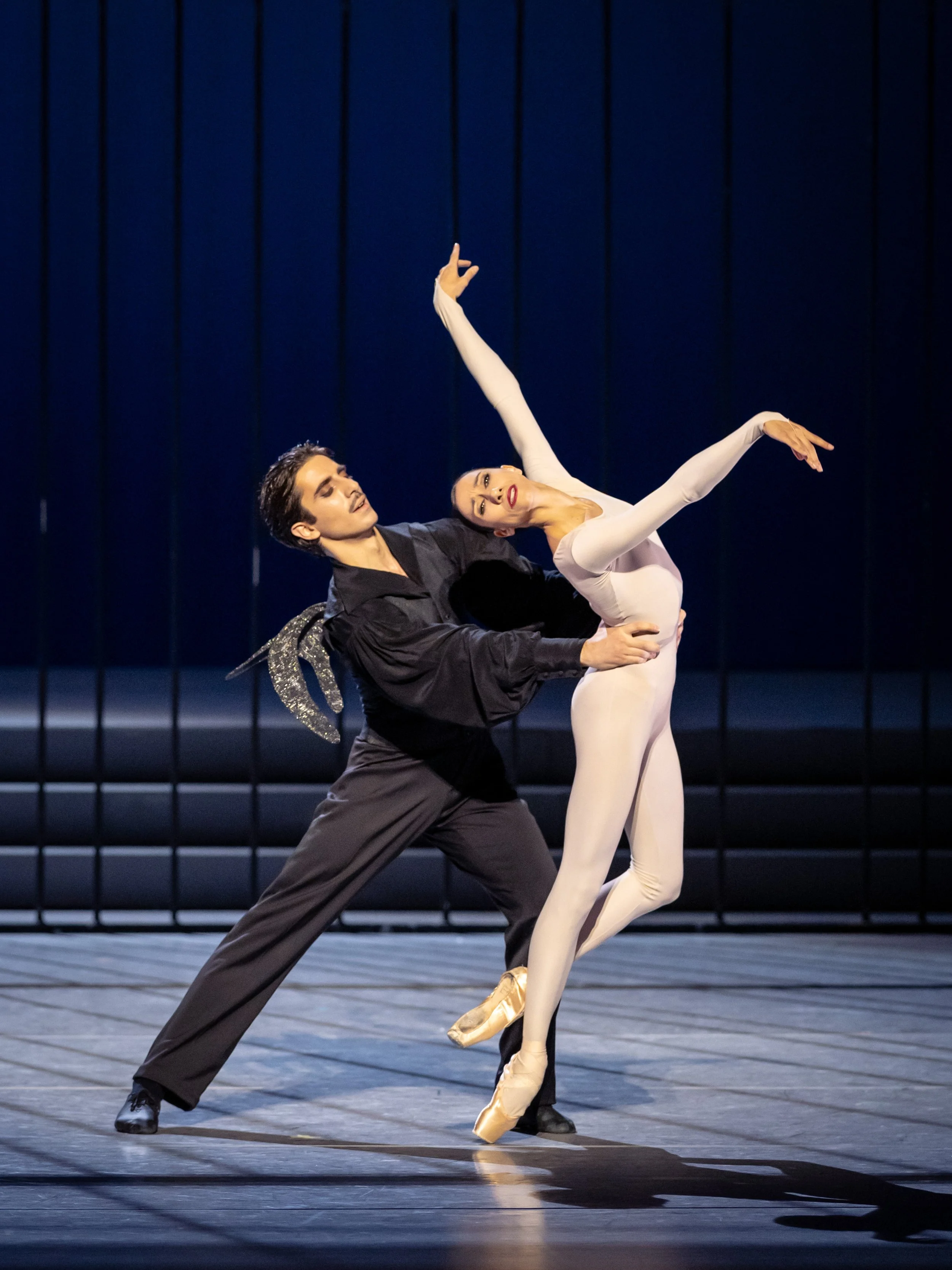
Demi-Soloist Alessandro Cavallo (and Ioanna Avraam, about whom we’ll talk a bit later) brought the House down. No question that after a few minutes of entering the stage, he managed to make us sure that he was sure of what he was doing, therefore there was no need to worry about „bravura“ parts of the choreography – Johann's part can be sometimes very defiant and requires a dancer that is also „technically“ top - and this time I use the same word that I used above for Mr Fourés but on the way that people understand it nowaydays. The „Bravura“ side of the medal.
Copyright: Ashley Taylor / Vienna State Ballet
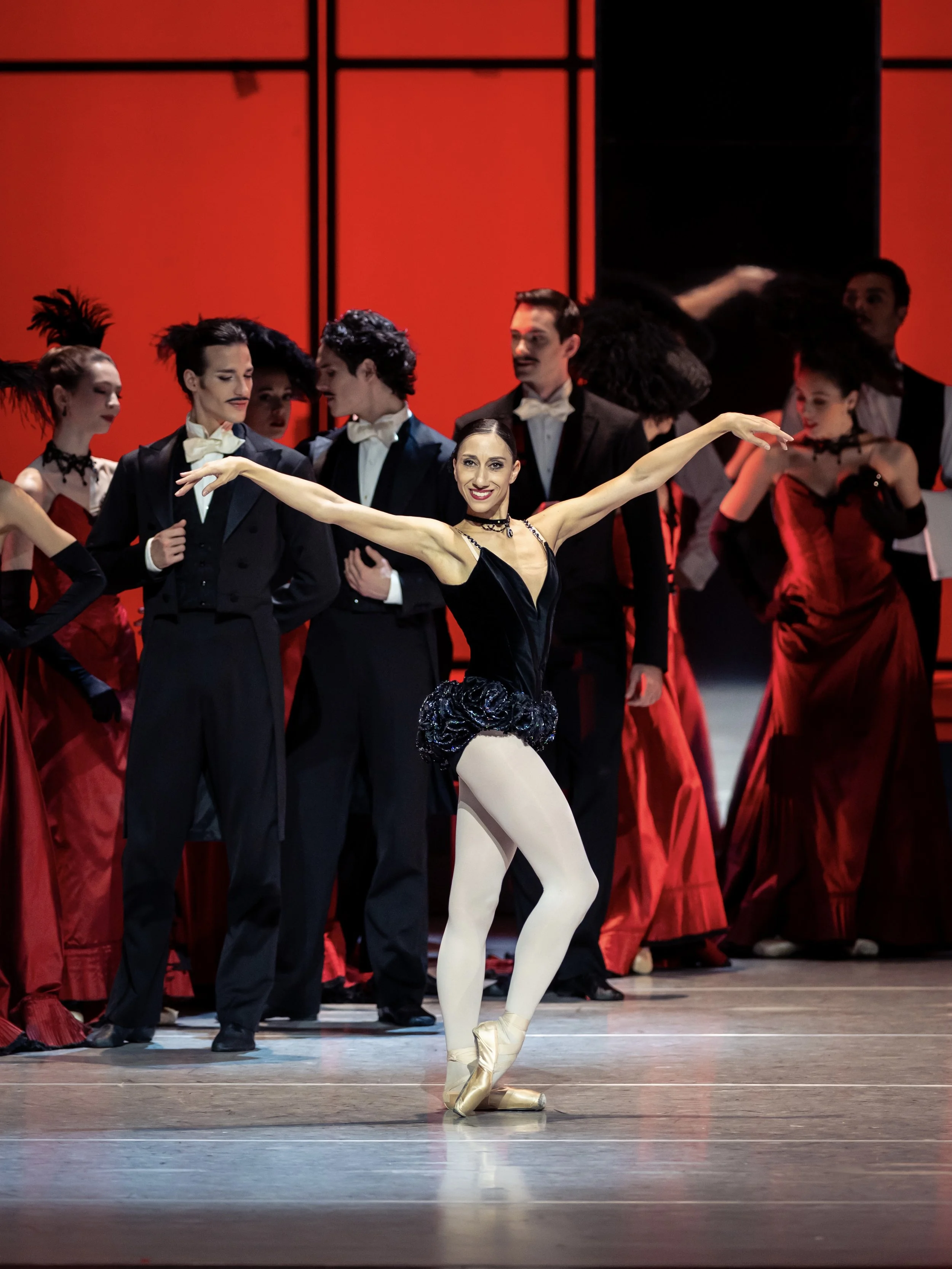
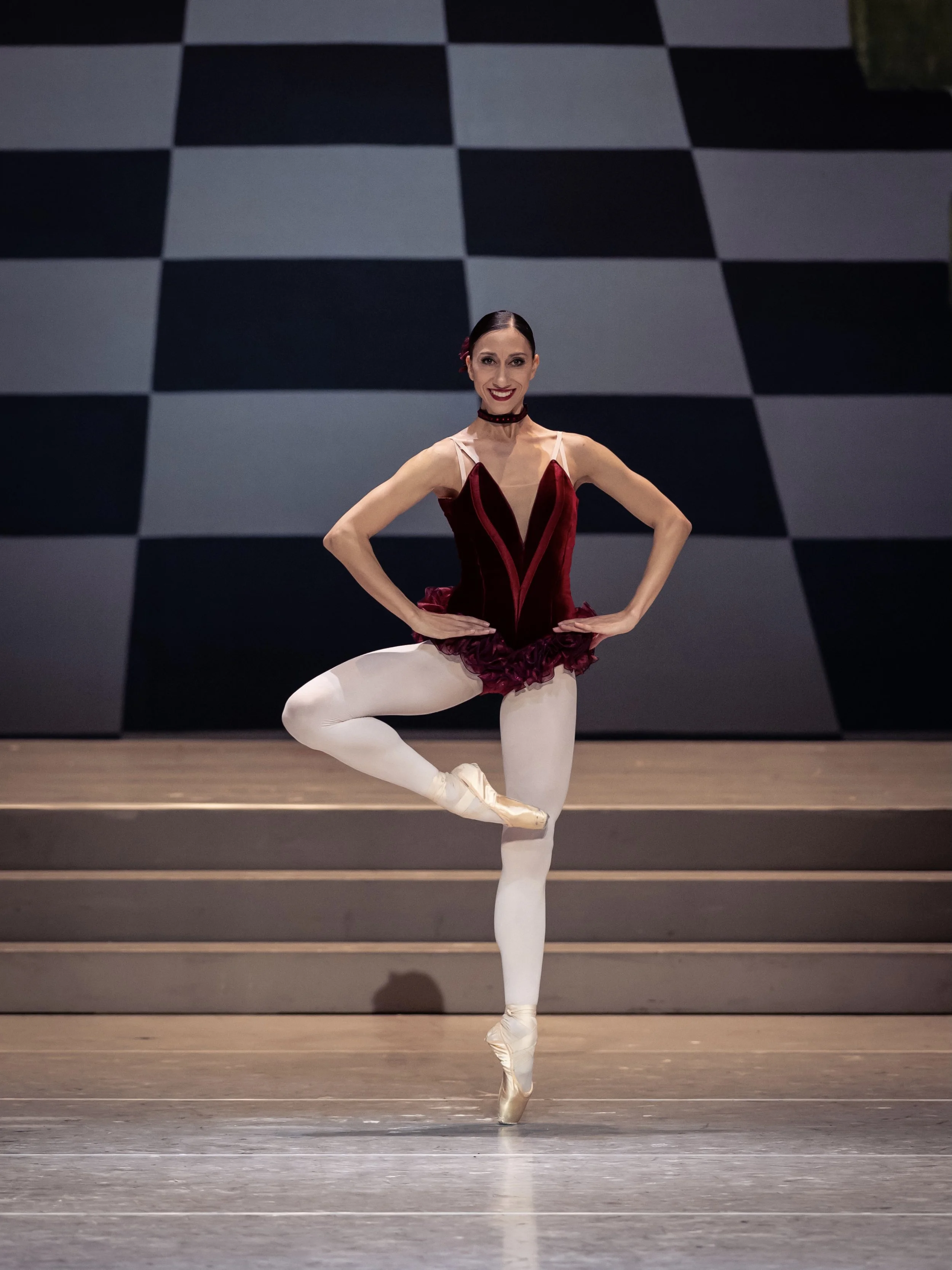
As mentioned, Ioanna Avraam “brought down the House”. Her Bella is feminine and possessed of charm, so surpassing that we can call her the “Epitome of Femininity!. Her „mignon“ stature, of course, contributes a lot in creating this beautiful „Bella“ (I am being quite a bit redundant, am I not?).
She also seemed to be having a lot of fun portraying a lighter character. Once, when I was very young, I took Theatre classes. I remember distinctly the teacher saying to us: “The secret of playing good comedy is never to think that you are funny” (That’s why D.Q., Nureyev’s one, never works. It is not his fault, but nowadays everyone on stage thinks they are so funny). Miss Avraam was perfect, using the right dose of fun, mixing it with wit and elegance.
Copyright: Ashley Taylor / Vienna State Ballet
I remember seeing one Bella like this in the past – and it was here in Vienna (was this in 2009?): Iryna Tsymbal. Ever since, I have missed these enchanting, susceptible, vulnerable ways that hide a very strong, determined character. I have missed a Bella like this. It is very good to witness Miss Avraam doing just that. I had forgotten.
One special moment, one that I always look for, is the end of her big solo at „Maxim's“ when she slides down the diagonal, from upstage right to downstage left (from the viewer’s point of view), in a manner that is more than quick and finishes jumping at Ulrich's lap just before doing a developée which Ulrich holds high up. Choreographically, as much as I love the diagonal, I have never considered the ending (The developée) a good „ending“ for the number and was never satisfied with the results (Mostly a bit too early in the music). Yesterday, and for the first time, I saw it probably in the way Mr Petit wrote it and intended it to be done. It was a joy. I liked it. Very much, indeed. And I think he would have liked it either. I must add that for years, I have immensely disliked that precise moment. Now I absolutely love it.
Copyright: Ashley Taylor / Vienna State Ballet
„Technically“ (in both senses of the word – see above), Miss Avraam is at her very best and, subsequently, in those beautiful years during which maturity enables her to portray, understand, and analyse the characters and even play with them. The spectators are very lucky to witness this moment.
The whole show is a wonderful „hommage“, a real tribute to Viennese Music – even though it may be called „Die Fledermaus à la Française“ - and Luciano Di Martino's conducting cannot remain unmentioned. The music that flowed from the Orchestra pit was (intentionally) so „Viennese“ that it made me want to hear Strauss again at home.
And it is nice to have a conductor in Vienna who observes the dancers and adjust the tempo to them.
As mentioned last Tuesday: Highly recommendable.
Ricardo Leitner
a t t i t u d e
Vienna, November 29th, 2025