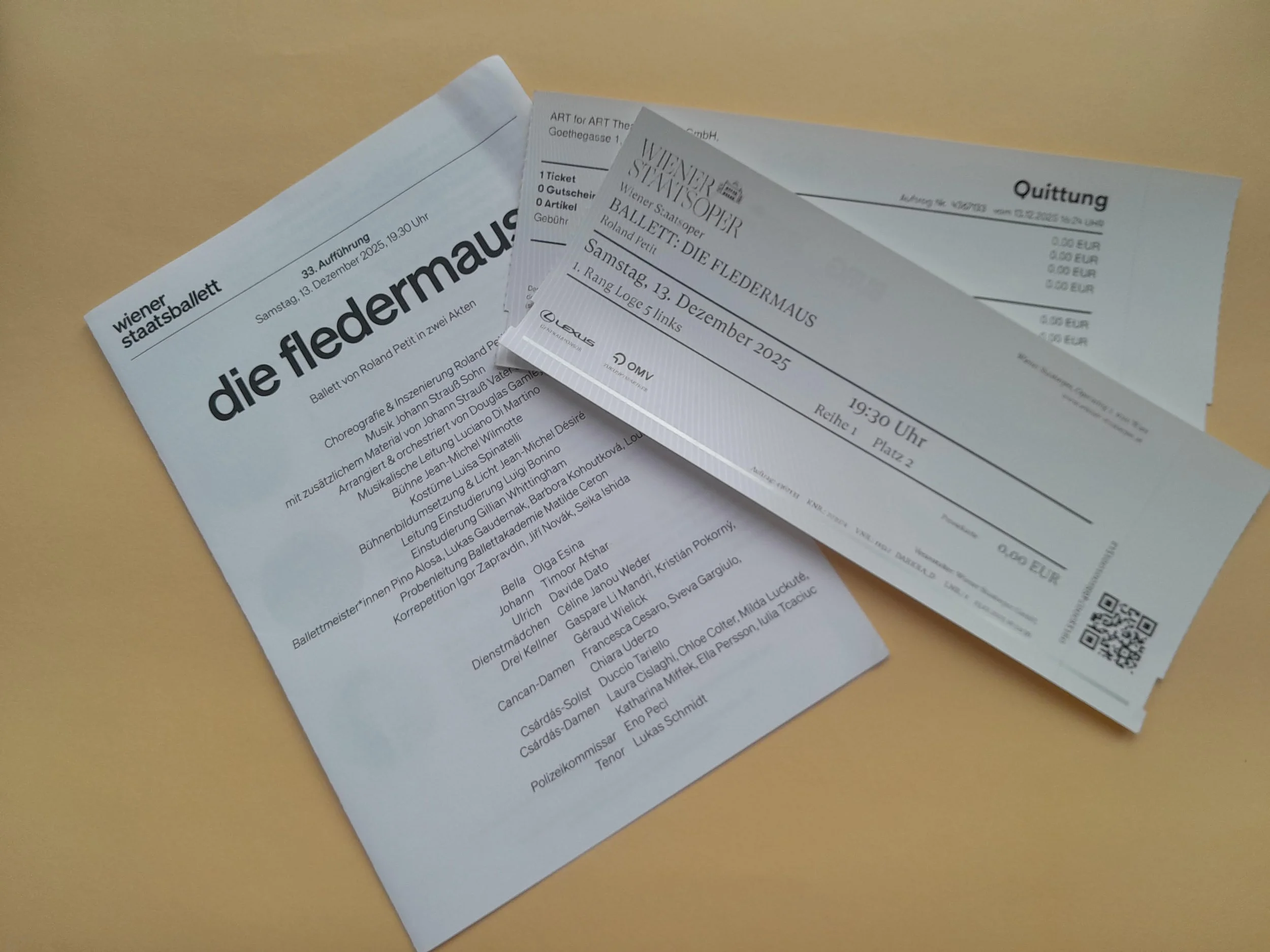
Die Fledermaus (La chauve-souris), revisited: Vienna State Ballet (Wiener Staatsballett), December 13th, 2025.
Having seen „Die Fledermaus” three times recently, with three different casts, I had the unique opportunity to observe more closely subtle differences in interpretation.
Copyright: Ricardo Leitner / a t t i t u d e
Last evening's cast is the one that comes closer to the “mood”, in the characters' interpretation (and in its execution), as well as in being more faithful to the stylish atmosphere of Roland Petit's original idea and concept.
Who, we must say, was never a choreographer to put „intellectuality “ in front of the „entertainment value“, that delights the audience and, as in the „Bat's case“, makes the audience stand up when the show is finished and go home with a smile of joy distinctively placed on their faces.
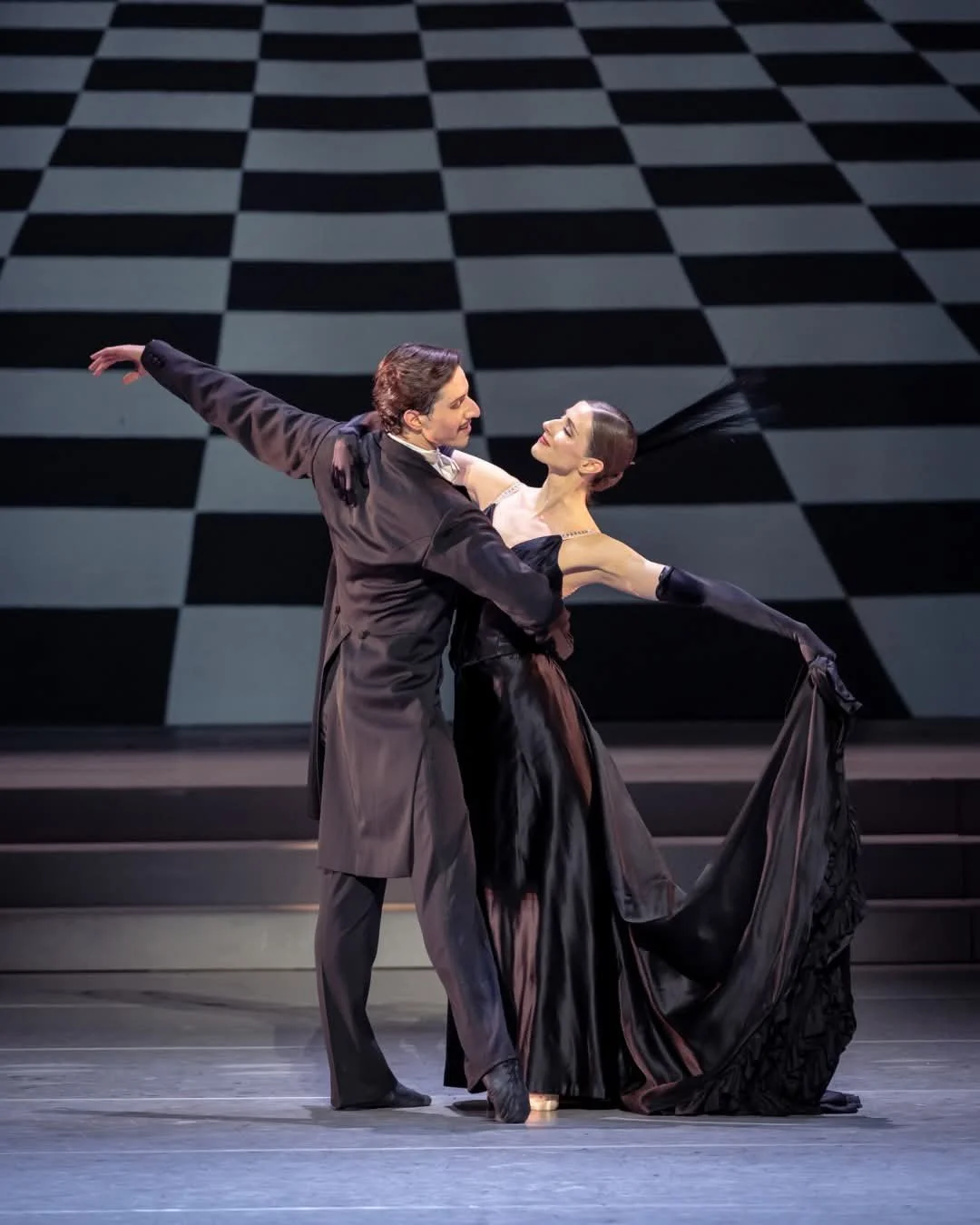
Copyright: Ashley Taylor / Vienna State Ballet
Altogether, I came to somehow “suspect” that Mr Bonino (Luigi Bonino, ex-brilliant dancer from the “Ballet de Marseille” and original creator of “Ulrich” - or was it Jean Charles Gil? - and also responsible for the Dancers’ coaching) spent more time with the first cast, as it strongly highlights, in very subtle details, a reflection of the original “atmosphere” and “moods”.
I have just mentioned Mr Petit’s original concept: Sometimes, people refer erroneously to the piece as being „partly” slapstick. I do not agree with that. Definitely, I prefer to use the adjective„histrionic“ to describe not only the whole mis-en-scène but also Bella's many times repeated direct eye contact with the audience - as if somehow, in the manner of Brecht, „getting out of the character” and narrating the story (or at least what has just happened or, in the scissors case (at last) of what will happen in a short time.
To make a long story short, „histrionic” is not necessarily „slapstick”. It is a mistake to confuse that.
This time, I shall refrain from writing about the many „ingredients” that form a ballet evening. For more information about the concept, music, choreography, costumes, sets, etc., you should read my last critiques, respectively, about the performances on November 24th
and December 1st
I must be honest: It is a delight for me to be able to write a critique just like this today. Positive through and through. In fact, in a long period I have not written so positively like since the beginning of the 2025/26 Season. It feels unusual. But I must say that it feels good.
About the Dancers: From the box I was sitting in, I noticed something that is a bit of a „mystery” for me. Something a bit “odd”.
I do not know if it was the lighting or if there is a new „foundation” for the Corps de Ballet. I mean, Make-up. The „shade tone” (I mean it as colour) is a bit too light and did not suit all the girl’s skin tones, giving some, who don't have such a fair, light skin tone, a bit of a „greyish” look. This was the first time I noticed that; however, this is a minor detail.
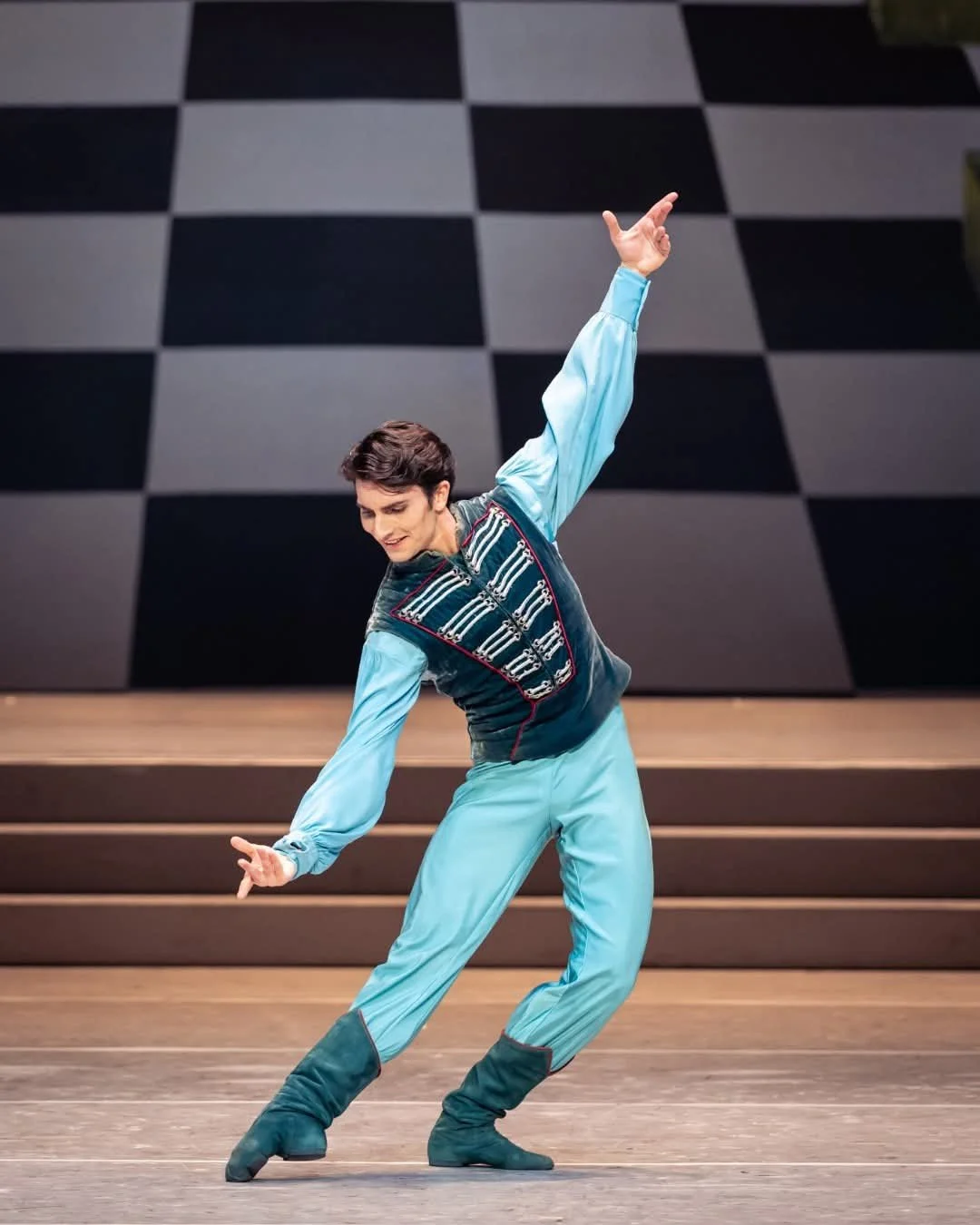
Copyright: Ashley Taylor / Vienna State Ballet
The Csárdás Soloist, Duccio Tariello, gave life to what I consider a quite „boring” part of the choreography. But he showed stage presence, a good technique and poise, which is „Conditio Sine qua Non” to this role. He was supported by two lovely dancers, who played the „First” girls of the Csárdás Number, which, in fact, has nothing to do with the rest of the storyline and is considered more of a Divertissement, with no real purpose for the storytelling: Milda Luckuté and Laura Cislaghi, who are totally different but complement each other visually and emotionally.
Once more, I cannot stop saying how the company is once more being well treated, with proper daily trainings, coaching and „the right eye” to what casting is concerned.
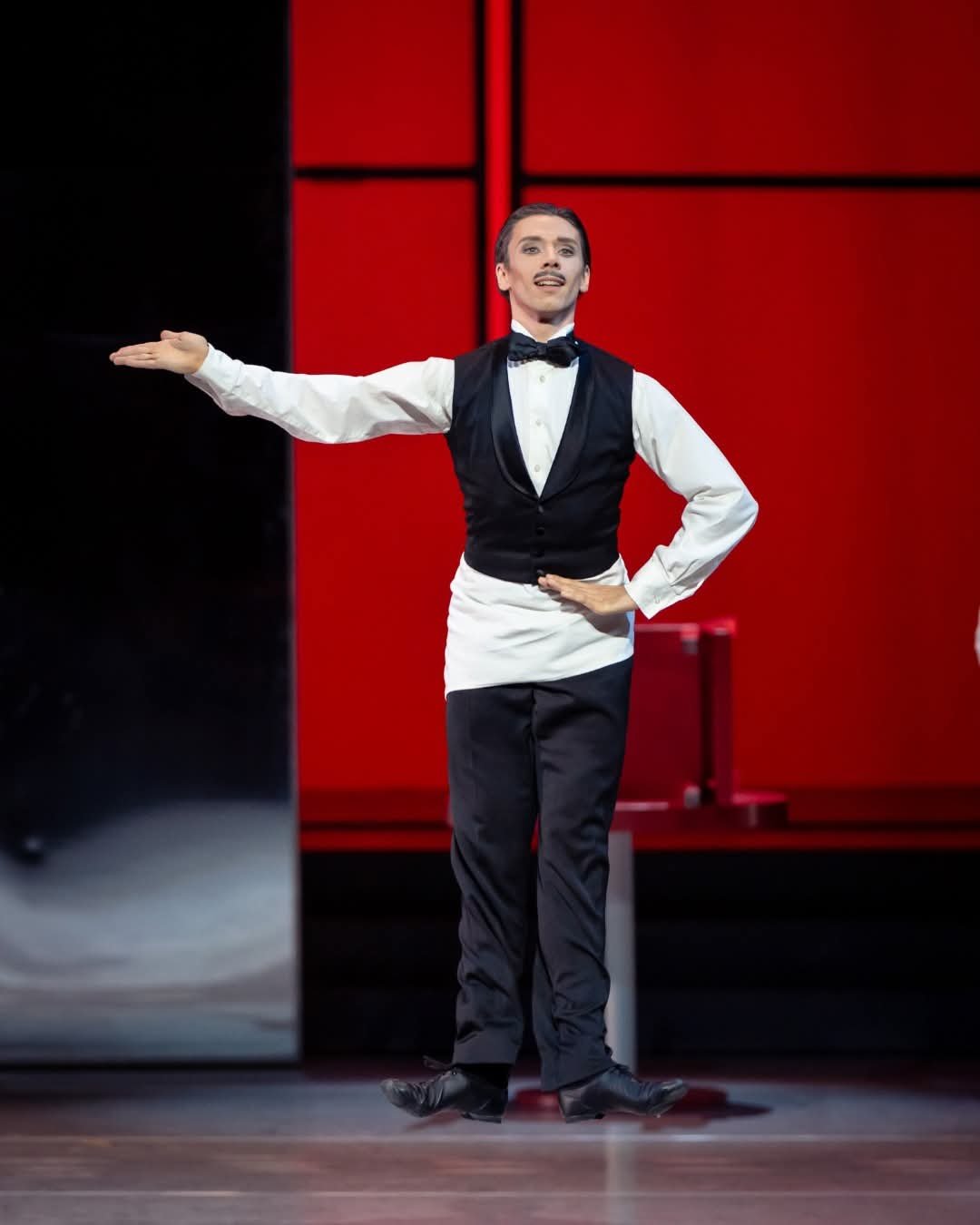
Copyright: Ashley Taylor / Vienna State Ballet
The scene-stealing performance of the waiters was extremely pinpointed and well executed by Gaspare Li Mandri, Kristián Pokorny, a very gifted dancer, and, of course, Géraud Wielick, feeling very much „at ease“ in the role – I don't mean „at ease“ as could be understood by many as careless, too relaxed, and not concentrated.
Much on the contrary. I mean „at ease” as very „well-cast”. This is just for the record
Not quite comprehensible is the casting of Soloist Eno Peçi as the Police Inspector, a minor role that consists mainly of a walk-in and walk-out. Mr Eno Peçi brought the house down as Ulrich (with the second cast in which Bella was played by Ketevan Papava and Johann by Masayu Kimoto) in a by the public, highly celebrated (and cherished, extremely valued) performance. It was quite unusual to witness an Artist of such calibre in such a small role.
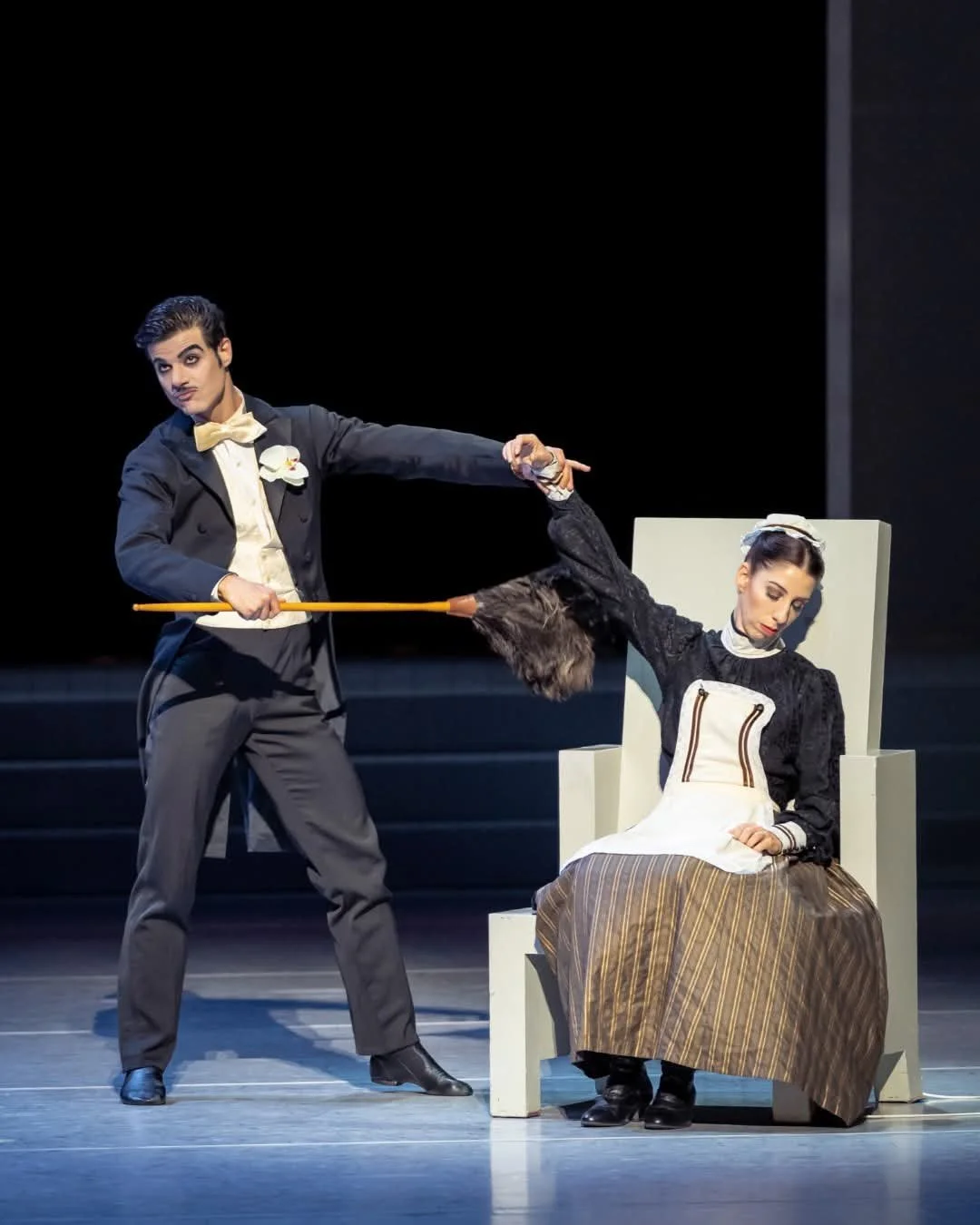
Copyright: Ashley Taylor / Vienna State Ballet
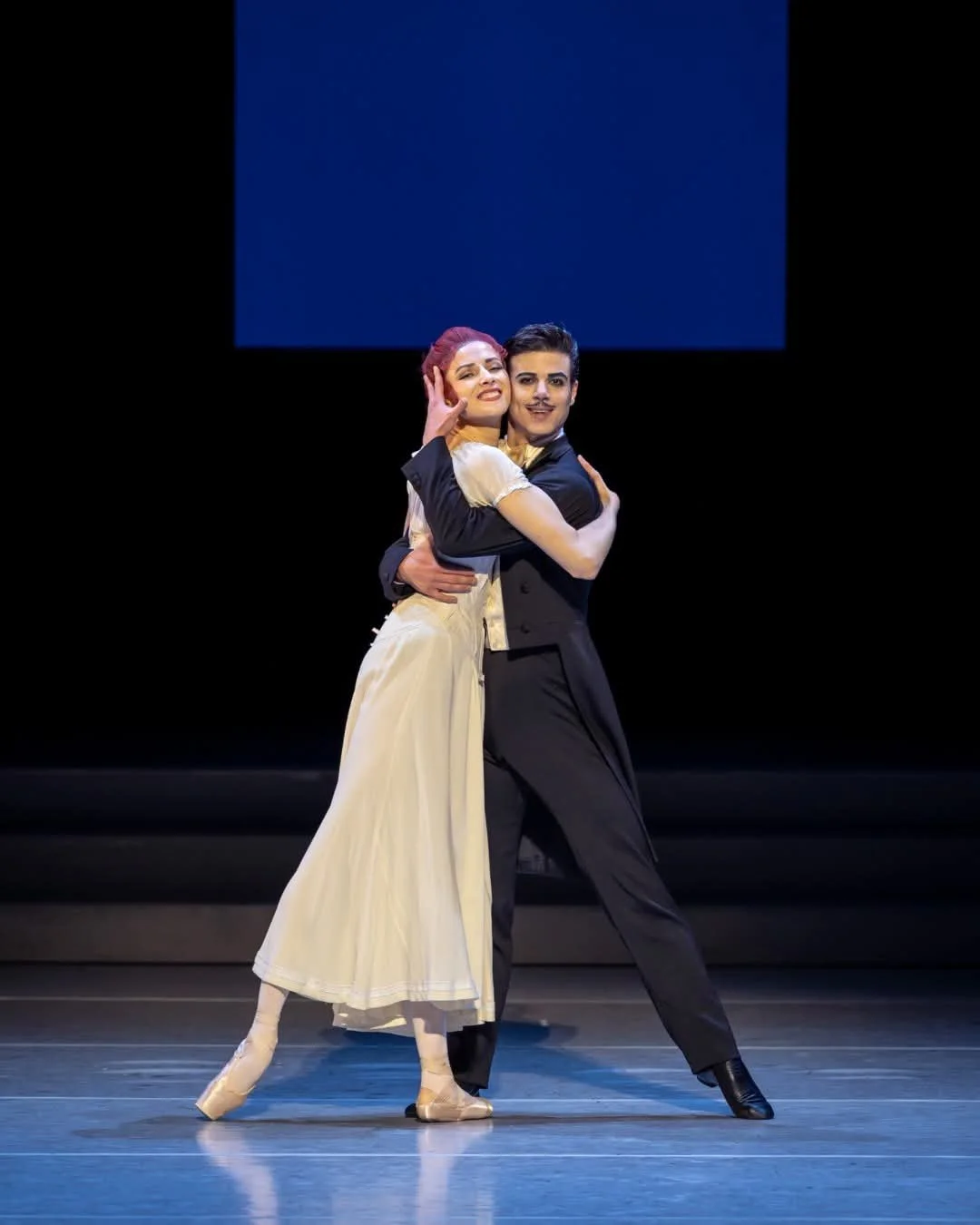
Céline Janou Weder was more than a delight as „The maid“. Many people tend to look at this role as short and insignificant. I disagree totally because I think it is a very difficult one to “find”, especially on the dynamic side. To give (real) life to this character, one needs not only a sense of humour, which Miss Weder proved that she has more than enough, but one „technique“ that is often overseen and disregarded: Timing. Precise timing. It makes all the difference.
During yesterday's performance, Miss Weder proved that she could make the audience laugh with her, not at her, which is quite a different story. She, one of the most versatile dancers at the Opera (a statement that I have made many times), carried her performance as a true Comic. Not even for a second “out of character”. Sensitively. SHE did not think she was funny; she portrayed the (extremely) funny role very straight, without even once „laughing at herself“. A beautiful performance which lengthened and suited Olga Esina's „Mother and Housewife performance”. Perfectly.
Copyright: Ashley Taylor / Vienna State Ballet
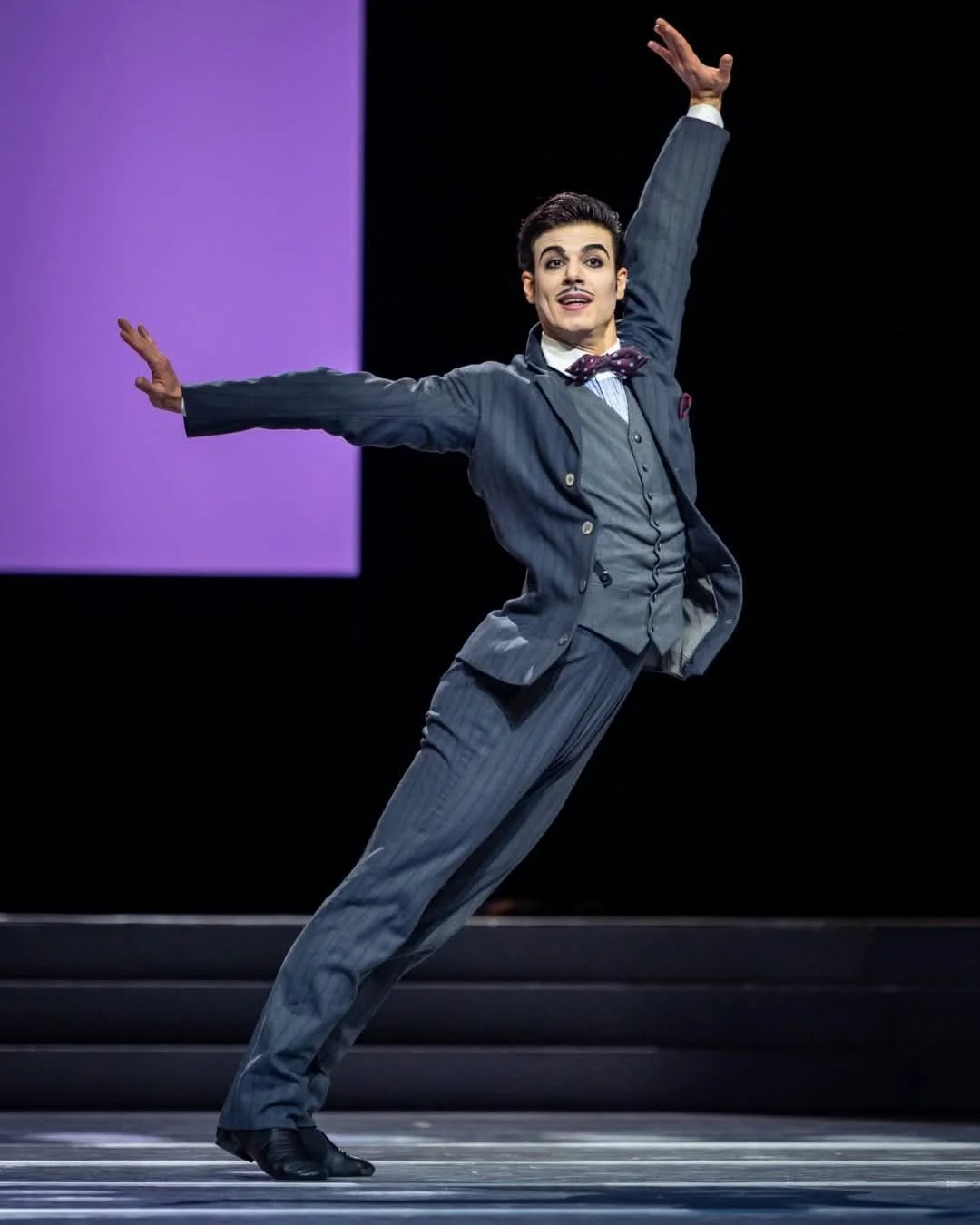
At Davide Dato's powerful entrance, the audience was suddenly taken aback. Powerful is the only word, and it means „Prepare yourself for something you haven't seen yet”. And we surely hadn't. From the whole cast, I can say that he is the only one who could, in some very honest way, be mentioned in some connection to the word „Slapstick“. His walk was sometimes “Chaplianesque”, his dancing very (Buster) „Keatonish“ and his cynical moods (especially in the „prison scene“) somehow extremely (Groucho) “Marxish“.
Copyright: Ashley Taylor / Vienna State Ballet
Mr Dato has been enchanting our Viennese Audiences for years, has a strong following and has developed into a „Public's Darling“. There's no need to mention either his technical skills or his presence on stage and „presentness“ in each role he portrays. Yesterday, there was a new Dato, another side of his character, funnier than ever, in a „give and take“ action with the audience. And he knows precisely until where to „go“, not doing „too much“ and „too little“, just the right dosage and, on top of it all, bringing the audience down to giggles and laughs when HE decided to.
A beautiful, versatile Artist. Yes, there is a long way, difference, world (you can call it the way you want to) between Giselle's Albrecht and Petit's Ulrich.
Copyright: Ashley Taylor / Vienna State Ballet
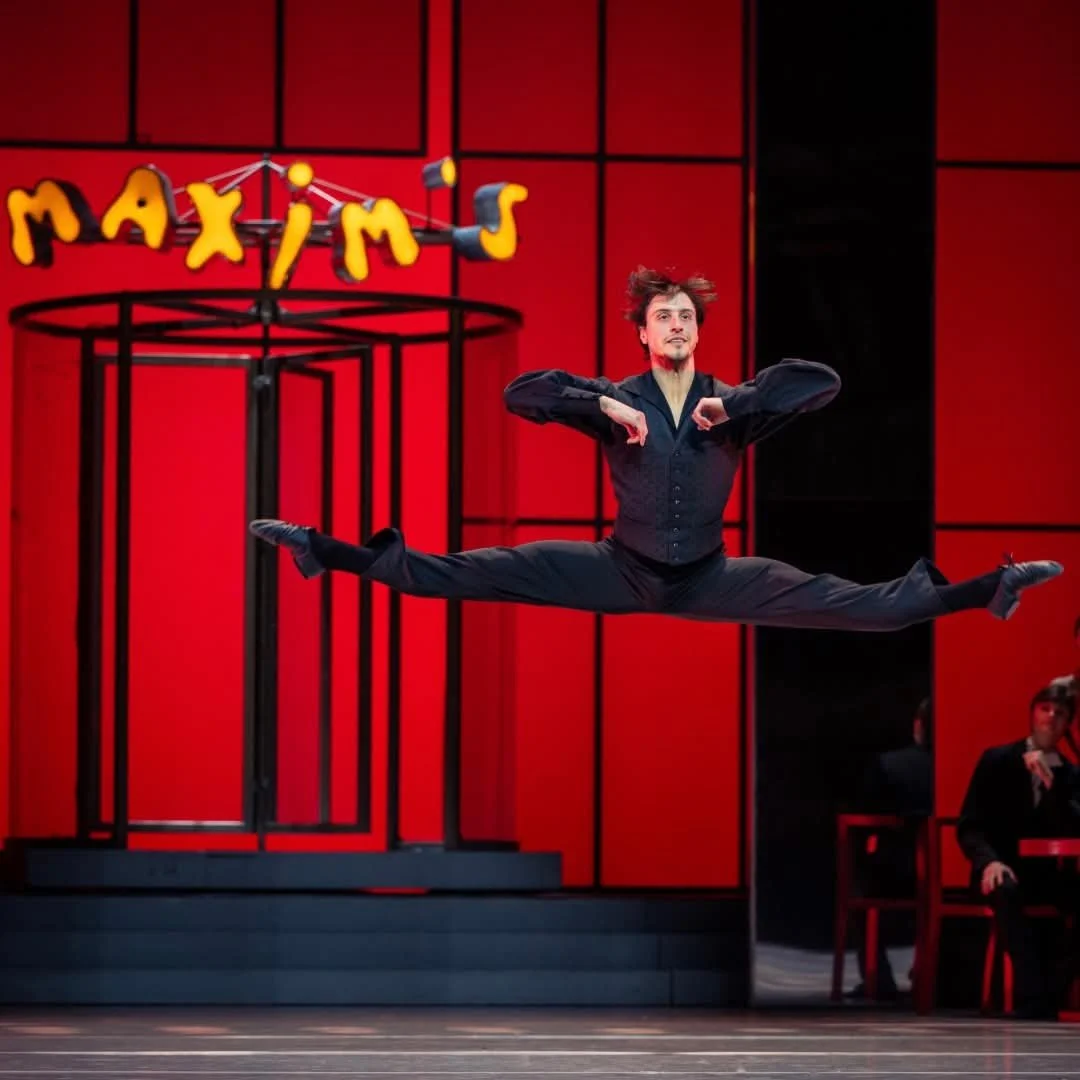
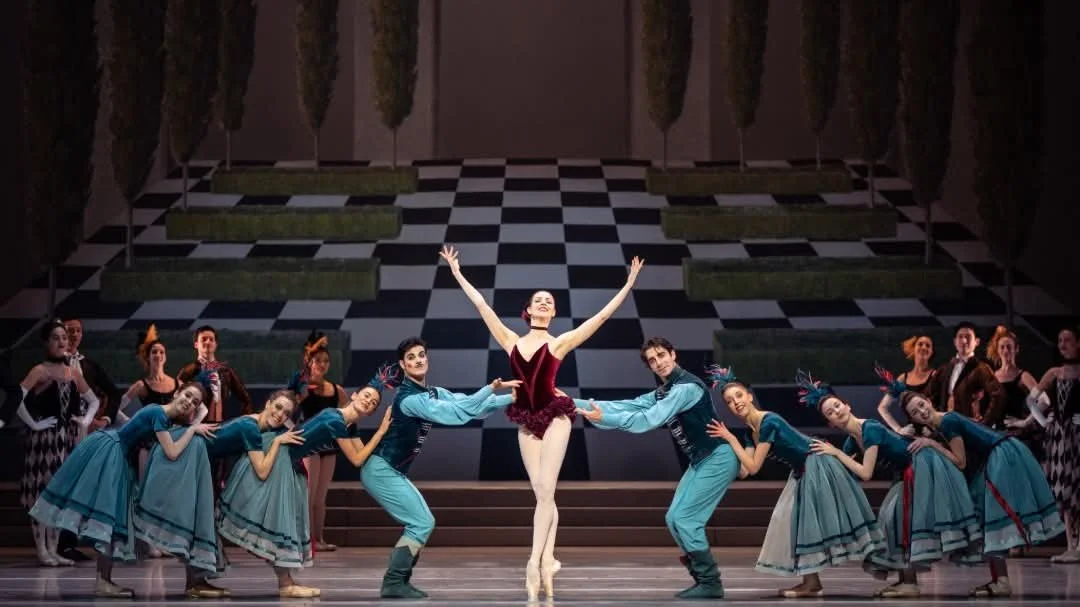
As Johann Timoor Afshar, once more, conquered the audience.
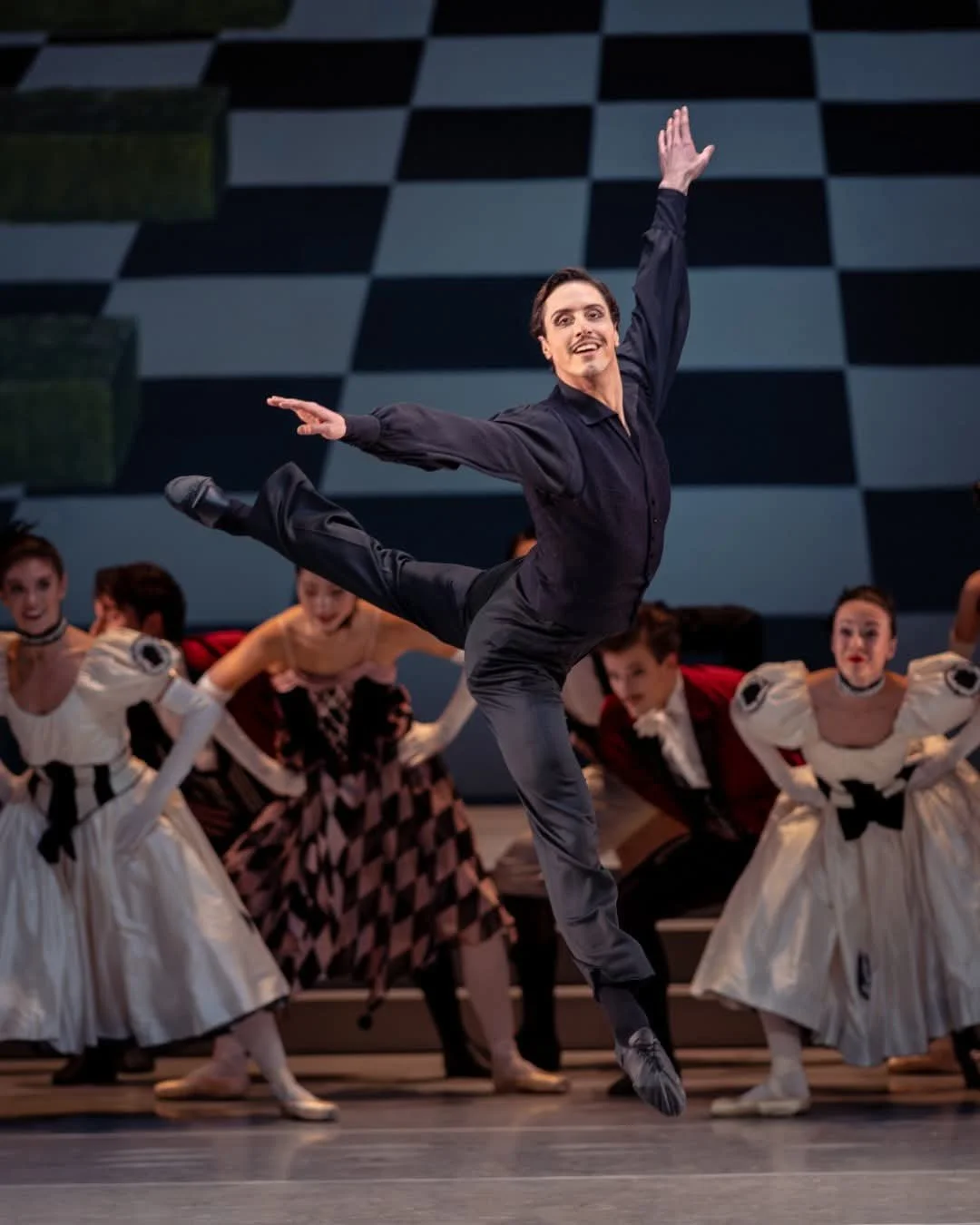
Let us be honest. Petit's Johann was created in a very careful mood. In a very dynamic and comic ballet, he is perhaps the dullest of all characters, but as a compensation, Petit created the most energetic, vigorous and effervescent solos for him. Solos that can only be executed by a dancer whose technique is nearly flawless and very robust.
Mr Afshar, who was honoured with the promotion to „First Soloist” on the very first day of the Season (Alessandra Ferri's first „official” day with the Vienna State Ballet), gave the audience an extremely lively display of dancing.
Copyright: Ashley Taylor / Vienna State Ballet
His character, Johann, is perhaps the only character built on the „Method” (Lee Strasberg's heritage from Stanislavsky), in contrast to the other characters that carry more of a „Brecht Heritage” (Think of „Pirate Jenny“, in “The Threepenny Opera”, as sung by Polly. She originally „leaves” - spiritually - the play to perform a number which has, in fact, nothing to do with the development of the play. Her character played a character, and performed a play within the play.
That is „more or less“ the so-called „gimmick” of Petit's „Die Fledermaus”. A real farce. A very histrionic one.
Think of it.
Copyright: Ashley Taylor / Vienna State Ballet
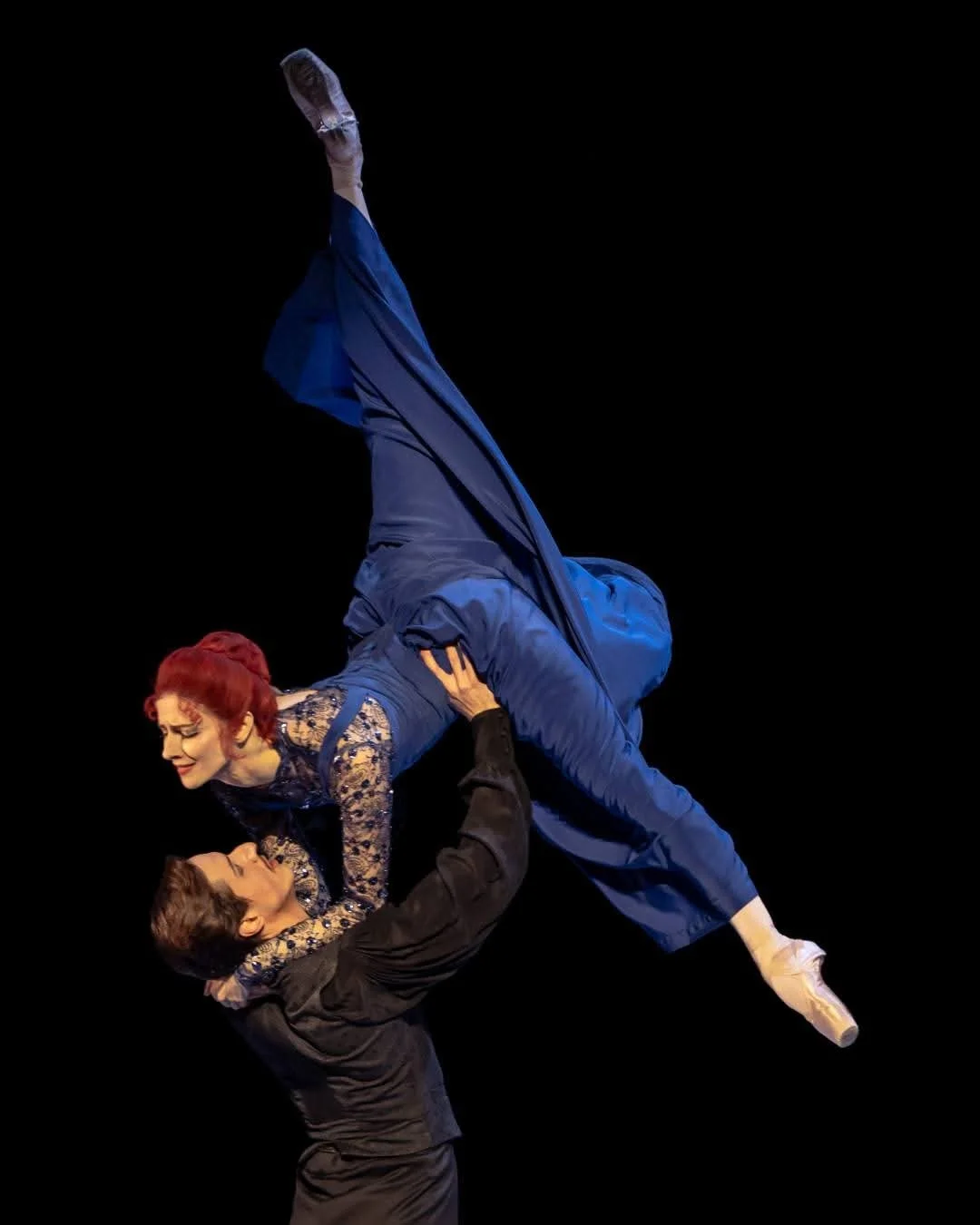
What else can be said about Olga Esina and her Bella, the character who reveals ways of telling the audience, through direct eye contact, the course of the story, her opinions, making even her thoughts and questions visible and transparent?
There is a long way and an incredible „change“ between her 2009 Bella and today's. It is amazing how she matured as an Artist who knows exactly how to project whatever she wants to the audience.
Experience? Yes. Strenuous work not only physically, but also intellectually? Surely yes.
But the biggest YES of all goes to the magic of Artistry.
And this you cannot „learn“. Either you have it, or you don't. I don't need to go further with my praise of Miss Esina.
The excited Applause last night still echoes in my mind.
Funny, Coquettish, adventurous, glamorous, daring, loyal Bella.
Apart from the fact that the red wig, used at the beginning and end of the evening, suits her beautifully (I consider it a very difficult piece of hairdo. One that is seen very selden as an advantageous adornment) one must point Miss Esina's (nearly unique) capacity of, as in descriptive geometry, of leaving the impression that she had drawn her movements and left them there, as lines, hanging in the midair. I was once more astounded by this phenomenon, after some ronde-de-jambes and, especially, during the sequence of three lifts (which I consider very difficult – because they are quite „ungrateful” to the Balleteuse) in the „Prison” pas de Deus with Johann/Timoor Afshar. Mr Afshar, who happens to be a very strong and good partner. It is very unusual to see these lifts done in such perfection and in unison with the partner.
Copyright: Ashley Taylor / Vienna State Ballet
Miss Esina, at that rare moment, that only happens once in a career, when maturity is fully there, and the body is at its prime. And she is in total control of that.
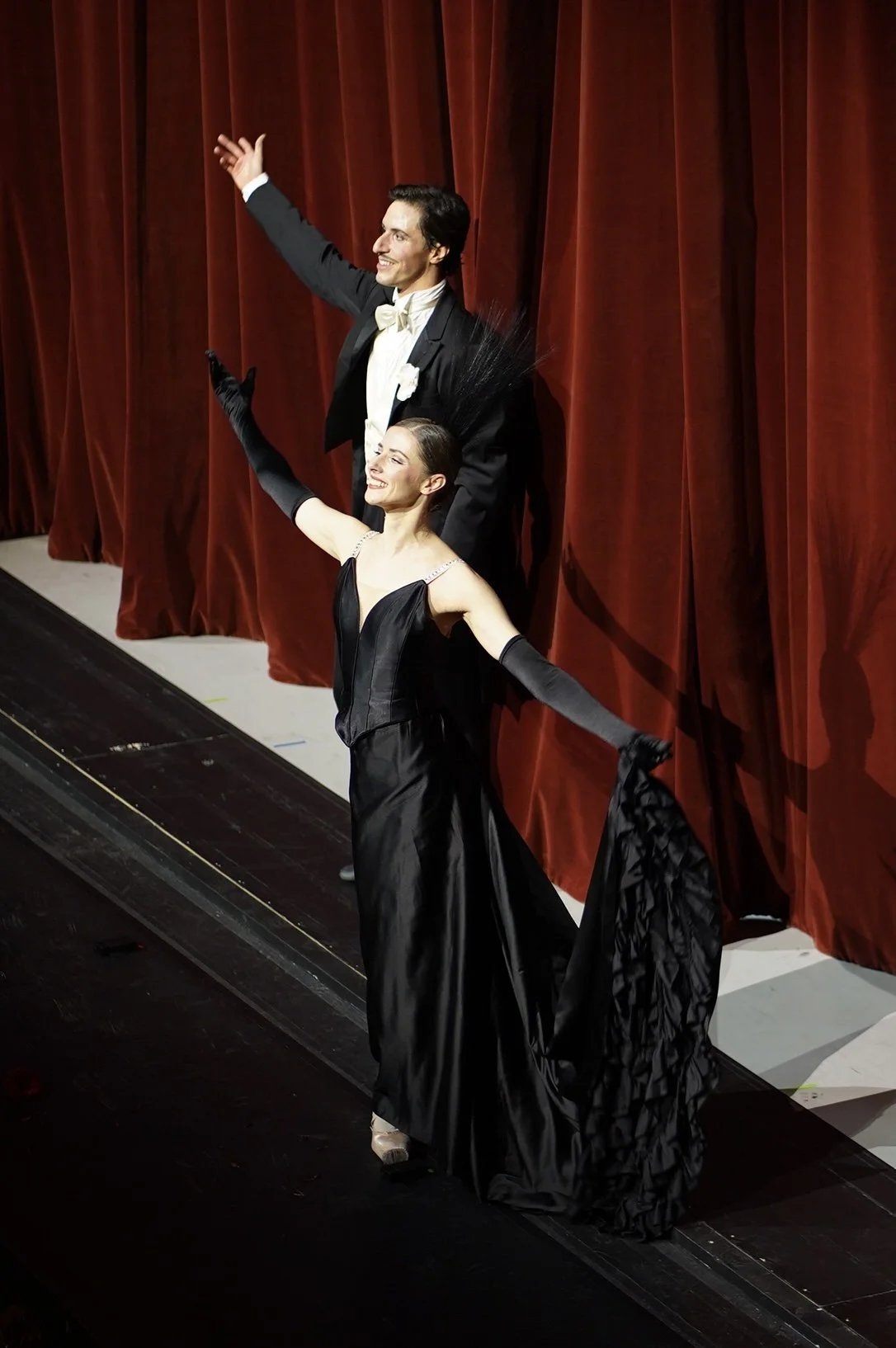
Resuming: a beautiful, practically flawless performance and a beautiful „cycle” with all three casts.
Copyright: Shino Takisawa. My special Thanks.
As I have written before, what a delight it is for me to be able to write a critique like this.
Positive through and through.
Yes, as the song goes: „Happy days are here again“.
Ricardo Leitner
a t t i t u d e
Vienna, December 14th, 2025