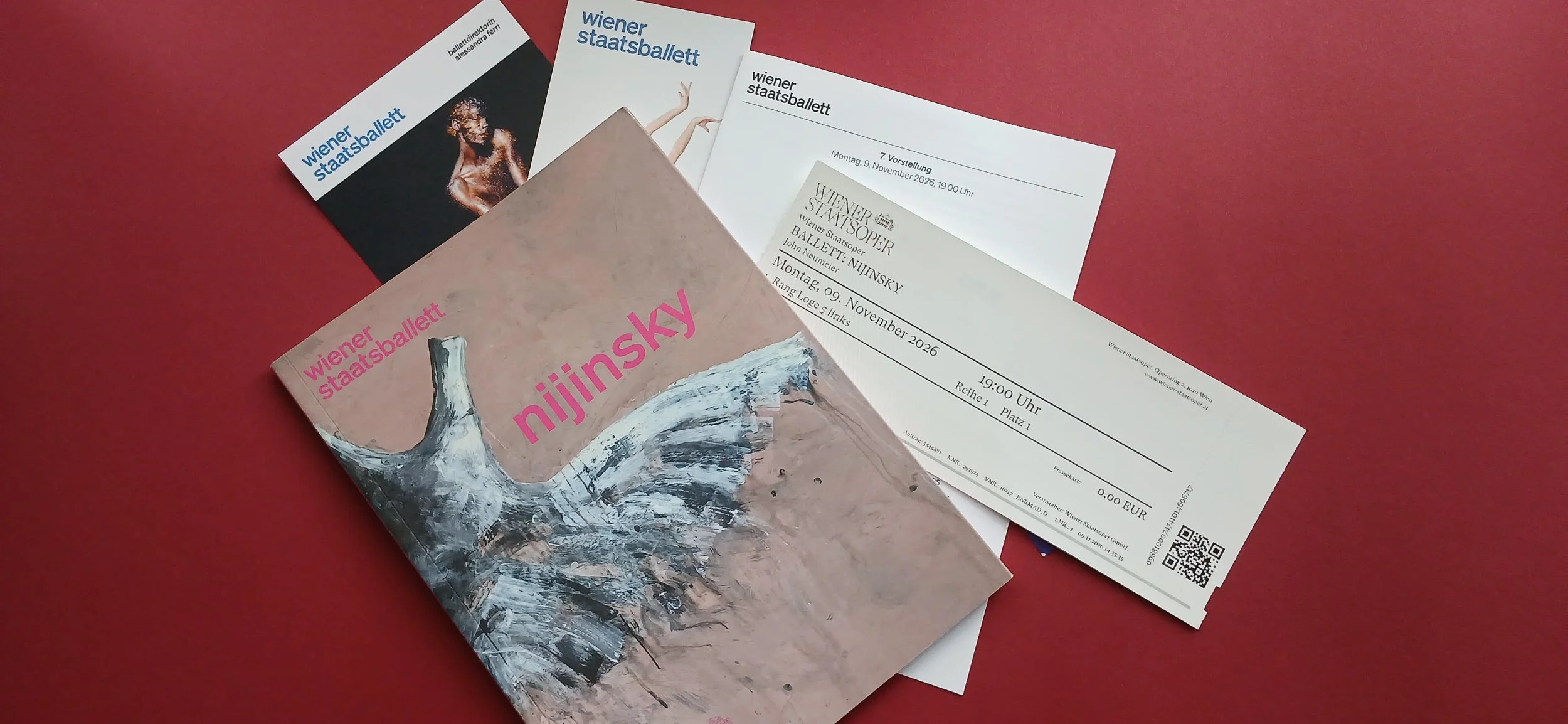
"Nijinsky", revisited, Vienna State Ballet (Wiener Staatsballett): November 09th, 2026
"Nijinsky", revisited, Vienna State Ballet (Wiener Staatsballett): November 09th, 2026
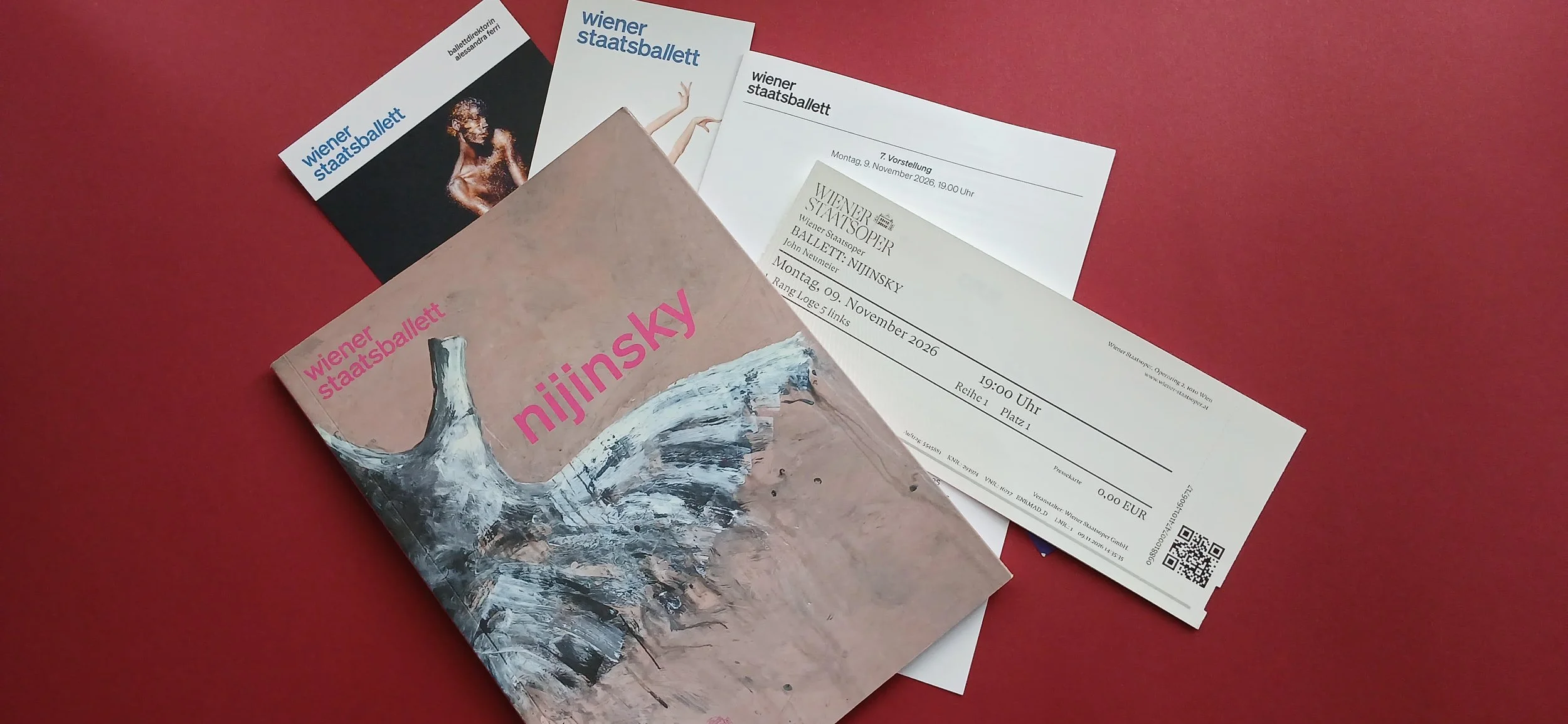
It is quite obvious to everyone that Nijinsky, the Artist, the person, the “revolutionary”, and the man, have been on Mr Neumeier’s mind quite a lot throughout the last decades.
It is extremely interesting to observe, over a period of nearly 50 years, how interpretations (And I mean this as a „reading“, not a stage „interpretation“) can change!
Neumeier’s „reading“ of the facts that contributed to Nijinsky’s fate (in “Nijinsky”) is no novelty. It tells us „facts“ that we are aware of; in fact, it repeats them to us who have occupied ourselves „a little“ with ballet history.
Neumeier’s work, altogether, varies too much, in the intellectual level, from piece to piece.
There is this always-present sense and mention of „versatility“, as seen (and interpreted) by the „everyday ballet-goers”, who are not preoccupied with a more advanced contemplation (or one could express it as observation and deep examination), and therefore use the (always fashionable and “interesting”) name „Versatility“ for what I would rather refer to as a lack of (the necessary) palpable continuity.
His work lacks the continuous „development“ of a „line“ (to understand this, think for example of Robbins, Balanchine, Ashton and even Twyla Tharp), be it thematically or even technically. It is not the result of a stable, consistent value. To explain this a bit more precisely, I just need to ask one question: What has „Nijinsky“ to do with „Sacre“ and with „The Lady of the Camellias “ or with „Joseph’s Legend“? To name just a few. These could be works from different people. They do not “match”.
His works are, partly, grandly staged and conceived.
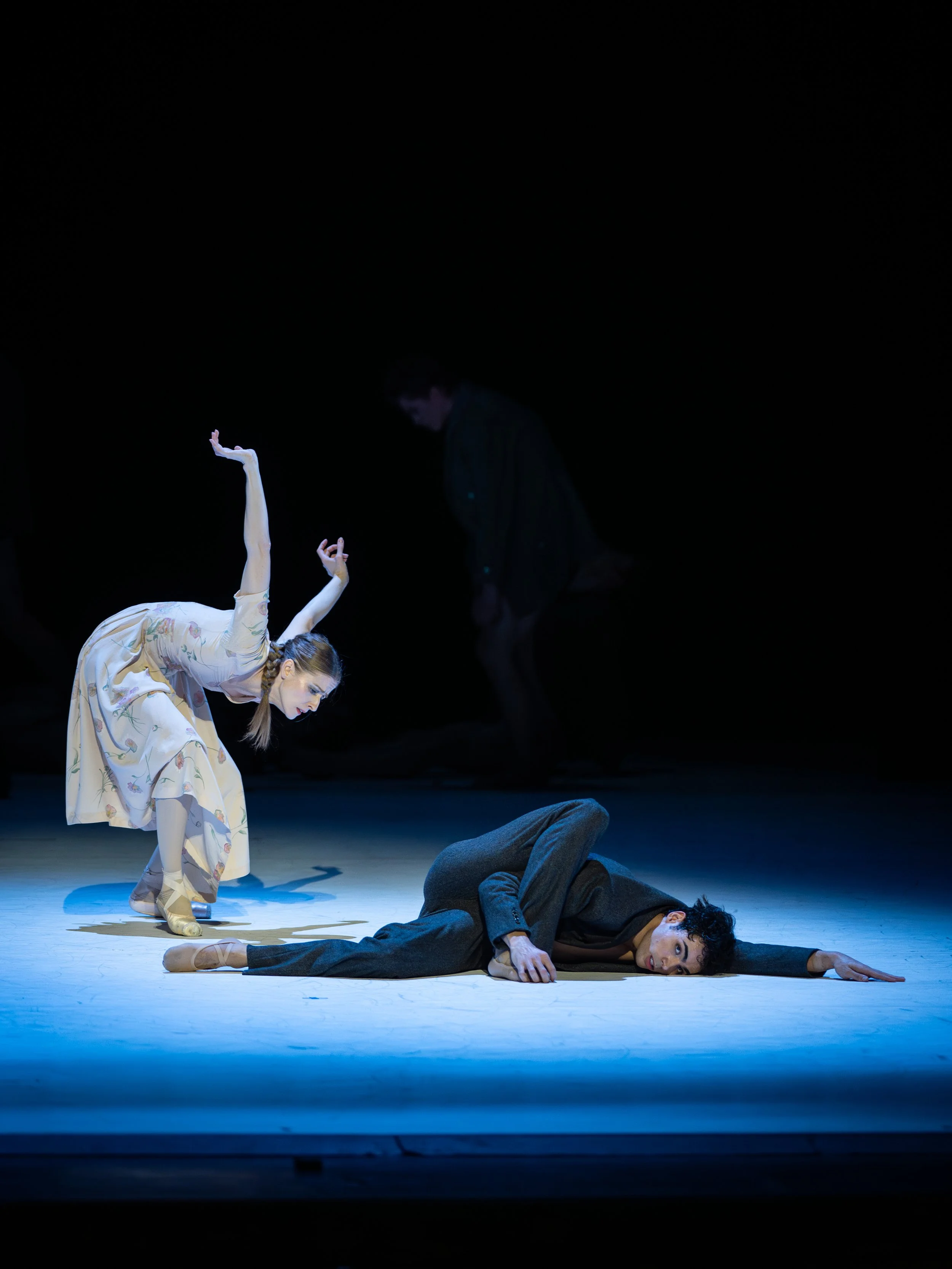
I consider „The Lady“ one of the greatest ballets ever. Not only a proof of a great choreography but perhaps the best dramaturgically created work for ballet of all time. Sensibility at its best. No question.
But to resume and finalize this matter, I would say, as a resumèe that this particular work, and reading of what one could call a piece of his „Nijinsky trilogy” (1979‘s „Vaslav“, the short ballet, „Nijinsky“, a ballet that I had the chance to watch 25 or 26 years ago in Hamburg after it had premièred, and 2009‘s „Le Pavillon D’Armide“, which is definitely my favourite of all three), is academic, especially dramaturgically, even if packed in the comfortable (and quite safe) cellophane of contemporaneity.
When I saw “Nijinsky” for the first time, I did not particularly like it. Yesterday, it was more than a trial to watch it. Sometimes I feel that this “Neumeier cult” is very overestimated and exaggerated.
As mentioned before, it tells us just facts. It offers no particular analysis or examination. A more personal “connection” with the theme. Especially when „talking about Nijinsky“, I miss that. Very much. He not only wrote a very important chapter of ballet history, but this, combined with his emotional instability and tragic life, would have given room to many other, more sensitive, possibilities.
I am glad that I got to say this publicly and that the reasons why I was not “in awe” for a fourth of a century have, at last, „crystallised “ in my mind by watching this show again,
But the main question is still unanswered: Even I, who occupied a certain time of my life studying and researching Nijinsky’s life, had trouble “understanding” certain passages of the show. What has Karsavina (By the way, beautifully danced by Elena Bottaro) to do with the Faun from “L’Après-midi d’un faune”? I just found out that the dancer was supposed to be Karsavina because I opened the programme. So I have to read the programme to understand what is happening on stage? And what about the “normal public” that does not know anything about Nijinsky, Romola, Diaghilev, Petroushka, Le Spectre de la Rose, Faun and Harlequin?
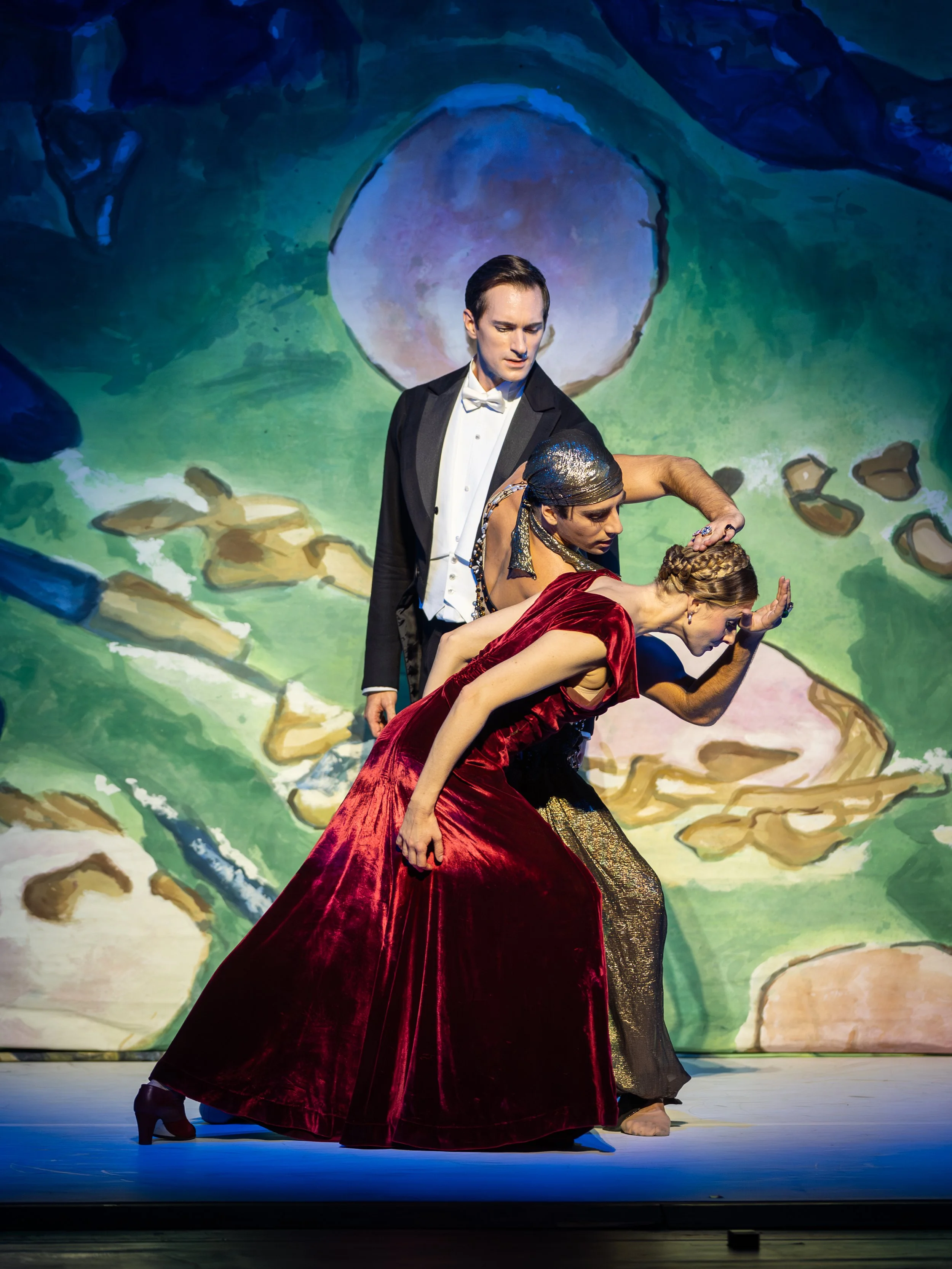
The worst conception of Art is the one that needs explaining.
Be it in a programme or in an introduction, Matinée, in which you are told what you are going to see (and how you “have” to feel about it).
During the whole show, I was trying to put myself in the shoes of the “normal” ballet-goer who does not have a certain “knowledge” about the world of dance. To be honest, let’s face it: these people have no clue what happened on stage and applauded at the very end because it was “Neumeier” or “intellectually worth”
The choreography itself is no wonder although the staging, sets and costumes are wonderful. It is ordinary and sometimes very ingenuous (A lack of inspiration?) and, combined with the musical choice, sometimes very (but really very) boring!
I repeat what I wrote above: Sometimes I feel that this “Neumeier cult” is very overestimated and exaggerated.
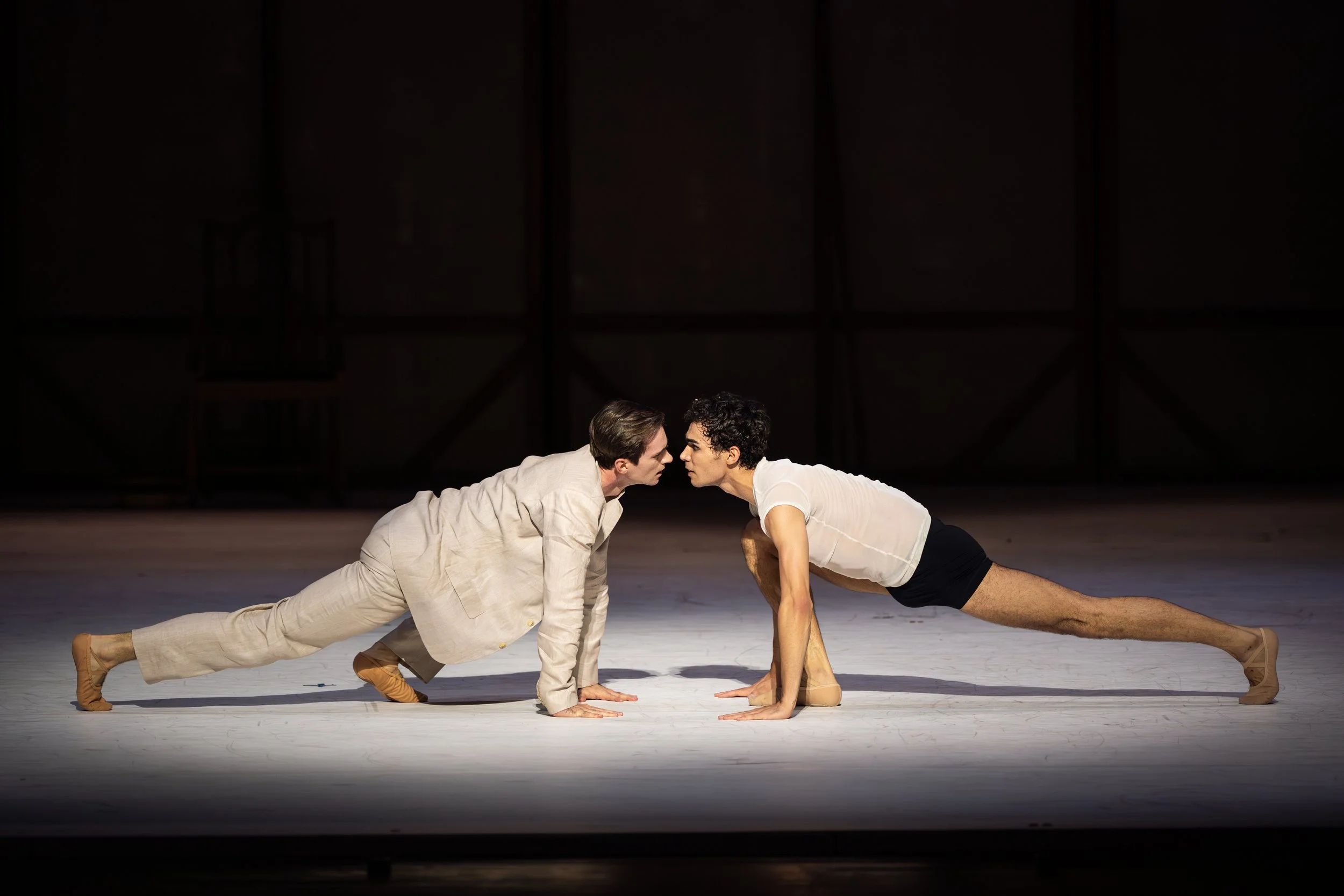
The company is in the best shape. No question about that.
Victor Caixeta (Nijinsly), Olga Esina (Romola), Rosa Pierro (Bronislava Nijinska), Masayu Kimoto (Thomas Nijisnsky), Zolt Török (wonderfully great as Diaghilev) and, as mentioned before, Elena Bottaro (as Karsavina), and marvellous Alessandro Cavallo gave great performances.
One thing must still be said: A very diffuse dramaturgy, too many characters combined with a very peculiar “put-together” choice of music. An irritating evening (musically).
But one must be fair: the public, many of them who did not understand a thing of what was happening on stage, loved it. Standing ovations. They simply adored it.
As you see, this critic’s personal opinion is not so important. The audience loved it. As I left the Opera, I could hear the shouting of “Bravo”!
Ricardo Leitner
a t t i t u d e
November 10th, 2026