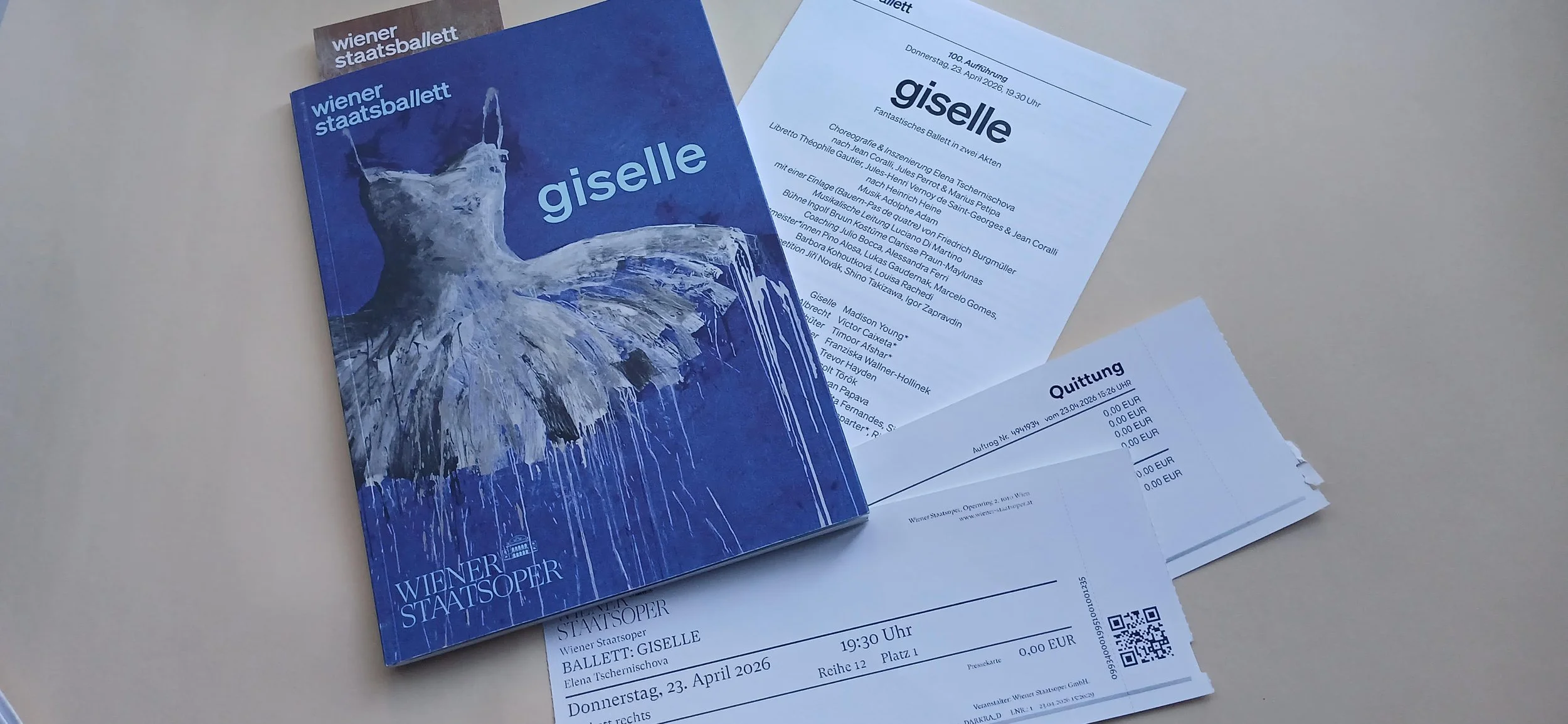
„Giselle“ , revisited: Vienna State Ballet (Wiener Staatsballett), April 23rd, 2026.
„Giselle“ , revisited: Vienna State Ballet (Wiener Staatsballett), April 23rd, 2026.
(or: “A night to remember!”)
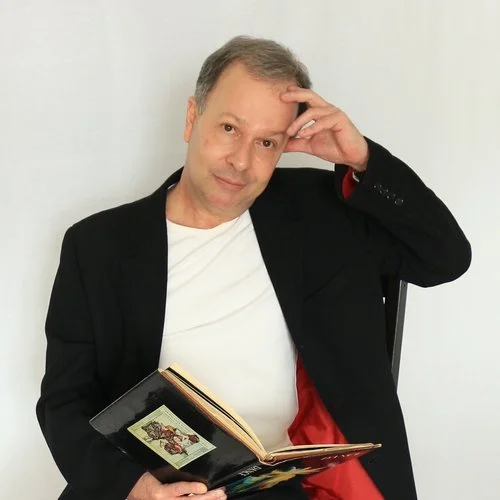
Copyright: Ricardo Leitner / a t t i t u d e
I do believe that the general public is not fully aware of the importance of the moment that we are passing through in Vienna. For „Balletomanes“ and the Company.
Not only an incredible transition phase in which the company is still being rebuilt, but also to everyone concerned.
The same way a Dancer can never „stop working“ and, through daily classes, “rebuilds” the body every single day, a Director is always rebuilding (or, because of „circumstances“, having to rebuild ) visions, organisation, projects, disposition, scheduling, etc et al.
Not at all an easy task, especially when you are confronted with the many „stones“ that are so normal in any Opera House and even a bit more complicated in Vienna.
There used to be an expression, a figure of speech, that went more or less like that: „If the world is coming to an End, come to Vienna. Here, things always happen 20 years later!”
I don’t believe that much has changed. This adds a lot more “extra” work for someone whose visions include also a strong feeling for „the sense of the present and actuality” of the world of dance: Alessandra Ferri.
As I have said before, I do not think that audiences are aware of the importance of this moment. And not of the work involved in bringing to the spectators a performance of such calibre as the one we have all (in a fully sold-out Opera House!) witnessed yesterday. A night to remember. Chapeau.
Coincidentally, as if a celebration was „in the air“, this was the 100th performance of Tchernichova’s version of „Giselle“ in the Vienna State Opera. Elena Tchernichova was a wonderful ballet master and a marvellous coach. But when talking about Staging, one can say that this field was not her „forte“. She was, for a very short period of two years (1991-1993), the Artistic Director of the Vienna State Ballet. Her „Giselle“ (1993) has surprisingly „survived“; her „Don Quixote“ (1991) did not. Needless to mention that many, much better versions of “Giselle” exist. For example, think of Myrtha’s first entrance: In other versions, after crossing the upper part of the stage from right to left, she repeats the same on the lower part of the stage, only this time from left to right, before starting her intricate arabesques.
Also, a „problem“ with this singular version is the sets by Ingolf Bruun and the costumes by Clarisse Praun-Maylunas (who, I found out, did Ballet classes with us, professional dancers at the old “Tanzforum” Studio in Vienna). Apart from the very „unusual“ (let’s put it this way) costumes of the Willis, colours are absent in the first act (which are very important as they create the strong contrast to the second, a white act).
All the attention is drawn to Bathilde because of her red costume, in a kind of „Autumn Sonata“ effect. You may be asking what "Autumn Sonata " is and why I mention it, but there is an Ingmar Bergman film from the late 70s that, although in colour, has a sort of emotional and visual “black-and-white" atmosphere. This is until the character played by Ingrid Bergman (no relation to Ingmar) enters this colourless life and environment in a long red dress, in the same shade as Bathilde’s. For me, it is quite obvious where the inspiration for this use of red for Bathilde came from. The problem is that, ever since then, there have been many productions worldwide that dress their Bathildes in red. Quite dramaturgically misleading to my way of thinking, as in the 19th century, red was only used by „professional women“. I am talking about women who practised the so-called „oldest profession in the world“. Definitely not Bathilde.
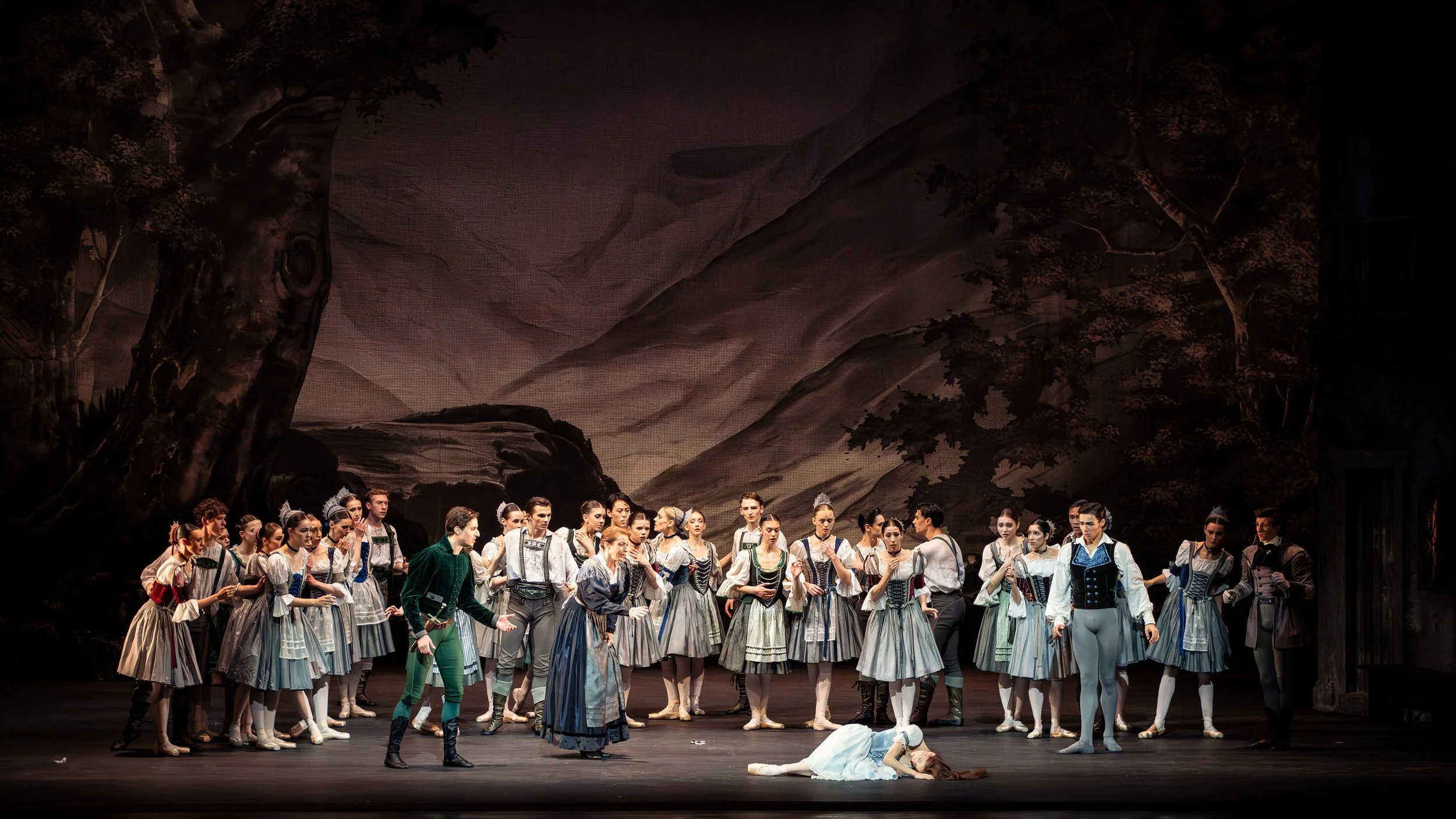
Copyright: Ashley Taylor / Vienna State Ballet
There could still be some work done on the „pantomime side“ of the production. But this seems to have become a worldwide issue. Dancers are either not taught, not motivated or do not pay attention to these details. I was sitting in the 12th row of the stalls. Many actions nearly did not „reach me“, and the Opera is much bigger than that. The action & interaction were either nonexistent or too small. That is the only work that should be made in this production.
Yesterday’s performance (with 6 or 7 role débuts at the State Opera) of a staging that I have known for years, in fact since its Première in 1993, has definitely the best cast, and is the most precise one, in terms of style, that I have ever seen of this version. Also technically.
When I think of the Première’s cast back in 1993, I remember talking with friends during the intermission about the “leading lady”, her lack of emotions and saying: “How can she die of a broken heart when she has got none?”
There are many differences from the „original“, but I don’t want to look at things constrictedly. And as there is neither a Tchernichova’s Foundation nor a Trust, and the ballet has been coached by many people who did not even see the original, or had not the eye for detailed work, I guess we’ll have to live with that.
The main thing, and I would like to underline this, is how the whole company is in „unison“. Not only technically but also stylishly. Like a puzzle where, within seconds, all parts fit perfectly.
This also concerns the precise and extremely “clean” work of the Corps de Ballet. There were so many moments to mention, but to mention all of them and all the names that have been working so attentively and dedicatedly would turn this review into an ordeal. Or, better expressed, it would become an „oration“ as long as last night’s performance.
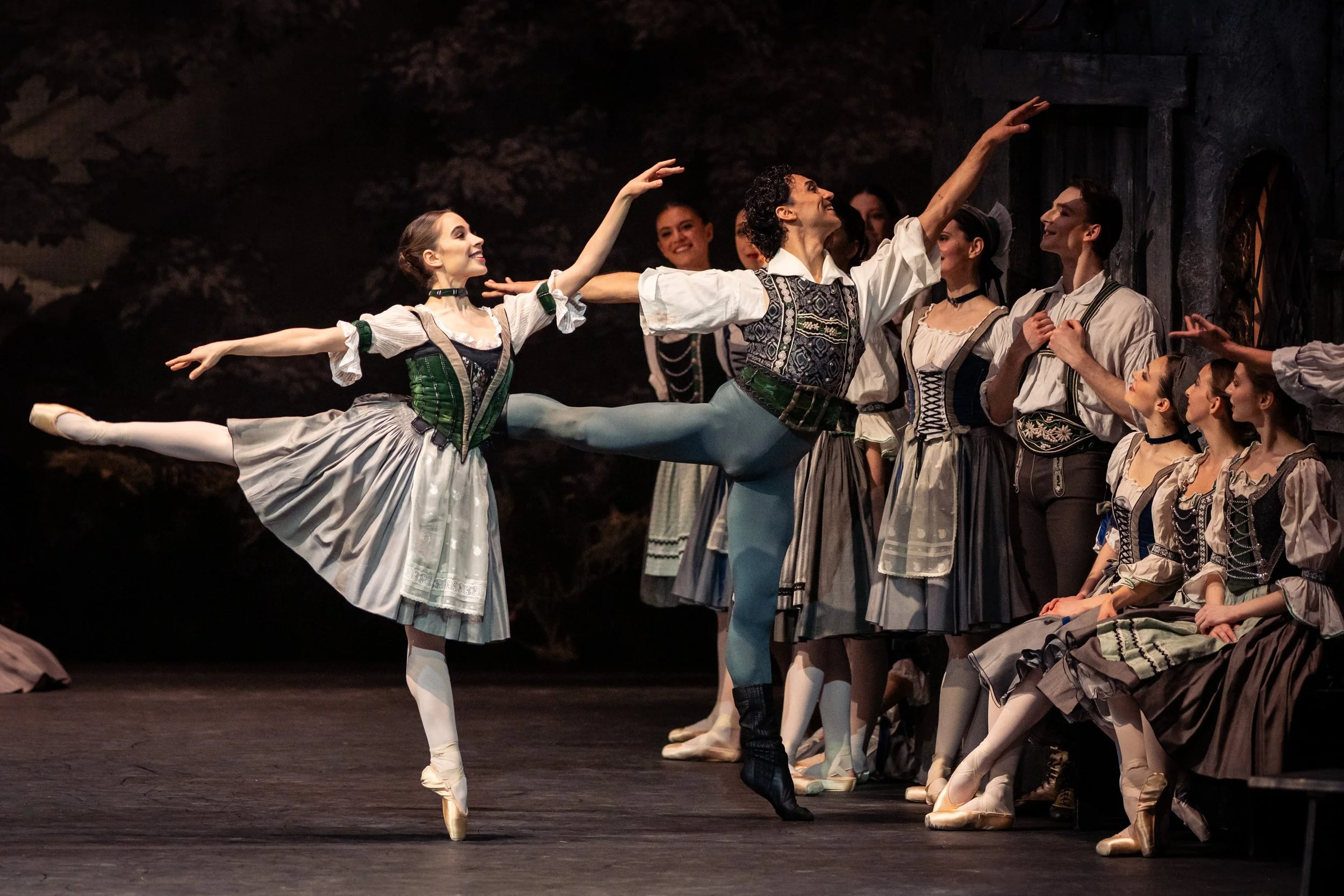
Copyright: Ashley Taylor / Vienna State Ballet
The peasants’ pas-de-quatre was beautifully performed by Margarita Fernandes, Sinthia Liz, Václav Lamparter (who tends to be a little ahead of the music) and Rinaldo Venutti. Perfect interaction.
By the way, music: Maestro Luciano Di Martino gave us sometimes quite uneven Tempi. Sometimes very slow, at others extremely quick.
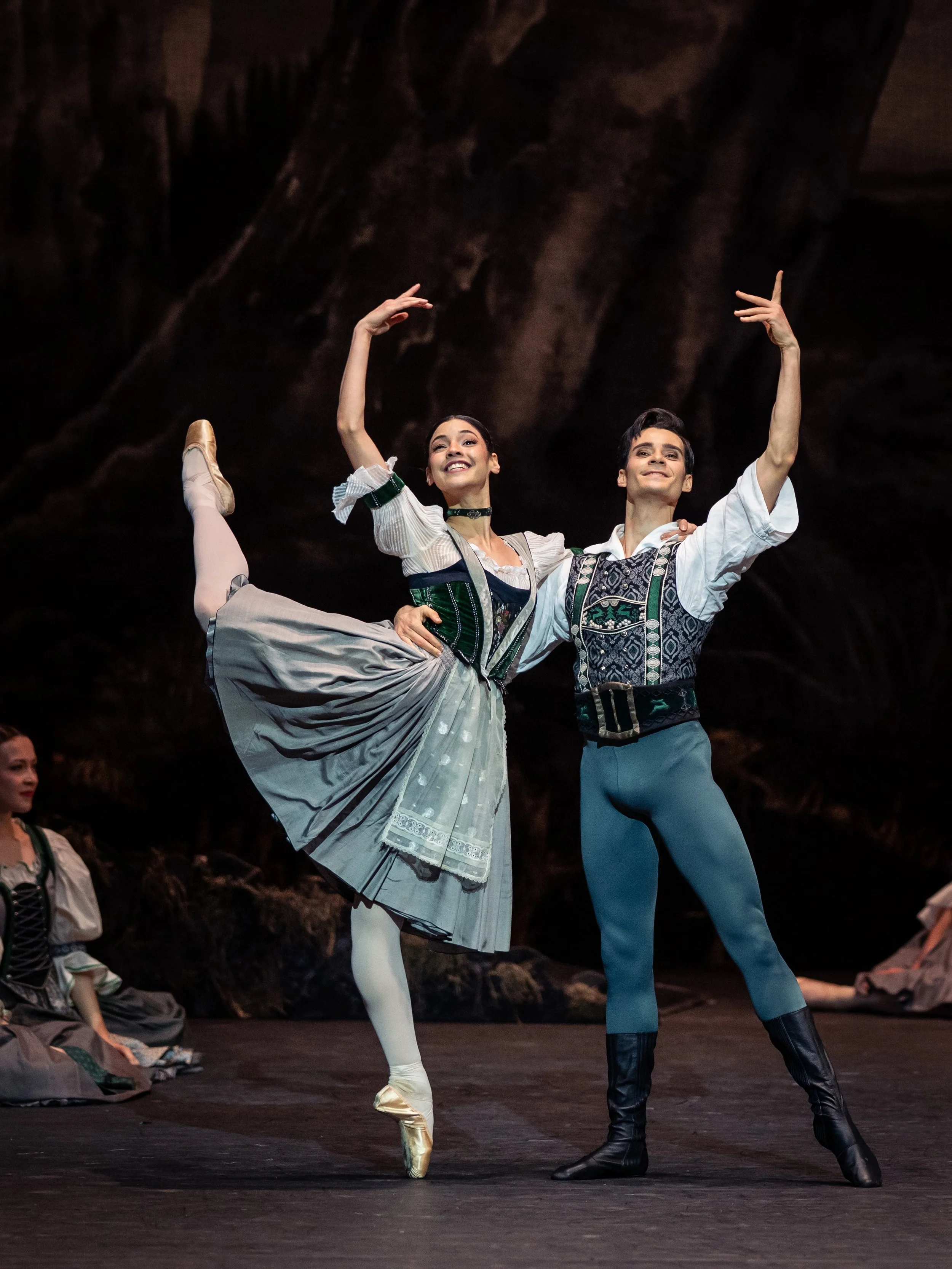
Copyright: Ashley Taylor / Vienna State Ballet
Natalya Butchko as Moyna and Sinthia Liz as Zulma gave a perfect display of what „style“ is all about. Such „clean“ performances. Quality at its best.
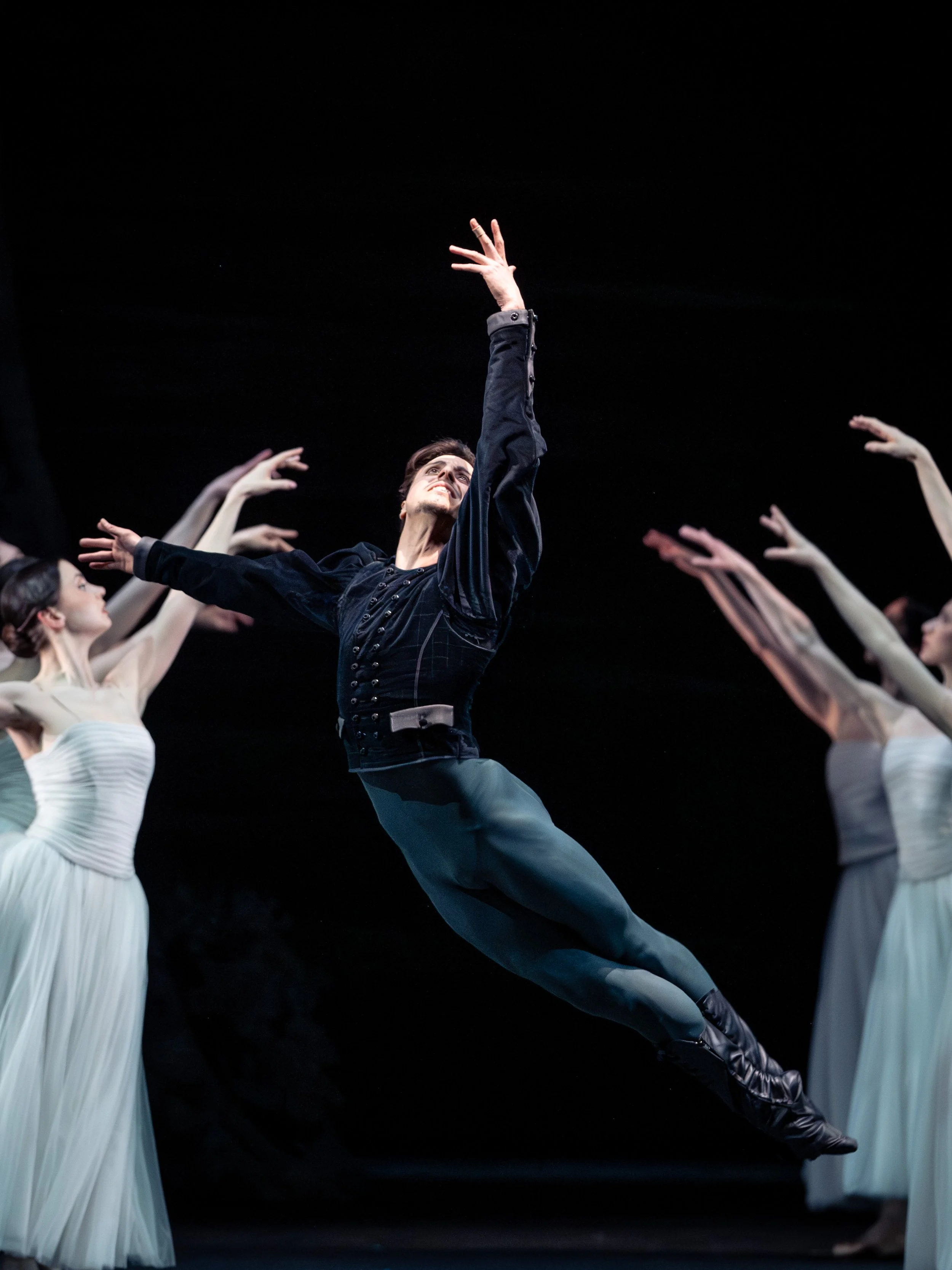
Timoor Afshar’s Hilarion is a man made of flesh and blood. Palpable. He gave us something that could be so easily perceived and felt. From the moment of his first entrance until he died in the second act.
Hilarion’s death is a part of this ballet in which I have seen many dancers fail and lose precision. It is extremely strenuous and requires not only pinpointness but also power and strength.
Mr Afshar did not let his public down. Up to the last moment, he maintained not only his wonderful and emotional acting “alive” but also maintained his Stamina on a very high level. A glorious display of professionalism and talent.
Mentioning Hilarion’s death, I was suddenly reminded of the fact that, originally, in this version, this was the single moment in which the Willis would „look up“. Now they look up and have their torso erect even during the hop on arabesques. But I believe that the intended „effect“ of their looking up for the first time during Hilarion’s death was to remind us, help us visualise how Swans look when they get angry and fight with each other (or even attack people). There is a saying: “The swan is mute, but when it hisses, it’s better to blow“. Think of that. And think of why the actress Elsa Lanchester was inspired by Swans in Hyde Park when she started hissing in an angry scene in which she was fearful in the classic „Frankenstein’s bride“ (A classic). I never thought I would ever mention Frankenstein in a ballet critique. I have to laugh about that!
Égal… Whatever else one can say about the Willis, one should mention that a „breath“ of ABT is quite visible. And I think that this is very good. But how could it be different after the wonderful coaching by Miss Ferri and Julio Bocca? Two Stars of the ABT?
I consider Myrtha one of the most difficult roles to cast. Sometimes she is wrongly portrayed as an „angry“ (and bad) woman, and this leads to typecasting. This very difficult character is much more complex than that: It is on the border, if superficially played (and danced), of becoming „cliché“. And that is not the way in which the role is conceived.
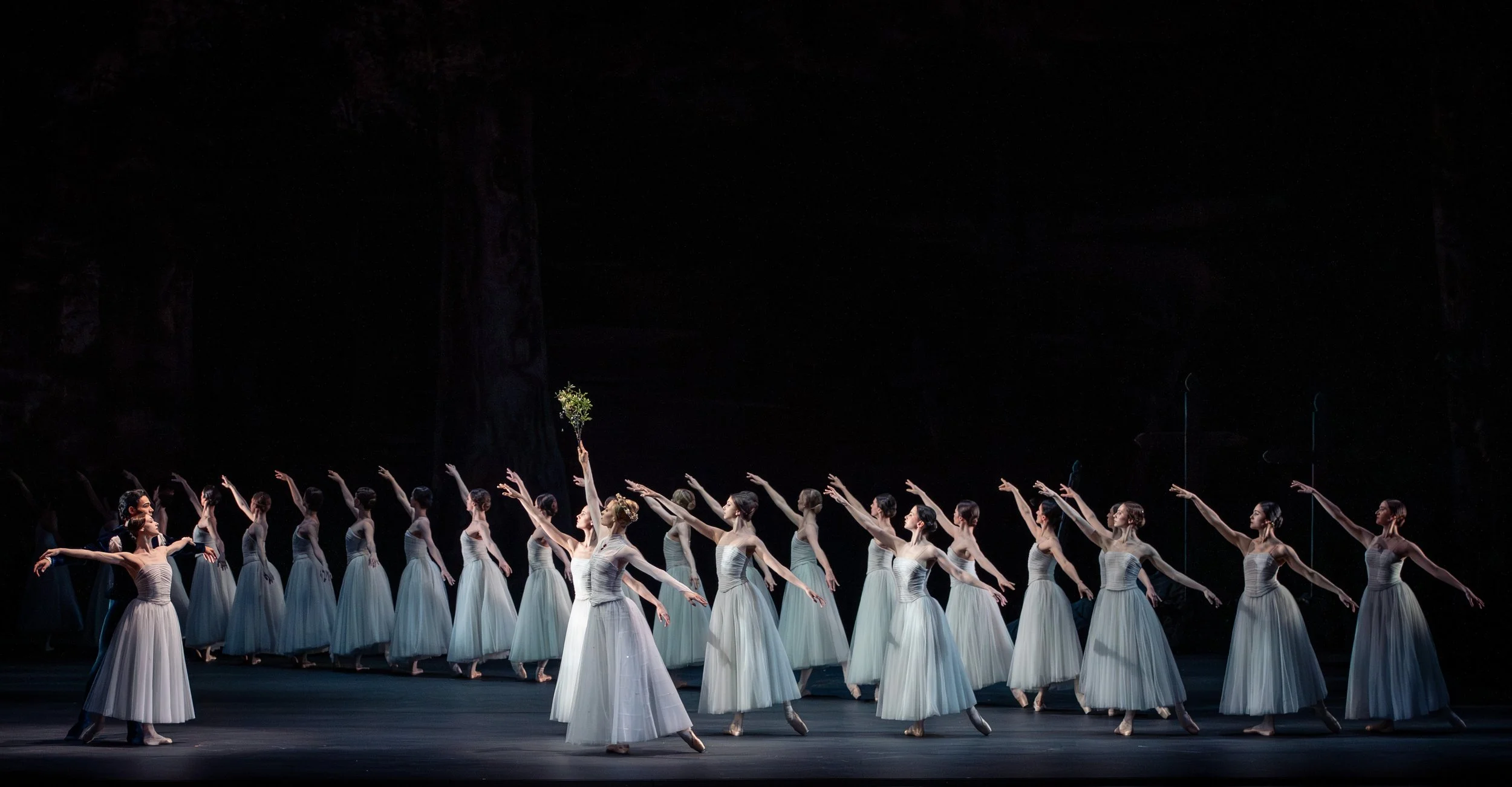
Copyright: Ashley Taylor / Vienna State Ballet
Think of the name Myrtha.
Many seem to have forgotten this, but Myrtha is a derivation of myrtle (the flower), which is myrte „en français“, myrte „auf Deutsch“, мирт in Russian etc. But why „myrtle“? Because it represents virginity, purity. Because until the beginning of the last century, in Central Europe, it was used on a Bride’s crown on her wedding day (Even Brecht wrote in his „The Three-Penny Opera“: Und gibt’s keine Myrte im Haar). And that is why Myrtha, while Giselle is defending Albrecht from the Willis, shows her a branch of myrtles, reminding her of her purity (and virginity), and not to defend this man who caused her so much trouble and betrayed her while she was still alive.
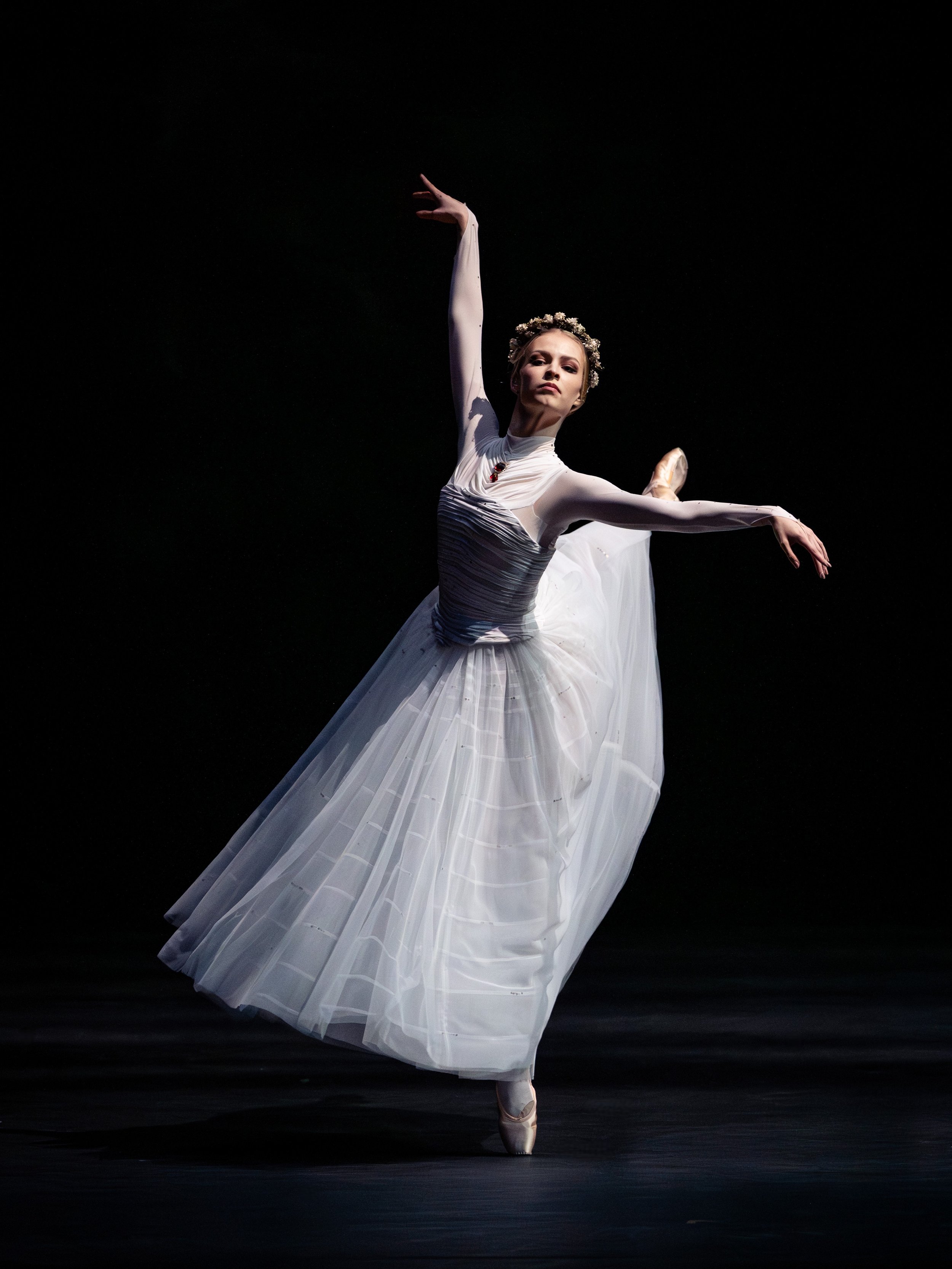
Copyright: Ashley Taylor / Vienna State Ballet
Milda Luckuté made her entrance in the second act with beautiful, precise, fascinating bourreés. She played Myrtha not only beautifully but very intelligently. Not only for one second has she „left“ the role, not even during curtain calls! And, surely, being a reflective person who thinks and analyses her roles (Her wide versatility and stage presence prove that), she must have thought of the reasons why Myrtha is this way: An „elderly maiden“ who turned out to be bitter and hates men because she was left alone in front of an altar? Because she was unloved?
Peu importe… The thing is, she played her role in a manner that just proved once more, one of her most valuable gifts. Presentness. Yes. She was right there, all the time inside her character. Not only giving a technically pinpointed performance, controlled in the tiniest details, but also displaying an ability to project the character.
She did not play Myrtha either as a bad girl, nor as an angry one. She was none of this. There were palpable aspects, like every human being, of everything (One cannot forget that even if she is now a “spirit”, she was once a human being): Goodness, Doubts, Badness, Understanding, Envy (Giselle is still being loved after she is dead. Was Myrtha ever loved?), Misunderstanding and the list goes on. Résumé: a full character.
She, Miss Luckuté, is all this. It had been a while since I saw this “spirit” represented by a character of “flesh and blood”!
P.S. Even giving her Début, which is always connected with expectations and, of course, nerves, especially because of the difficult part of Myrtha, Miss Luckuté „found some extra time“ to play one of the winemakers in the first act. In fact, exactly 7 months ago to this day, Sep. 23rd, 2025, was the first time I saw Miss Luckuté on stage and started, keenly, to follow her career. Her „steps“ turned out to be huge grand-jetés and she has been performing quite a lot of leading roles during the past months. I feel somehow “proud” to have noticed her seven months ago. Alessandra Ferri’s casting of her in so many (important) roles makes me sure that I was “right”.
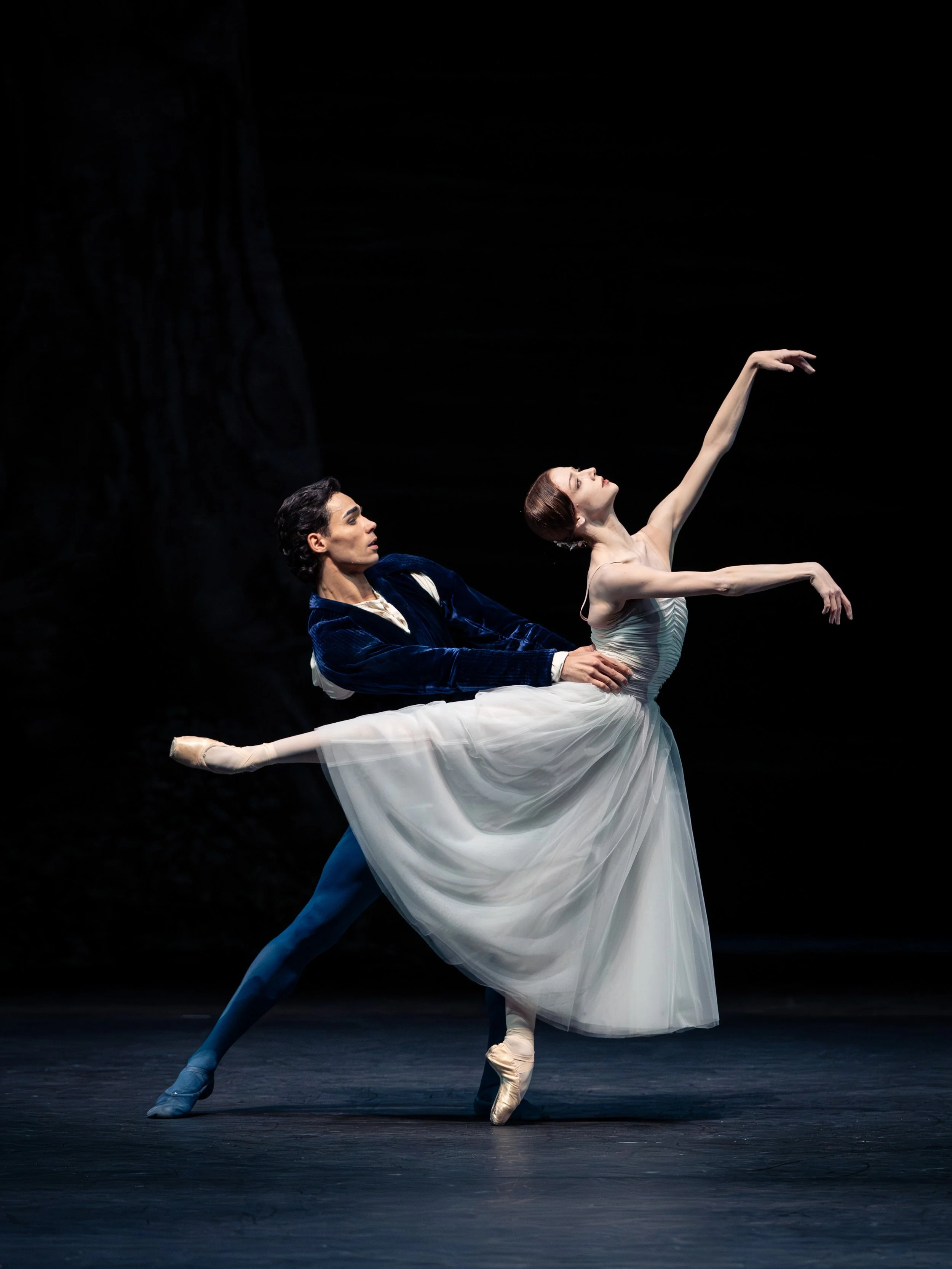
Copyright: Ashley Taylor / Vienna State Ballet
For me, one thing is very important to set straight while writing this review: Some time ago, I „criticised “ a bit of the lack of chemistry between Victor Caixeta and Madison Young in „Callirhoe“, even though I underlined that they are wonderful dancers. Apart. I had meant just the „chemistry“.
This time, I can only mention the contrary and must contradict my former opinion.
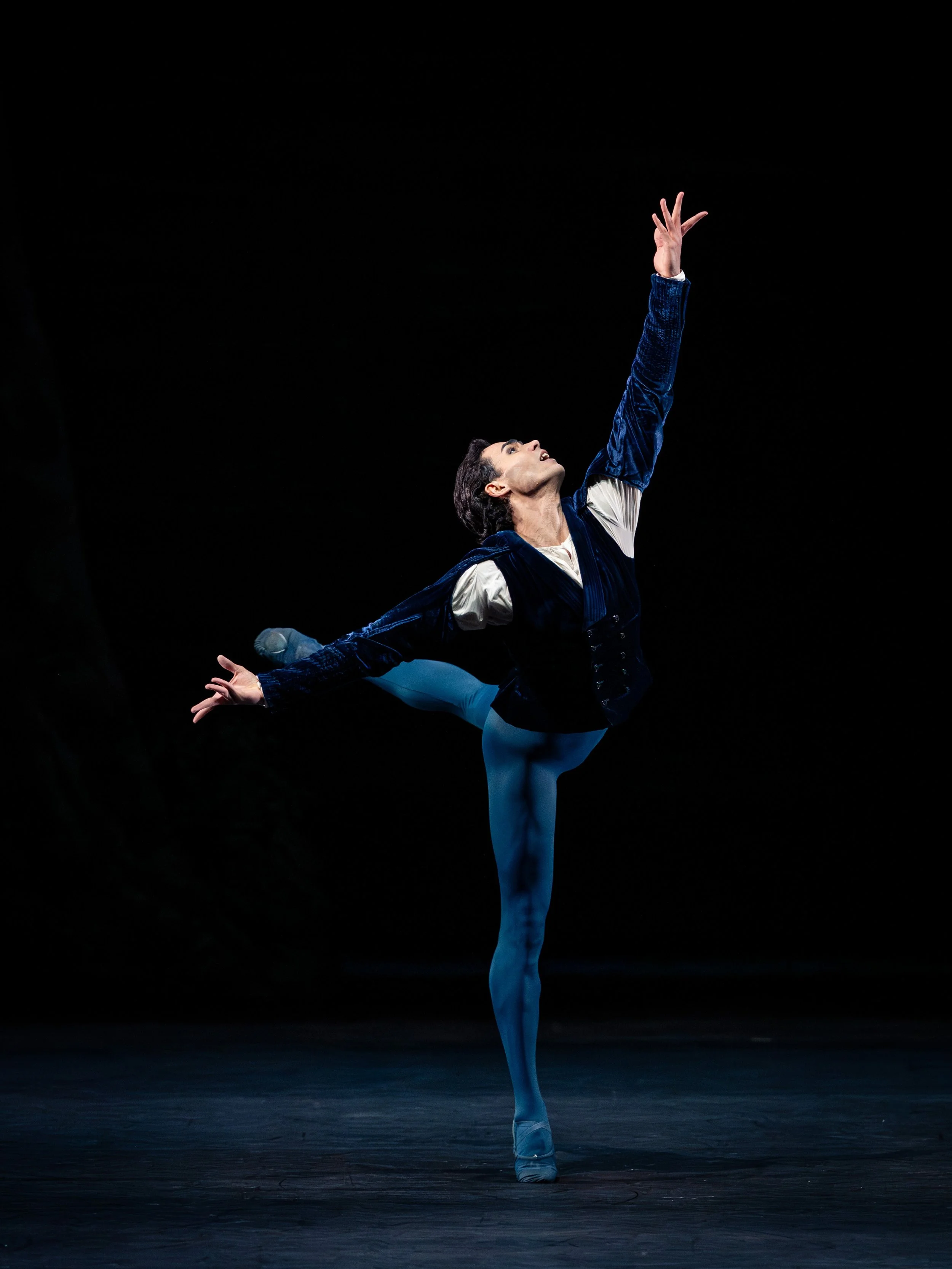
Copyright: Ashley Taylor / Vienna State Ballet
Victor Caixeta gave a very heartfelt display of „his“ Albrecht. We do not need to go into details about Mr Caixeta’s beautiful technique. Just his „Curriculum“ can make us blindly be aware of that. A long-legged Dancer who surely had a very precise formation, that, in relation to a very suited physique to classical ballet, enables him to perform technical wonders.: The height of his jumps was prodigious, his pirouettes, his musicality, his reliability as a partner and… I told you I was not going to write about technique, but it seems that, obviously, I could not resist that.
There is another aspect, the one that impressed me the most in the whole evening. His capacity to communicate and project these feelings to the audience. A talent which I have not seen in many, many years on stage, “inside” a dancer playing Albrecht.
Just an example: In the second act, when he is mourning at Giselle’s grave, she „appears“ for him. As we all know, he cannot see her, but he „feels“ that she is there.
His gift, which I have not seen in many, many years on stage, “inside” Albrecht of those emotions (the inability to see her and his ability to feel her) was made clear to the audience. Not to be misunderstood by it. It was something, a short sparkle he did with his eyes (and this is also “technique”). With many other dancers, you neither feel nor “see” that he can’t see her. And I am not only talking about the Viennese casts but thinking about “big names” of the dance world, which shall remain nameless.
I was in awe because, as I always say, I love nothing more than having a good story well told.
And he told us stories.
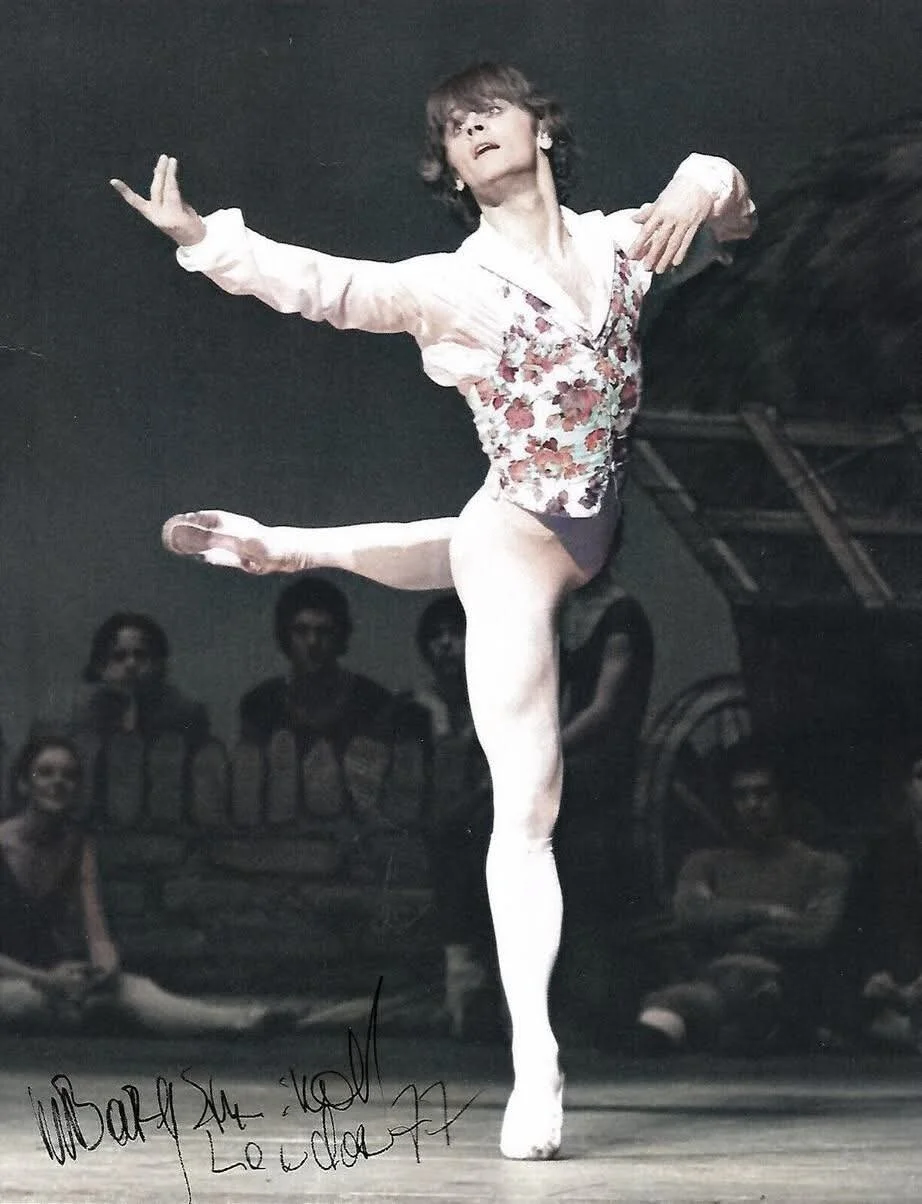
A deep insight into a role which he still plays as an innocent lover, who made the mistake of lying and being untruthful to Giselle. But the question is: How will he develop it further? Will he perhaps develop his Albrecht into the „Playboy “ Baryshnikov played him in later years? The playboy who is not mourning Giselle but is just filled with remorse? Or will he find another way to surprise us?
I am looking forward to what the future will bring.
Copyright: Ashley Taylor / Vienna State Ballet
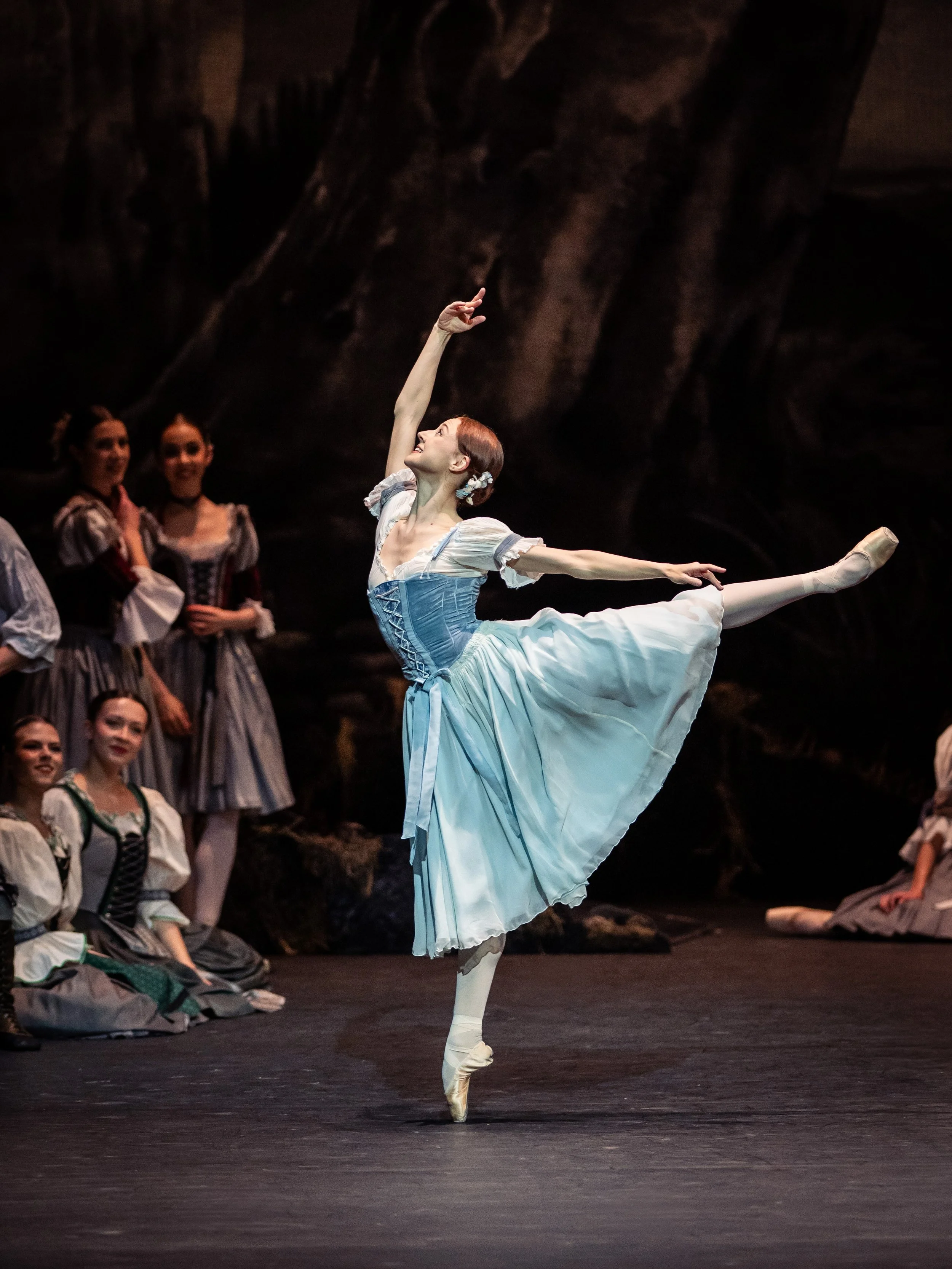
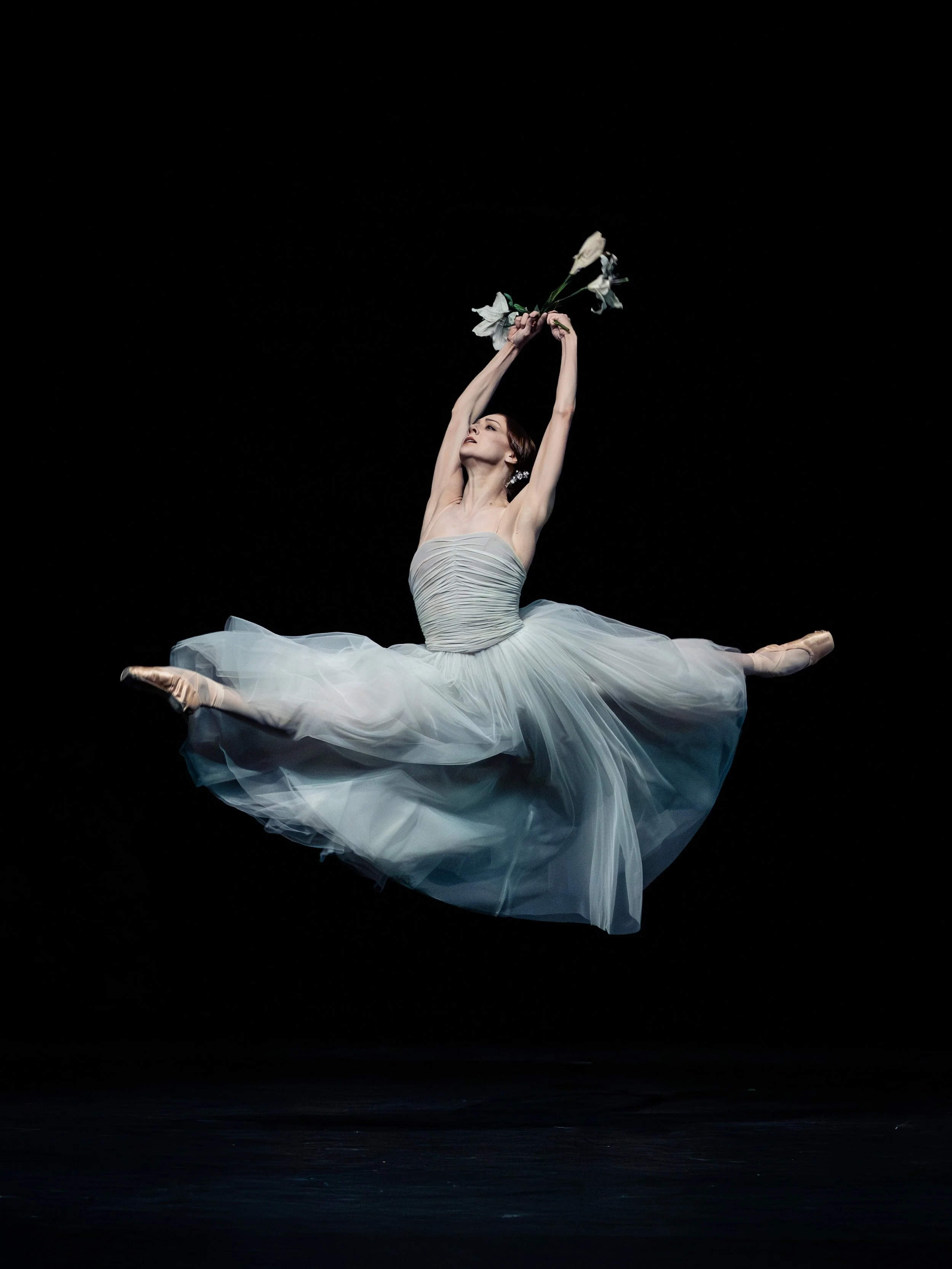
We are very happy to have Madison Young again in Vienna. I think that when she left Vienna for the State Ballet in Munich, she was a Demi-Soloist here. In these few years, she has advanced to an extremely sensitive, fine dancer who is blessed with a lightness that is incomparable.
Apart from her technical gifts, she also possesses something that has turned out to be quite rare these days: Upper-body quality. Few dancers had (have) that. Fonteyn had it. Even though she had no extension and (to today’s standards) many technical difficulties, she had this quality, and all her dance and magic came from that.
In Miss Young’s case, we are dealing with a Ballerina who not only has this rare gift but adds to it a beautiful physique, the most beautiful bourreés I have seen in years, very controlled extensions, never using the vulgarity of over stretching (Although the développés à la seconde in the Adagio in the second act are, for me, personally, a bit too high. But this is only my personal opinion - not part of my critique - and the fact is that nowadays this is the usual „norm“), musicality, quickness (which has nearly disappeared in every company) and acting skills. She gave „her“ Giselle a certain vulnerability and a definite fragility (on a body of steel) that were much more than just „enchanting“: They make us feel as if they were essential. This fact also makes us ask, „Why haven’t we seen this for such a long time? (If at all).
Copyright: Ashley Taylor / Vienna State Ballet
As I wrote at the beginning of this review, the importance of this moment in the company and for all involved is not to be ignored.
Additionally, and being very honest, Madison Young, Victor Caixeta, Milda Luckuté, Timoor Afschar, and many others in the cast set quite an example in their performances and art, and quite a large scale with their work, seriousness and commitment, which makes it very difficult for others to follow.
The audience responded excitedly with a very strong, heartfelt applause, like I haven’t heard in years. An applause that was combined with understanding and thankfulness. Yes, Happy days are here again.
Definitely a night to remember!
Highly enjoyable and very recommendable.
The next performance with this cast is on April 30th.
Ricardo Leitner
a t t i t u d e
April 24th, 2026
P.S. The only disturbing factor in the whole evening is the fact that people (especially tourists) insist on continuing the use of their mobile phones throughout the performance, even if they are told (acoustically) not to do so and switch them off. During the intermission, I had to gently ask two ladies who spoke very little English not to use their phones during the “dark” second act, because this would be even more disturbing for all sitting behind them than during the first act. I know that this is very difficult, but how I wish that something could be done about that.