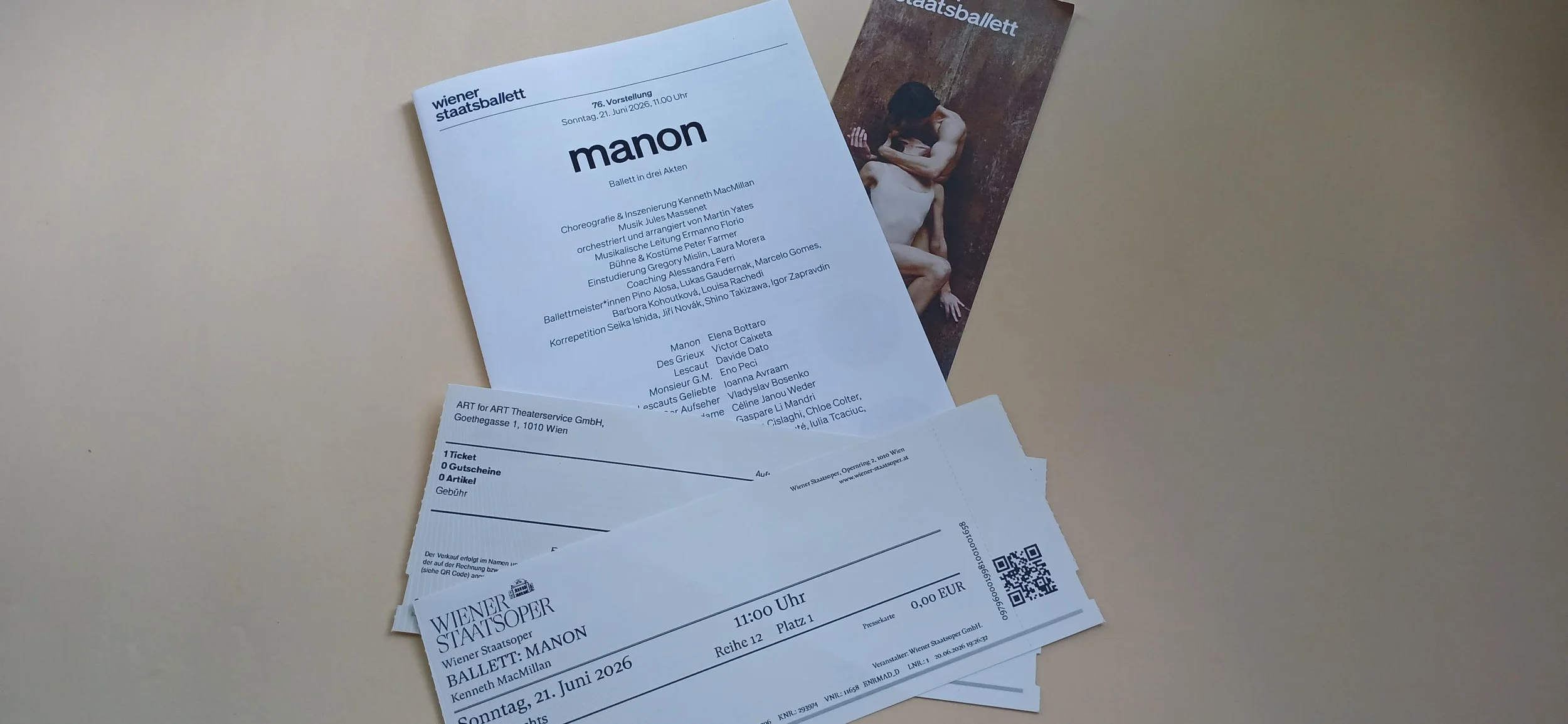
„Manon“, revisited, Vienna State Ballet (Wiener Staatsballett): June 21st, 2026
„Manon“, revisited, Vienna State Ballet (Wiener Staatsballett): June 21st, 2026
As a great believer and admirer of Sir Kenneth MacMillan’s work (perhaps with the only exception, „Mayerling“, a ballet that does not contain, for me, the necessary, required „ballet language“), I had to „take some time“ between performances, as this ballet and the characters’ complexity are what one could call „a notch above“. You must have time enough to, pardon me the expression, „digest“ what you have just experienced. And “Manon”, on top of it all, adds a bit of melancholy to my well-being.
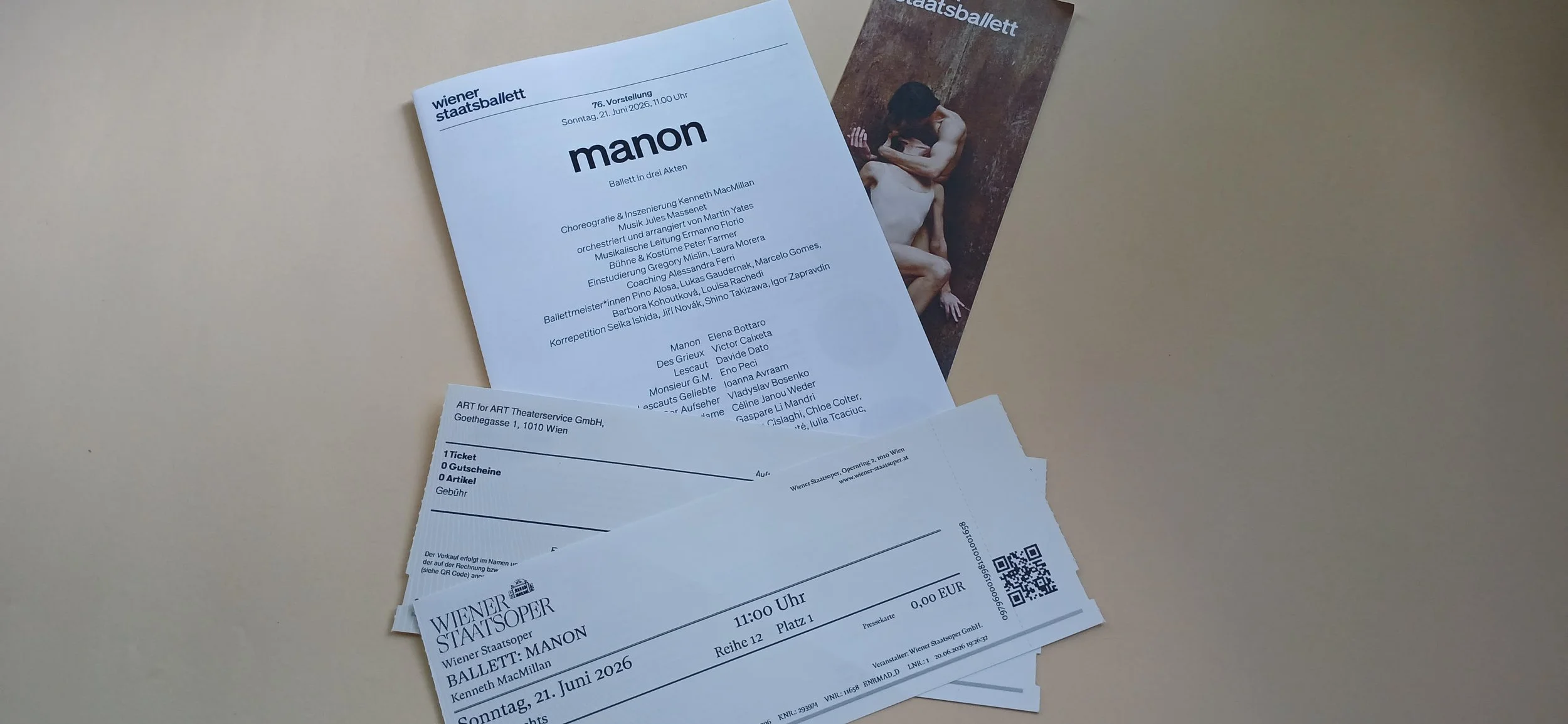
Copyright: Ricardo Leitner / a t t i t u d e
I would have loved to watch Cassandra Trenary’s performance with Victor Caixeta, but it was just four days apart from the first performance of this most welcome revival. As a „sensitive“ follower, not only of Sir MacMillan’s work but also of all „revolutions“ that Miss Ferri has managed to achieve in such a short time during her first Season at the Vienna State Opera, I had to „pass“. I would not have reacted fairly – neither to the dancers nor to the work itself. And my relationship with „the ball“ is one of great respect.
„Manon“ in the purest sense touches my heart. Perhaps even too much. This is why I would like to dedicate today’s critique to another narrative form. Not one that will mention „here and there“ Bourrés, Temp levés, Glissades, Échappés etc. et al but one that would like to concentrate much more on the necessary consistency to create, compose a role, a character on stage. One that is more concentrated on the Artistry and not only on the tools (the „so-called“ technique) that help one to achieve it!
This, nowadays, quite rare quality of Miss Ferri’s direction period should at last be highly mentioned – and even though I have done this many times before, I do not feel that I have given it the real, the indispensable spotlight it deserves. I will try it once more.
In times when „everyday ballet-goers“ (Sorry, I am being cynical!) are more preoccupied with technical achievements – or better said, to what people believe to be technique (or should we call it „Bravura“?), we are experiencing in Vienna a very instrospectice moment, a beautifully delicate moment, filled with much care (love) in which the focus in not only concerned on the „physical side“ of „the ball“ but with its subtilities. A unique moment. And, giving you just a hint of what I mean, I will only mention „en passant“ that Miss Ferri worked with Sir MacMillan, among many other geniuses of the XXth Century Ballet personally. And that she not only got to know them but also had the opportunity to understand and analyse their feelings, motives and delicacies towards Dance. She could also feel their brains, and pick them up! What a chance, as a dancer, to be working for a person of such vast experience. Coaching like this is priceless! I don’t think that another mention of this very unique moment for the Vienna State Ballet would be necessary, am I not right?
Copyright: Ashley Taylor / Vienna State Ballet
As you may have guessed, I just need to mention a few names, and the „connection“ to this very special state of mind is immediately easy to understand and feel. The completeness and comprehensiveness of ballet are given by just a few definitions: teamwork, togetherness, wholeness. Think of that.
Let us now talk about consistency, performing consistency and not about grand jetés!
Copyright: Ashley Taylor / Vienna State Ballet
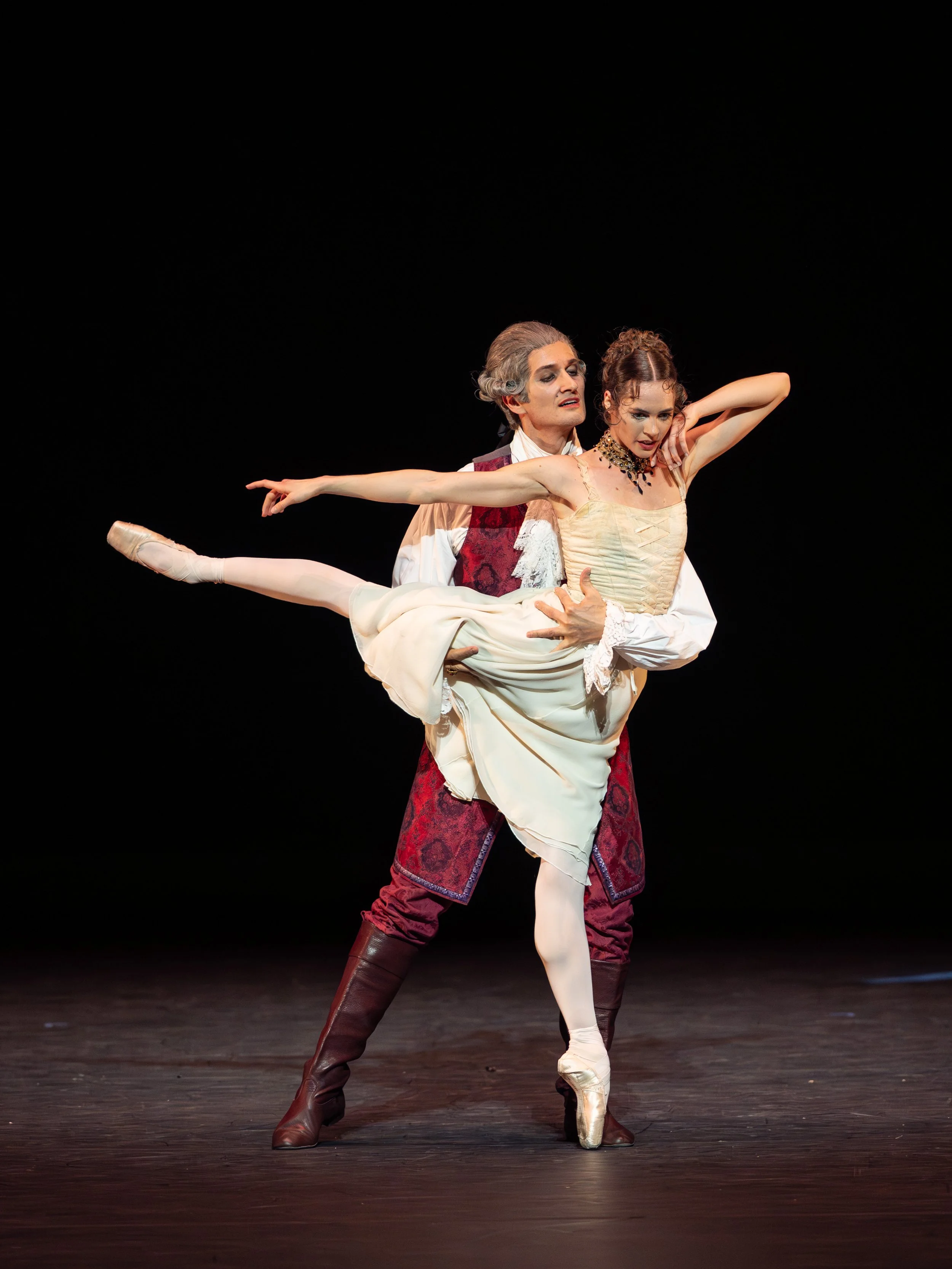
Eno Peci, an experienced „actor“ as Monsieur G.M. and Céline Janou Weder, another experienced „actress“as „Madame“, gave life – yes, and I mean this very precisely: To give life, personify a character and give it all nuances that belong to a personality. Miss Weder and Mr Peci, to my way of thinking, belong to that seldom-found category in a theatre nowadays: The versatile one. Artists who do it all. Point work, abstract, modern, contemporary, narrative, elegant, bizarre. Artists who build, compose a character. Artists who are at ease in telling a story to the audience!
Copyright: Ashley Taylor / Vienna State Ballet
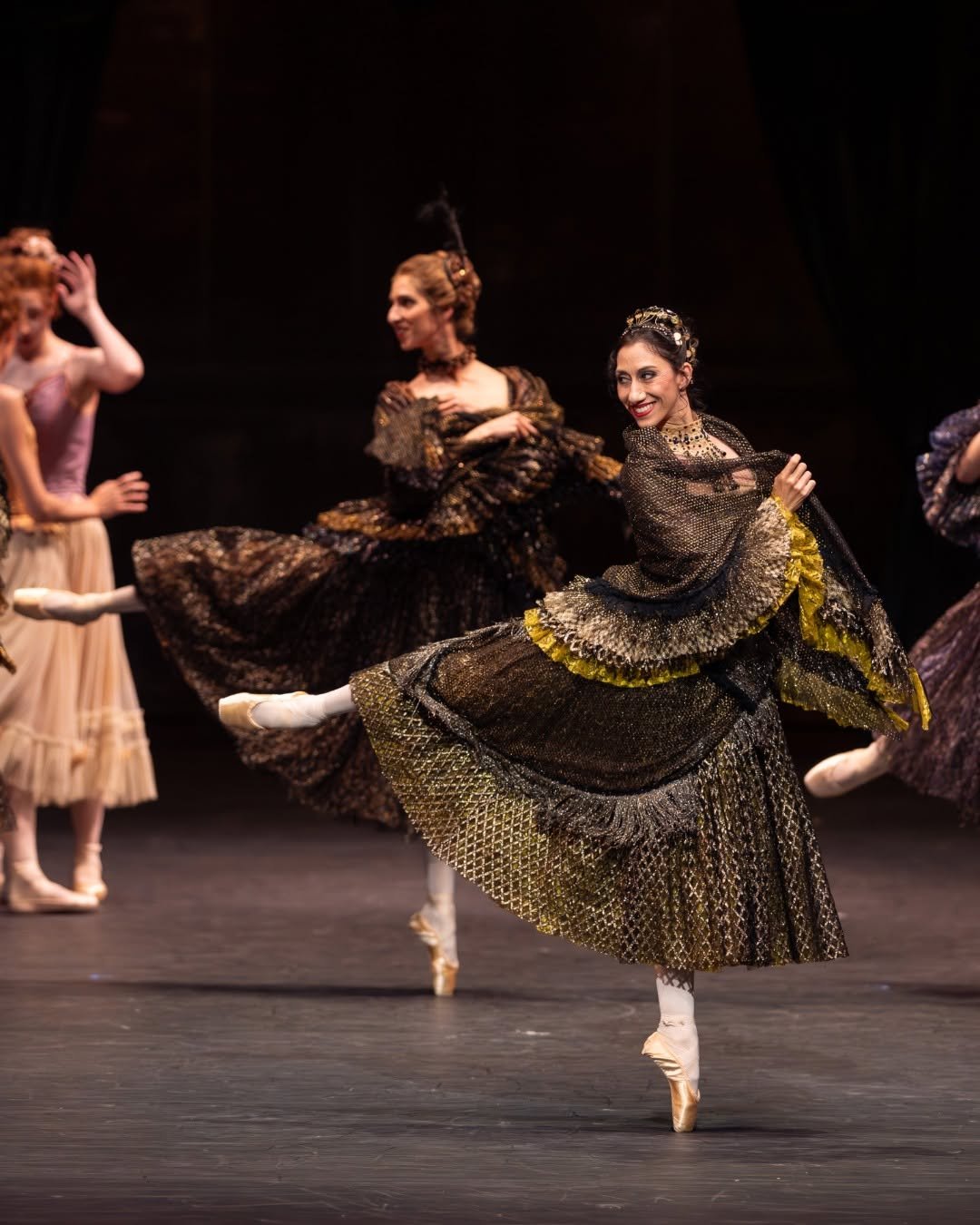
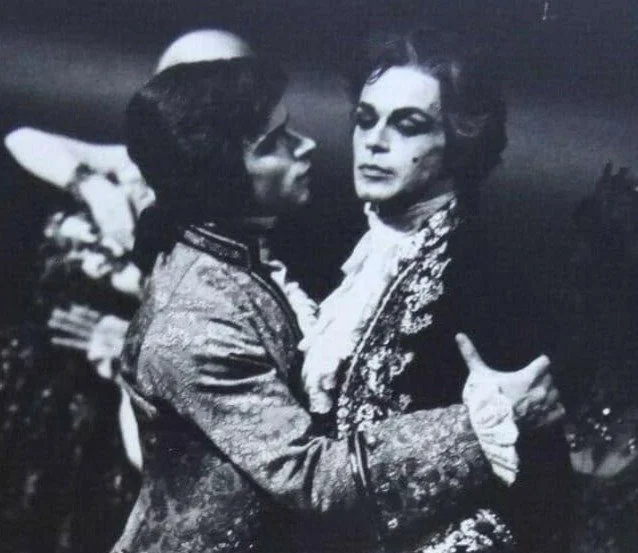
Another couple of consistencies: delightful – and always surprisingly creative, always giving her personal and very sensitive „signature“ to each role - Ioanna Avraam as Lescaut’s Mistress and Davide Dato as Lescaut – who made me think of Dowell. Yes, I was among the few who were lucky enough to witness Anthony Dowell as Lescaut (Although „Des Grieux“ was created for and on him), as he used to switch roles with David Wall, from whom I was lucky enough to get some advice as a young dance student in London. Mr Dato displayed on stage exactly that certain „thing“ that made me understand Dowell so well as Lescaut. Especially in the (incestuously underlined) „pas de trois“ with Manon and Monsieur G.M.
Elena Bottaro, unfortunately not perfectly cast as “Manon”, has „homework“ to do. I said that we were not going to write about technique today, but I also mean the way the character is built and composed. Manon, the character, is not an easy subject, I must admit, and there is no question that much experience is needed to give her life. She has various sides inside her at the same time: The young country girl, the ambitious (beautiful) girl, the bitch, the honest, the amoral, the loving, the whore, the ignoring, the helpless and the one that caused her self-helplessness. It takes a long time and much analysis to understand this complex woman. They are all, at the same time, beating inside her breast. And not separately, the way in which an actual South American Royal Ballet Star tries to portray her. Manon is not only difficult but also, dramatically, a very „emotionally rich character“ and she should be handled as such. Not to do so and using her just superficially, imitating feelings, is, I must say, a waste of time. It takes a long one and lots of (also emotional) experience to “discover” a character like that. That is a fact.
Copyright: Ashley Taylor / Vienna State Ballet
„Manon Lescaut“ is the translated (and mostly used) title of Prévost’s novel (Which was first published in Amsterdam in 1831, because of „censorship“ problems in France).
Originally it was called „Histoire du Chevalier Des Grieux et de Manon Lescaut“.
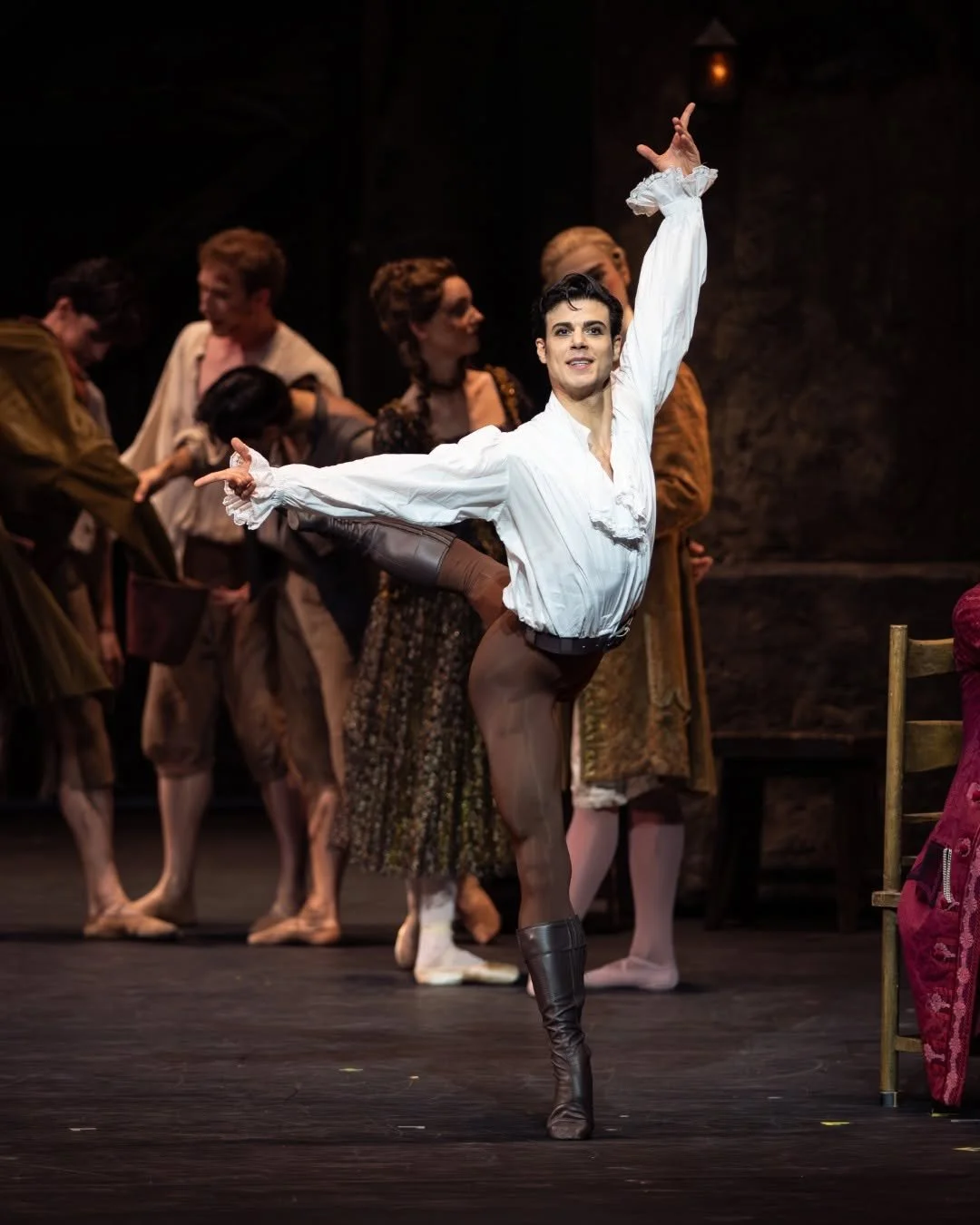
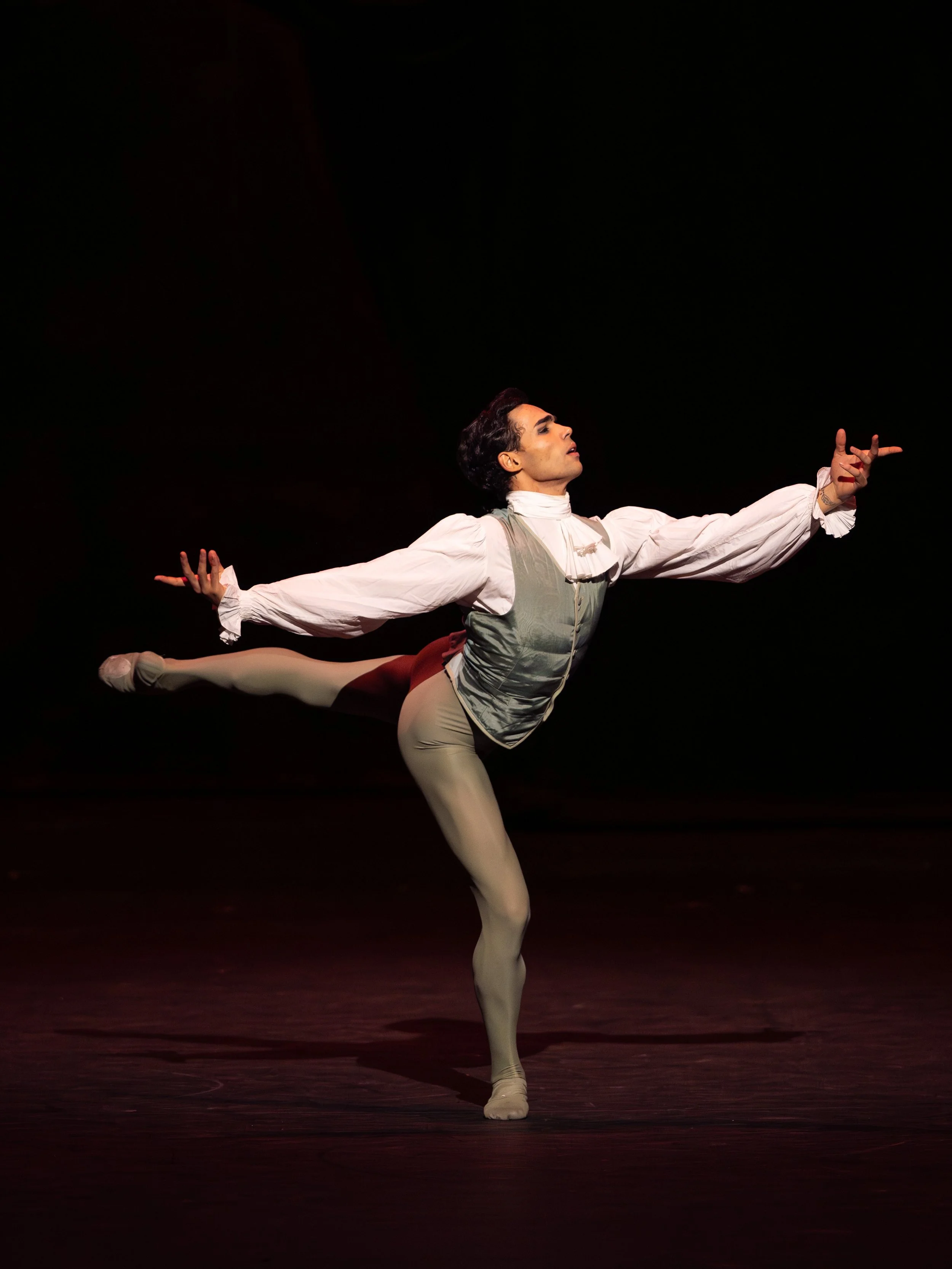
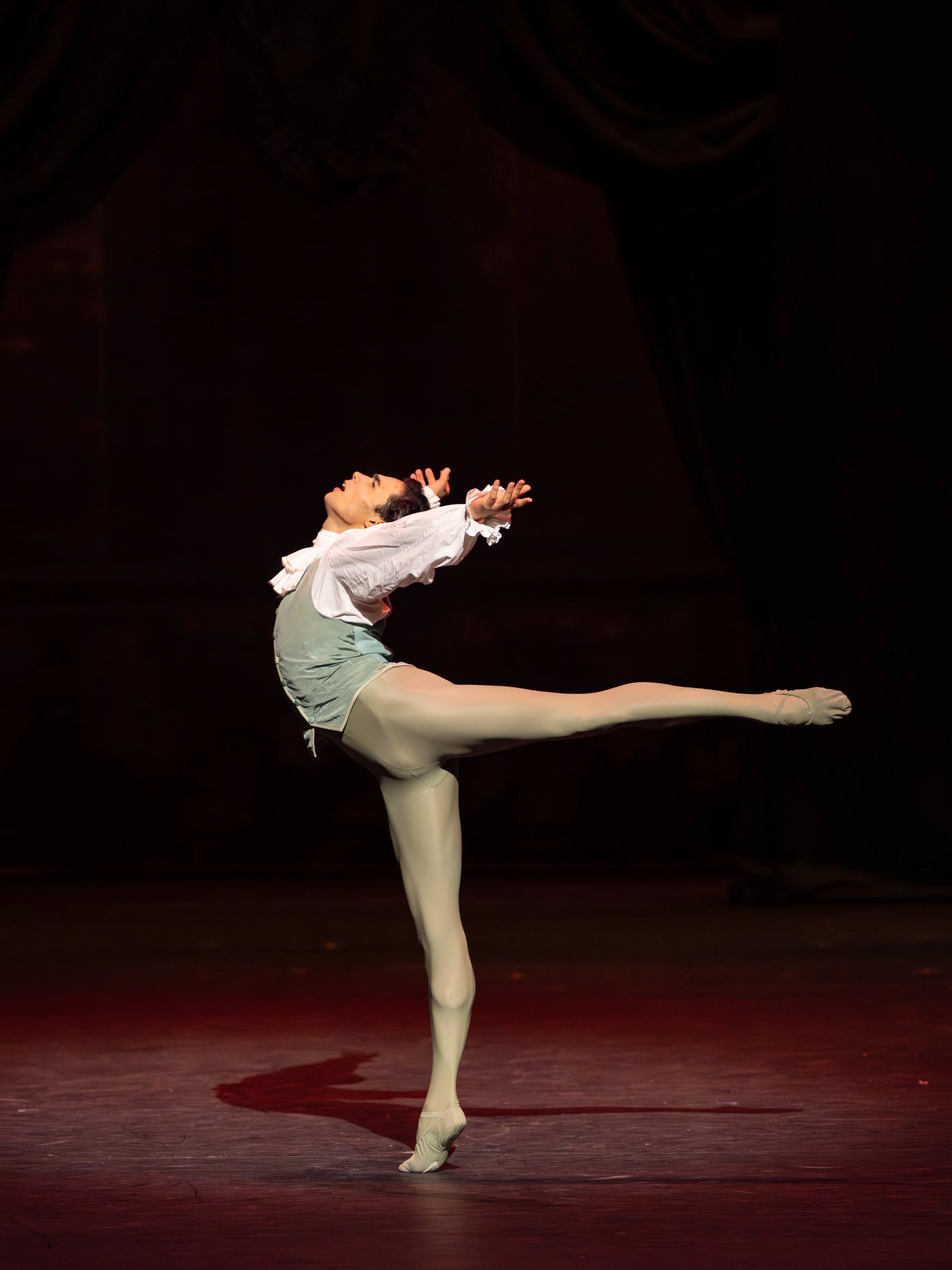
Thinking of yesterday’s performance, I must admit that, according to the original story in which Des Grieux is mentioned in front of/ before Manon, Prévost would have been very happy with the character’s display, strength, depth and (to use that word again) consistency that Victor Caixeta gave to the character, the way he created and displayed and presented him. I see lots of work, research, interpretation, questioning and insight connected with it.
Copyright: Ashley Taylor / Vienna State Ballet
I usually say that „Rules are made to be broken. Especially mine, by me“. And I am going to do it again.
I wrote a few times that I was not going to write about technique. I cannot resist mentioning all the arabesques created on Anthony Dowell, which were more than beautifully executed and so adequate to Mr Caixeta’s long-limbed physique, added to the fact that Mr Dowell was also a „lefty“ (I am not talking about politics, please!). Well, there are no coincidences.
He “stole the show”.
Predicate: A new Des Grieux was born.
Ricardo Leitner
Vienna, June 22nd, 2026
a t t i t u d e