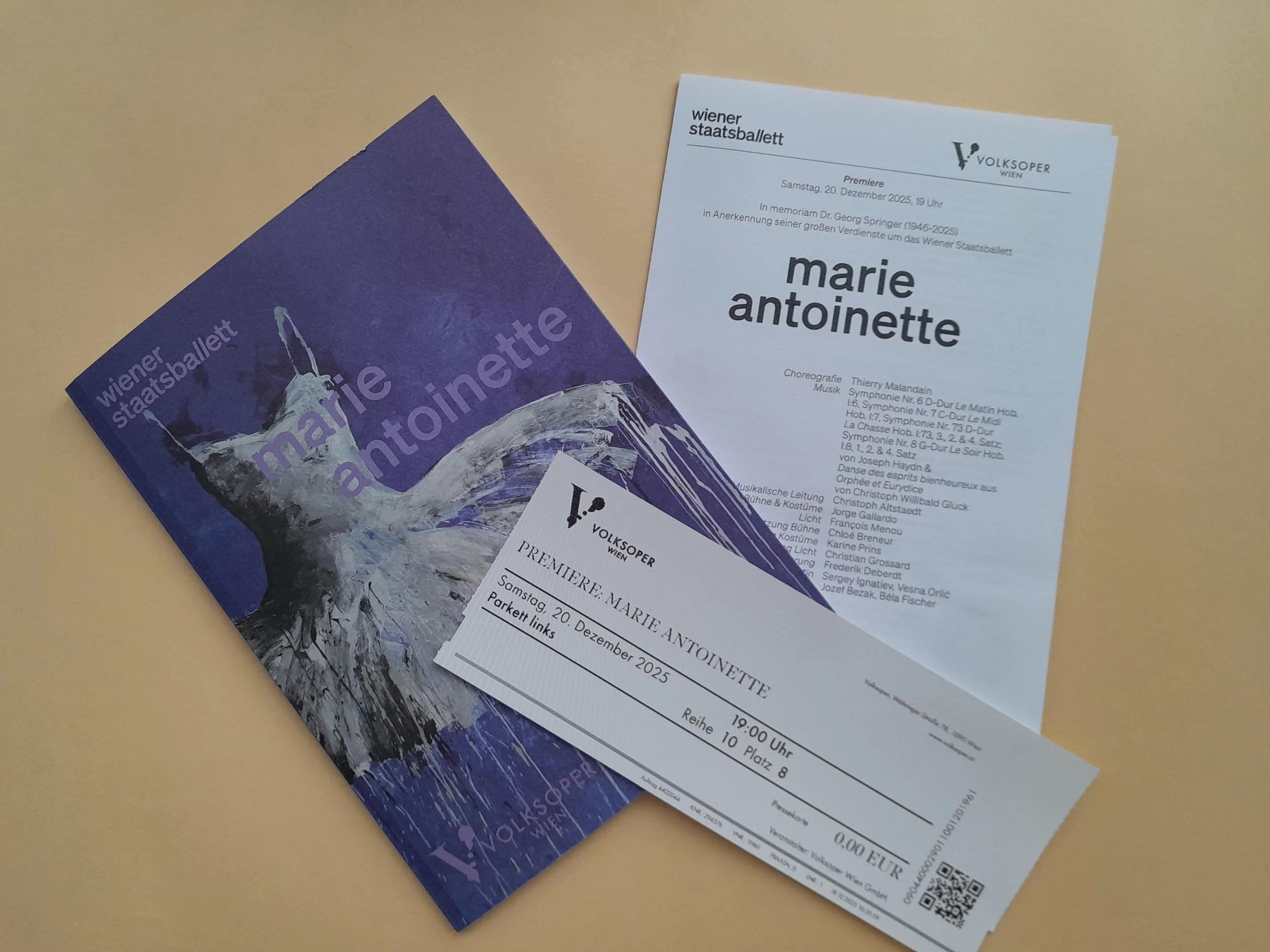
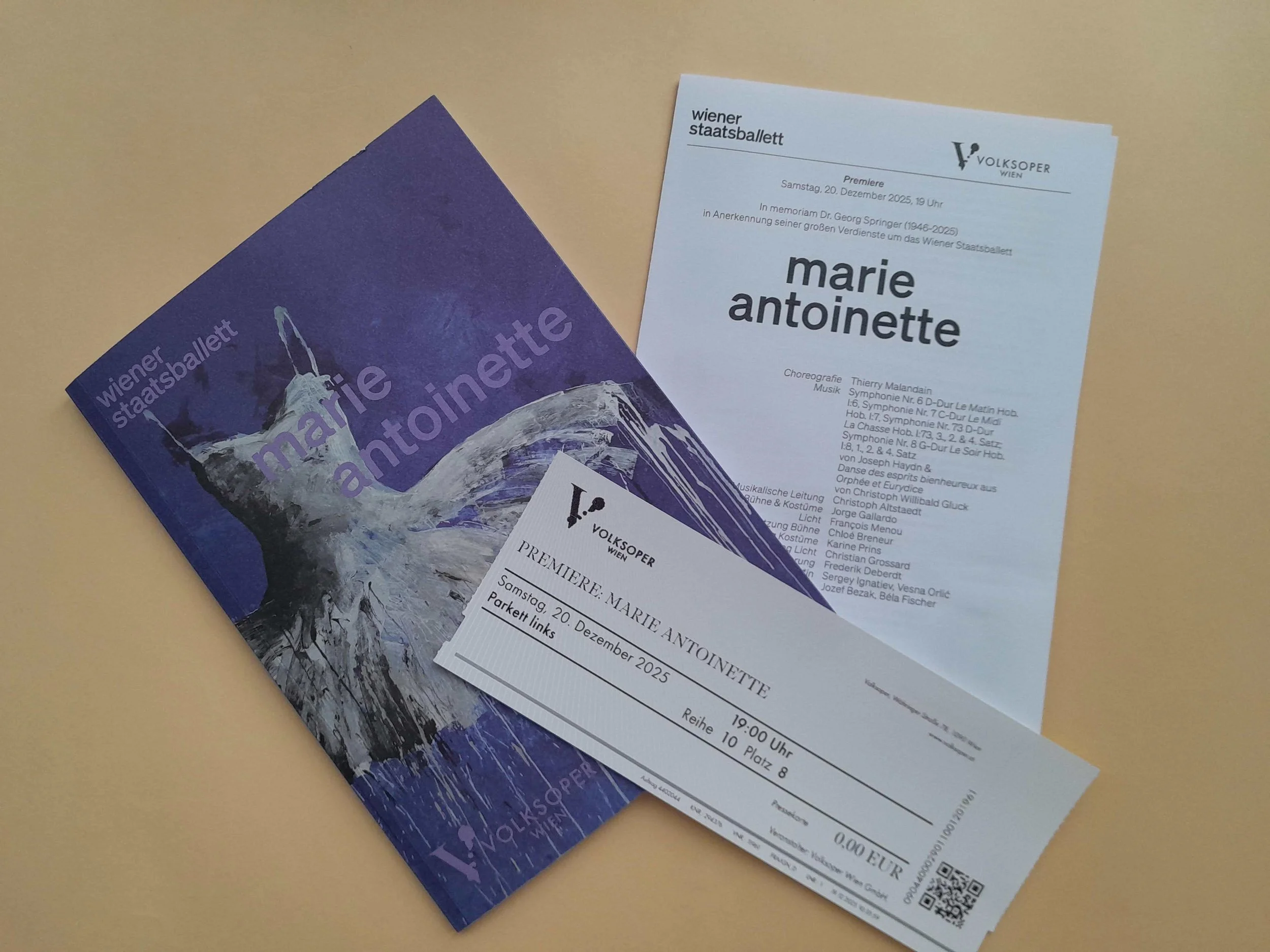
Marie Antoinette, Première, December 20th, 2025: Vienna State Ballet (Wiener Staatsballett), Volksoper.
Marie Antoinette, Première, December 20th, 2025: Vienna State Ballet (Wiener Staatsballett), Volksoper.
Quite a charming, but somewhat shallow evening.
Copyright: Ricardo Leitner / a t t i t u d e
It is not an easy task to find the „right“ ballet to present at the „Volksoper“ (The people’s Opera, by the way). This applies in no way to the company but to the „intimacy“ of the surroundings, but plainly said and to put it without any „rethorical“ embellishment, to the size of the „smaller“ stage in a smaller house (to which the word „intimacy“ is just a more fashionable and sophisticated „translation“), that frees the dancers from the obligation of consciously „projecting“ their dance until the last rows of the gallery.
„Marie Antoinette“, in this conjecture, would seem to be the perfect choice. But it is not.
The „demi-pointe“ presentation, which in all aspects suits the ensemble and its technical status quo, would be considered a perfect choice. I’ll explain it more closely.
Antoinette is a character who fascinates the entire world because, at least during her childhood in Austria and her youth in France, she was what one could call shallow. That is the dramaturgic treatment in which the plot of Sofia Copolla’s (terrible) film is built upon. A film that is „officially“ based on Stefan Zweig’s wonderful biography but has no resemblance to it.
She was shallow, but around her, and the particular historical situation in which she was living wasn’t.
That is a fact. One of which we had no clue about, and wasn’t referenced yesterday evening.
Before we go on, I want you to understand that I have great respect for History and the written word.
Having seen Thierry Malandain’s work in „Cendrillon“ and „Don Juan“, and being well aware of his treatment of historical matters, I tried not to „prepare“ myself for what I was going to „see“ (or not).
I did not read the programme, which one lady sitting beside me kept „studying “ during the whole evening. I tried to let the choreographer’s conception „work upon me“, expecting a good „storytelling“. It did not happen. Even if small, idealised, and with very few characters, I could not place them. One is lost without some written explanation. And I ask you: Is this what one aims for in Ballet? Is this the use of Ballet’s language that should not require any help from other art forms (as the written word) to explain itself? Think of that.
When one compromises to „write a choreography“ about a character, be it fictional as „Cendrillon“ or existent as „Antoinette“, one compromises to a certain storytelling, historically seen.
Therefore, some „liberties“, even historic distortions, taken are unnecessary and completely out of place.
Where was the animosity between Antoinette and Louis XVI during their first years together? Where was the tension between them because of seven years without an heir? Where is the antagonism of the people towards Antoinette? Where is the antagonism towards royalty? Just in the screams that are heard when the people marched into Versailles?
One has to read to find it out.
And, the real antagonists, who are also „players“ (and dramaturgically more important to the plot), are not seen.
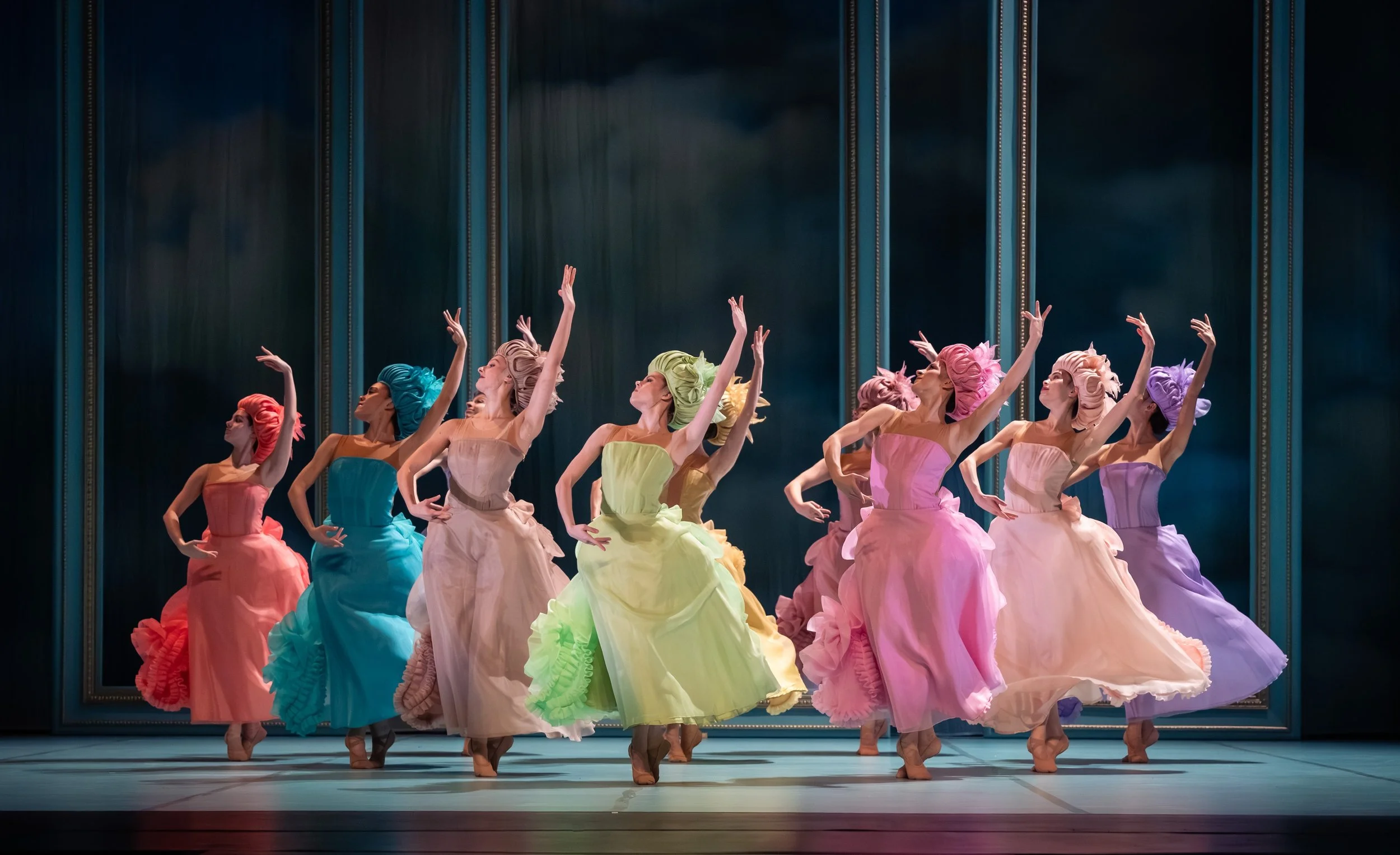
Copyright: Ashley Taylor / Vienna State Ballet
I understand that „Cendrillon“, „Don Juan“ and, in our case „Marie Antoinette“ are titles that attract the public to the house. But, if one is not willing to be accurate, wouldn’t it be more honest to create something new, instead of “retelling” a story in which all facts have been historically proved, researched and analysed? This would have been a more understandable choice.
If not, in choreographing something related to “History”, one “binds” himself to some “details” that cannot be overlooked. That is a fact that also Patrick de Bana had to respect in his “Marie Antoinette” (Which, by coincidence, was also shown at the Volksoper, years ago).
The choreography is not inventive and very repetitive. It uses the music well. At this point, I would like to praise the conductor, Christoph Altstaedt, who gave us, from the orchestra pit, a clean and clear interpretation not only of Haydn’s pieces but also of Gluck’s „Orphée et Eurydice“.
But the musical choice, as beautiful as it is, has no dynamic in it. It is flat. It has no “ups and downs”. No highlights. No Tempo changes. No dynamic. And this, of course, influences the choreography, turning it into a monotonous piece. Tame, insipid.
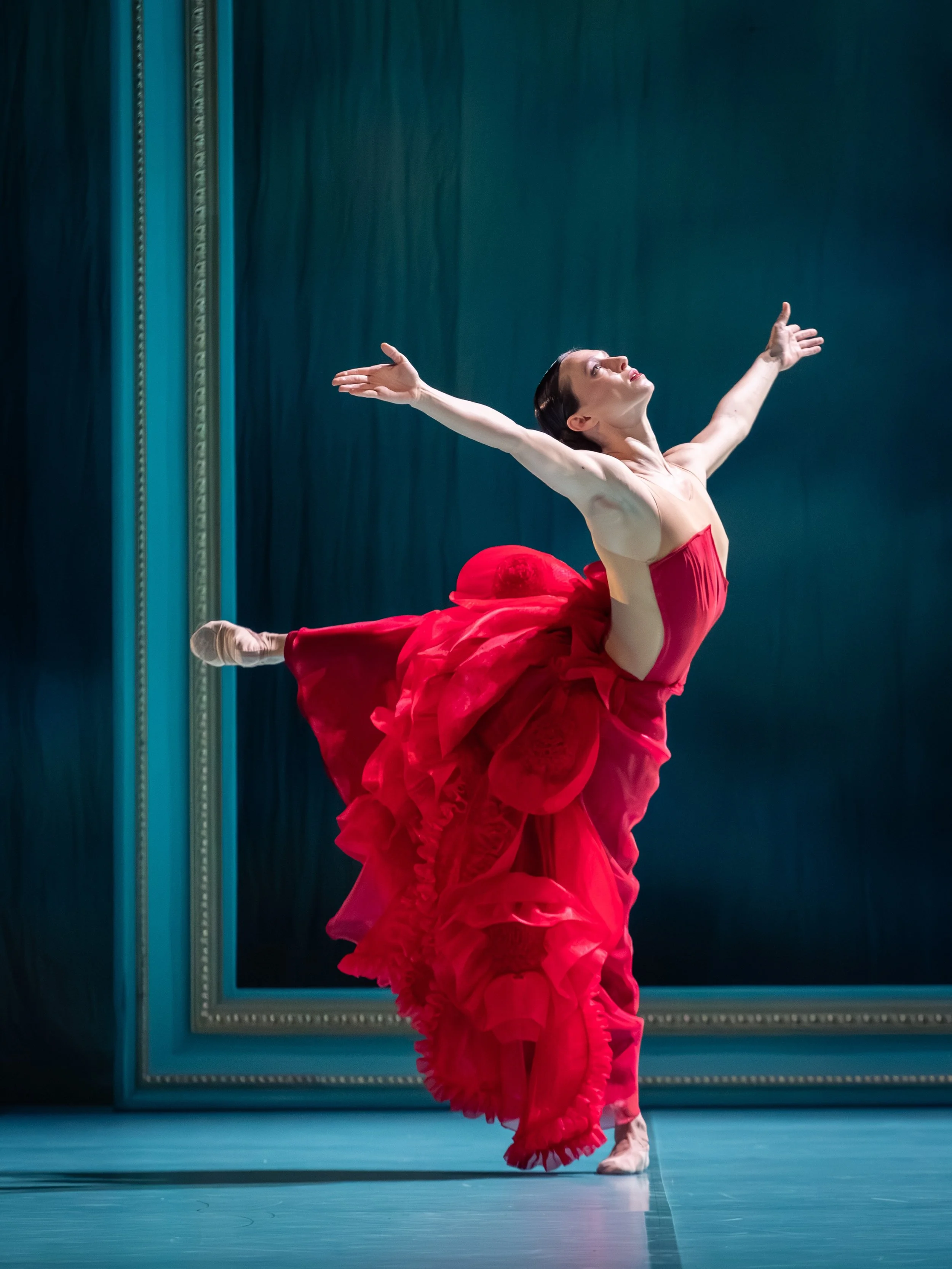
Copyright: Ashley Taylor / Vienna State Ballet
There was a sudden „change of airs“ when Lázló Benedek and Mila Schmidt (with a dashing red dress) entered the stage as Louis XV and Du Barry. They sort of „stole the show” for a while, but their presence on stage, according to their characters, was not long enough to move the concept of the evening into more brilliance. Nevertheless, we are talking here about two very professional Dancers who understand very well their strong stage presence and what they are doing.
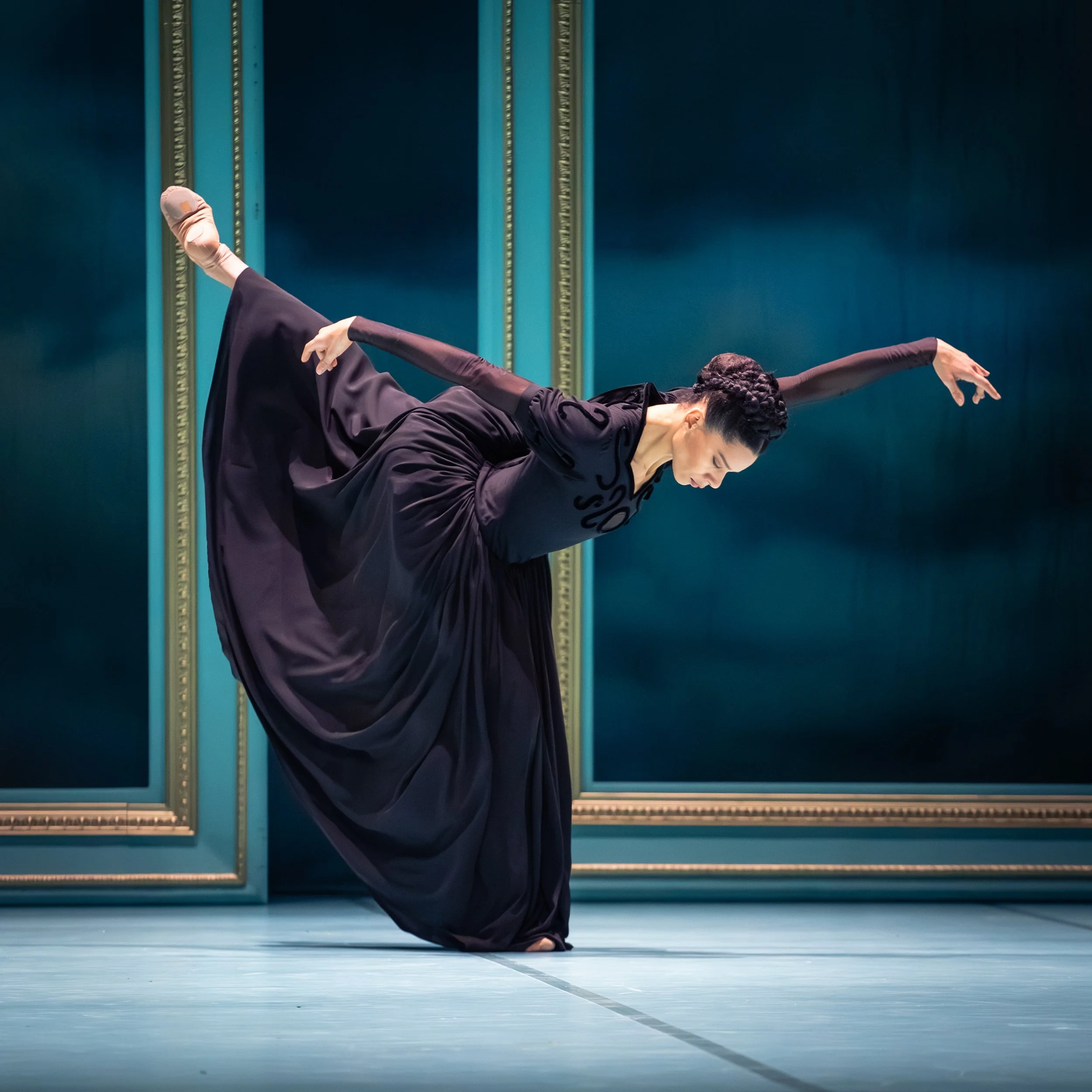
Copyright: Ashley Taylor / Vienna State Ballet
Rebecca Horner as Maria Theresia gives us a very „present“ character. Miss Horner, displaying a new stage of maturity that dramatically adds total depth, through her Persona, to the character. Purer. A very consistent performance filled with „presentness“. Yes, she was right there. Using her beautiful lines to best advantage. Totally immersed in the role. Somehow, controlling this energy while carrying it constantly. The public does not see it. It feels it. Good work.
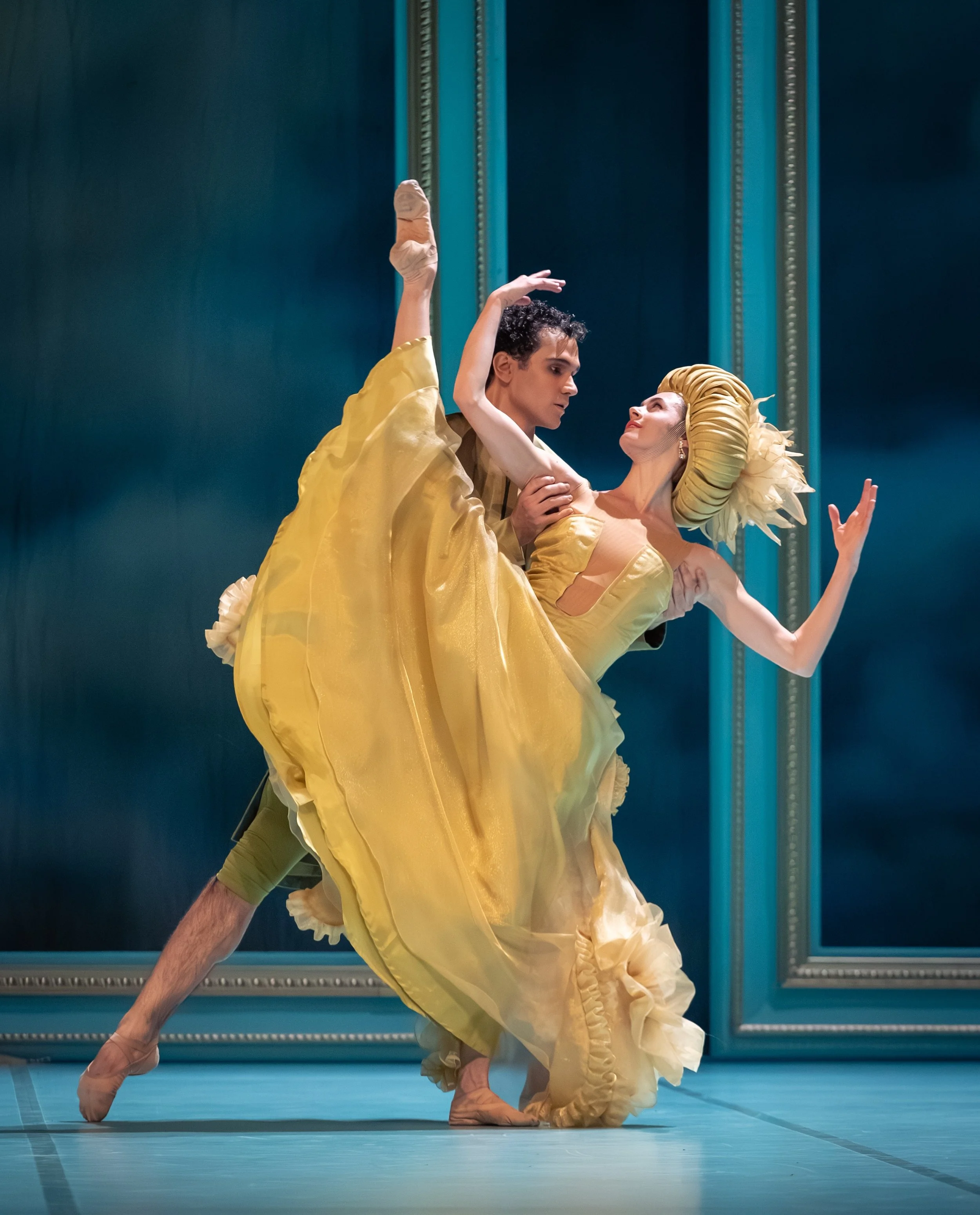
Copyright: Ashley Taylor / Vienna State Ballet
Andrés Garcia Torres (Louis XVI) and Elena Bottaro (Antoinette) did the best they could with the material given to them. No question about that. Very „clean“ technically, giving the possible depth to the characters.
Mr Torres carried the evening with strength and presence. He was in the role and never, not even for one single second, was he out of it.
Also, Miss Bottaro gives a new side of her stage Persona to the audience. A dancer, whom I always thought of in relation to more abstract roles, in which I thought she would be more effective, this time she acquired some unexpected nuances in her performance that are worth mentioning. More truthful, more truly fragile, more vulnerable, with more insights. She surprised me by giving her Antoinette such an inner life. I like that.
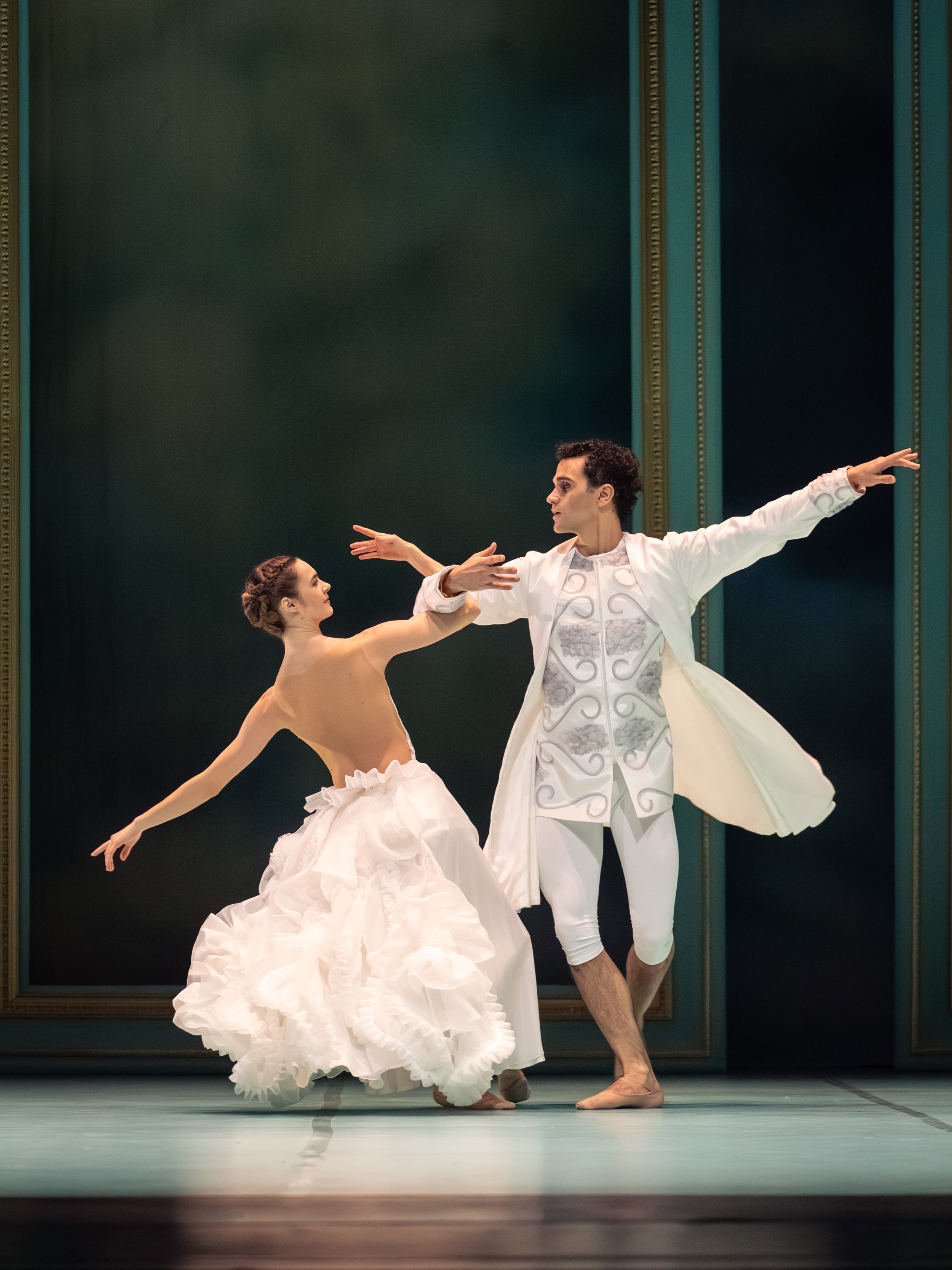
Copyright: Ashley Taylor / Vienna State Ballet
I always tend to see „Antoinette“ through Zweig’s eyes. His very well expressed „Marie Antoinette: Bildnis einen mittleren Charakters“ ( Portrait of an average woman), that carries a beautiful psychological description, Zweig’s forte, of hers. Not ugly but not very beautiful. Not stupid but also not very bright. Not bad, but definitely not too good. Average. A girl who had been extremely controlled by her mother and was somehow „blended“ by the splendour (and glamour) of the French court. It is that simple.
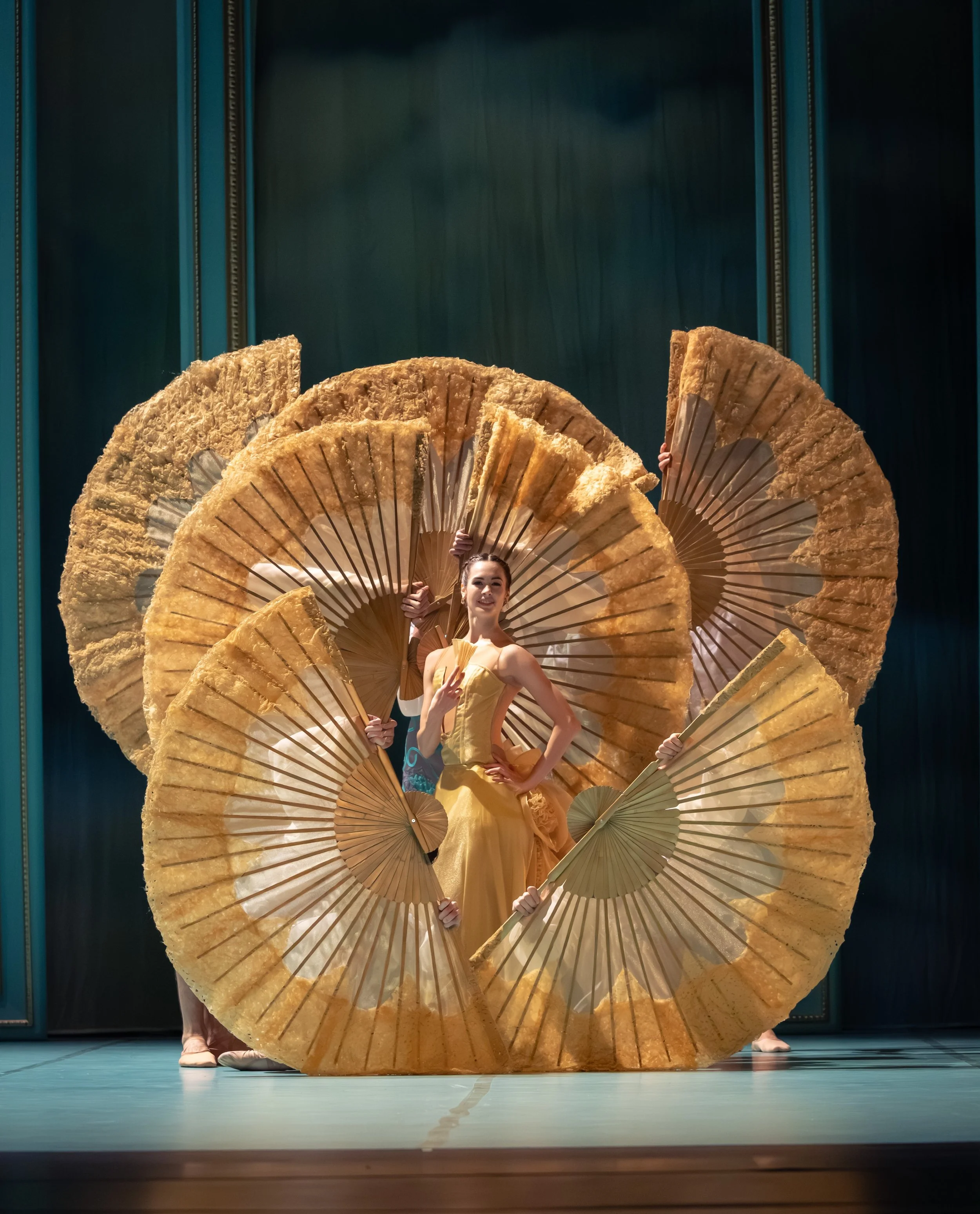
Copyright: Ashley Taylor / Vienna State Ballet
Volksoper’s „Marie Antoinette“, a beautiful production, is a piece that could not „survive“ without the beautiful costumes (Even though the scene with the fans was a bit “too much”, even for me. It made me think a bit of vedettes at the Folies Bérgères and even of Zizi Jeanmaire with her feathers), and the simple, “clean”, and very effective sets by Jorge Gallardo. Not to let unmentioned, the discreet, very „carressing“ lighting by François Menou. Good taste.
I would only have wished that more care had been given to authenticity and historical accuracy.
Ricardo Leitner
a t t i t u d e
Vienna, December 21st, 2025