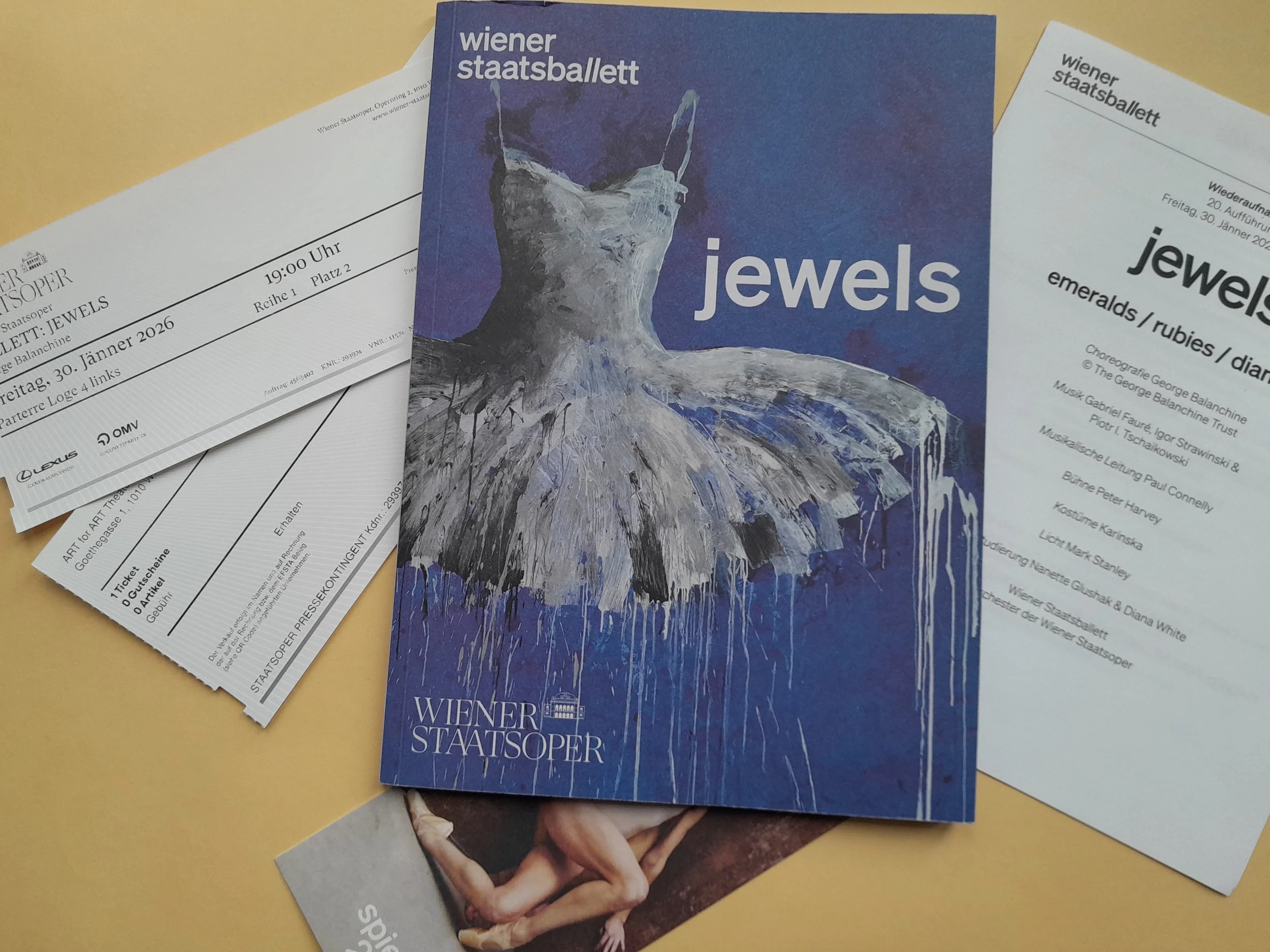
„Jewels“, revisited: Vienna State Ballet (Wiener Staasballett), January 30th, 2026.
„Jewels“, revisited: Vienna State Ballet (Wiener Staasballett), January 30th, 2026.
A short while ago, I was asked by a follower and avid reader of my reviews why I never explained „more“ to the readers about the ballet plots and/or the construction that the choreographer envisioned and/or the „history“ of the particular Ballet, even historically, that I am reviewing.
My answer was plain and simple: “It is unnecessary!” Totally".
Copyright: Ricardo Leitner / a t t i t u d e
a t t i t u d e is a platform (as my follower called it) dedicated to and read by dance lovers, „Balletomanes“, the „everyday ballet-goers“ (as I call the real fans), dance professionals, and people somehow related to it, be it professionally or as part of the audience. For those, there is no need to explain what one should know, or „carry in their personal baggage“, to read a critique.
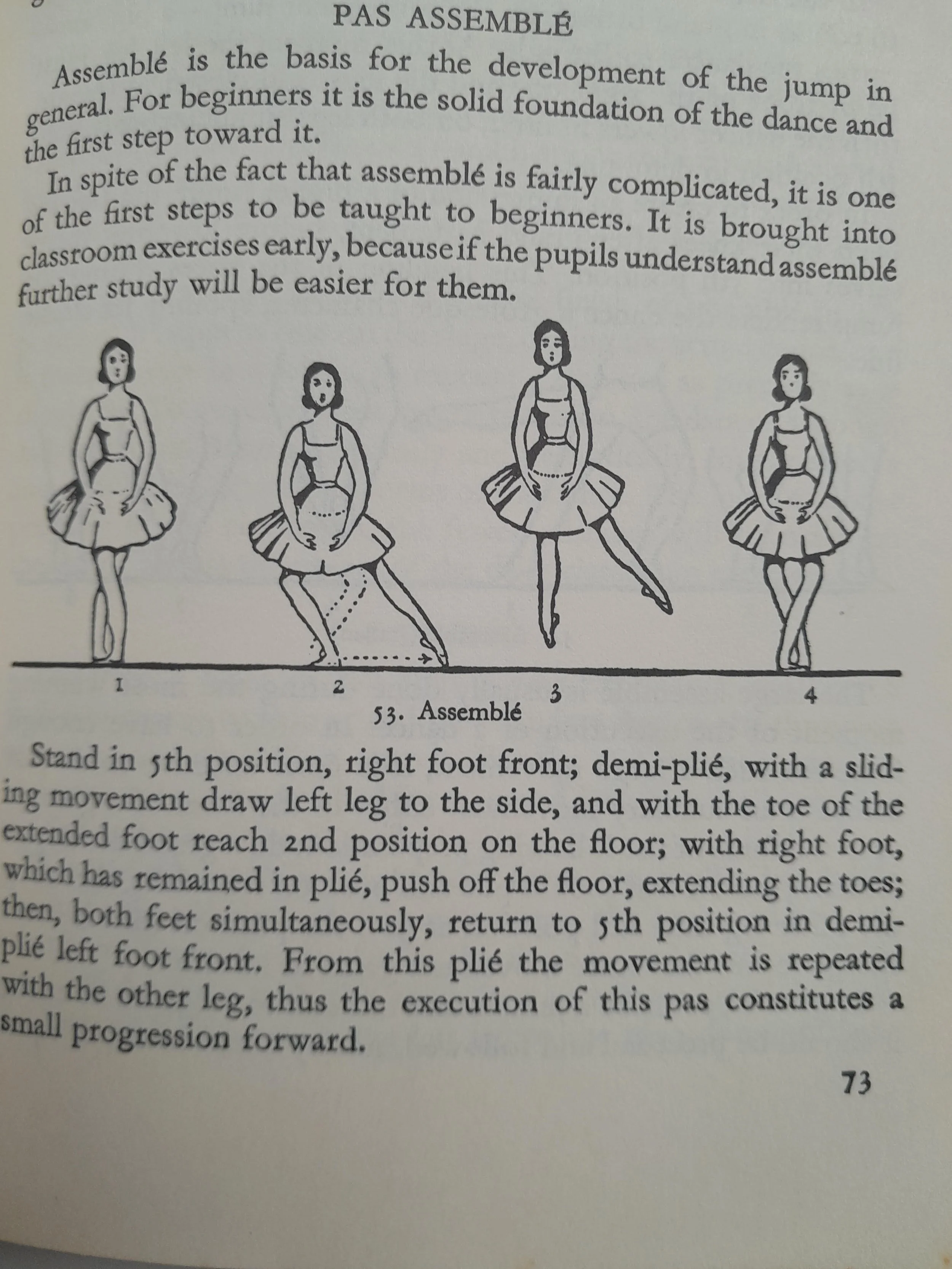
But if one is not well-acquainted with the ballet world, and there is a need for (basic) information, one can easily find it on programmes, other reviews, encyclopedias (I have to laugh: Does anyone still use an encyclopedia? I do!), books and, of course, on the internet.
There are many ways and different opportunities to research; the best way to gain an understanding of a certain subject. I recommend it far more than just „swallowing down pre-chewed“ information. It takes more time, but it is more effective. Definitely.
There is nothing that I find so unnecessary (and abhor) as copies of a programme (and sometimes even its mistakes), included in a critique.
I never considered it, and I never wanted it used as part of my work. Not remotely.
Apart from that, there is no need to try to explain Balanchine’s significance in the Art world. Not nearly.
His extensive and incomparable, in fact, unparalleled work includes many milestones, real marks in the annals of Ballet history, and I think of „Jewels“ as one of them.
But before going into a more detailed report of last Evening’s performance, I would like to make a few comments about Karinska, whom I consider a singular genius and who created the iconic costumes for „Jewels“.
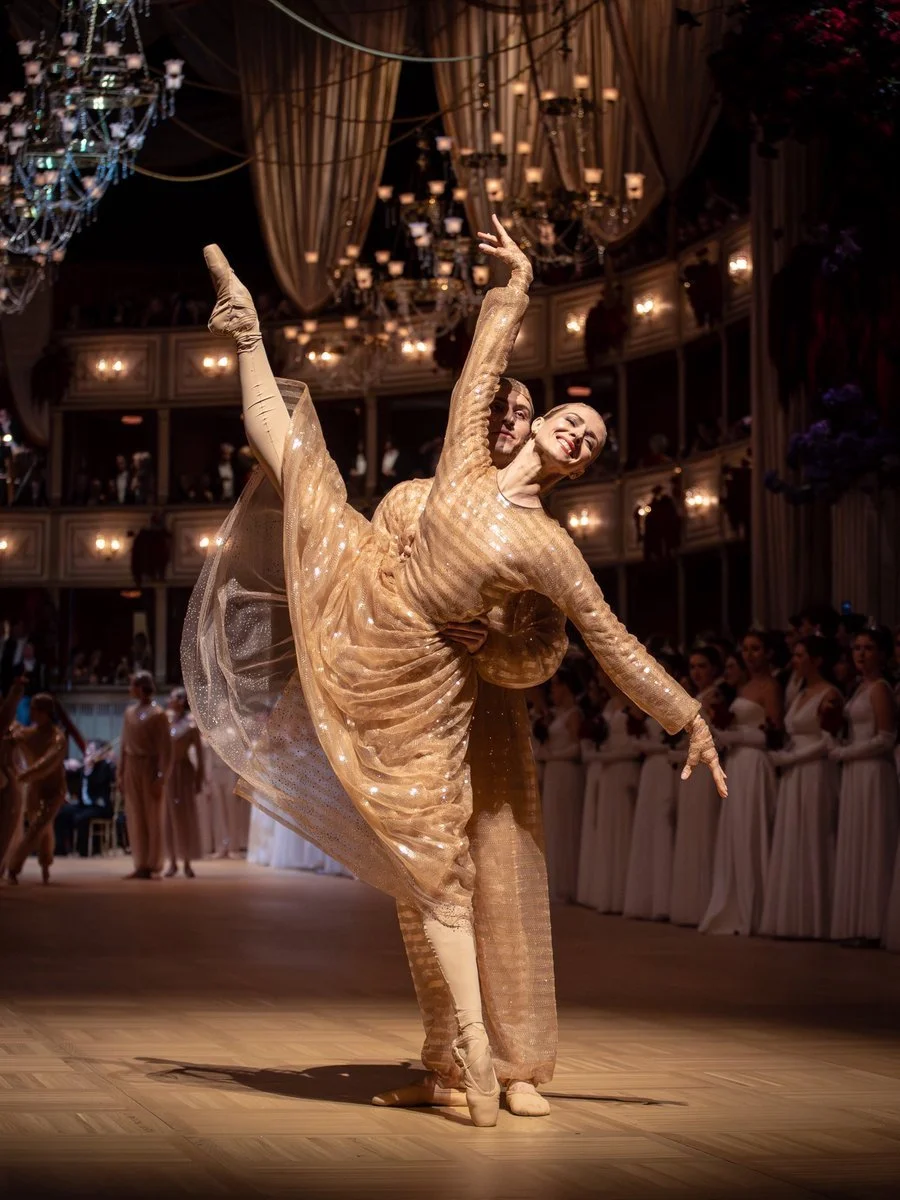
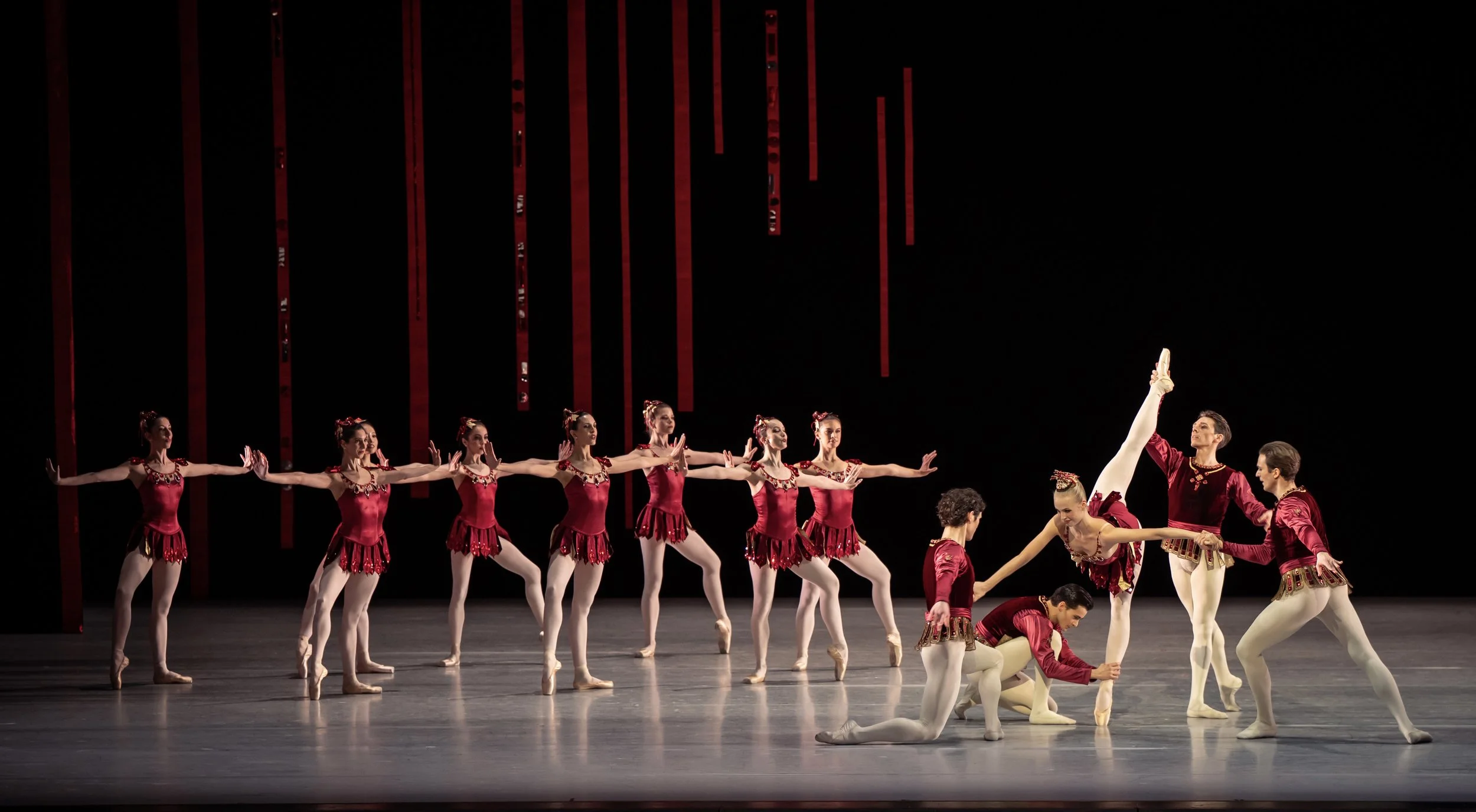
Karinska, the brilliant Ukrainian designer, who followed Mr B. to the United States, worked with him in no less than 75 different Ballets. A lifetime partnership. The brilliant designer who created the legendary (and also iconic) „powder puff“ tutú, which became a customary element of every company in the world and replaced the old, quite problematic wire ones. To tell a long story short: Because the shorter layers of material are self-supporting, no wire hoop is needed in the "powder puff" tutú (or sometimes called „the Balanchine-Karinska“ or „American tutú“). This tutú design has become standard in ballet companies all over the world since it first appeared in 1950, in the ballet „Symphony in C“, and created a „revolution“. No more clashes, no more hooks on stage. She also cut the bodice material in a way that was more comfortable for the dancer.
Copyright: Ashley Taylor / Vienna State Ballet
From my place in one of the „Parterre Boxes“ (which are more elevated than the stalls), I began, since the beginning of this present season, to gain more of a precise overall view concerning formations. And this is extremely important when considering the Balanchine work. Detailed precision, centimetre-like precision. And this deals not only with technique but also with lots of (emotional) intelligence.
Another very positive point is the sudden change in the attitude of the male dancers while partnering. A very important point that is neglected in many „Eastern European“ Companies (And Vienna is unfortunately still very influenced by that) and, surprisingly, also strangely, at the Paris Opera, is the posture of the male element while behind his partner. Slobby, careless, as if they were not on stage. As if they were invisible. All of a sudden, I started to realise legs straightened, feet pointed, the whole „posture“ erect, and the attitude a completely different one. Is this an inheritance from the ABT? An inheritance from the many years in a company that always took utmost care in this department, which the Vienna State Opera is getting via Mr Marcelo Gomes? Mr Gomes needs no introduction after his many years as a principal at the ABT, where he built a glorious career, and that, luckily for the Company, is now the leading Ballet Master of the Vienna State Ballet. When I heard about his joining Alessandra Ferri’s Team, I remember saying, „This will be, especially technically, very good for the boys“. And yes, it is.
Considering the short time since the Vienna State Ballet is going through a phase of „reconstruction“ (We are talking about a process that started last September), I could not be more satisfied with the Corps de Ballet.
During the last months and having learned a lot of I what I plainly call „Dancing together“, the company is showing strong improvements not only in dancing „together“ but also in „feeling“ the space and each other (consequently, becoming a group!): A kind of training that, with the passing of time, becomes instintive, natural, part of one’s body and psyque, and (a marvel) is quite contagious, because it not only defines the respect one has for the others’ space but it also defines one’s own space.
A fascinating thing that I truly believe in and that reached another apogee this Season.
Also, because of Nanette Glushak’s and Diana White’s staging and coaching of the present “Jewels” production. Both need no introduction, but I cannot resist mentioning their many years in The New York City Ballet under „Mr B.“ It was, back in 2023, an extreme pleasure to meet and chat with Miss White at the „Premiére Party“ of „Serenade/ Tchaikovsky's Pas de Deux/ Concerto Barocco/ Episodes“ with the NdB - Národní divadlo Brno, as Vadim Muntagirov and Fumi Kaneko (The Royal Ballet) danced with the Company.
But that is another story. Completely.
Last evening, there were more than usual „role débuts“ (Forty-four – Yes, 44! If I counted them right!) in the three different pieces. Not an easy task to observe meticulously, I say.
Let us start with “Emeralds”:
Copyright: Ashley Taylor / Vienna State Ballet
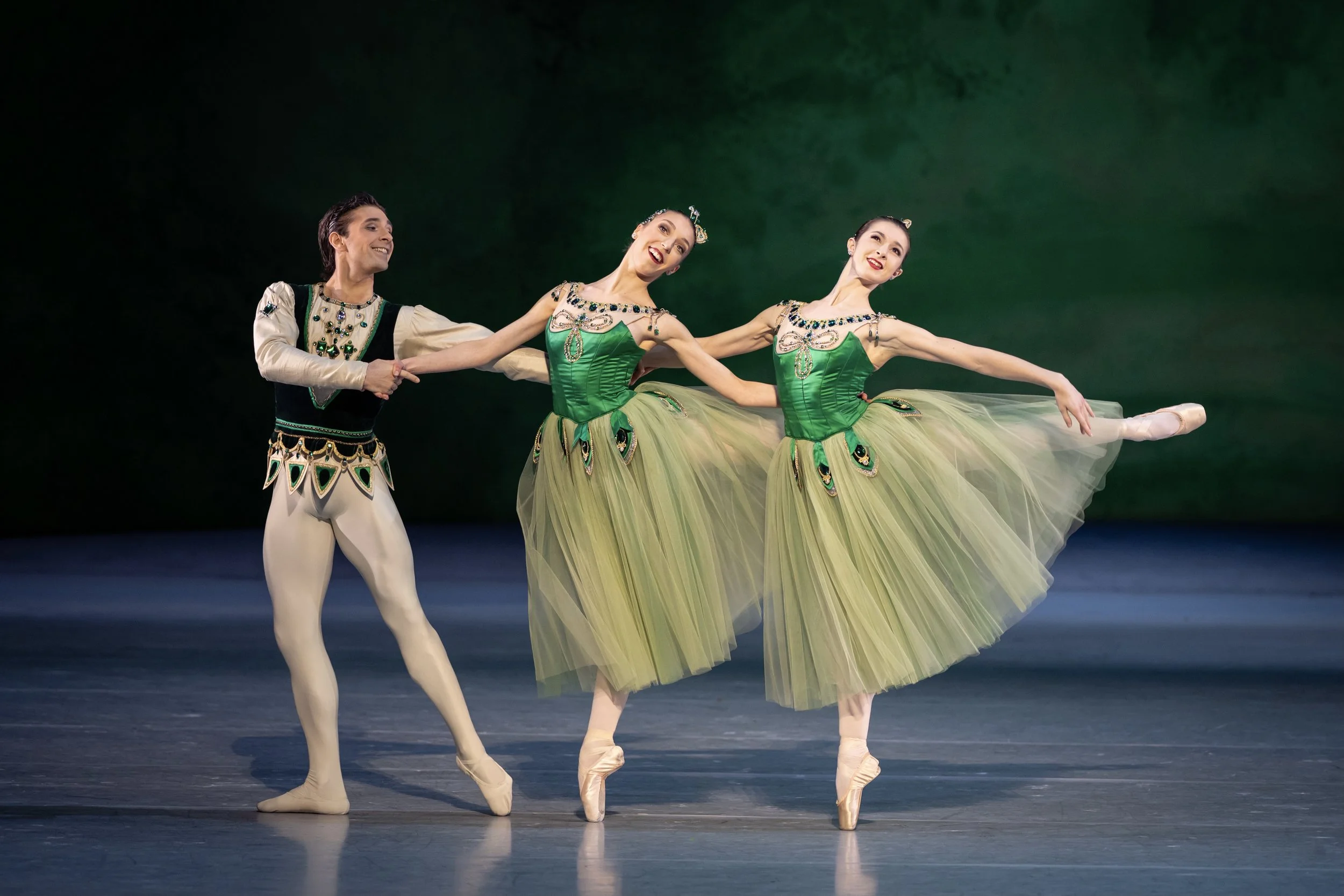
Gaia Fredianelli, Phoebe Liggins and Giorgio Fourés shone very competently as the (direct) supporting cast to both soloist couples. Here, my description above of „dancing together“ can be literally taken: The „trio“ performed, not only with a defined precision of what directions, togetherness, and also„equality“ (in the sense that legs, arms, heads, posture in general) was on the same „level“, therefore fundamentally „equal“.
Copyright: Ashley Taylor / Vienna State Ballet
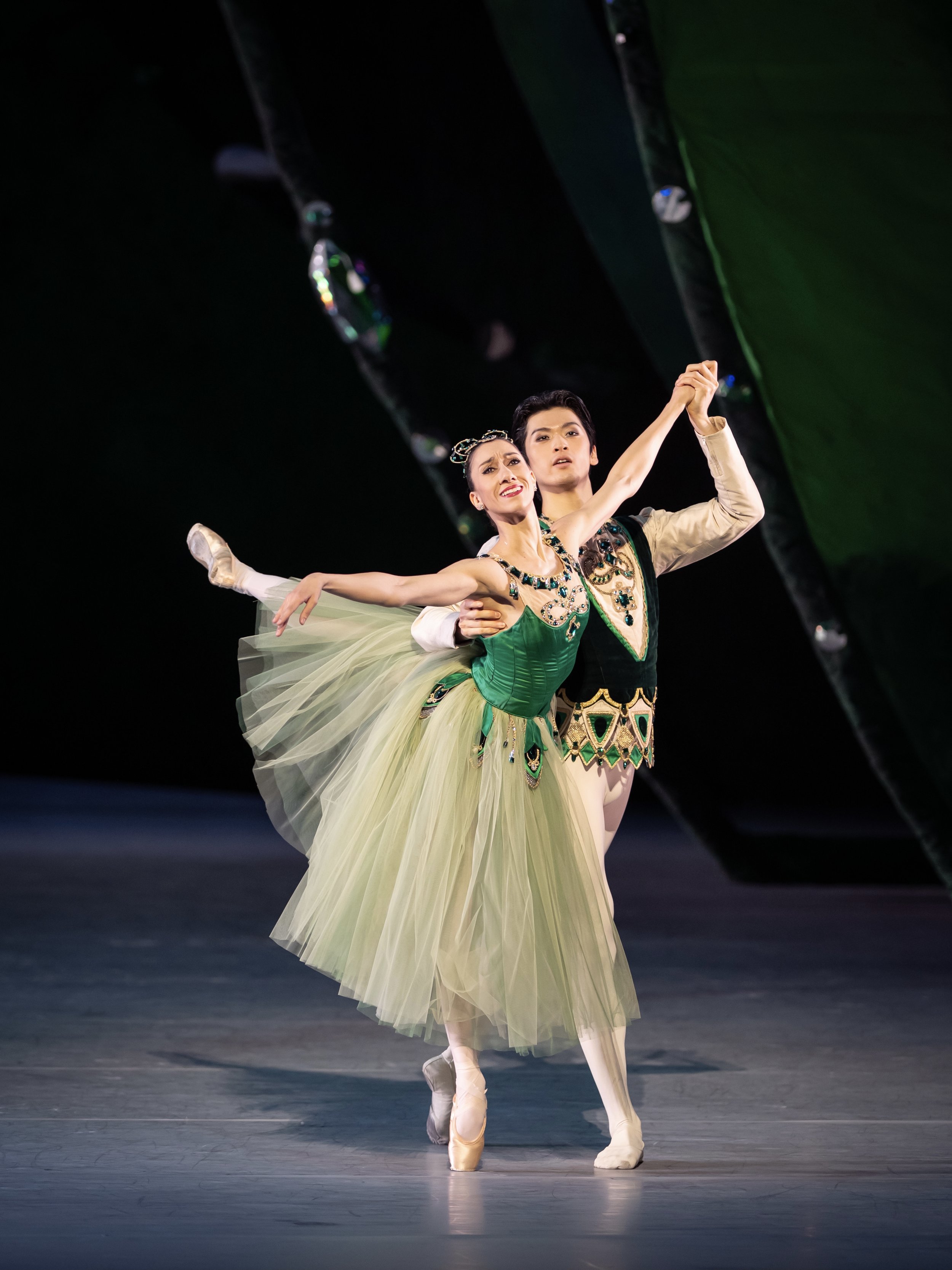
The scene opened with Ioanna Avraam and Kentaro Mitsumori: Miss Avraam, whose career I have been following very precisely (and with strong interest) for many years, showed another side of herself, floating through and breathing in the musicality and delicacy of the used Fauré’s „score“. She took the musicality which Mr B. used to choreograph the piece and used it to her best advantage. Delicacy that is never „saccharine“. Dreamy delicacy in a steel Personality. Very, very special. Think of that.
Kentaro Mitsumori, whom I saw for the first time on stage, is a good partner with a good, clean technique and very correct. Perhaps too much
Surprisingly, the dancer I had seen on videos at the Studio, who impressed me with his clean technique and wonderful achievement in very intricate „petite batteries“, was a bit „too“ correct to my way of thinking.
This is a fact that restricted and strongly limited the projection of his persona into the audience of the (big) Opera House. Appearing to be quite stiff, he did not „break“ the fourth wall, this imaginary barrier separating not only the story from reality, but also the performers from the public. A „fait accompli„ that prevented the audience from creating any kind of empathy towards him. First Night willies?
Copyright: Ashley Taylor / Vienna State Ballet
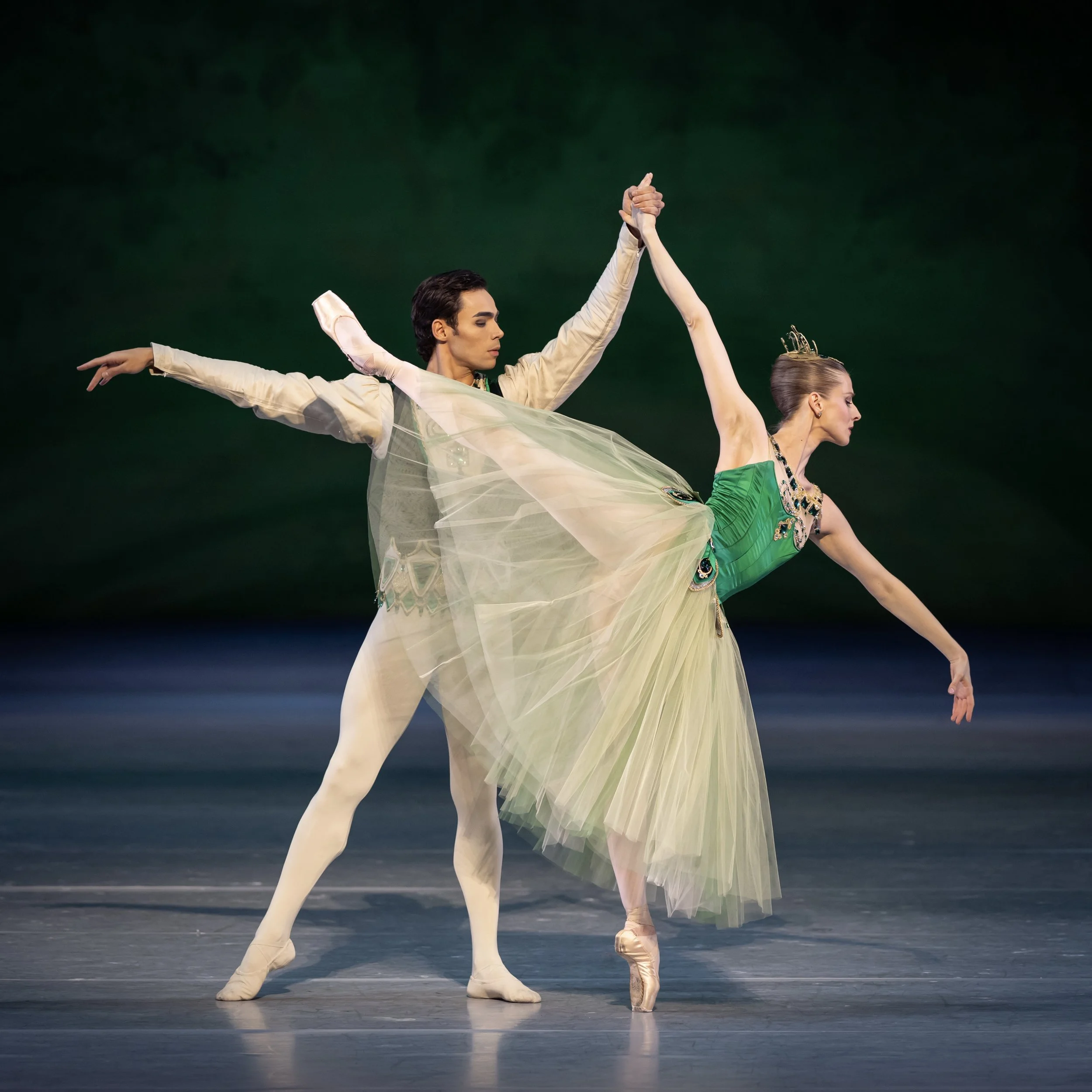
Olga Esina, also giving her début in „Emeralds“ (I had just seen her as the leading Lady in “Diamonds”), melted the delicate choreography, one that definitely combines quietness and inner life, bringing it to another more contemplative level. One that combines exquisiteness and fineness in such abundance that it is hard to define when one ends and the other starts. A few little moments that impressed me by their delicacy: While doing light, side cambrés, her poetic arms added so much depth and lightness at the same time to this floaty choreographic addendum by Mr B.
There is no need to highlight Miss Esina’s technical accomplishments. It is a certainty.
A grown-up Artist in full blossom.
And, last but not least, Victor Caixeta, whose personality and stage presence are so magnetic that they canalise all your attention. While dancing the role, using its full calmness, and with a strong sense of inner balance, in a way that can only be described, in a positive sense, as self-centred. I am not quite sure if Mr Caixeta will dance other roles during the run of „Jewels“ in February. I see him more in the lead of „Diamonds“, as I think that the role would give him more opportunities to showcase his (many) talents. Just a thought!
The use of Stravisnky’s „Capriccio for Piano and Orchestra“ could not be of a greater contrast to Fauré’s „Pelléas et Mélisande“, especially because there was „speed & quickness“ in the air, nearly like in the past.
It is a fact that even if dancers became quicker in learning their steps, understanding the exercises at the Studio, etc., they became continuously „slower“ in the past decades. It is, for sure, more comfortable but definitely not as effective, especially when, for example, one thinks of the tempo to which „Capriccio“ was conceived. Honestly, I wish something could be done about that someday.
Copyright: Ashley Taylor / Vienna State Ballet
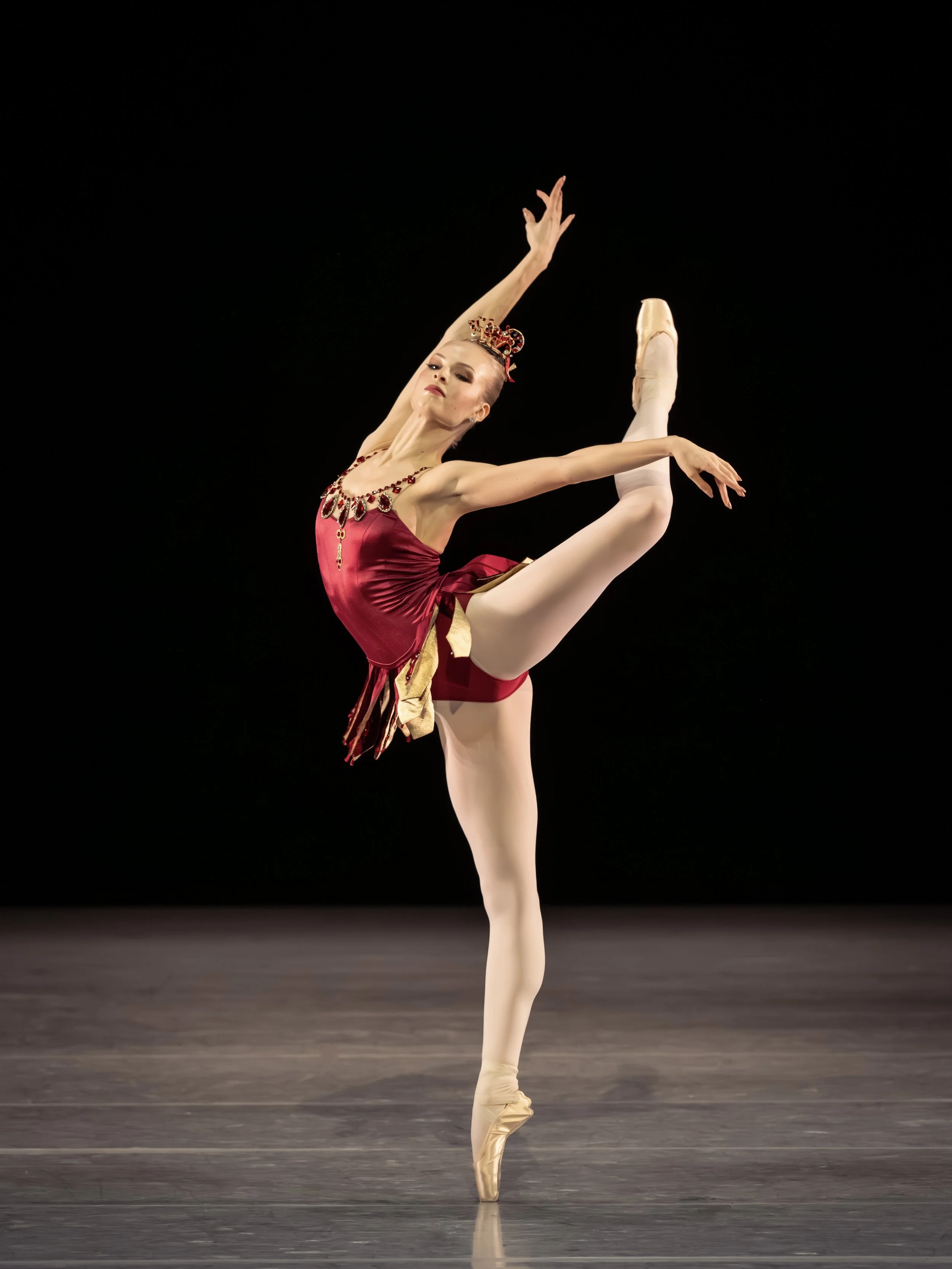
I have only one word to describe what I thought when Milda Luckuté first entered the Stage last Evening: It is a plain „WOW“! It was as if, translating it into words, she would have said something like „This stage is mine!“ or „ Now, I am in command!“
A gifted dancer who came to my attention for the first time while in the Corps de Ballet in „Giselle“, one who caught my total concentration because of the „truth“ that she communicates in all her movements. She does not only „move“. There is a reason, in every single movement, to be doing it. This is a gift and a very rare one, rarely seen in such a young dancer.
I am glad that I am not the only one who feels this way. Her roles in „Die Fledermaus“ (La chauves-souris), in „Callirhoe“ (The Queen of Babylon) and now in „Rubies“ prove to me that the potential that I have seen at that first „Giselle“ performance exists. I am happy about it. A dancer with a strong personality, one that captures all your attention, one with a solid technique and one that never uses it to disadvantage and the vulgarity of „overdoing it“ (such as overstretching, overextensions, etc.).
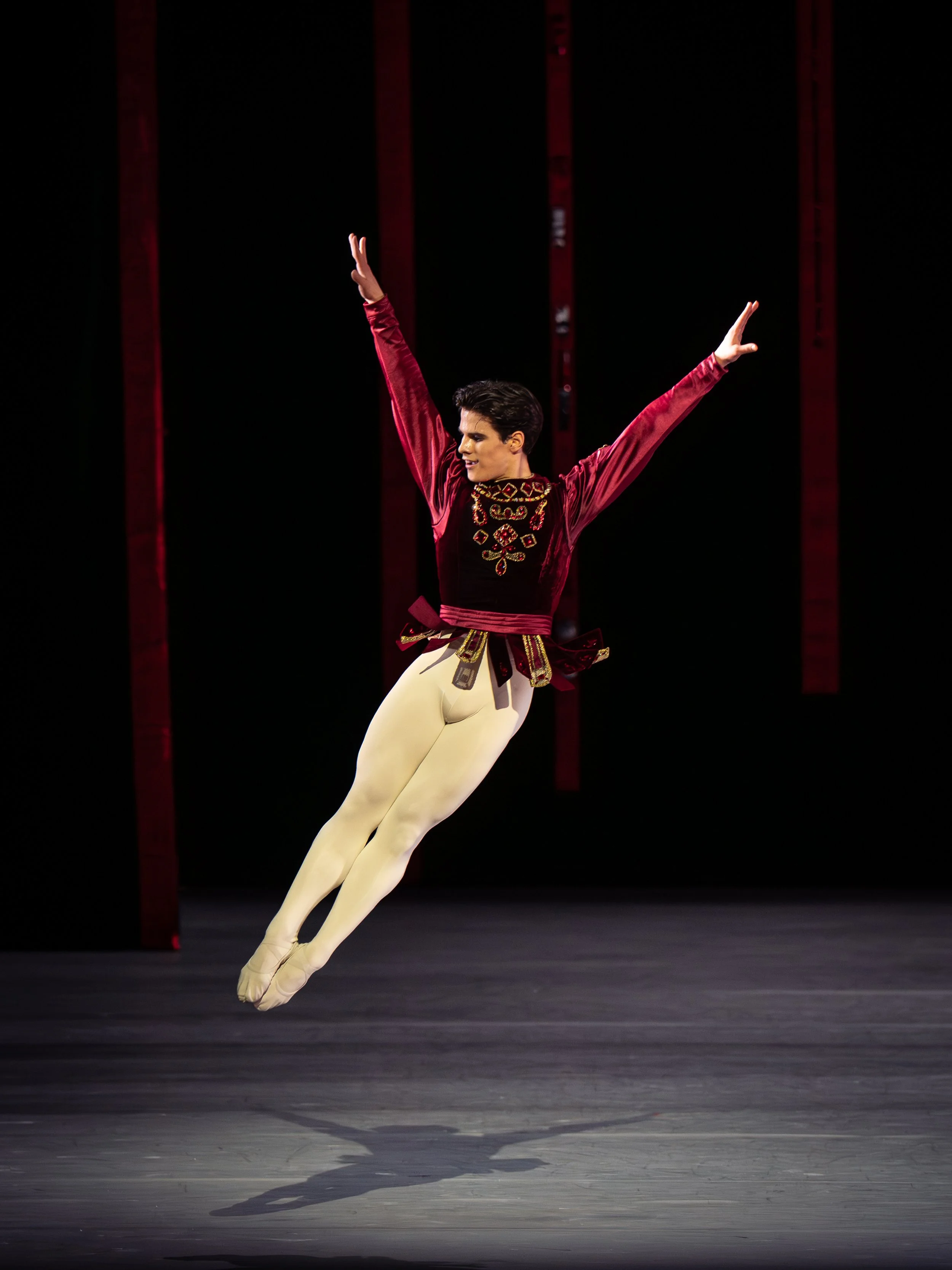
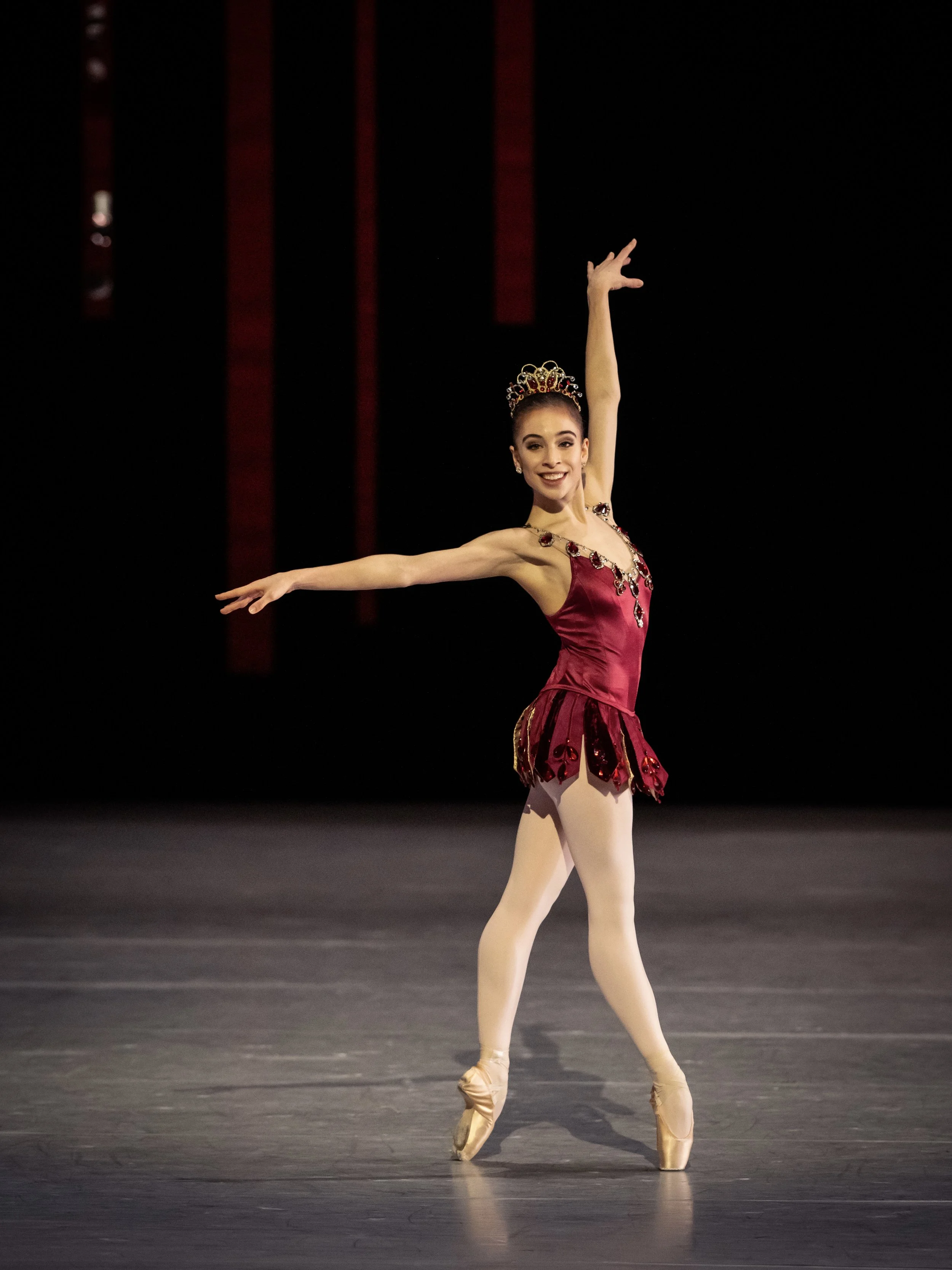
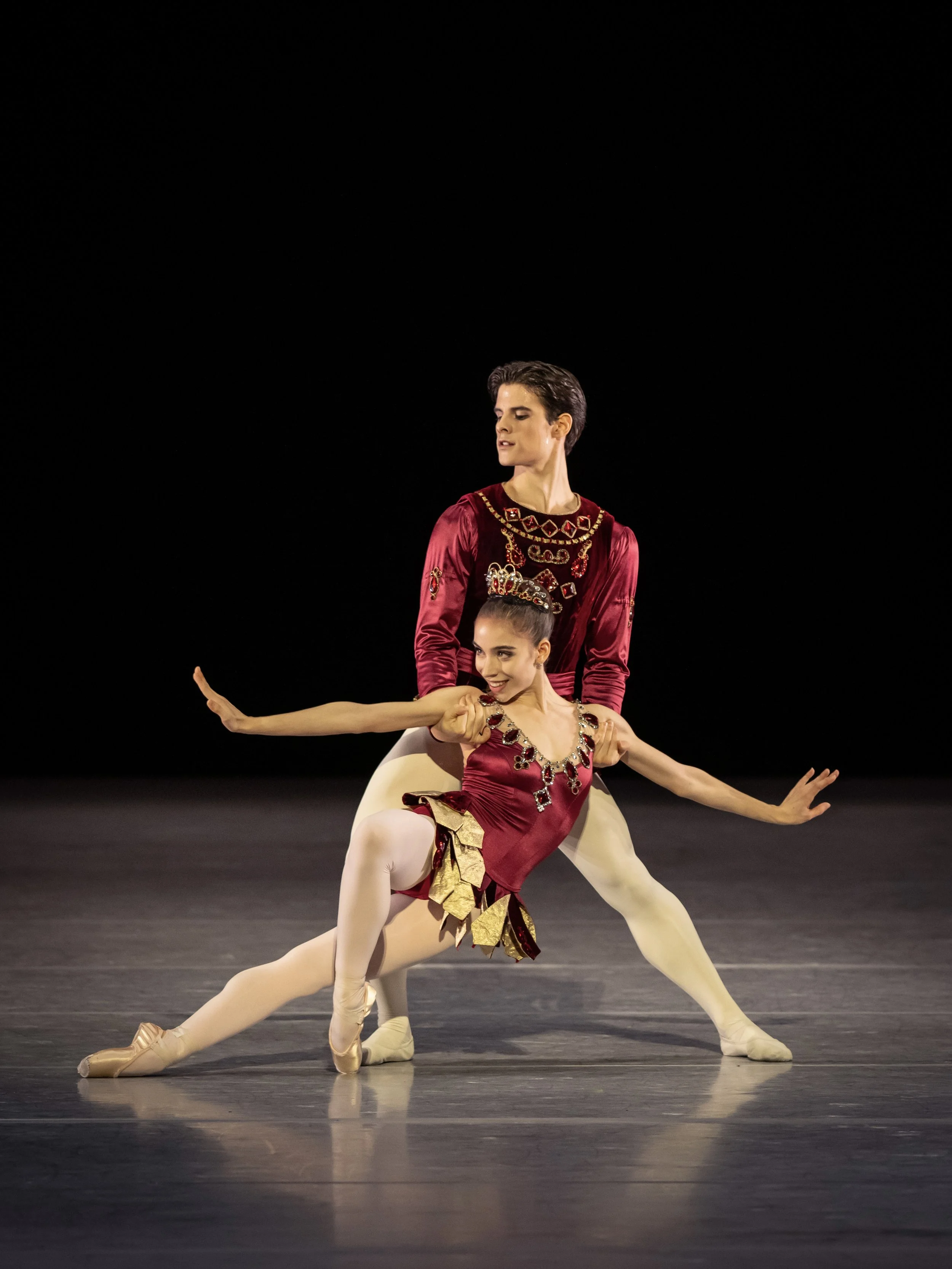
Antonio Casalinho and Margarita Fernandes brought down the House. Intense energy, power, and dynamism filled the stage with both dancers.
Copyright: Ashley Taylor / Vienna State Ballet
Mr Casalinho, in possession of a beautiful, pinpointed technique, has all the „required ingredients“ to be a “public’s Darling”. His general precision, from jumps to turns, from his posture to his quickness, from caressing the floor with his feet to the correctness of his very defined positions (effacé, croisé, écarté and en face) that not only determine the dancer's orientation in relation to the audience, but gives the public the structure to objectively observe the dancer’s body and, the desired effect that the choreographer has aimed for in different passages of his work.
Copyright: Ashley Taylor / Vienna State Ballet
Miss Fernandes, also technically gifted (Extension, turns, strength, and musicality), plus an additional „triple dose“ of balance (en pointe), which she manages with such implicitness that one tends to think that this is an „easy task“.
Also in possession of a very sympathetic aura, she, together with Mr Casalinho, impressed the audience, a fact that was euphorically mentioned during the intermission after „Rubies“ (which, I have to confess, is my favourite piece of the evening and a great contrast to „Emeralds“) and just before „Diamonds“.
Copyright: Ashley Taylor / Vienna State Ballet
Summarising: Mr Casalinho and Miss Fernandes managed to display not only the charisma and „savoir-faire“ but, and what is more important, their „joie de vivre“ while dancing. Exciting.
As mentioned before, „Diamonds“ is not my favourite piece. Neither musically (I have a problem with Tchaikovsky’s simple musical constructions) nor choreographically. But as I always repeat, this is my personal opinion and taste. Not a part of the critique.
„Diamonds“ is a work that I usually describe as „punctually majestic“. Not thoroughly. Sometimes a bit cliché-like, but in the right measure to impress a non-European (or the US) public with some excerpts of majestic discipline in formations. As I mentioned, the right dosage to impress, leaving Mr B. enough space to float choreographically through the music (Also, and this is just a thought, the right piece to „frame“ the period before and after the Viennese Opera Ball).
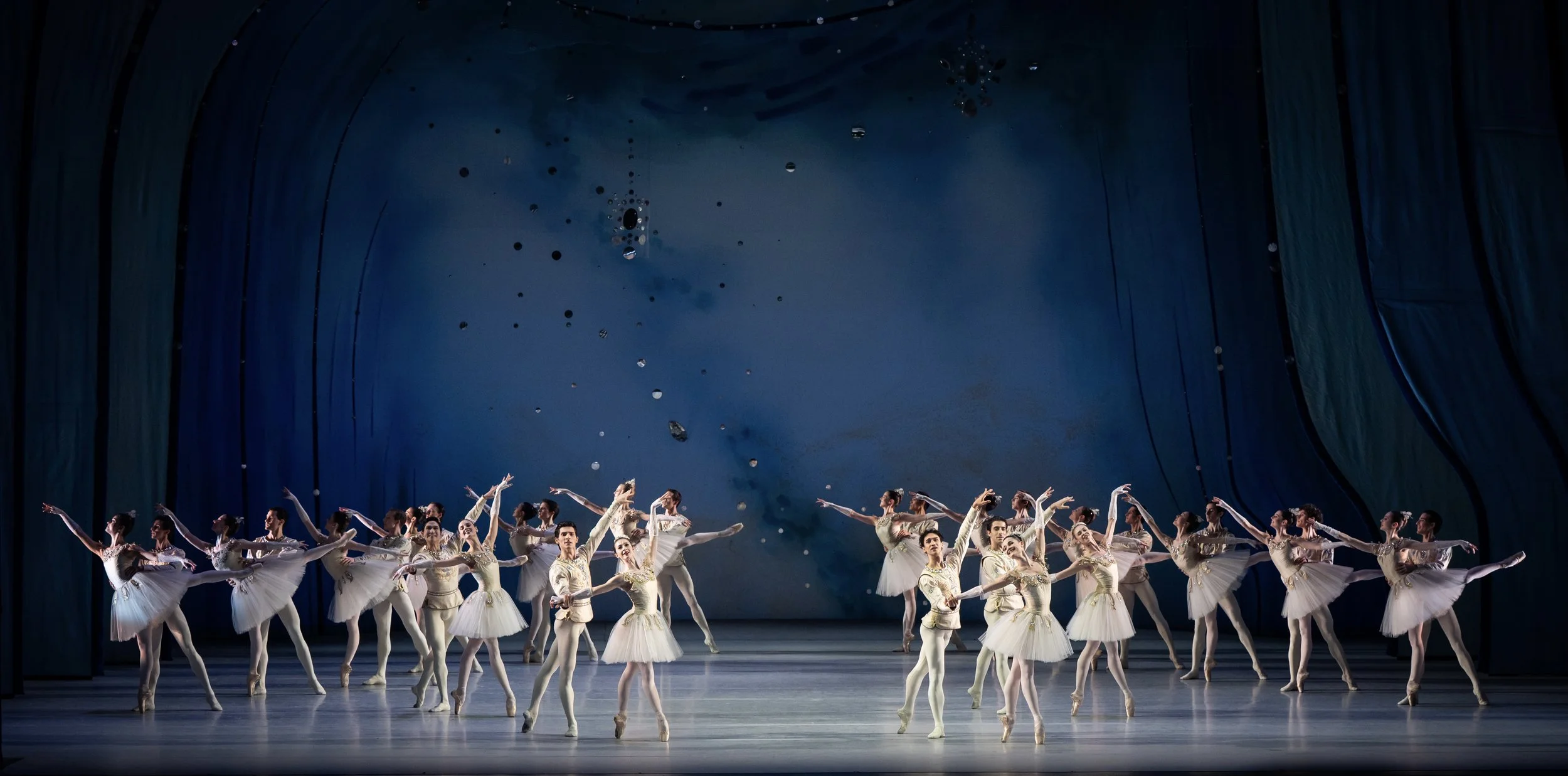
During this last piece, which originally brings some „Brilliance “ to the evening (The public always murmurs when the curtain rises and the light blue sets and the dancers, glittering in the beautiful Karinska white costumes, are seen), one thing became clear to me.
One thing that had been bothering me since the beginning of the evening, but that I could still not express.
I did not know exactly what it was, but I knew it was there.
Not by coincidence, during a ballet „without a story“, at last I found it: Smiles.
There is a huge difference, an enormous „gap“ between a forced smile and one that comes with tranquillity to the surface, not causing any facial muscle contractions.
A relaxed smile that comes from inside. Not one coming from outside, and that is „plastered“ aggressively on your face. Not one that is so exaggerated that it resembles something „false“. A lie.
That is my only critique of the Corps de Ballet. Of course, some members carry this present (and beautiful) tranquillity in a very natural way. But there are other extremes. And the contrast is uncomfortable. Exactly like a dancer’s „duty“ is to find the truth in every movement, most of all understanding the motivation of each gesture, the care given to every facial expression must exist. This is important and, obviously, there is work ahead. This is why I have always recommended theatre classes for dancers. The „method“ (as taught in N.Y. by Lee Strasberg) is a way of understanding how to be truthful.
Copyright: Ashley Taylor / Vienna State Ballet
The four „main couples“, danced by Laura Cislaghi, Isabella Knights, Phoebe Liggins, Rosa Pierro, Alessandro Cavallo, Tomoaki Nakanome, Duccio Tariello (the only one, from eight dancers, who was not giving a role début) and Rinaldo Venutti were not only wonderful in their very pin-pointed execution (apart from some of the above mentioned “smiles“) but also proving, in many cases, an incredible versatility. Very good show!
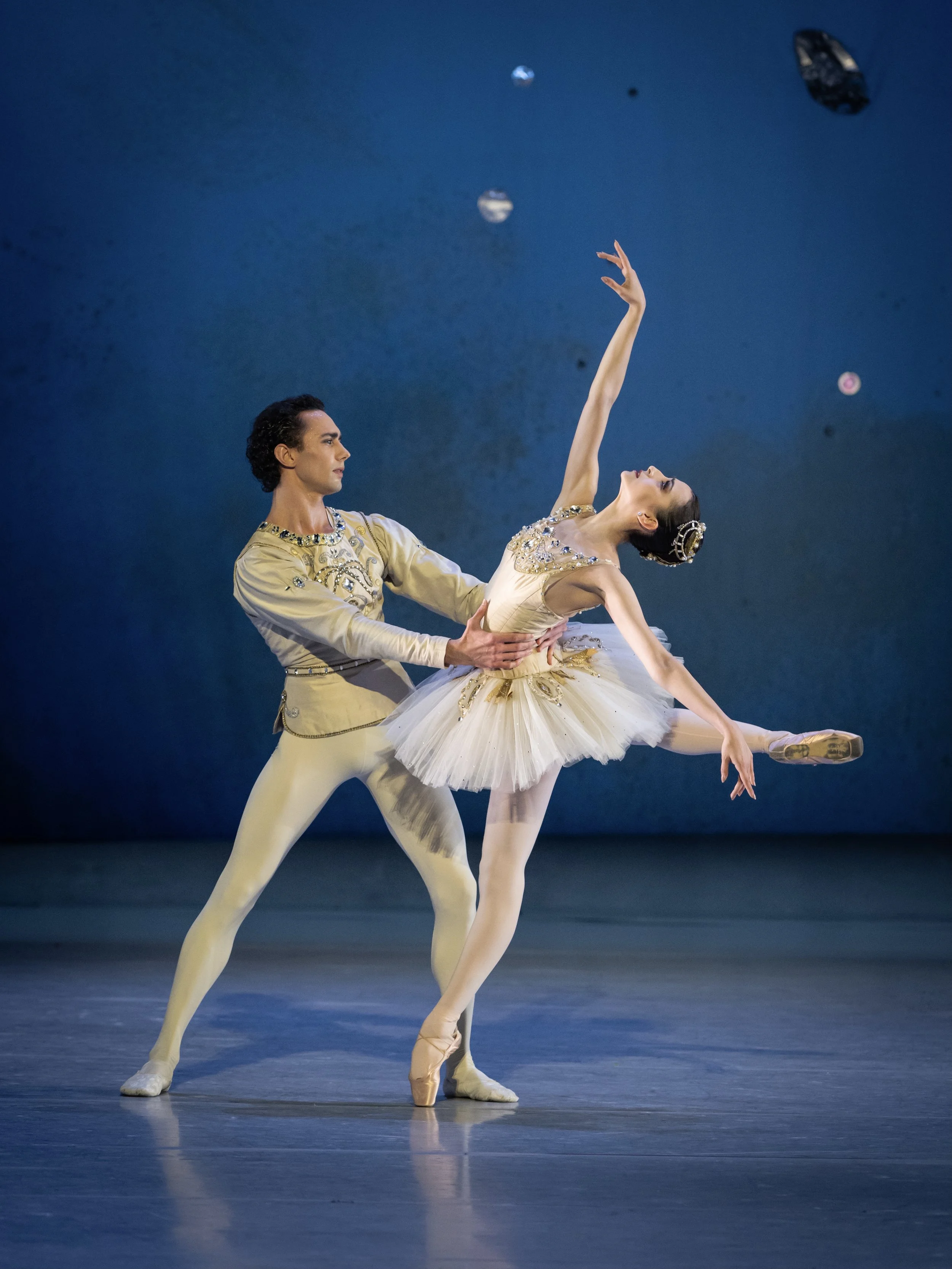
Laura Fernandez Gromova seemed somehow „distracted“. Don’t misunderstand me: Not „absent-minded“ but somehow worried. Too much preoccupied with something (The technical side of the medal? The music? Or another case of First Night willies?). I saw no real reason for that. She not only mastered the choreography beautifully, but is also a gifted dancer, who impressed me very positively in her first „Giselle“ in Vienna (apart from some very ill-fitting over-stretchings that were completely out of place in a romantic ballet. This was not the case yesterday, even though there was the „opportunity“ to do it. The one and only Diana White, who coached her personally, saw to that, to a complete style homogeneity. In the last third of „Diamonds“, she was more confident, more relaxed, and definitely more in command of the performance.
Note: Again, another “victim” of the “foundation problem”. Too light in comparison to her skin tone. Is there someone new in the make-up department who has a bit of a “craze” for Kabuki?
Copyright: Ashley Taylor / Vienna State Ballet
Alessandro Frola, who is on a fast track to become a favourite of the Vienna public, once more displayed his extreme versatility (A short time ago, we were present at a ferocious performance by him in „Callirhoe“); This time, he gave us a very noble performance. He was „on the top of everything“, extremely clean technically, but with his usual „presentness“. This quality of being, as I say, „right there“, looking at his partner, sensibly, honestly, truly – the same quality he presented in Hamburg as I have seen him in Tennessee Williams’ emotional „The Glass Menagerie“ by Neumeyer. As you can well imagine, Mr Frola is not one to „waste“ exaggerated smiles on stage. He is the one who, probably instinctively, masters „The method“, combining it with a „Premier Danseur“ perfectly „cut“ (as in a gemstone) technique.
I am personally looking forward to Mr Frola’s future achievements with the Company.
An evening that is not only perfect in its original conception but that was also performed at the deserved level. An evening that left the audience with „something to remember“.
And cherish.
I’ll leave you with that.
Predicate: Highly recommendable.
Next performances: February 4th, 5th, 8th, 9th, 14th, 15th.
Ricardo Leitner
a t t i t u d e
Vienna, January 31st, 2026