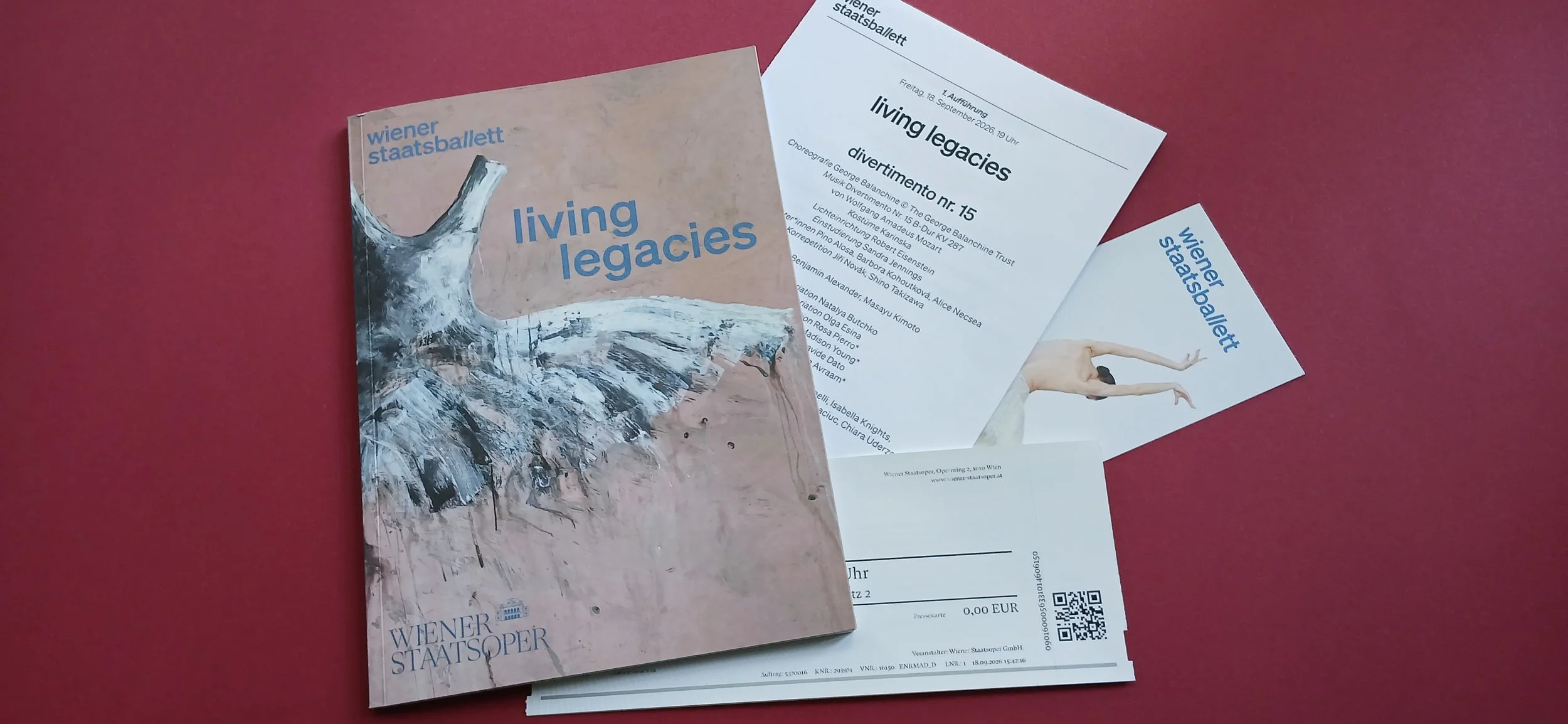
„Living Legacies“, Vienna State Ballet (Wiener Staatsballett), September 18th, 2026.
„Living Legacies“, Vienna State Ballet (Wiener Staatsballett), September 18th, 2026.
What a beautiful (and precise) „Epithet“ for an evening which reopens the Season 2026/27. Not exactly a “première. But now that the Ballet Season is with us again, I think it would be most appropriate to „give a more serious talk“ about the construction of this evening.
A beautiful programme, built around the concept of how those three choreographers „complement“ each other in their precise concept of Dance. It would be redundant to „describe“ Balanchine’s and Ashton’s work to the Balletomanes who read my work, but I feel quite right when saying how much Wheeldon „has“ from both of them in his work. There is no ignoring the fact that he was „built“ as a dancer at the Royal Ballet. Ashton’s „home“ for many decades, and that he was a Soloist and is now the Resident Choreographer of the New York City Ballet.
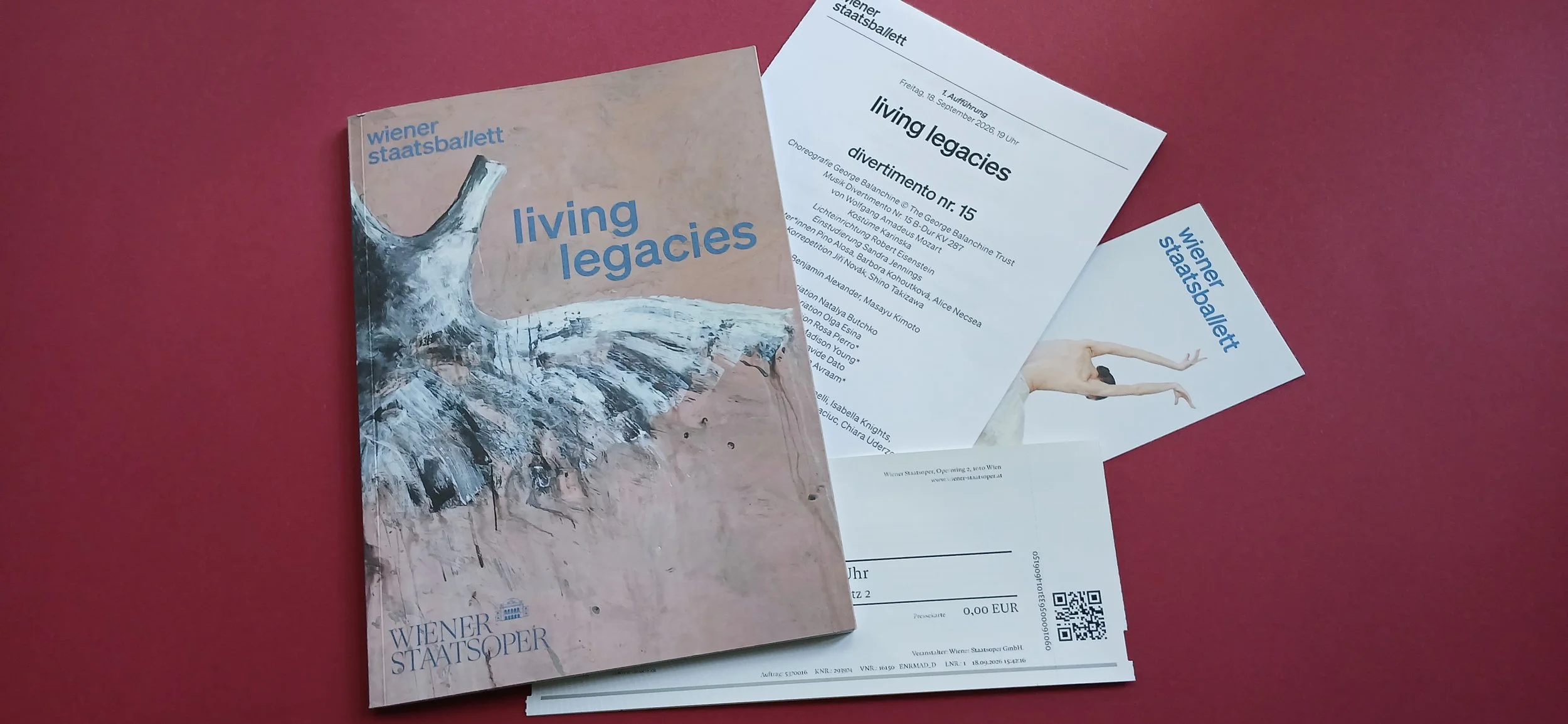
„Living Legacies“ opens the Ballet Season with a triple bill that includes works that are more or less „known“ to the Ballet public in Vienna: Balanchine’s „Divertimento No.15“ had already (and, I must say, surprisingly) been presented (but not meticulously well-cast) to Viennese audiences by the former Artistic Director, whose tastes, I believe, surely do not include Balanchine as a favourite. Wheeldon’s „Within the Golden Hour“ and Ashton’s „Rhapsody“ had been introduced to the public at the last Gala, which was dedicated to Sir Frederick Ashton last June 29th, at the Vienna State Opera.
Both pieces, I realised yesterday, somehow did not receive the attention they deserved because of the many other pieces presented after them. When I think of it, they sort of „disappeared“ a bit from our memory.
Planning Gala evenings, planning a whole season, is something quite hard. There are so many aspects to consider (and re-consider and re-re-consider all over again). To „master“ this „task“ is not an easy thing, and I am aware that it may take years to be in full command and control of that. Yesterday, both choreographies were deservedly not „The opening act“ of the evening but, together with „Divertimento“, the real „Stars“ of the Evening. That is good. Nevertheless, I believe the programme to be more suited to the Mid-Season, when Dancers are on top again and not yet physically “tired” of the Season. It had quite an exaggerated effect on me. “A notch above” in the level of how to start a Season.
Sometimes, as this case proves, even a very well-intended „exaggeration can be „too much“. Like any kind of exaggeration is. Even drinking too much water is an exaggeration that can damage your health… But as I alluded to this matter before: Experience in this case can only come with time.
And don’t forget: Balanchine, Wheeldon and Ashton. Even though “compatible” styles to form, build an Evening, different styles. Are injuries “programmed” for dancers who are dancing in more than one Ballet? And will the same cast repeat the performance tonight? Isn’t this also too much for a Season’s begin?
George Balanchine’s „Divertimento No. 15“ premièred in 1956 in Stratford, Connecticut, just one year after Stratford had become home to the American Shakespeare Theatre, but it had quite „a story“ before that: „Caracole“, with the same music, was choreographed in 1952 by Mr B. for his company. A few years later, he, as with many others of his Ballets (most notably „Balustrade“ (1941), which was turned into „Stravinsky Violin Concerto “ in 1972), restaged it for a celebration of Mozart's Birthday bicentenary and made changes not only in the score, but also in the choreography, costumes and set design, presenting it as Divertimento No. 15. A „Divertissement“ in the purest (and perhaps most frivolous and superficial) sense of the word. But beautiful, anyway.
That is the true essence of Balanchine’s work – always changing, always „moving“ (as dance should be), the constant „rethinking and renewing itself“, always „keeping pace“ with time.
After his death, his work was, obviously, „frozen“ by „The George Balanchine’s Trust“, which was established in 1987 with the sole mission of preserving and protecting Mr B.‘s work, not to be ever changed. Admirable and respectful. And the only right way to „act“.
But on the other hand, this is also what can be called „a double-edged sword“ cutting both ways. Of course, I agree with the Fund’s attitude, but to be quite honest, even if there is no other plausible solution to the matter, doesn’t it go exactly against Balanchine’s primary thoughts (At least his actions made us believe that!) that a work was never „finished“ and „frozen“ but always changing, being recycled, in constant „evolution “ and therefore „movement“?
A principle, a very important and logical one when one is talking about Dance. Think about that.
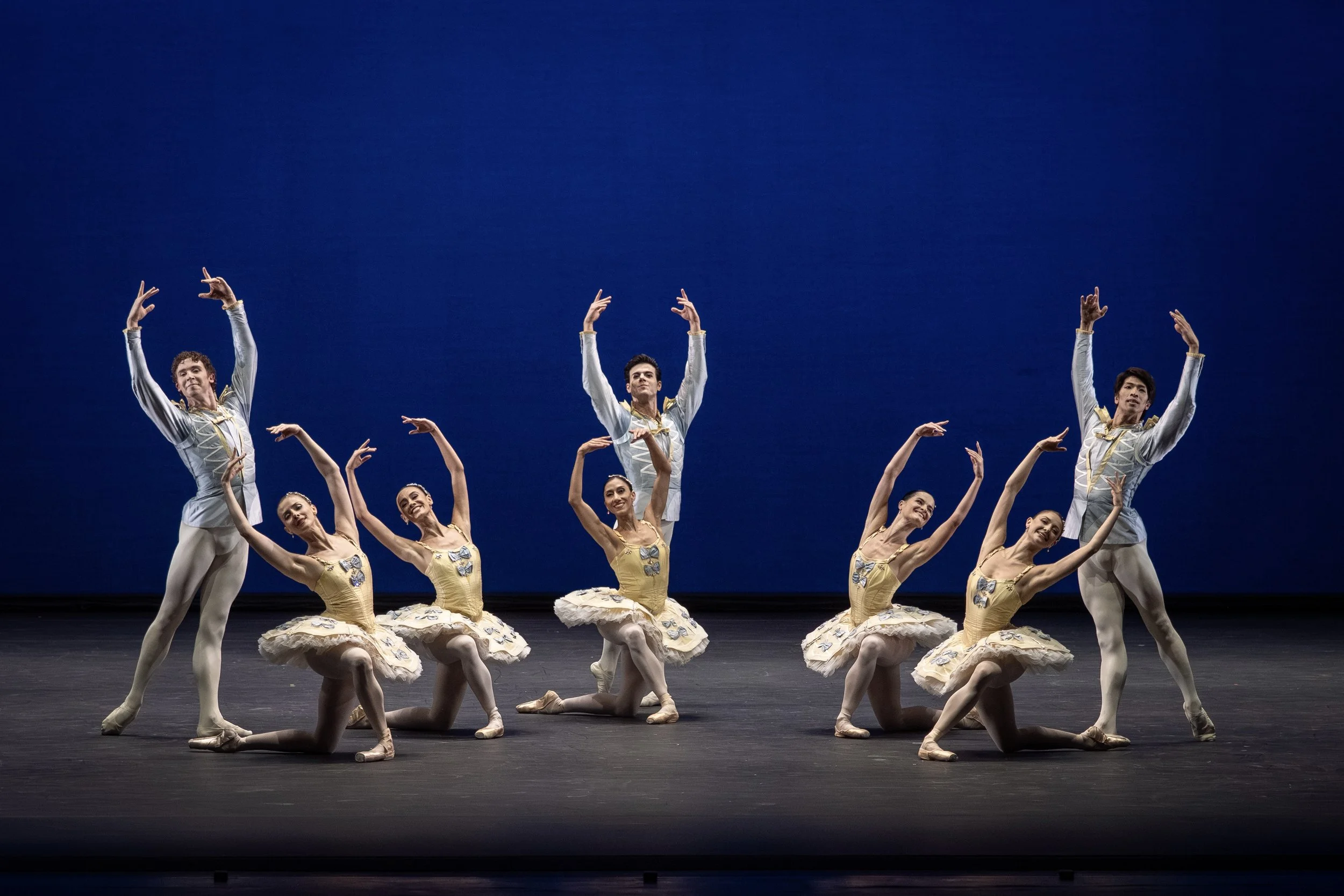
Copyright: Ashley Taylor / Vienna State Ballet
Mozart’s „Divertimento No.15“ in B major is a six-movement „divertissement “ for two horns and strings, also known as „Lodronische Nachtmusik Nr. 2“ (Lodron Night Music No. 2). So much to „general information“.
The construction of the Evening, especially as the first performance after a two-month „Summer Holiday“, is not what I can call an easy one.
For Soloists and for the Corps de Ballet: It is hard for a Corps de Ballet member to perform „Divertimento No.15“ and then „Within the Golden Hour“, one just after the other. This happened to Gaia Fredianelli and Isabella Knights, both lovely, talented dancers, who surely have a promising future in front of them (Editorial Note: Both with beautiful arms!) and on whom you can rely for a good performance. But it is surely a very tiring task. No question.
Back to the Evening’s construction: It is a hard one on the dancers. And that could be felt during the first 15 minutes of “Divertimento“, during which a certain, visible insecurity seemed to dominate the whole cast.
But professionals are professionals, and the whole cast „recovered“ from what I call this very „contagious state of mind“.
From this „recovery“ on, early in the evening, they gave the audience a full display of concentration and precision. Everyone in the production contributed to this „togetherness“, this „Unison“ that was so obvious to the public that it nearly felt „palpable“.
Why?
Because we could witness it in the shaky way that the Evening’s first Ballet started and how the „end product“ turned out to be.
But professionals are professionals, and the whole cast „recovered“ from what I call this very „contagious state of mind“.
This time I only have positive statements to make about the dancers!
Copyright: Ashley Taylor / Vienna State Ballet
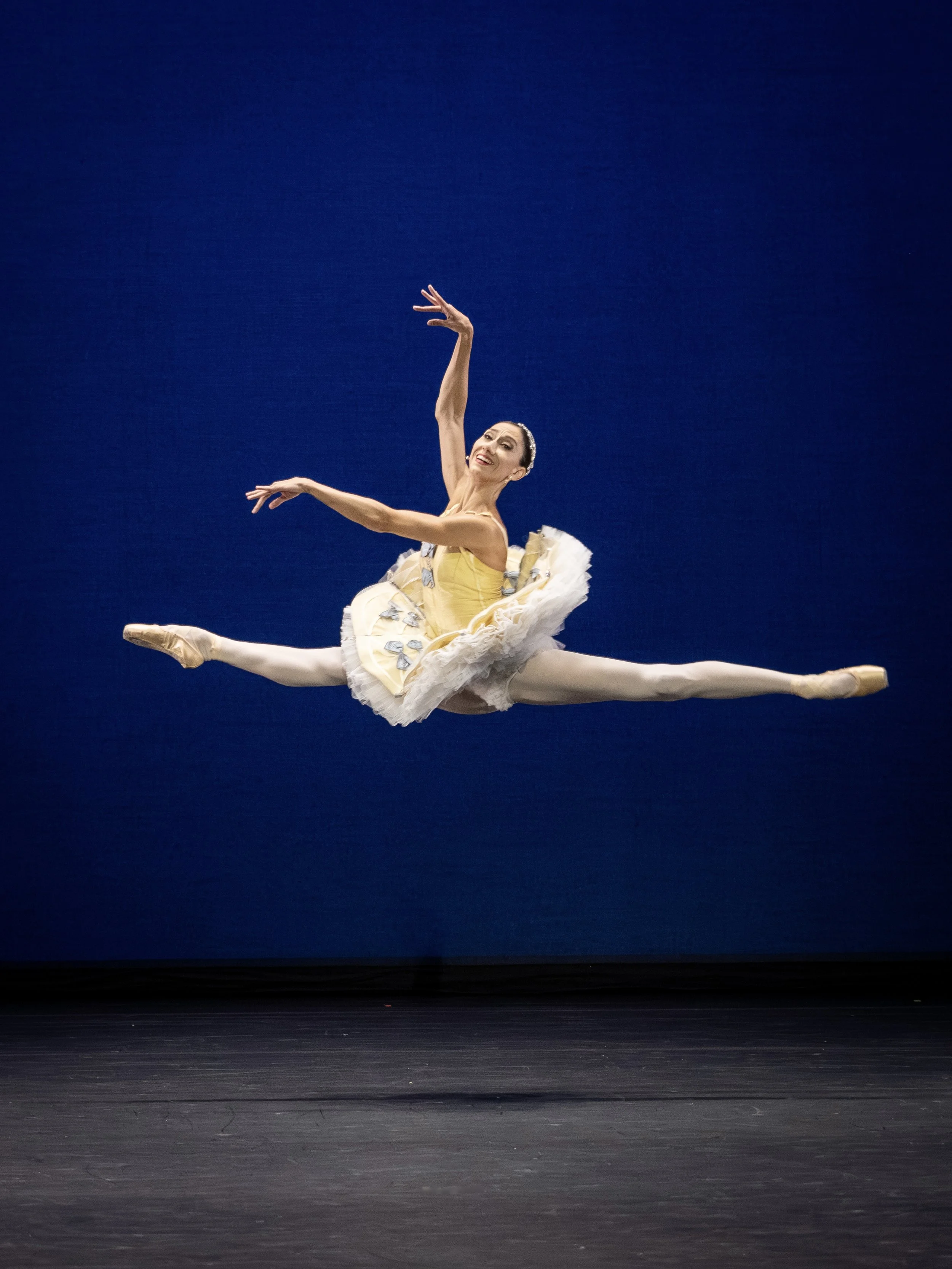
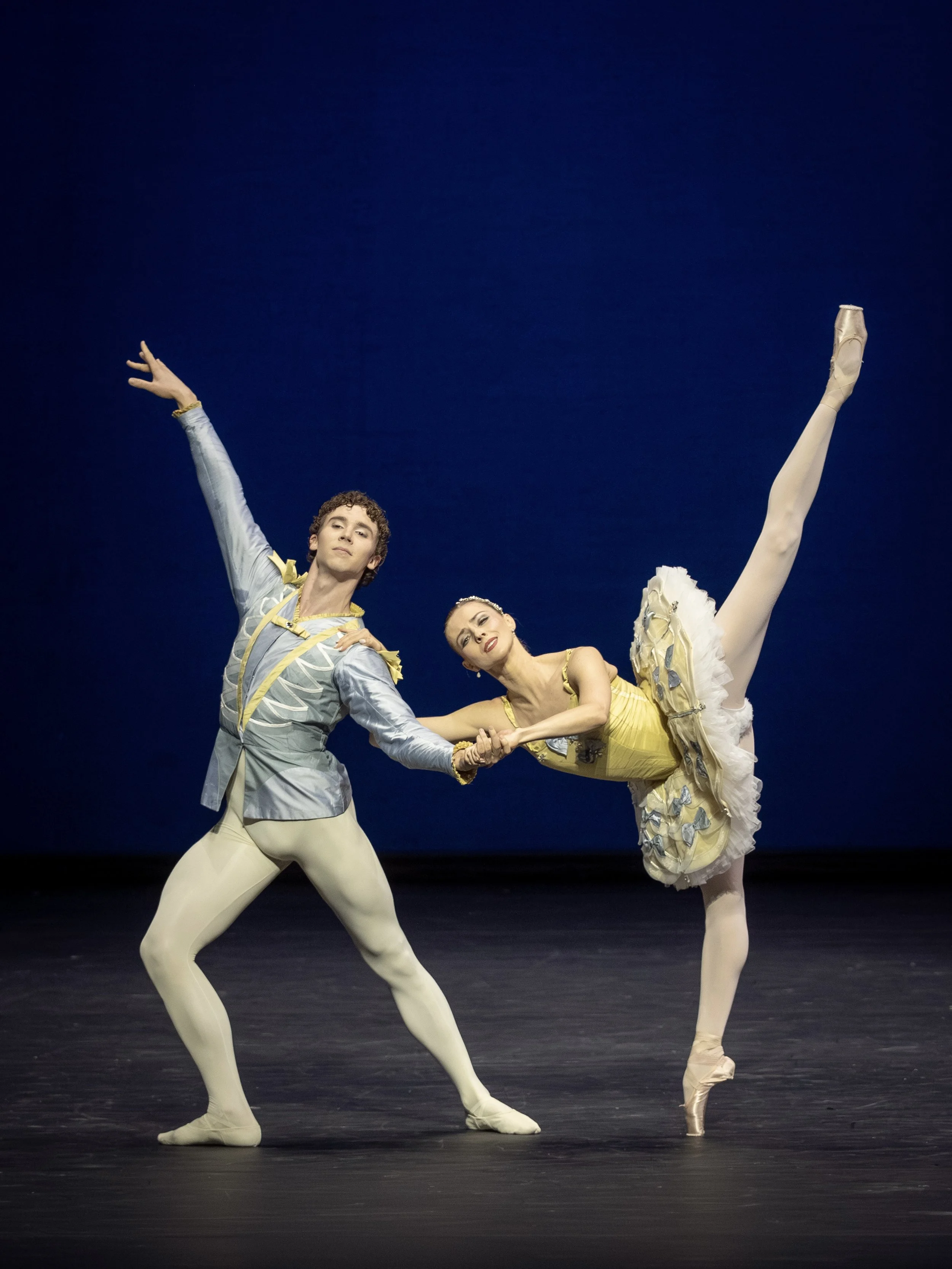
Dynamic Benjamin Alexander and Masayu Kimoto, lovely and precise Natalya Butchko, a very hard worker, stage persona of the first magnitude Olga Esina, present and versatile Rosa Pierro, whose stage presence cannot be overseen, a very strong dancer (and I don’t mean this „only“ technically), brilliant Madison Young (A very good thing that she returned to Vienna), Davide Dato and Ioanna Avraam that share one thing in common, and this I have been observing for „quite a few years“: They do not ever „stand still“ (I mean this metaphorically in connection to „rely on their fame and accomplishments, sit back and put the feet-up comfortably“), much on the contrary. Every time I see them on stage, they surprise me with something new, something that they have achieved, conquered and added to their (vast) repertoire. Technically, and emotionally.
Copyright: Ashley Taylor / Vienna State Ballet
Personally, there is nothing I enjoy more than this. Seeing Artists grow. And having the chance to observe it from a very near distance.
The phrase I wrote before, about Mr B., would apply very well to both: „always changing, always „moving“ (as dance should be), the constant „rethinking and renewing itself“, always „keeping pace“ with time“.
Mr B. Would have liked that.
Christopher Wheeldon’s „ Within the Golden Hour “. As mentioned before, Mr Wheeldon could never deny his past as a Dancer at The Royal Ballet and at The New York City Ballet and the „influence“ Ashton and Balanchine had on his present work. I will not go much into that, as this is a known fact among „everyday ballet-goers “, and nothing „new“, actually. It is not worth mentioning.
„Hour“; a favourite piece of mine.
It always make thing and dream of waves on a high sea. Growing high, melting into each other. Constantly moving, and filled with poetry.
It feels light and easy, for someone who is not quite aware of the physical demands that it takes to make it look „light and easy“.
And all this added to the pinpointed technical command?
Copyright: Ashley Taylor / Vienna State Ballet
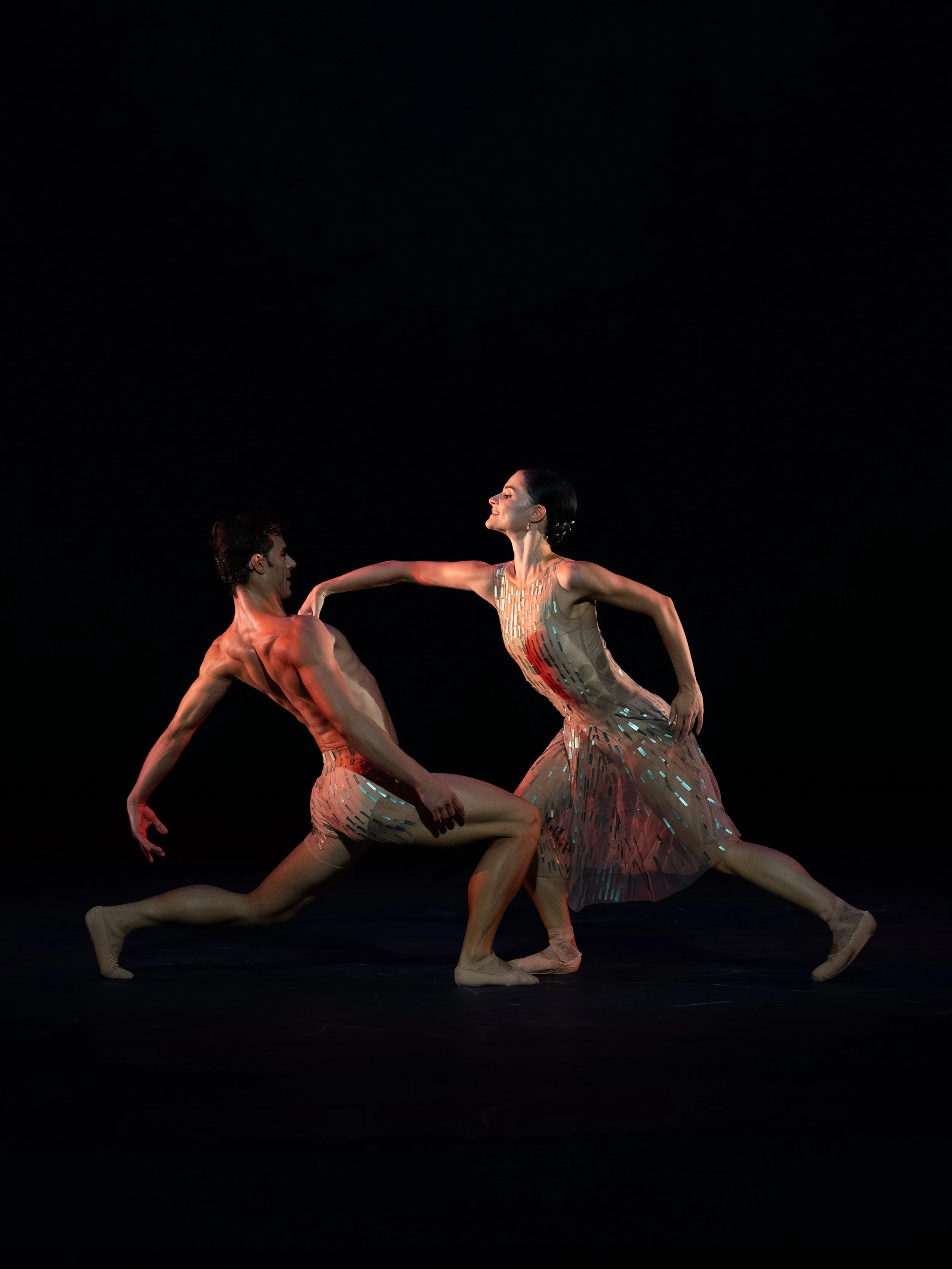
Rosa Pierro and Davide Dato. I could summarise this partnership in one single word: Three “Exs”… Exquisite. Explosive. Excellent.
A humorous confession: Since 2011, Davide Dato has always been “Mein Liebling” (Tänzer)) (Translation: My darling Danseur). I think that Rosa Pierro will soon become “My darling Tänzerin” (Translation: My Darling Danseuse). Such personality - and I am not writing about this for the first time.
But no, I want to say more. I like this „explosion of feelings“ that I can only (metaphorically) compare to the feeling when you taste a beautifully well-cooked meal that tastes at the same time sweet, salty, sour, spicy, bitter, piquant, etc. and causes an „explosion“ on your palate. Have you ever felt that? On another level, Miss Pierro and Mr Dato presented to us an explosion of feelings, so subtly portrayed and sustained by such a richness of a beautiful „vocabulary“ while doing it. This may not be understood by a new generation who believes that only jumps, pirouettes, Tours en l’air and fouèttes technical displays, instead of what they are: Bravura (Here we go again to my „evergreen “ theme!): This display of emotions, projecting them through a whole (big) Opera House and making the audience delight in it: This is also technique. I’ll leave you with that.
Copyright: Ashley Taylor / Vienna State Ballet
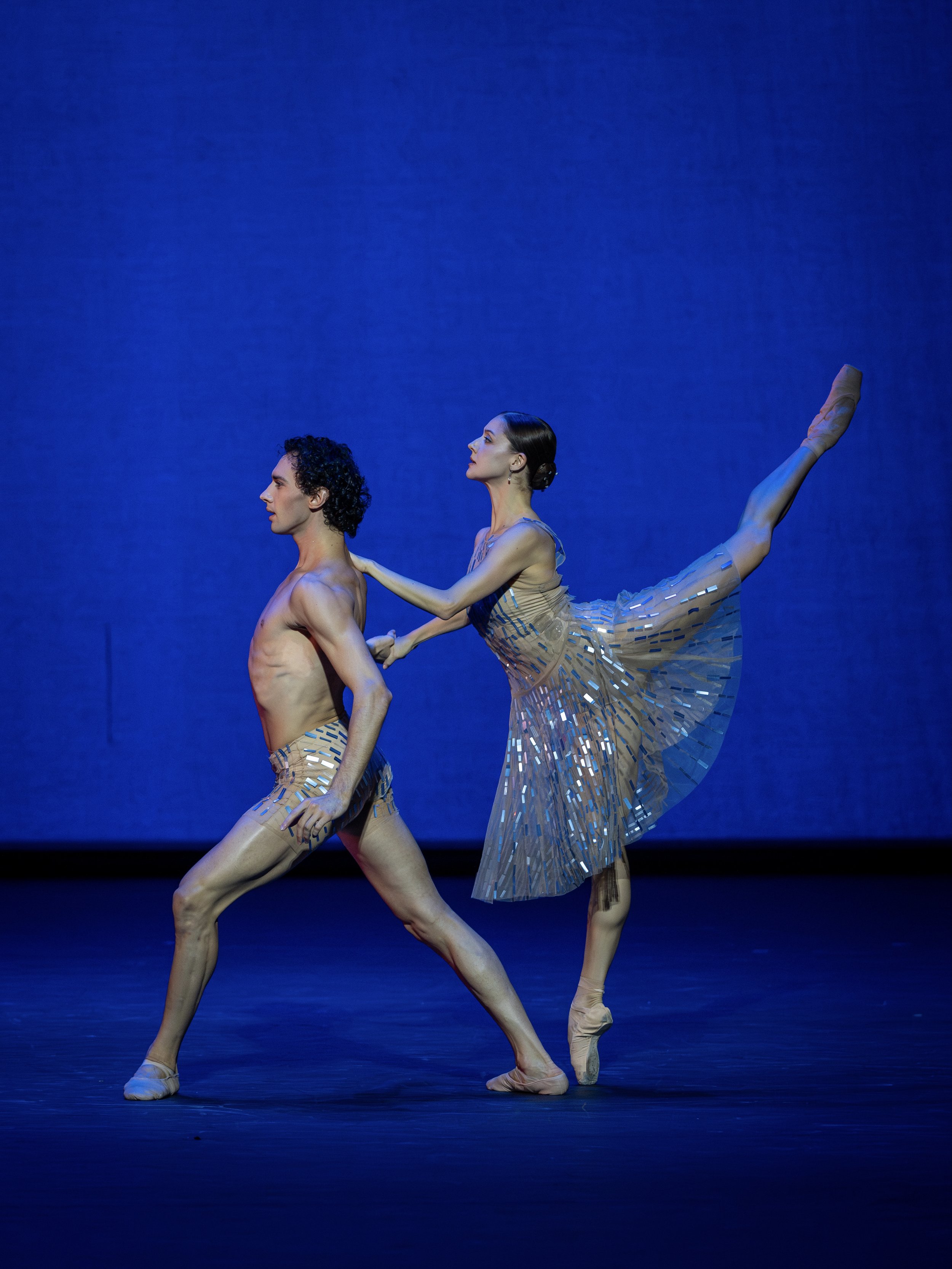
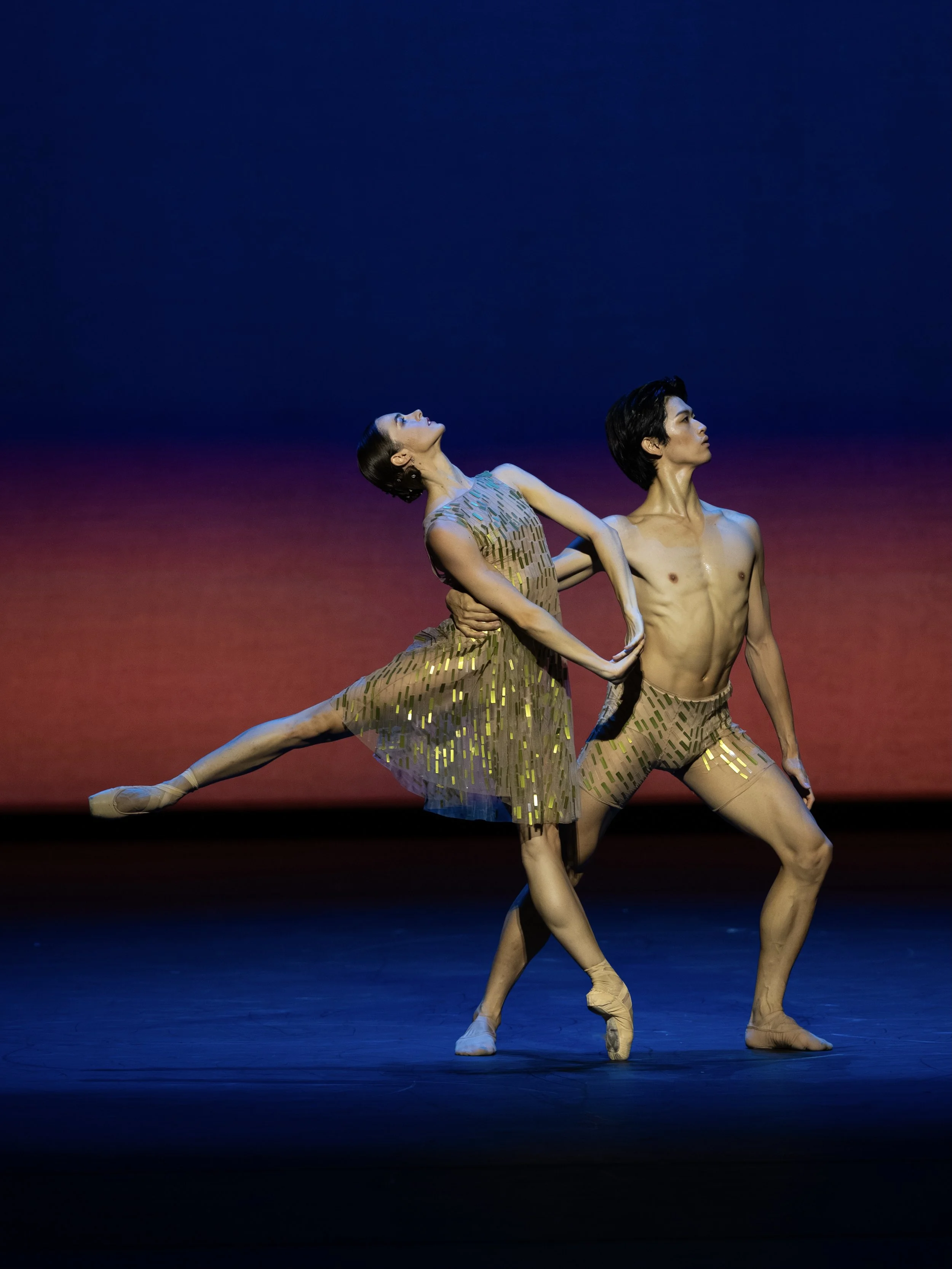
Madison Young and Alessandro Frolla – delicate musicality at its best that managed, like a magnet, to catch the audience’s concentration to the fullest! Chapeau!
(Editorial P.S. I noticed that, especially because it was the only time, in a whole evening, during which an obviously bored gentleman, sitting in the next box, remained quiet and sat still, concentrated – otherwise he would change his sitting position every ten seconds, scratch himself on the arms, on his head and move constantly – but please, don’t misjudge that: Not in the positive way in which I portrayed Mr B.)
Copyright: Ashley Taylor / Vienna State Ballet
Elena Bottaro and Kentaro Mitsumori (whom I have, funnily, seen yesterday for the first time, even if he has already been in Vienna for a full year) – a beautiful partnership. Really a good one. He is a very good and efficient partner who brought Miss Bottaro to shine on her own right. I liked that!
Copyright: Ashley Taylor / Vienna State Ballet
Choreographed to Rachmaninoff's Rhapsody on a Theme of Paganini, „Rhapsody“ by Sir Frederick Ashton, it is a one-act ballet. Having premièred at the Royal Opera House on August 4th, 1980, the ballet was made for the Queen’s Mother’s 80th birthday and Baryshnikov’s guest appearance with The Royal Ballet. The two principal roles were danced by Baryshnikov and Lesley Collier; on those days, a favourite of mine, an extremely musical and „very British“ Dancer. A perfect couple for a Ballet that combines some challenges.
Apart from the quick tempo, it combines not only technical challenges (including some jumps I cannot name, as I do not know how they „could“ be called!) but mixes them with the style in which the height of arms, head positions and lines – yes, the famous, very noble, Ashton, British lines that are not restricted only to the upper body but to the whole Dancer’s body.
A fact.
And, believe me, even for very experienced dancers (who happened not to „grow up“ with this particular school of movements, in our case, The Royal Ballet School), it is not easy to coordinate all the premises for this choreography.
Copyright: Ashley Taylor / Vienna State Ballet
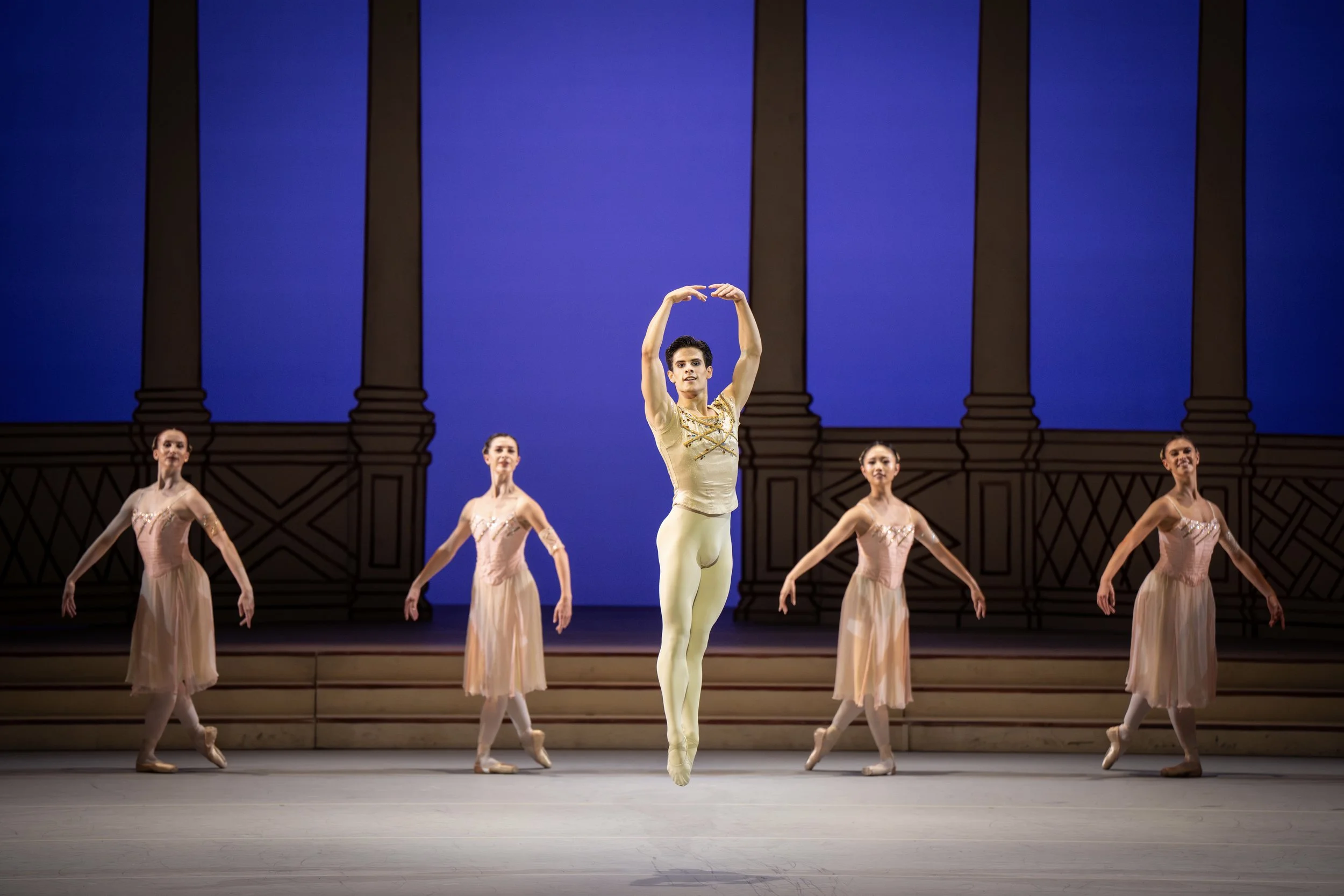
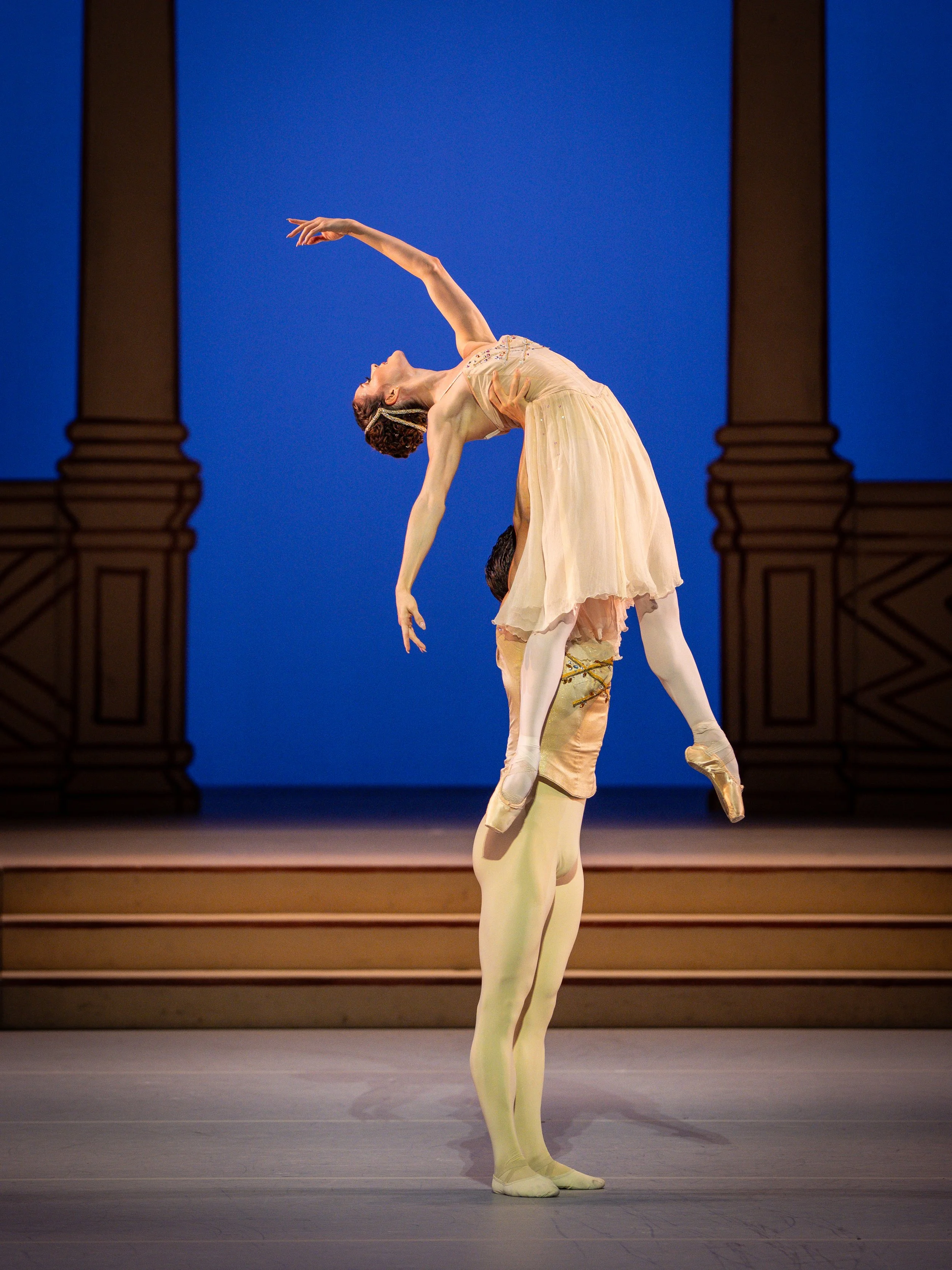
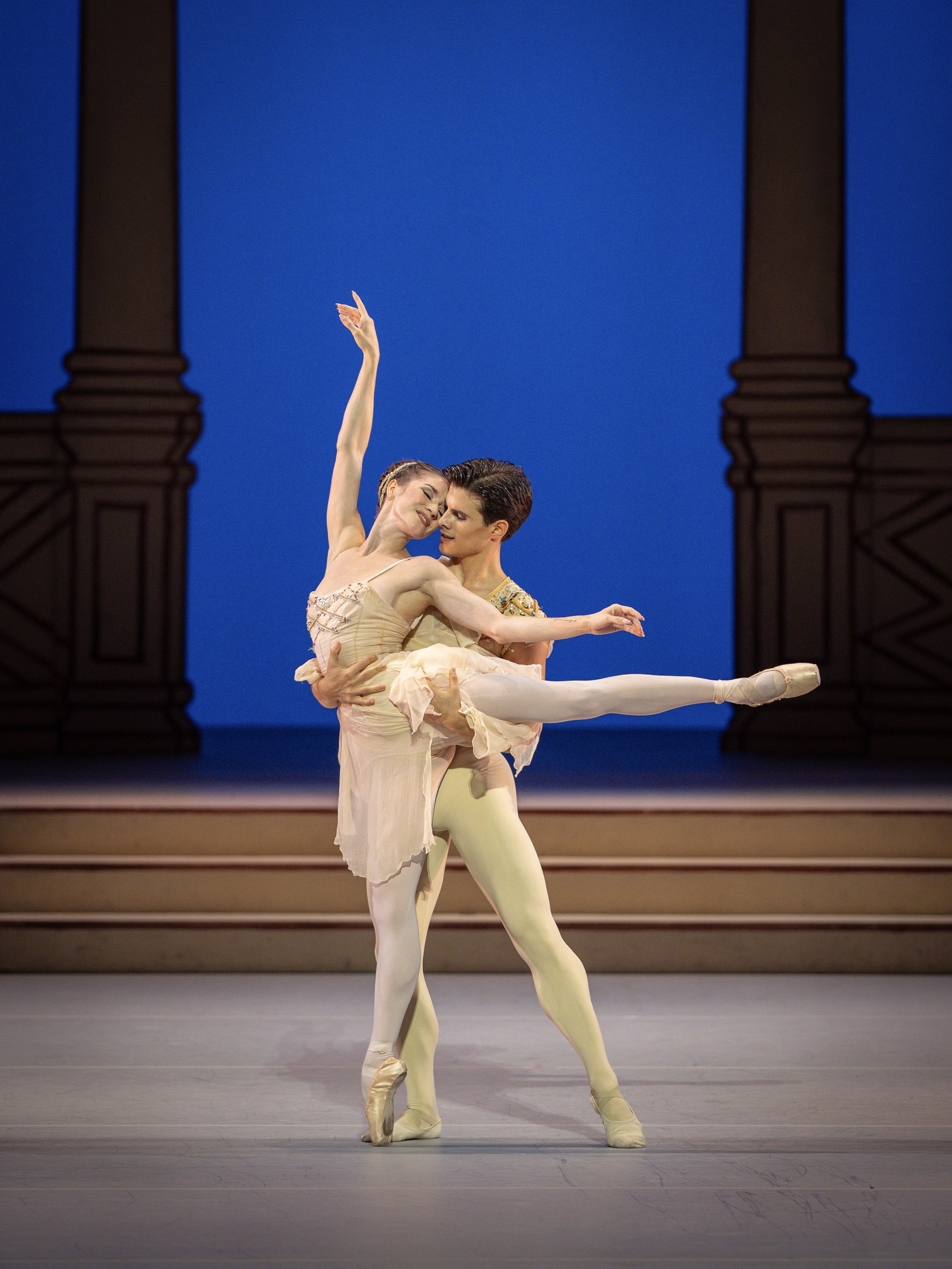
For the main couple, the same very gifted dancers who danced it at the last Gala: Lovely and precise Cassandra Trenary, the former ABT Ballerina, and dynamic Antonio Casalinho, it is not really what could be called „an easy thing“ to perform after a well-deserved, no question, but long two months’ vacation.
I can well imagine how much work and time were invested in rehearsals to give the public such a pinpointed, glorious performance. Yes, and this, one must add, to the last detail and even making it look „easy“. Chapeau.
Both Miss Trenary and Mr Casalinho performed it with such concentration and technical expertise that the audience seemed to be entranced, completely dazed.
Copyright: Ashley Taylor / Vienna State Ballet
It is so beautiful to see dancers, again and at last long, performing quickly – as there is this world-tendency to do things slower and even more slowly than that.
The quality of the technical display that both gave is nearly indescribable. Fascinating. Perhaps the best one Viennese audiences have seen in (many) years. „Rhapsody“ is not an easy ballet – in fact it is terribly difficult, also for the ladies and gentlemen of the corps de ballet.
(Editorial note: Here I must make a short stop and mention the naturalness of a Corps member, Giorgio Fourés, whose open smile revealed not only his natural aura, but also, while watching his fellow dancers perform, much of a beautiful, generous and noble personality/state of mind).
A memorable Evening to remember.
Highly recommendable.
Ricardo Leitner
a t t i t u d e
Vienna, September 19th, 2026
P.S. While waiting on Sunday to go online tomorrow at 11 am (due to technical reasons, I never “publish” anything on weekends), word came to me about injuries. If the information is right, I don’t think it’s a coincidence that the injured people are the ones cast in more than one piece.
Ricardo Leitner
a t t i t u d e
Vienna, September 20th, 2026.