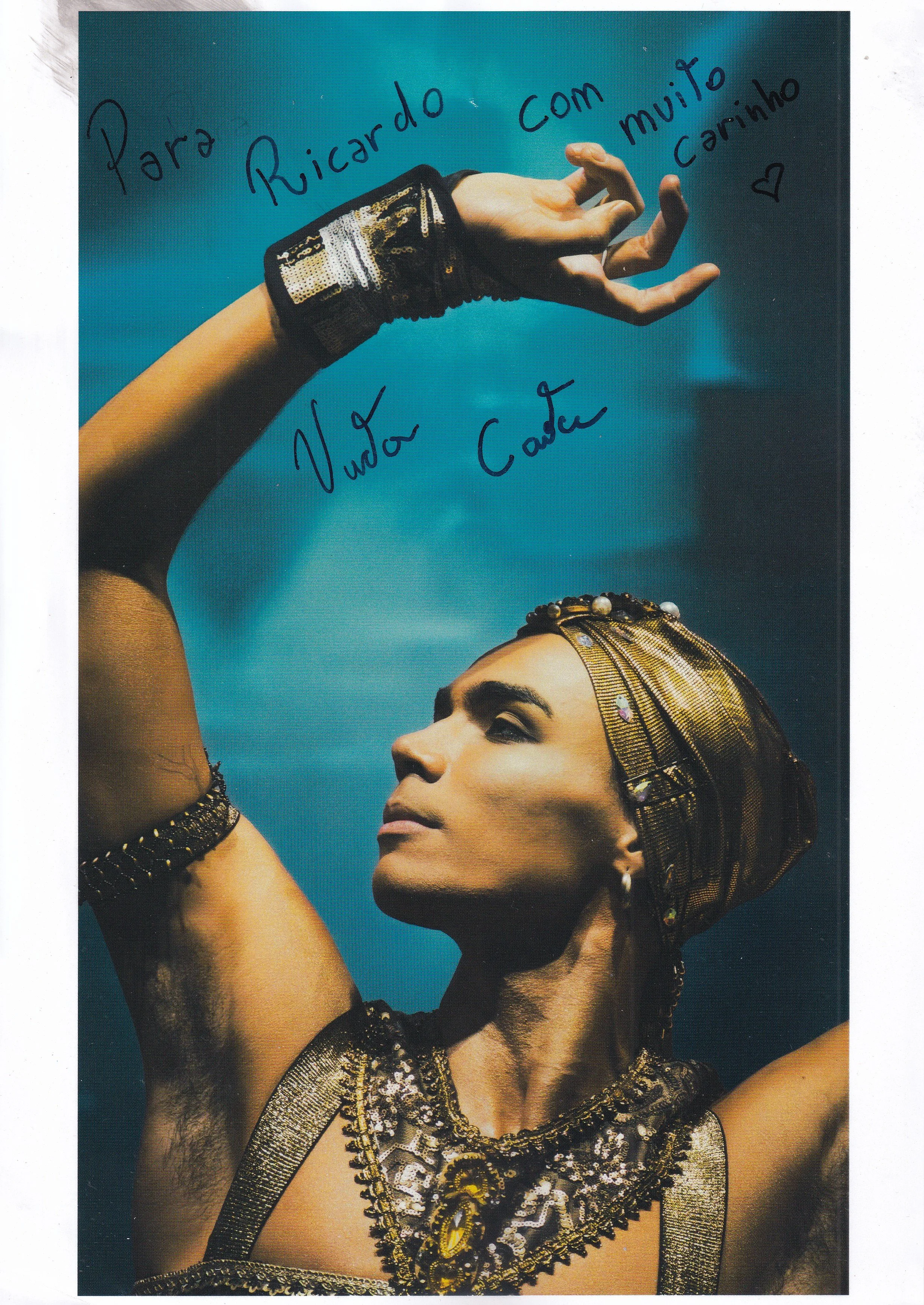
Victor Caixeta – Principal, Vienna State Ballet (Wiener Staatsballett): An Interview, Part 2
Victor Caixeta – Principal, Vienna State Ballet (Wiener Staatsballett): An Interview, Part 2
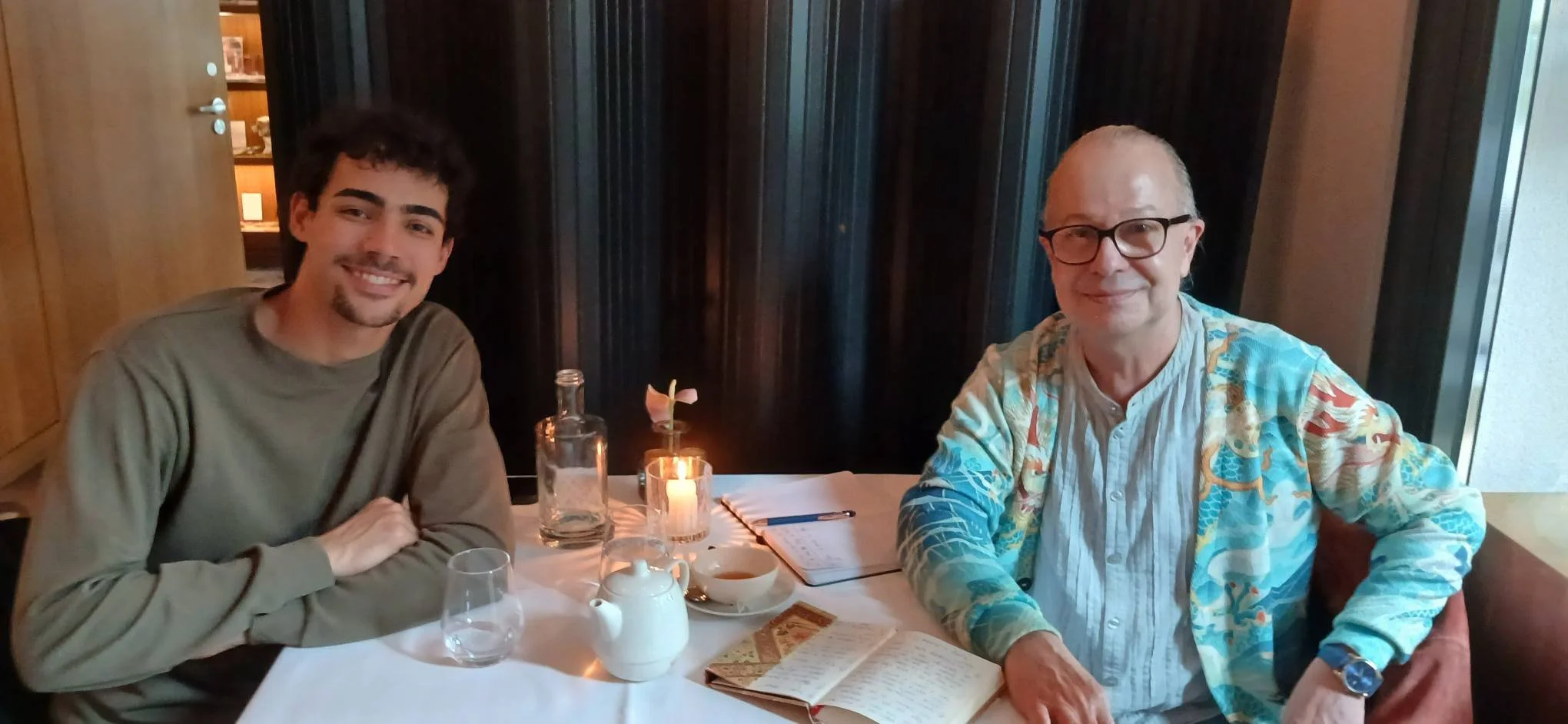
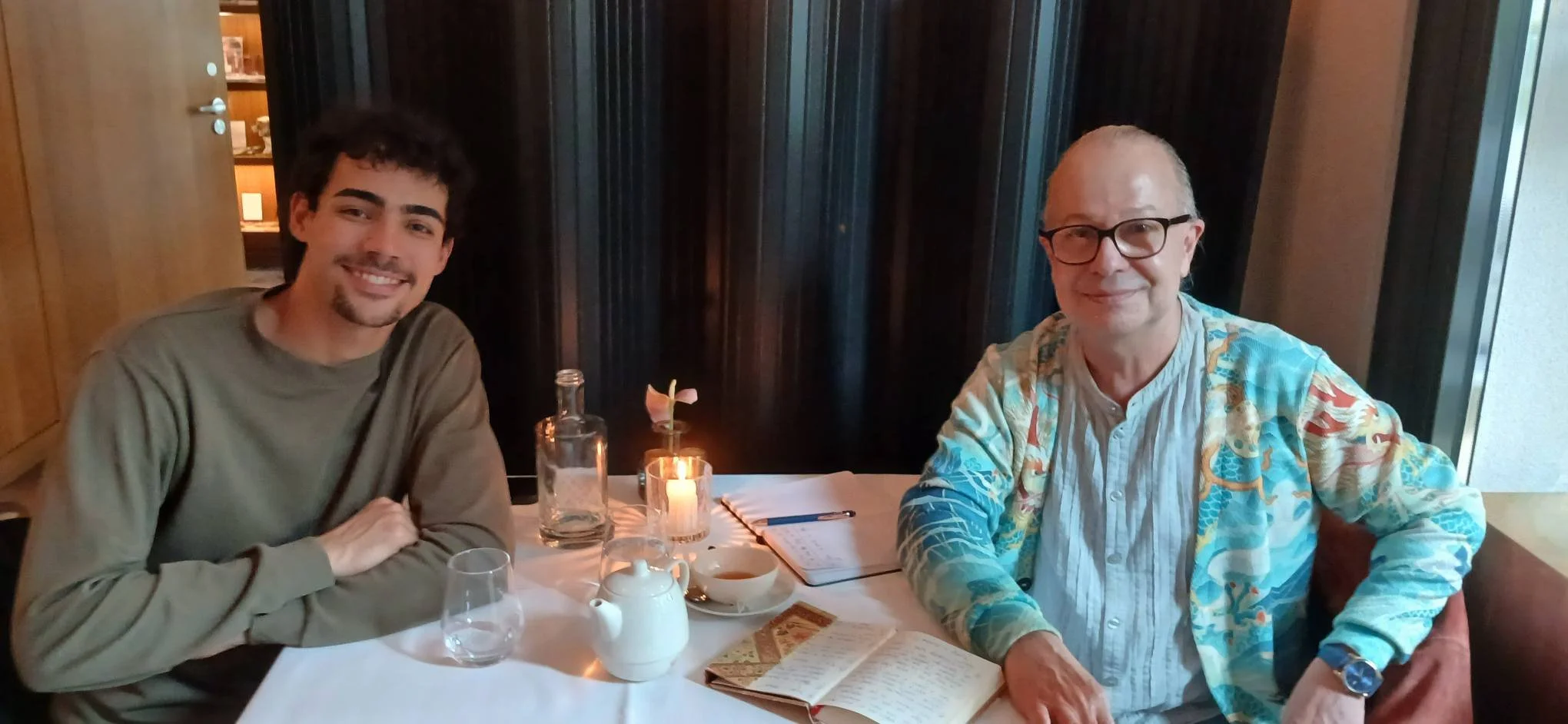
Having talked for a long while during the first part of our interview, we have broached many facts and dealt with quite a few “sensitive” subjects. If you have not read the first part, just scroll back to September 7th. I tell you: It’s worth it because of the many beautiful, very intelligent insights concerning “the ball” (As I like to call this beautiful, often misinterpreted Art form!)
„I see… I have been observing a phenomenon during the past years: Talking of young students… They watch, incessantly, videos on their mobile phones, mostly „competitions“ (which, sadly, make of „Dance“ a „Sport form“). Would you have anything to suggest to them? You are young yourself; they might take you more seriously”
„This is quite difficult for me to answer as Competitions are, mostly, the only solution to enter a company. After „Lausanne“ I had 18 school offers – first I went to Canada as my Mother wanted me to finish my (formal) studies and Canada was a good place for that.
But, going back to your question, watching competitions is „for the kids“ nowadays the biggest reference! Even changing variations to make them even more difficult. I am sure that you are now thinking: „But that is not about Dance“. And you are right, Ricardo; the conclusion is that when they at last begin in a company, they realise that they are completely mistaken. They do not know how to interpret a role and act it properly, according to life experiences. And this is the point: They have neither real-life experience nor the solid experience requested in a ballet Company (Note: And the sensitivity and the sensibility) that is essential for an Artist. These are qualities that create a „simple thing“ called inner life!
Please don’t misunderstand me, as I am extremely grateful to those Competitions. They enabled my life as a Dancer. My Mother wouldn’t have had the money to give me this educational opportunity”
„Let’s talk about Partnering… Apart from the fact that I am witnessing Marcelo Gomes’ incredible ABT influence in the company (The boys from the Corps de Ballet are looking good while partnering. A while ago they never cared much about that, as they were „hidden“ and thought to be „not visible“ behind the partner, to put it mildy – a tendency in many Companies), there is also the „other side of the coin“: Danseurs who want always to look their best and somehow neglect their partners, and this not only „a bit“. What is your opinion?”
„I am quite the opposite of what you have just described: My „favourite part“ in dancing is sharing these moments with my partner. If it makes sense in real life, why not also share this emotion in Art? I know that this is quite uncommon – but I prefer pas de deux to Solos… “
Very unusual, I agree. But this fact reveals, once more, another side of Mr Caixeta’s generous personality and his dance „Persona“. Think of that.
„Any favourite Ballets at the moment?“
„When we consider my present time in Vienna, I can only say that I have been very lucky until now. All Parts, except Giselle (in another version) and Emeralds, have been new for me. Yes, I have been very lucky until this moment, and I must confess that I am really looking forward to giving life to Des Grieux in „Manon“!”
„Even if „Mayerling“ is not one of my favourite Ballets (in fact I don’t like it at all because of the lack of what I call „Ballet Language“ – if you don’t read historical books about the Habsburgs and the social, political situation of the „empire“ on those days, you won’t understand a thing!), I see you as „Rudolph“, and the way he was created by Sir Kenneth MacMillan„
„Oh, I would like very much to impersonate the part. But it is a very complex one. Tough. Because of its difficulty, it is technically quite a big challenge. And so many partners within three hours. But all Dancers like challenges, don’t they?“
„And thinking of the fact that you enjoy, tremendously, partnering… it’d be perfect! Well, the one I am going to refer to, now, is not at all a PDD… What do you think of Béjart’s „Bolero“? I see you in it… „
„Yes, yes!“, he answers happily, „A big dream of mine!“
„For me, you are a Danseur-Noble. Do you feel that way? Would you dare roles that do not require this „Noblesse“?“, I ask.
„First, I am long-limbed; that is a fact.”
„But do you feel like a Danseur Noble? “, I ask quite abruptly, somewhat insisting on the subject.
„Hmmm“, he smiles „I for sure learned to be one in Russia... But I don’t know if it came naturally to me in the beginning. Now yes, with all the experience I have, and most of my repertoire is in that “category”.
But I like to think that I’m very versatile, and want to be remembered as a dancer who could do everything.”
As for the other part of the question, I think I have, somehow, already answered this question, as I mentioned that I would have liked to dance „Spartacus“. Perhaps everyone under some sort of Russian influence tends to be „radical“, but being Brazilian, I felt additionally „a bit different“ when I was there. Perhaps Russians believe more in „typecasting“. I like to try „new things“, and not exactly just what one would expect of me“
I ponder for a while, and although I did not ask him this question, I cannot get rid of this single thought: Can one really „learn“to be a Danseur Noble? Or is this a quality with which one is (luckily) born with? I ask you that. Mr Caixeta is definitely what I consider to be a Danseur Noble.
„About „Romeo and Juliet: Cranko or McMillan?“
„MacMillan!“
„In my Review of „Giselle“, I dedicated quite a few lines to the scene in which Giselle first „appears“ to Albrecht in the cemetery. You inserted what I’d call „the text between two Commas“ in your reactions. And, by the way, quite wonderfully. How is your very personal, creative process when creating a part? Very intense?“
„For sure. I try to connect myself with the parts I play – even the abstract ones. I am very intuitive. It made me happy to realise, when reading your critique, that someone had „seen“ what I tried to project. It is not only about doing the thing at the right time and looking to the right place to achieve the desired effect. It is also about the intensity with which you project. Sometimes „less is more“. Feeling it. Being honest.“
„Stanislawsky?“ (Note: In the Western World also known as „The Method“ (The focus, logically, is on emotional memory and psychological depth), used by Lee Strasberg in his famous New York’s „Actors Studio“
„A part of the Curriculum at the School in Russia, but I was already a grown-up and formed dancer when I entered the company – but in rehearsals the ideology was passed to me!“
„You are an intelligent dancer; you use the information that is given to you. You study it, decode it. Very clever!“, I have to say.
„Ricardo, I don’t really know if I am intelligent, but using a good old Brazilian expression: „Eu sei vender o meu peixe!“ (Free translation: „I know how to sell my fish“).
As I said at the beginning of this article: Such humble, gentle, polite and uncomplicated ways, that contrast very strongly with his critical views, principles and needs of professionalism.
I’ll leave you with that.
Ricardo Leitner
a t t i t u d e
May 29th, 2025
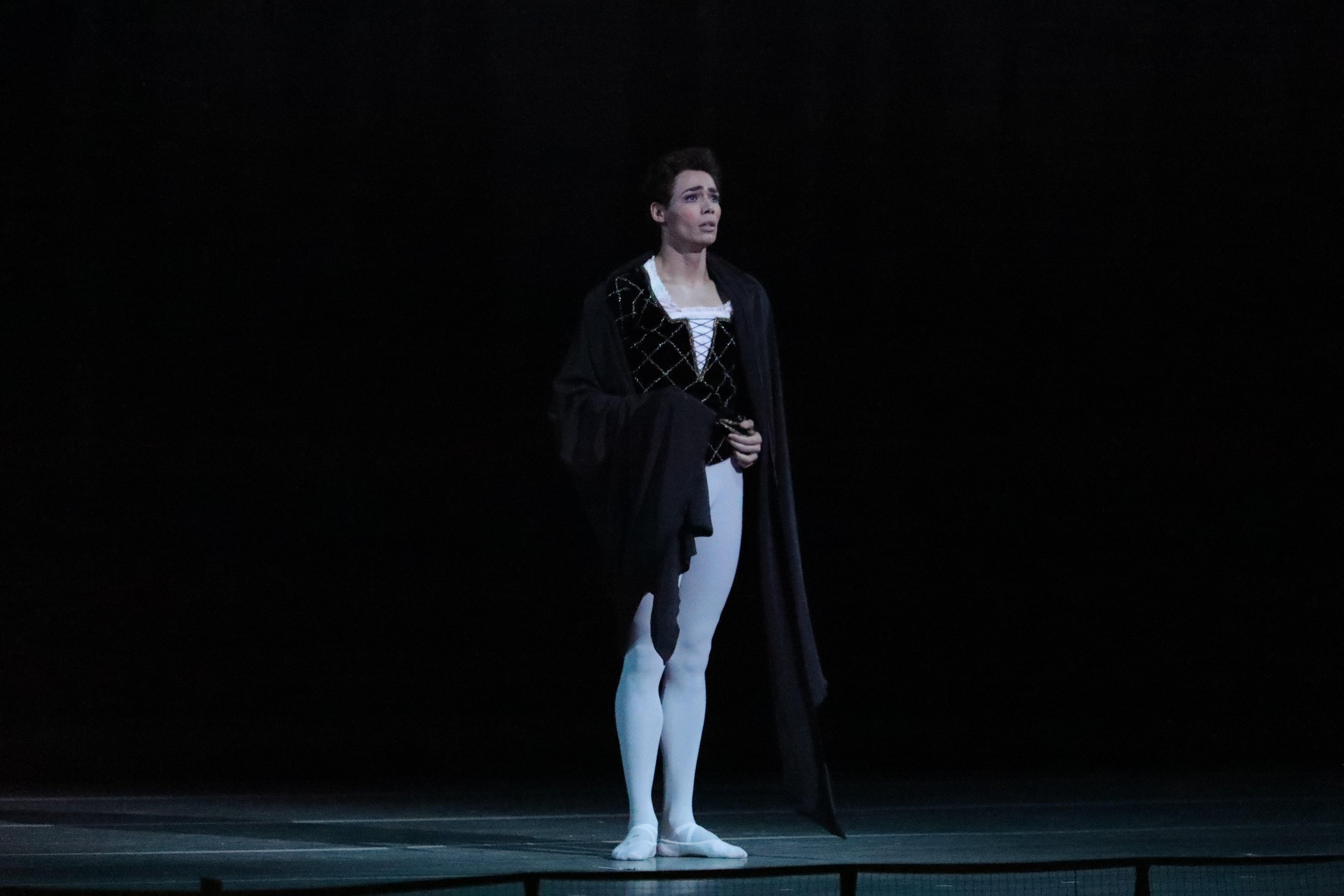
P.S. Just a few days ago, and just after his Première as Des Grieux in „Manon“ (I am going to watch it on June 9th), I sent Mr Caixeta my critique of another cast, which I saw at the first revival performance. I preferred to wait until he had premièred „his“ Des Grieux on stage.
His answer (which included beautiful drawings of Manon and Des Grieux and an oil picture by Leloir):
„I would also like to share with you some images which helped me during my creation process of „my“ Des Grieux.
The show was a dream, a „watershed“ („divisor de águas“ in Portuguese, meaning metaphorically „a turning point“) in my career… Never have I found myself so much in a role…
All the hard work paid off…”
Thank you, Victor!