Milda Luckuté, Vienna State Ballet (Wiener Staatsballett): An interview, Part 1
Milda Luckuté, Vienna State Ballet (Wiener Staatsballett):
An interview, Part 1
I distinctly remember being at a press conference once and listening to a question being asked, in quite an aggressive tone of voice, by a journalist who, I believe, does not understand much about ballet: The question was made in her native language, because of a lack of English knowledge. The Artistic Director, the person being questioned, had to have it translated:
„Why are dancers from the Corps de Ballet dancing with Soloists?“
Nothing more than a question based on the pure acceptance of hierarchy, as if it were self-evident. Definitely, a very old-fashioned idea to my way of thinking. An idea that reveals much of a „very formal“ personality.
The Artistic Director’s answer was simple and brilliant in its honesty.
An answer based on knowledge of the world of dance, experience, and sensibility. Something that, probably, may be completely strange to the person who asked the question: „My casting is done according to what I think is best for the ballet“ (implicitly „not for the hierarchy“). Chapeau. I liked that.
Continuing this idea, I must say that I know some people will ask why I am interviewing Miss Luckuté, as I always interview either Soloists, Principals or well-known personalities of the international Ballet world (such as Ciaravolla, Bocca, Harvey, Fosse, Ferri - and the list goes on).
To those who may be reflecting on that, I would like to say that I interview talented DANCERS, regardless of their status, position in the company, or hierarchy. It is as simple as that.
Adding to this statement the fact that Miss Luckuté is a very promising dancer (and stage personality), who won The London Ballet Circle Dame Ninette Award as the best female graduate from 2023, Ballet Association Award 2022, Lynn Seymour Award for expressive Dance (2nd place, 2021), 1st place by the Youth America Grand Prix in Paris (2018 & 2019), The Little St. Christopher-Prize from the Lithuanian Government (2020), the Hope Award des Youth America Grand Prix (San Diego, 2016) and the Dance Europe Nomination as the „New Name to watch“. She was also a finalist in the Prix de Lausanne 2020 – quite a list of achievements, I must say. Recently, the trade magazine*tanz* nominated her for the prize as Best Newcomer of the Year. This kind of information adds „even (more) spice to life!“
I hope that herewith, I have made my point of view quite clear to all readers.
For me, the gist of the matter of conducting an interview is quite complicated. You meet someone personally whom you only know from performances, playing characters and people they’ll never be. There is usually not „all the time in the world“, because we are all running from appointment to appointment, and during this short period you have to enter someone’s mind, penetrate their soul and their depth and, as I try not to „be on the surface“, this short period together can be very laborious (although I must say that I never ask boring questions to which answers are everywhere on the internet to be seen and read. Questions such as „Where are you from?“, „Where did you go to school?“ etc.). But what is most important is to try to make some sense of it and to put the pieces of this „puzzle“ (which every human being consists of) together.
Therefore, I believe that this kind of interview is extremely important to „younger“ dancers who spend too much time on their mobile phones watching „competitions“ – to realise that there are other, perhaps even more important, aspects to dance, a very „tricky“ art form, than just the physicality of it. Think of that.
Last Season, Miss Luckuté, a very young dancer of 22 years of age, kept surprising the public in general and I. Constantly. Over and over again. (Editor’s Note: I like to talk to other „everyday Ballet-goers“, who perhaps do not understand much of ballet principles but can reveal to me the kind of information I am looking for. Just through them, because they look at things more simply, I can determine if the specific dancer’s „personality“ is jumping over the limelight and really getting to the person who is sitting somewhere in some balcony and not on the Orchestra pit level a few meters from the stage… I always want to hear their opinions. They are utterly important to me!) She has the gift of surprising us, not only because of her stage persona but also because, if I may say so, of her versatility. And as I was to learn during this interview, not only on stage but also in what ideas, principles and logic are concerned. She is one of the few Dancers I know (or that I have known) who has an intellectual approach to her vocation and can express it verbally. I like that.
Very much.
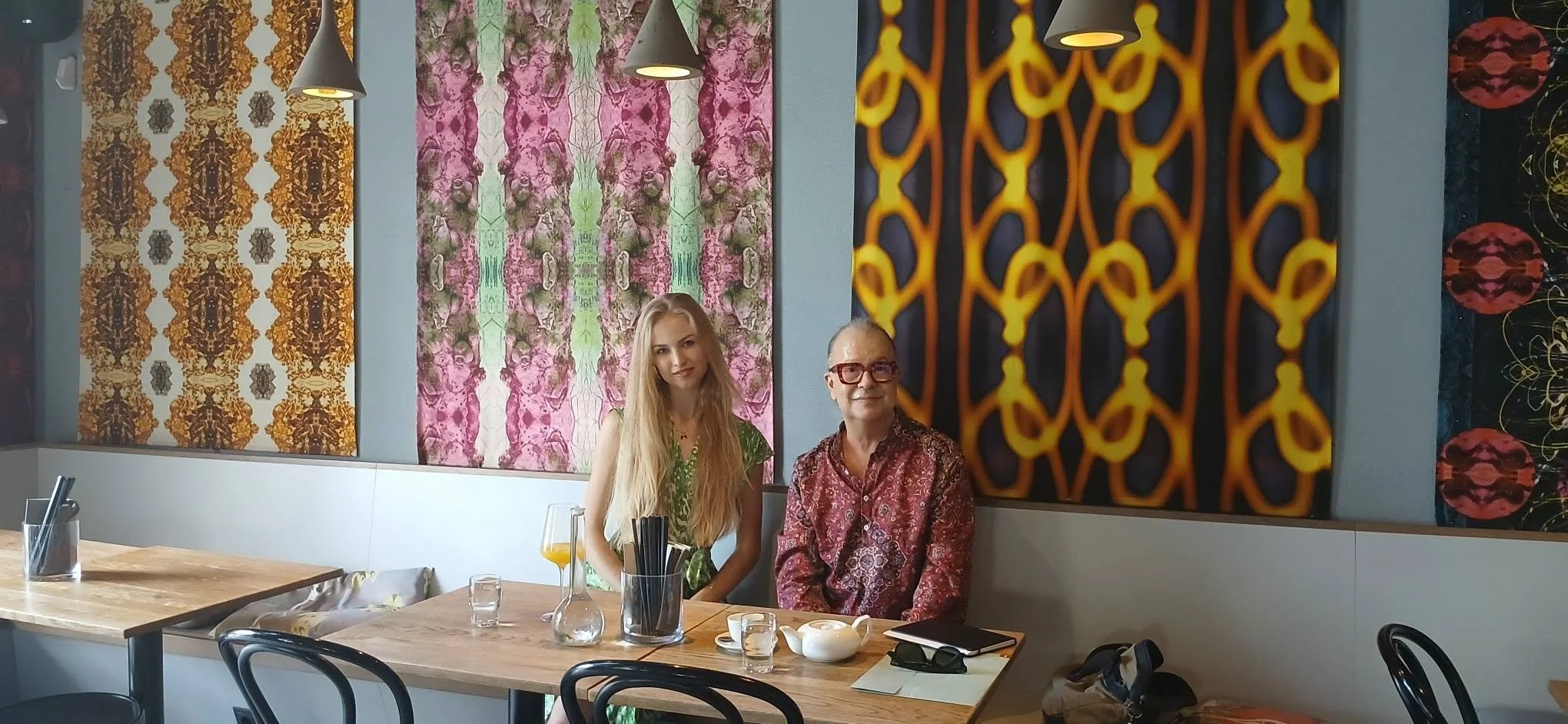
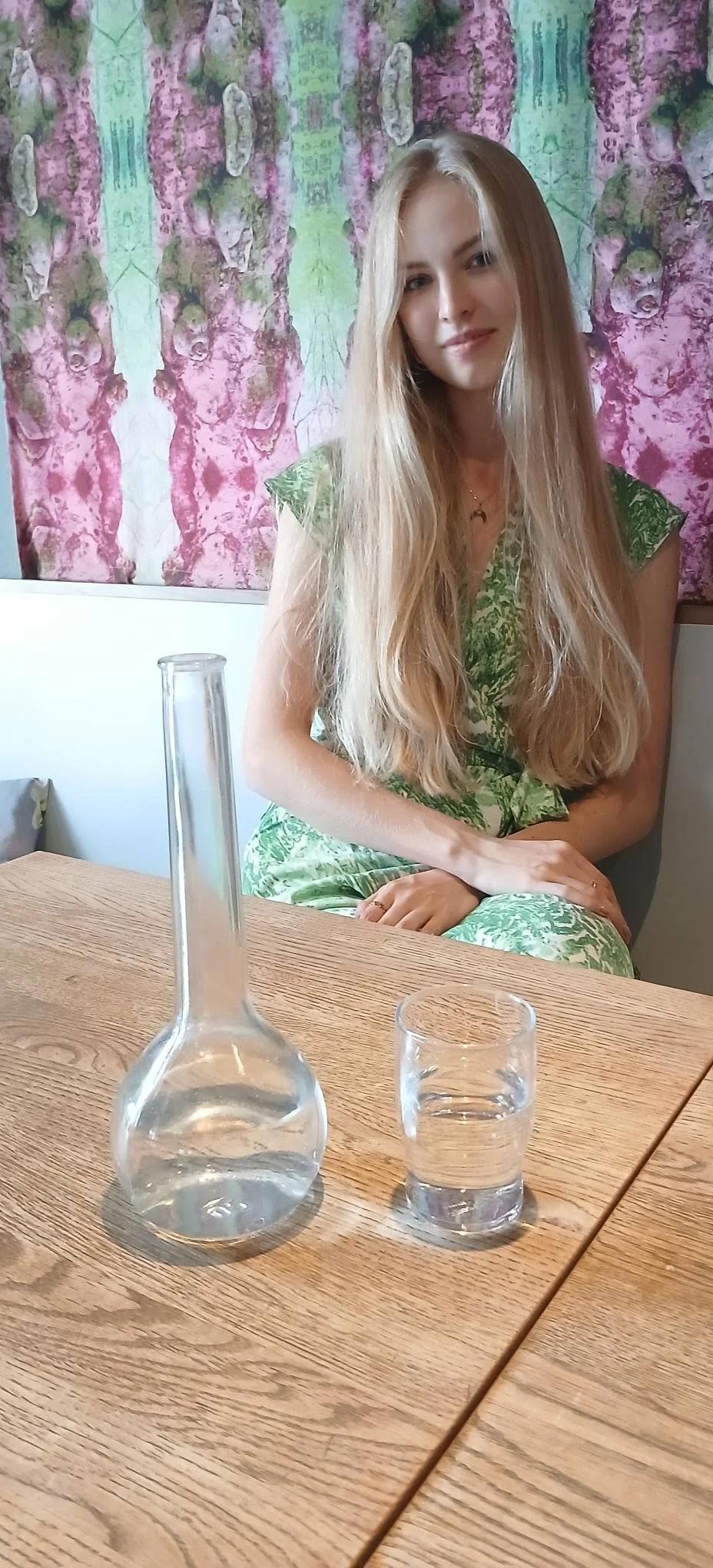
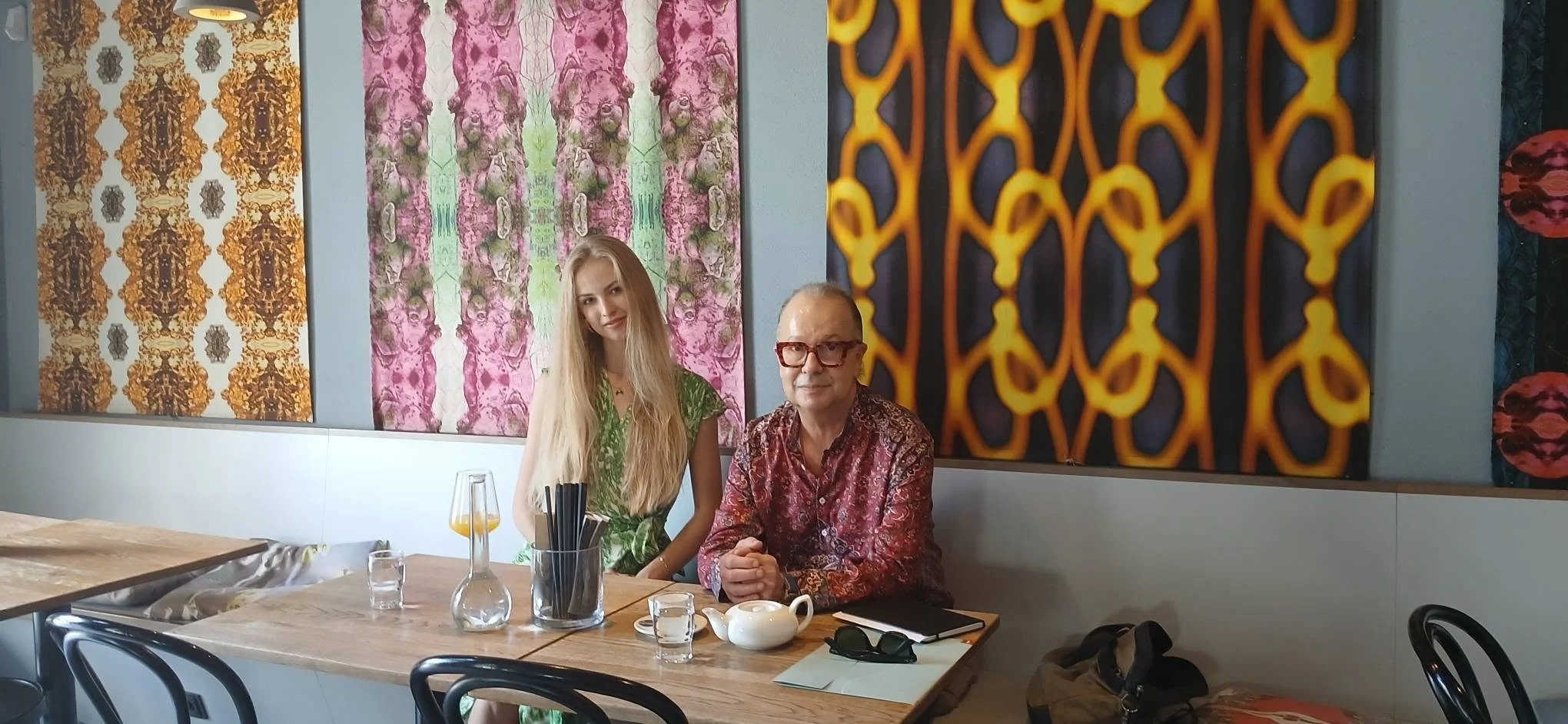
We met at a very „colourful “ restaurant near the Market in Vienna and combined our Interview with a nice lunch. Spices and thoughts. Pleasant discussions and Sushi. Exchange of ideas and Lychee Drinks. A good combination!
To write a critique, or an essay or even an interview, you have to be an observer. This is „conditio sine qua non“ for the job. In our present case, the first thing I „observed“ was that she did NOT put her mobile phone on the table, keeping it in her bag. And I thought „This is a good beginning, and I like that“.
No disturbances. Concentration. Full attention. Respect.
Have you ever interviewed someone who kept answering phone calls and reading messages on their iPhone? I did, and I can tell you that this kind of situation is not „my cup of tea“. Not at all.
But, to make a long story short, what impressed me most, apart from her sweetness and uncomplicated ways as a human being, was the intellectual level at which she „moves“. I thought many times about writing this phrase, perhaps for fear it wouldn’t be understood. Perhaps because it is the first time that I am making a statement like that. Perhaps… But its depth is not to be overlooked. It is part of Miss Luckuté’s personality. Never to be seen disconnected from her. And that explains the aforementioned versatility. And intentionally, I repeat „the intellectual level at which she moves“ because that is the gist of the matter: literally, she moves. But everything has been thought of, as if every member, every part of her body, has been analysed, carefully dissected, so to speak.
I hope you could „catch“ the mood in which this, for me, exceptionally interesting – and enriching (in the sense of improving one’s mind, soul, and life experiences) interview took place. That’s the drift.
„Dear Milda, thank you once more for coming. Before we start, I've prepared a few questions, but we don't need to stick to them. Not at all. They are just a sort of „guideline „ for me, but I am never afraid to „wander“ and let thoughts drift... Let us just talk, OK?“
She agrees…
„But before we start, I would like to ask two preliminary questions: Was your „Myrtha“ last April 23rd your first, or have you danced her before, perhaps at the Semper Oper?“
„No, she was my first one“, she answers quickly.
And perhaps you may think I am mad as a hatter, but which is your favourite colour?“, I add.
She smiles and answers with that definite, incisive sureness which can only be associated with truth: „I will never think that you are mad! Violet!“
And suddenly I knew I was on the right track: We will soon talk about Myrtha, but the colour information… Yes, just what I had thought of. In the „rainbow“ of colour symbolism and significance, violet stands for Spirituality and Imagination; it inspires us to divulge our innermost thoughts, and its mystery and magic spark creative fantasies. It symbolises sensitivity, emotionality, creativity and it is inspirational. Yes, I was on the right track.
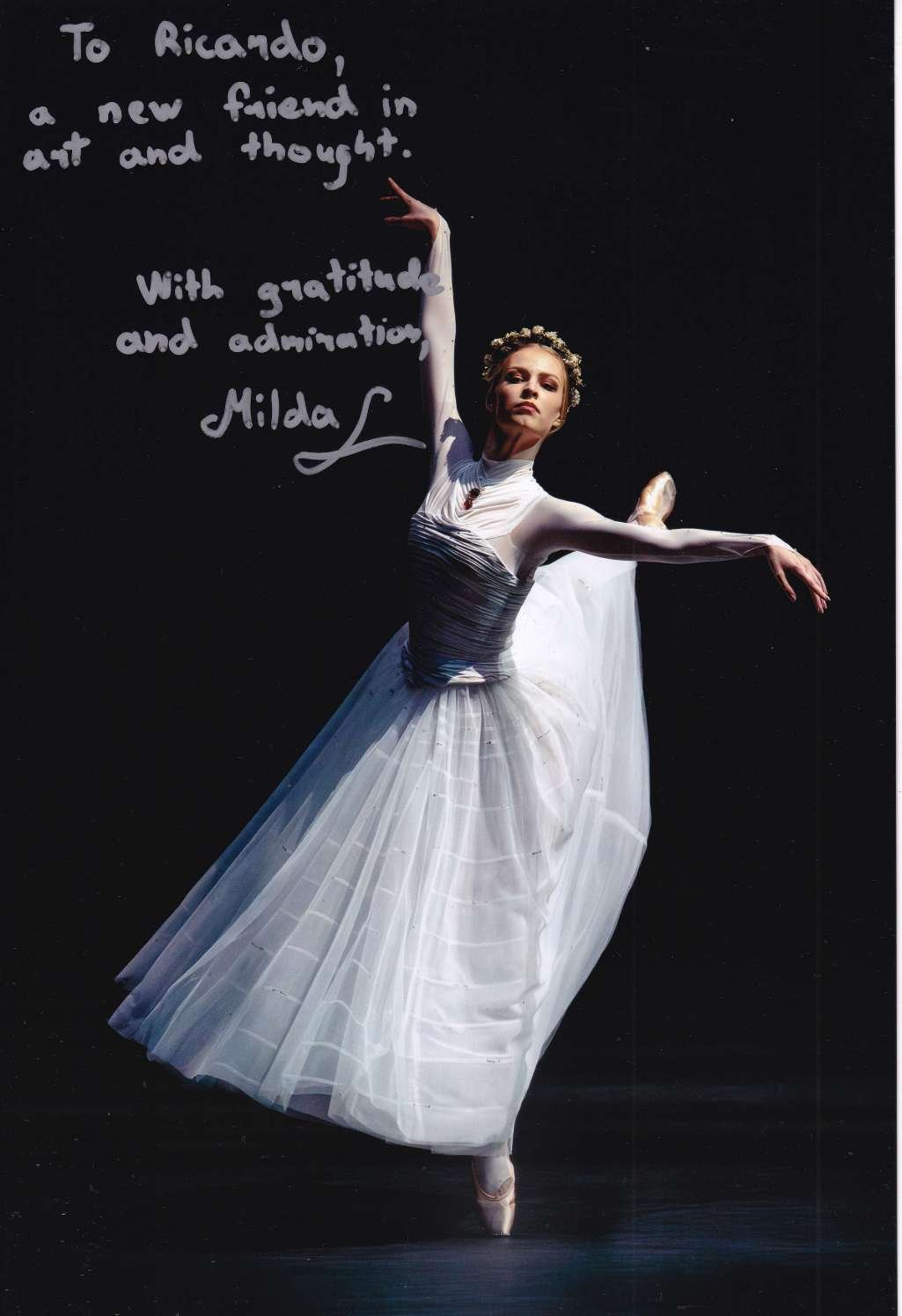
I say, „It’s funny because I remember exactly the day on which I saw you for the first time. It was at „Giselle“last September (2025), and you caught my attention. When I talked about you during intermission with some friends, they said (quite superficially, I must say), „Oh, you noticed her because she is a tall girl“. But I knew it wasn’t that… I came to realise what it was during another Giselle performance months later, but then you were playing Myrtha: I will never forget your „presentness“ (Editor’s note: I was not only talking about „stage presence“. It is more than that – it is „presentness“: full concentration, never leaving the stage and the role at an emotional level).
Think of how „Presentness“ is described in the dictionary:
The quality or state of being present, or existing right now in the current moment.
It seems easy, a matter-of -fact thing and quite self-evident. But it is a very difficult thing to create on stage. The same as with „being yourself“ in the limelight. It is easier to create the illusion of a character than creating on stage the „illusion“ of being yourself. Think about that.
„Presentness. Yes, one is always „right there“. Fully present. Amazing how present you are on stage!“, I started.
She looks at me, giving me her whole attention, and just says, „Thank you“.
And she meant it. Simple as that. As honesty usually is.
I had to add that I did not mean this as a compliment. It was just a simple statement based on truth and on my simple experience as a spectator.
„Milda, how did you „construct“ your Myrtha? I mean, can you tell us something about the creative process?“ (A question I love, especially to motivate young Ballet students, in helping them realise that Technique (and Bravura) are just tools to help them with their artistry).
She smiles, as if admitting that I touched one favourite „pointe“ of hers: „Asking the question “why” is the most important for me in the preparation for the role. WHY is this character the way it is? WHY does it move, act, dance, stand, maybe even talk the way it does? When I answer these questions to myself clearly, all further development starts to make sense effortlessly. I always come up, to myself, with a little background story. Let me explain that a bit more closely: I create a whole life-story about each character (or part!) that I am playing. Even for abstract roles! It makes it much easier for me to respond organically to the role. The same procedure I had done with the Queen of Babylon in Ratmansky’s „Callirhoe“ back in January. I must get information. And I am always using „external information“ not only for the construction of a ballet but also for myself as a person. I listen to music all the time, quite eclectically. I visit at least one museum every week. I read every day; in fact, I am always reading two books at the same time – one physically, the other one digitally“, and I cannot help but think „I love this girl!“.
„How do you think „information“ affects dancers? I feel sometimes that they are now living 100% in the „cocoon“ of the ballet world and do not even care about what is happening in the world (Think of an Austrian Dancer who, egoistically (and brainlessly), just thinking about her career, went to Russia while everybody, every person who can think, was leaving the country because of another pointless war – like all wars are). Is this true, or is it just my impression?“
„Yes, and I understand that the world is not a „Pony Farm“ and I also understand that a total dedication to ballet is needed. But more is needed. Much more is asked and demanded from the performers. To „reach“ the audience now, you must, even being „historical“ in a narrative ballet, be able to communicate to today’s audiences, and this requires not only „their language“ but a full understanding of the global situation!“. I like that.
„I would like to refer now to what I call, humorously, „The Baltic state of mind“ – for everyone that I met from there showed me what I described when I asked you about your favourite colour. And this is, fascinatingly, specific when talking about Lithuania, Latvia and Estonia.“
She laughs.
„I must add another point: All people from the Baltic countries I have met were, one way or the other, passionate about what they were doing. How do you relate to that, and how much do you think that this, let’s call it now „Lithuanian State of mind“, influenced (and still influences) your work? I ask this because, even if you were at the Royal Ballet School in London, you „project“ on stage so much more than English dancers do“, I dare ask.
„It is funny you should mention that – this is he first time somebody has asked me something so clear to me, and yet I had never thought of it“, she says „ My teacher, whom I have much to thank for, my family, my teachers, my parents have something in common: Whatever they do, they do it to the fullest. I always did the same, be it doing a ballet class or gardening. There was no other „possibility“. I grew up like this. My surroundings made me think of it as natural. On top of it, my whole family is very related to art, and Egle Spokaite, who was the most dramatic Ballerina I have ever seen. It was SHE who introduced me to Art, and this was a privilege!“, and by saying that, she made me feel the importance and respect of her, why not say it?, attitude towards Dance, Art and, I must say it, Life itself. Admirable.
„A light question now“, I say laughingly, „If I were a „genie in the lamp“ and if you found the lamp, rubbed it, and I appeared to you to make three of your wishes come true (in this particular case, three roles you would love to dance), what would you quickly and spontaneously say?“
She does not think twice and answers quickly without hesitating: „Neumeier’s „Lady of the Camellias “, Odette & Odile and Béjart’s „Boléro“. And I can see and feel why… Great choice. Chapeau!
To be continued on October 12th, 2026.