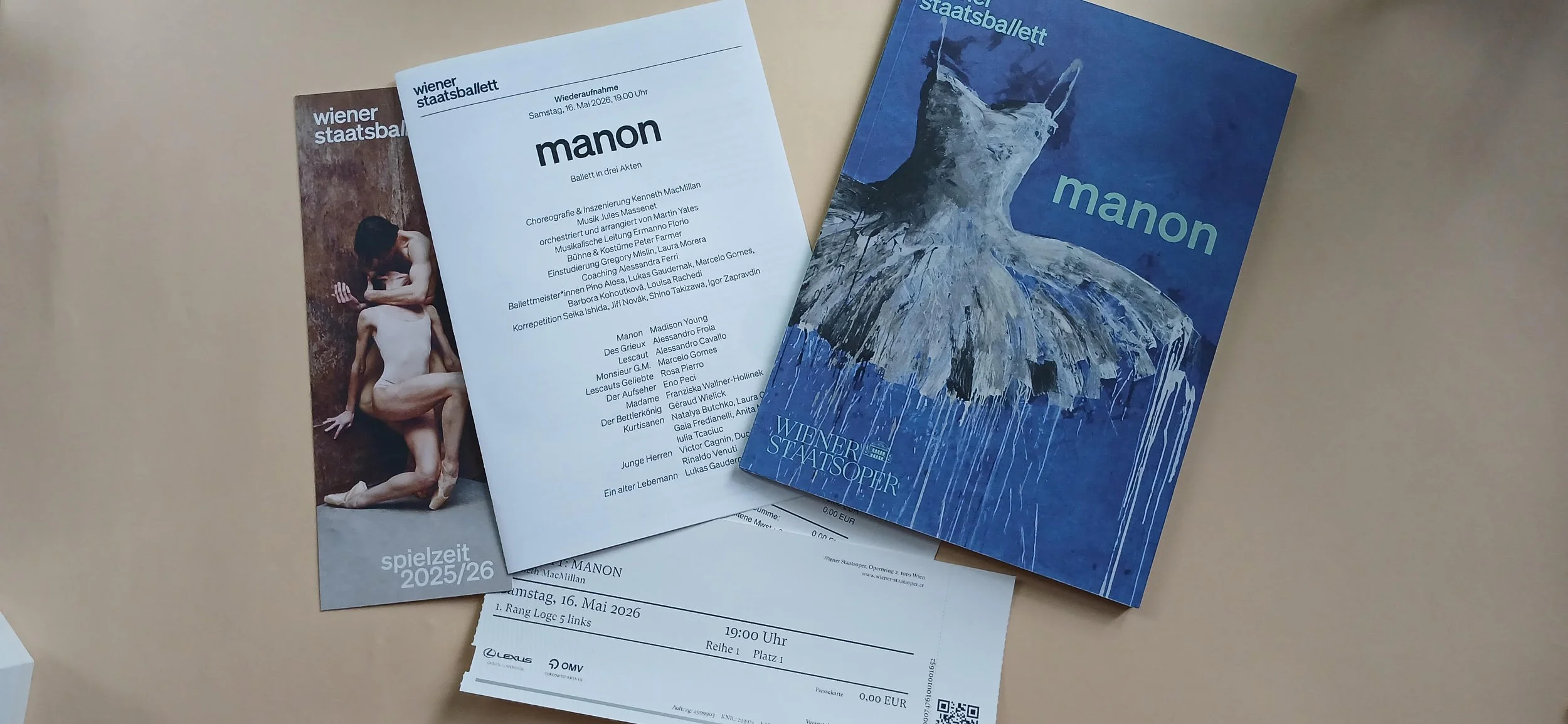
„American Signatures“, Première: Vienna State Ballet (Wiener Staatsballett), May 9th, 2026.
„American Signatures“, Première: Vienna State Ballet (Wiener Staatsballett), May 9th, 2026.
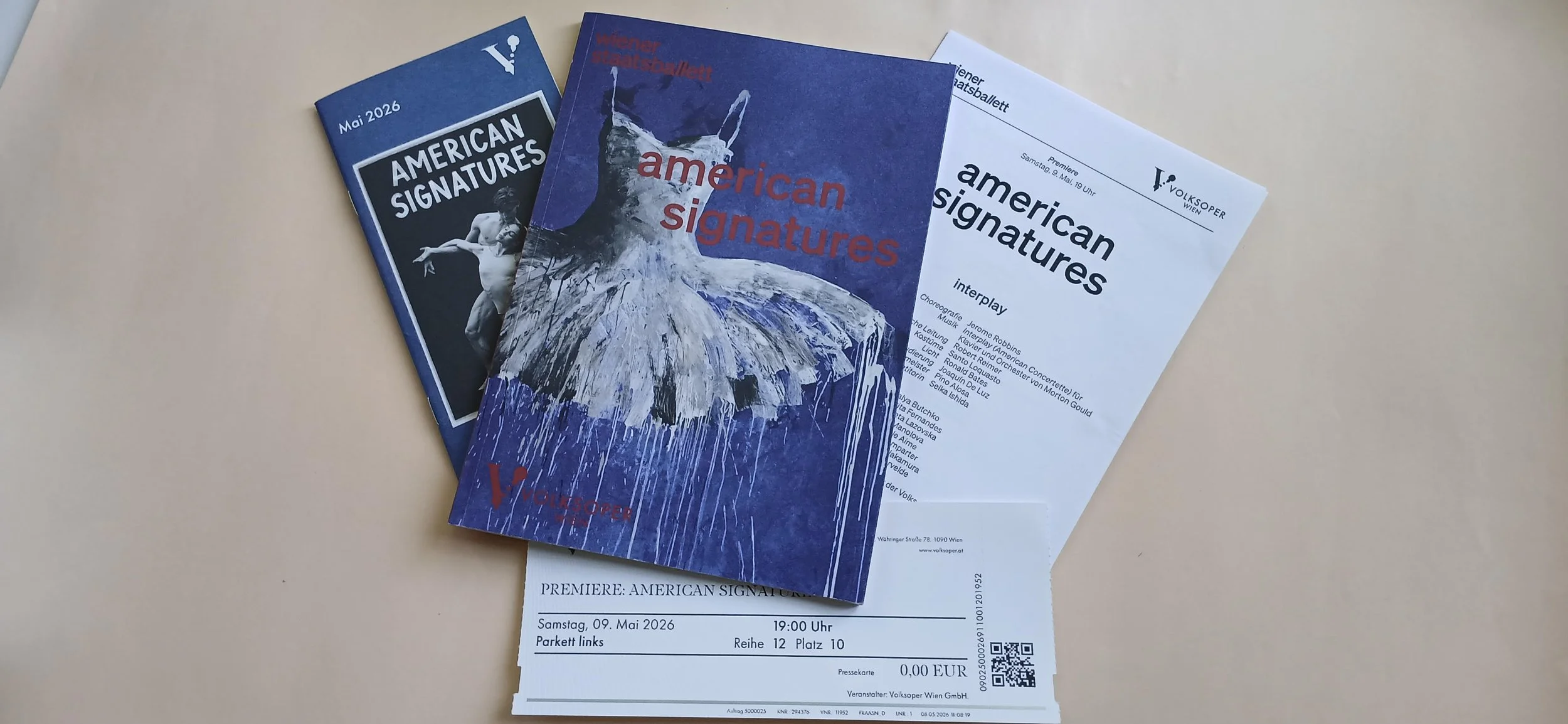
Copyright: a t t i t u d e / Ricardo Leitner
I happen to be Austrian by birth, but having been born „abroad“ and having grown up in South America, I consider myself Brazilian. A (South) American. Therefore, like many other people, I have an „oblique“ relation to the word „America“ when referring to the U.S.A., the country.
America is a continent, you see, and is divided into South America, Central America, and North America.
It begins in Patagonia and ends in Alaska. The U.S. is a country, like Canada, Mexico, Cuba, Argentina and Venezuela. A continent.
But that is a completely different story, and I have not let the „wrong entitlement“ of this (very special) evening disturb me at all. But I particularly think of it better as “U.S. Signatures”.
It is not easy to find the right material for a triple-bill. Let alone for a quadruple one.
We have been given a programme of the highest calibre possible. Four very different pieces, four extremely distinct dance languages, presented in an ascending scale that caught the audience somewhat by surprise. The intricate levels of emotionality never stopped getting deeper and stronger, culminating in nearly turning the Opera into a temple. One that celebrates Art in a very pure way. A perfect programme concept.
Alessandra Ferri presented us with a beautiful conception for a (more than) wonderful evening. Touching.
No question that the public reacted ecstatically, giving the whole ensemble a strong applause that was somehow „translated to“ me as: „Yes, I see“.
Copyright: Ashley Taylor/ Vienna State Ballet
Happily, the evening began with Jerome Robbins’ very interesting „Interplay“, which I had never seen before. Robbins’ second choreography ever must have been „revolutionary“ back in 1945. It reveals today some „care“ to retain a certain formality (8 Dancers who begin the piece in very „square“ 4/2 beats). This is easy to understand. This has been forgotten, but Robbins was „fresh“ from Vaudeville and trying to conquer a place where the „legitimate Art“ was played. Such interaction between Burlesque, Vaudeville, Broadway and the legitimate Stage was not unusual in those days. But as mentioned before, this has long been forgotten – perhaps because people like to think that they are representative (only) of the „serious stage“. A shame, to my way of thinking, as I do believe that all Art forms „interact“ with each other. Jerome Robbins choreographed for and directed on Broadway until the end of his life. Mr B. did not only Broadway but also Hollywood (For example, „On Your Toes“ with his then-wife, Vera Zorina), Madame Danilova did a Broadway musical, Nureyev jumped at the opportunity to play in Ken Russell’s „Valentino“, as did Baryshnikov to play alongside Liza Minnelli on „Baryshnikov on Broadway“. There was no „snubbing“ towards „lesser“ Art forms. There was an openness which was much stronger than the pretentious ones from the present. Think of that.
Most of the dancers seemed relaxed and comfortable, as one could see while they informally sat around on stage in a very légère attitude. While sitting “casually around”, Margarita Fernandes seemed a little bit stiff in comparison to the others, with a certain classical ballerina “sitting attitude” – but let us not forget that she had given her „Giselle“ Dèbut, which seems to have been a very special one, just the night before and, let’s be honest, it is tremendously difficult, intellectually, emotionally, and technically, to go from „Giselle“ to Robbins’ „Interplay“ within less than 24 hours. It is more than quite a difficult task; in fact, it is an ordeal to make such a transition in just a few hours. This was a serious disposal error and surely quite stressful for Miss Fernandes. To “press the light switch” and change completely stylishly. It’s like singing in „Butterfly“ in one evening and in a Blues Concert the next.
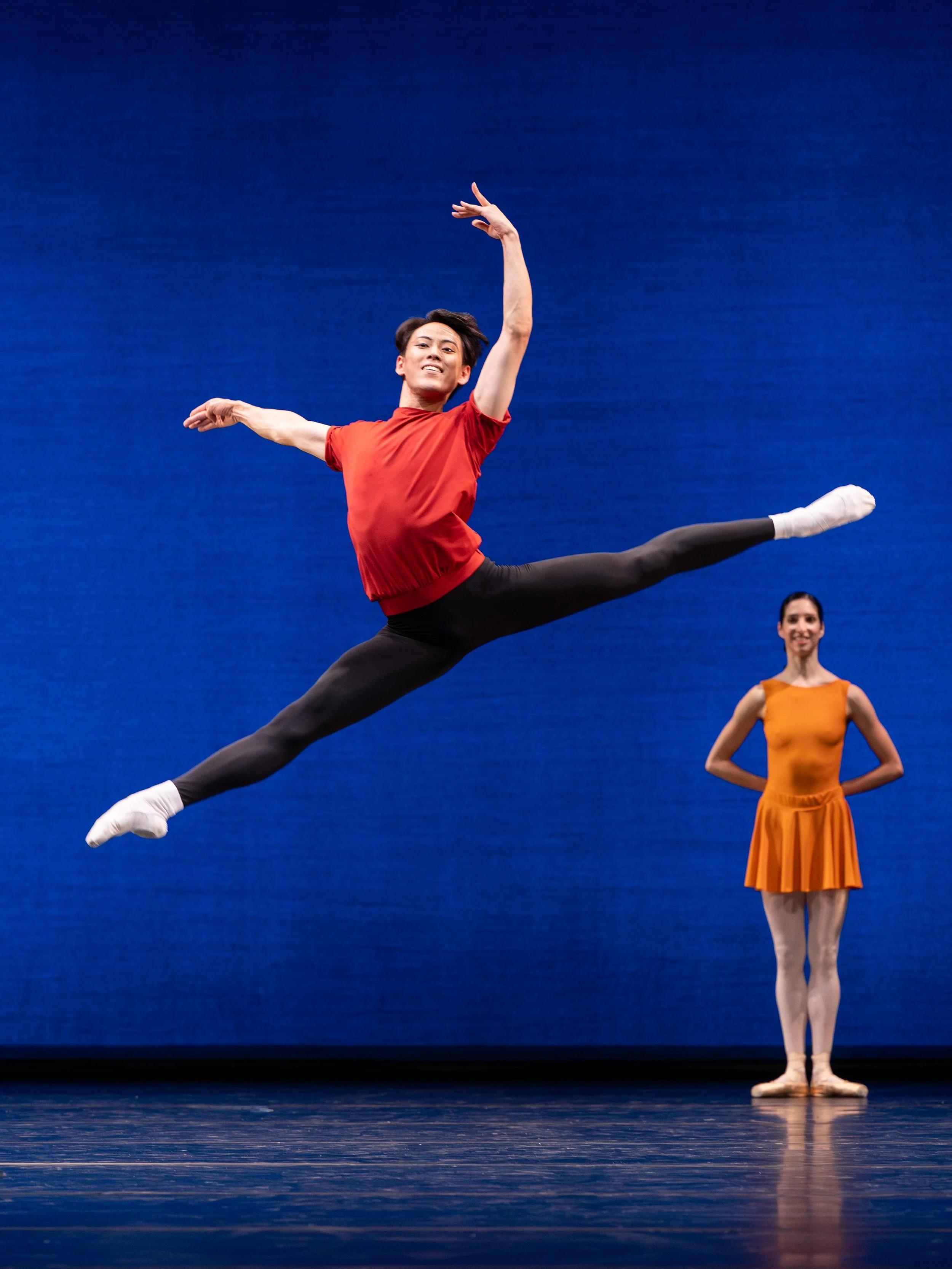
Many interesting performances, and among them a newcomer who caught my attention: Yelyzaveta Lazovska. Very harmonic lines, stage presence and a natural sense of musicality.
Copyright: Ashley Taylor/ Vienna State Ballet
Junnosuke Nakamura, with his very bright presence and lightness, left a good impression,
Copyright: Ashley Taylor/ Vienna State Ballet
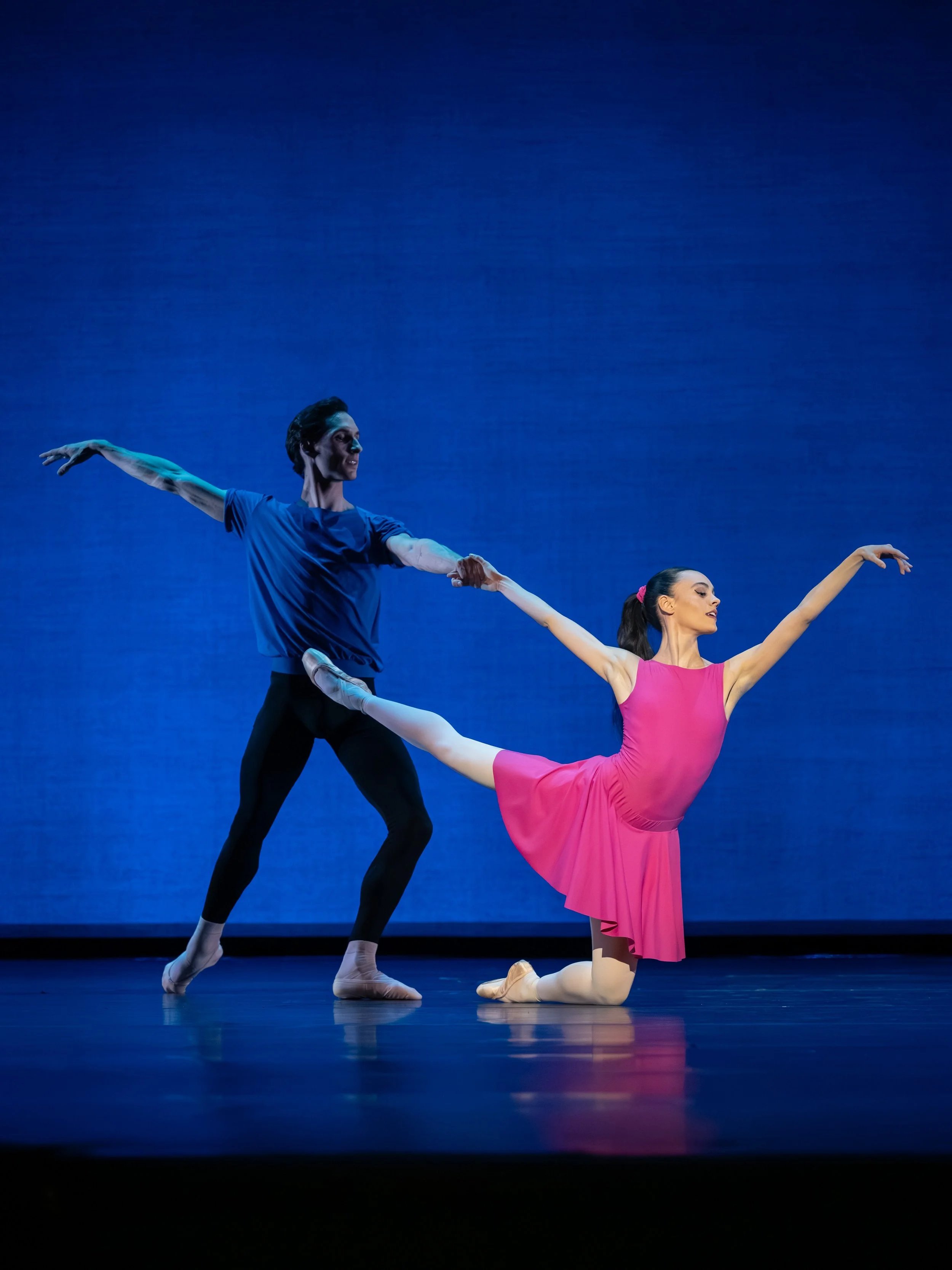
and Arne Vandervelde and Natalya Butchko shone like beautiful gems. Their delivery of the „Blues“ (Byplay), the 3rd part of Morton Gould’s „American Concertette No.1“, was fabulous. Both experienced dancers are in very good shape. The kind of dancers one can rely on: Professionalism always mixed with a sense of naturalness and particular interpretation. Definitely personal and unique.
„Interplay“, which turned out to become a classic after premièring with Alicia Alonso, the great Tommy Rall and others, was taken into the repertoire of ABT. It was composed 9 years after Richard Rodgers’ „Slaughter on Tenth Avenue“, but both became sort of „cousins“ in this groundbreaking phase of Dance in the States.
Modern for the times in which it was written, while relying on the classical technique within this „lay-out“ that carries a certain spirit of modernity and contemporary perspective, it still is (after more than 80 years!) a dynamic, quick, light, fun, and very light piece!
The next piece „opened the second page“. A totally different one. Another story completely.
Copyright: Ashley Taylor/ Vienna State Ballet
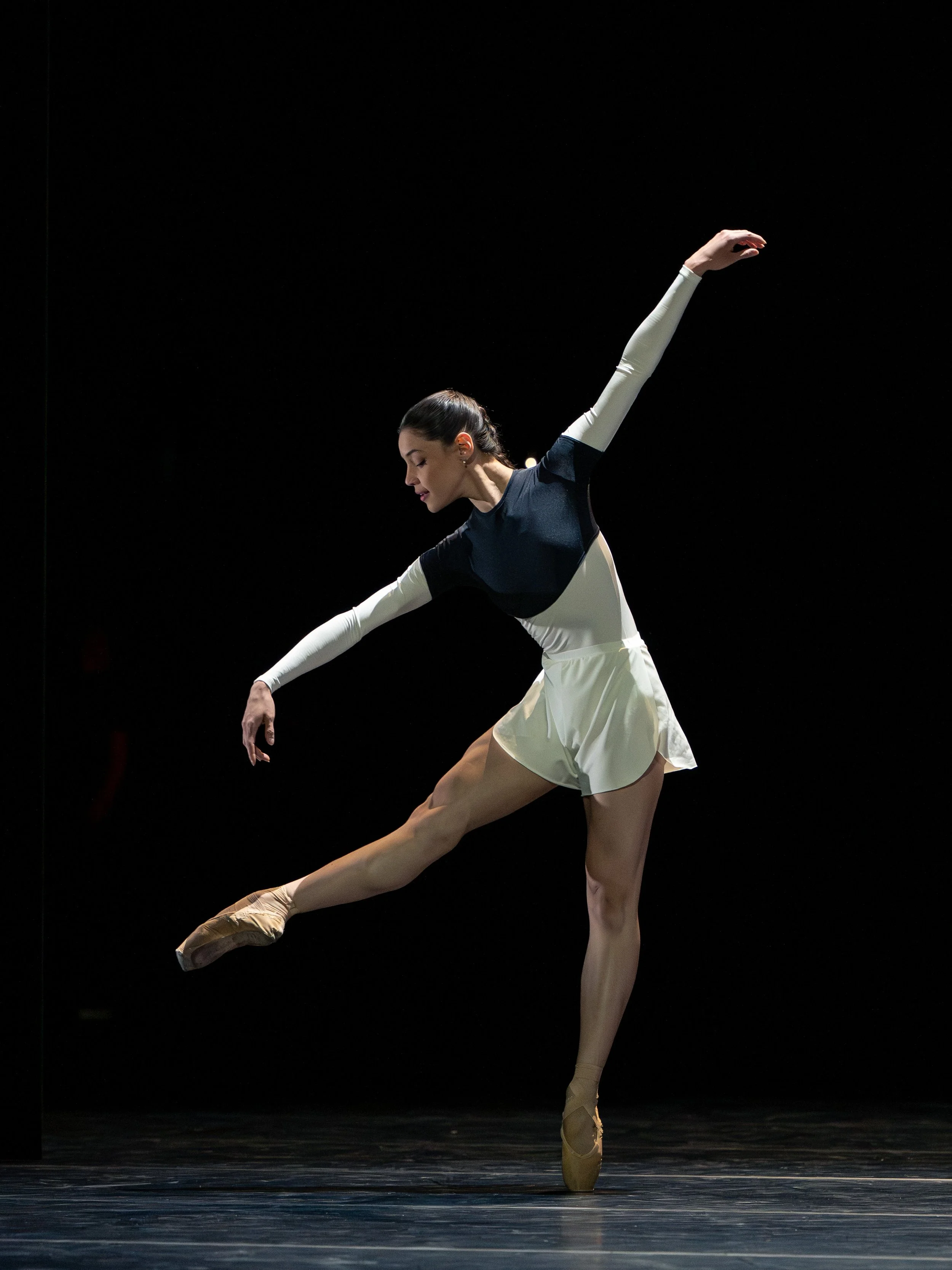
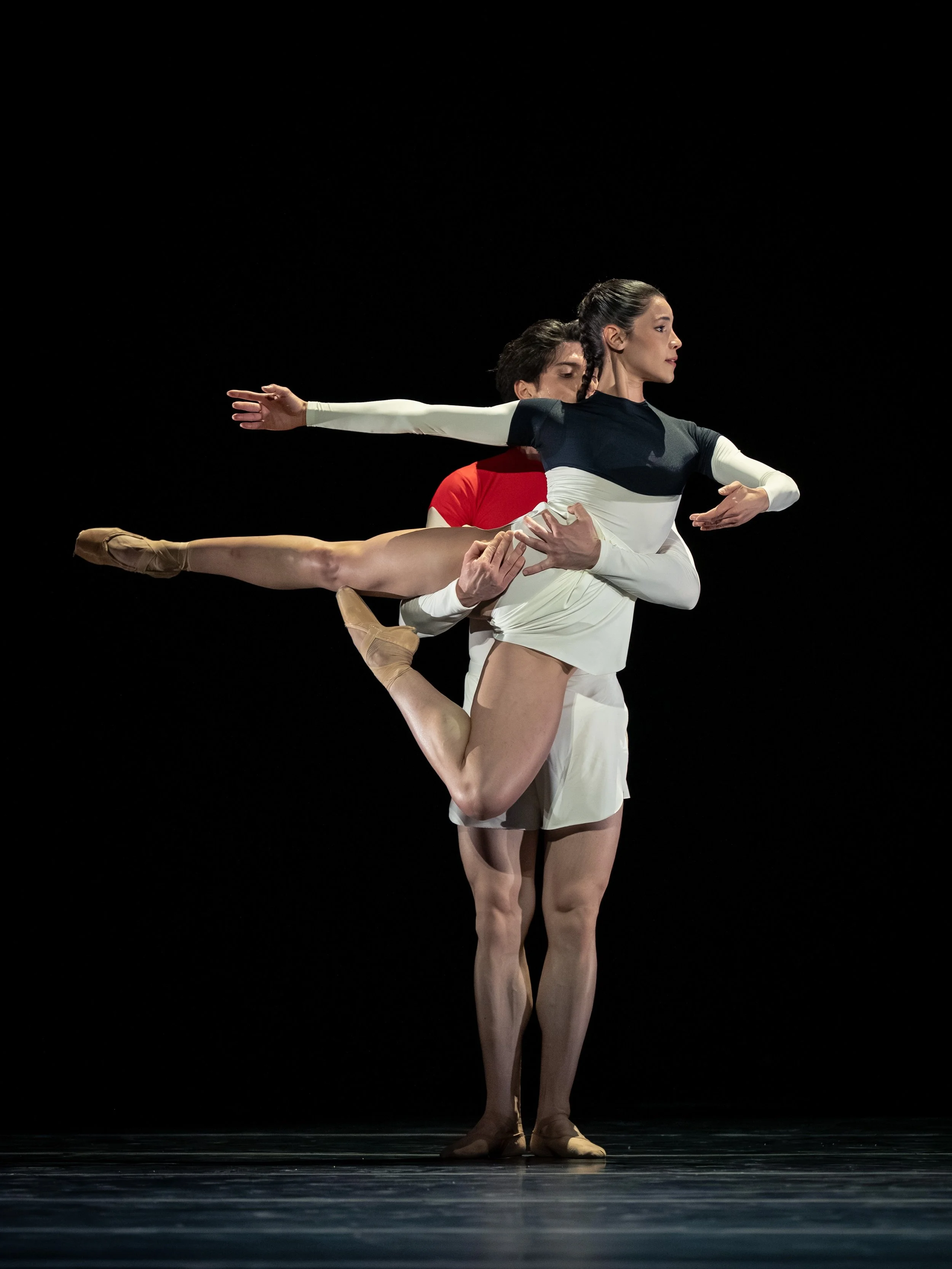
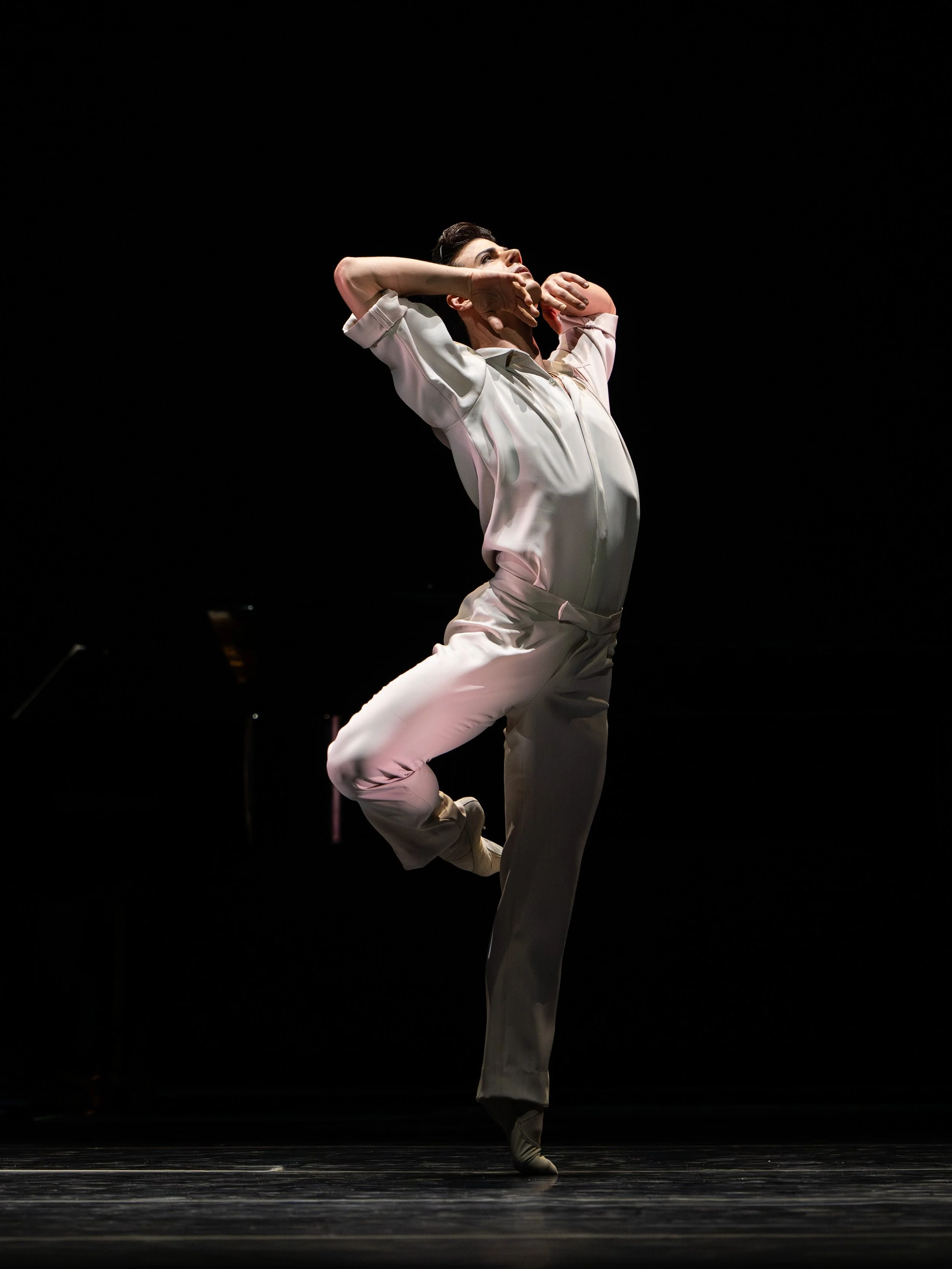
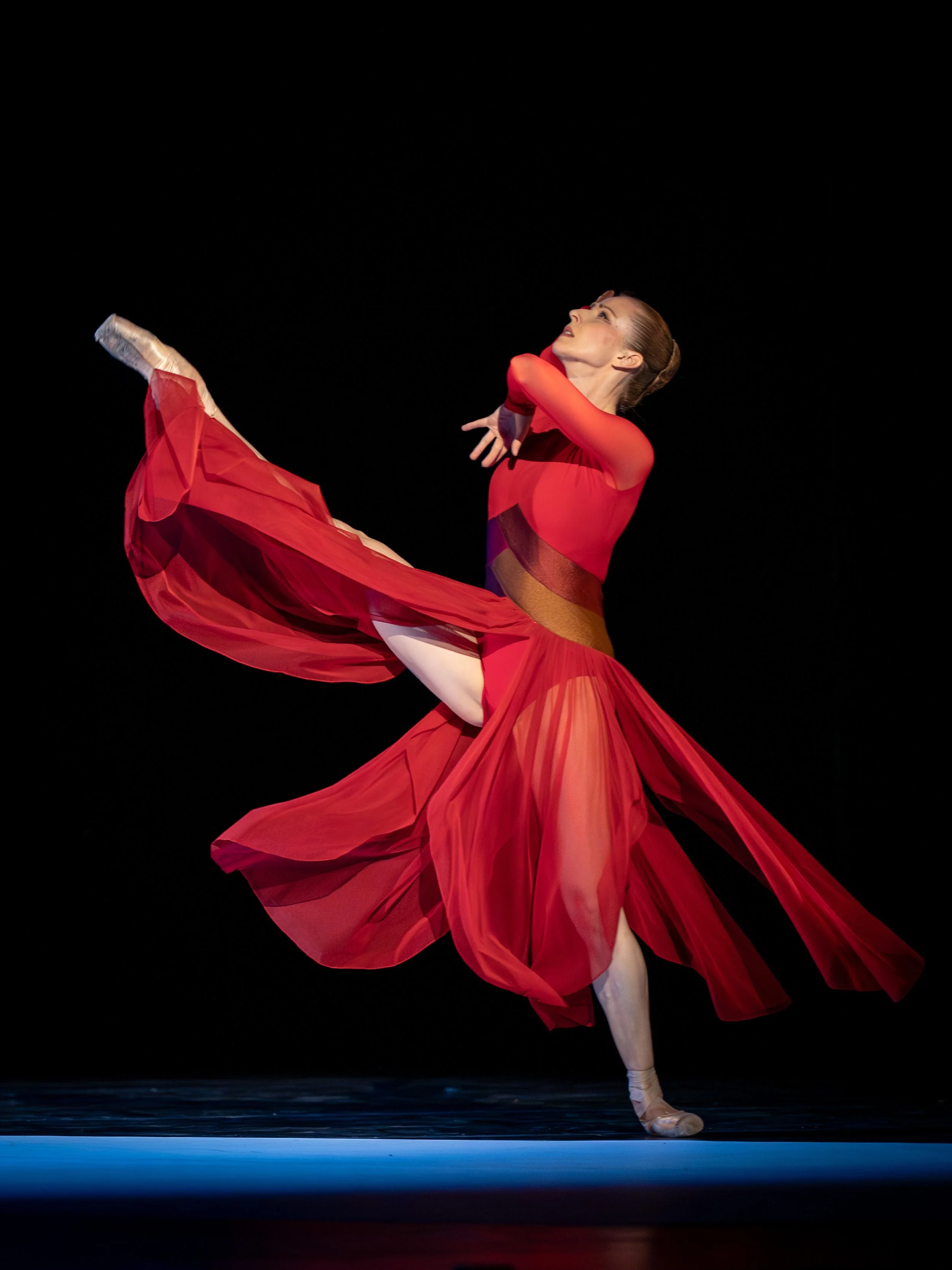
Pam Tanowitz’s „Dispatch Duet“ to Ted Hearnes’ catchy music is a very intriguing piece. At the same time that it arouses deep interest, curiosity and fascination, it is quite unusual, mysterious and unexpected. At times, it decodes movements that are so customary and regular in the classical ballet „vocabulary“ and then surprises us by using them in the most „non-habitual “ form. Fascinating.
Copyright: Ashley Taylor/ Vienna State Ballet
The choreography requests the dancers to be at times provoking, fun, maddening, and even erotic, in a very bright display of a huge spectrum and in a very specific dynamic. To top it all, the music is not „countable“, I mean one cannot count beats, etc. One has „marks“, very specific ones, that „guide“ the dancers throughout the piece. I most admire dancers who can do that. Because an extreme sense of “timing” is conditio sine qua non to be able to perform it precisely.
And Duccio Tariello and Synthia Liz, in perfect unison, managed to do that, splendidly.
Chapeau.
Copyright: Ashley Taylor/ Vienna State Ballet
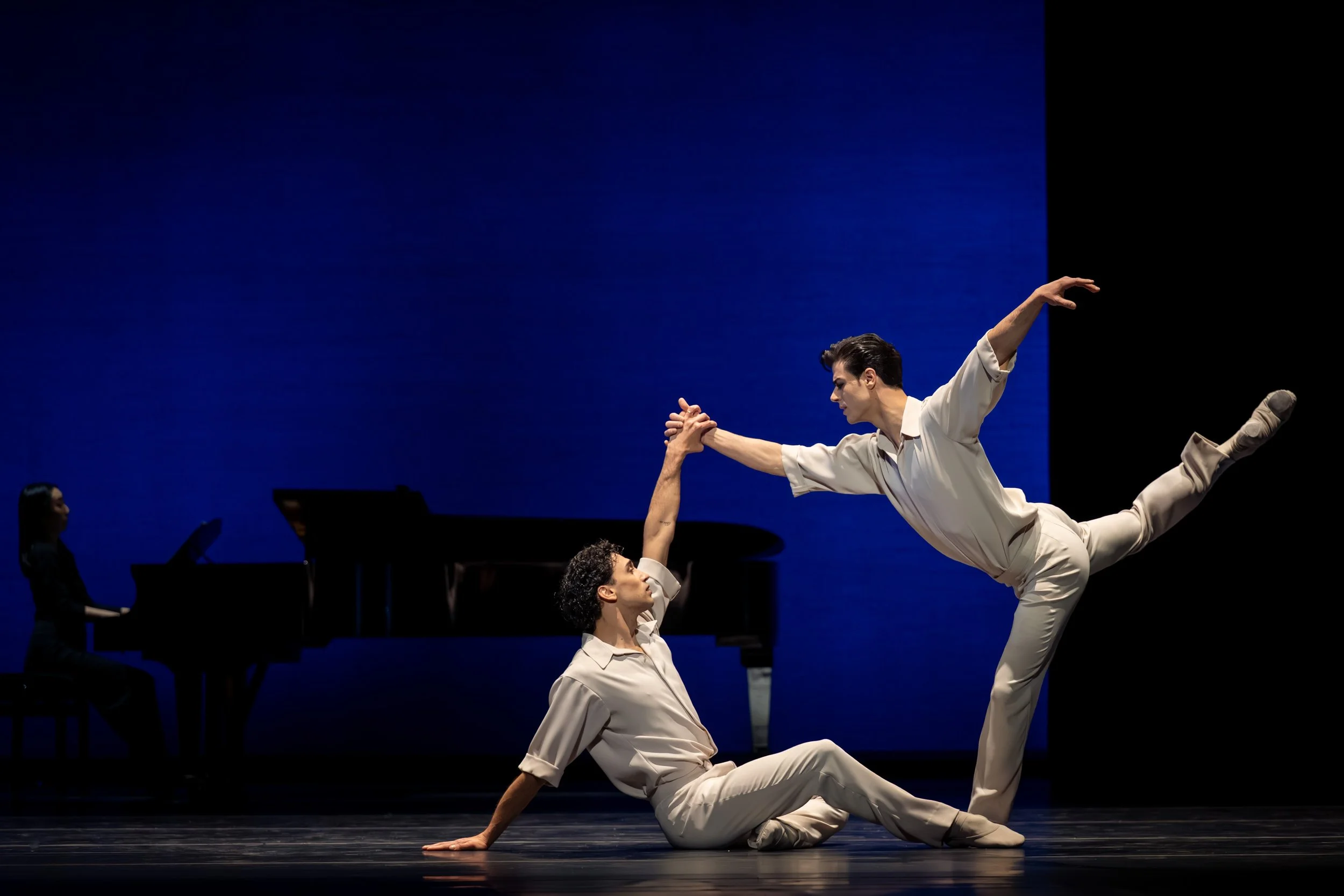
This page was closed, and Lar Lubovitch’s „Each in their own time“ opened another one. Another surprise. Another story to which his own description (I never mention programme lines, but this time I have to make an exception): The duet is one of my favourite Forms: „Two souls, two torsos, four legs and four arms offer endless possibilities“
I began to realise that step by step, the „mood of the evening“ was changing. The first piece had been more joyful, the second one with different „accents“ had given us a broader pot-pourri of emotion. Now, on this third part of the evening, we were all of a sudden confronted with more „seriousness“, so to speak.
I am very „suspect“ in my opinions because, this time, I could not manage to ignore my personal taste. Brahms is, Brahms always was (and always will be) my favourite composer – and the „Acht Klavierstücke op. 76“ belongs to my all-time favourites. It is difficult for me to remain impartial when such music is played, and so sensibly as it was, yesterday, by Shino Takisawa.
This piece had begun to awaken my curiosity more than a year before yesterday. During the first press conference that Alessandra Ferri gave in Vienna, she mentioned this (If I am not mistaken, it was formerly planned as a triple, not a quadruple bill) and mentioned a choreographer whom she’d think of as „a poet“. For some reason which escapes me completely, I did not write his name down. I was probably too busy with so much information… Some months later, interviewing her, I mentioned it again and asked her whom she had meant. And why? Her answer was simple: „Lar Lubovitch. And to your second question (Why?), you’ll see… „ she answered charmingly.
And now, face to face with the solution of this question which had me so curious during months, I thought: Yes, I see it...
Copyright: Ashley Taylor/ Vienna State Ballet
Davide Dato and Rinaldo Venuti – what else can one say about two dancers who know what they are doing and whose sensibility comes to the surface? It would be superfluous.
They are not only two dancers with beautiful technique, very similar by the way, but who use it as a mere tool to achieve the best for their Artistry. What can one say of such professionals who give you that (priceless) feeling of sitting back, „putting your feet up“ and relax in order to enjoy what is happening?
I appreciate very much the casting of them together – as far as I remember, this was also the first time both danced together.
A very good decision.
The message’s depth is quite simple. Nothing more than a dialogue between two friends. All about closeness, distance, common experiences and, most of all, personal „unfolding“. Now take this and think of two versions of what happened: the first one could be „How joyful, how beautiful, how wholesome“. The second one could be, but „Stick that in your pipe and smoke it!“ It’s all a matter of choice – or one can understand the piece both ways.
The last page was turned, finishing the third chapter and beginning the fourth and last one, which could only be turned after the intermission. I understand that an intermission is always needed, but in my (very personal) mood, I would not have minded to refrain from it.
Copyright: Ashley Taylor/ Vienna State Ballet
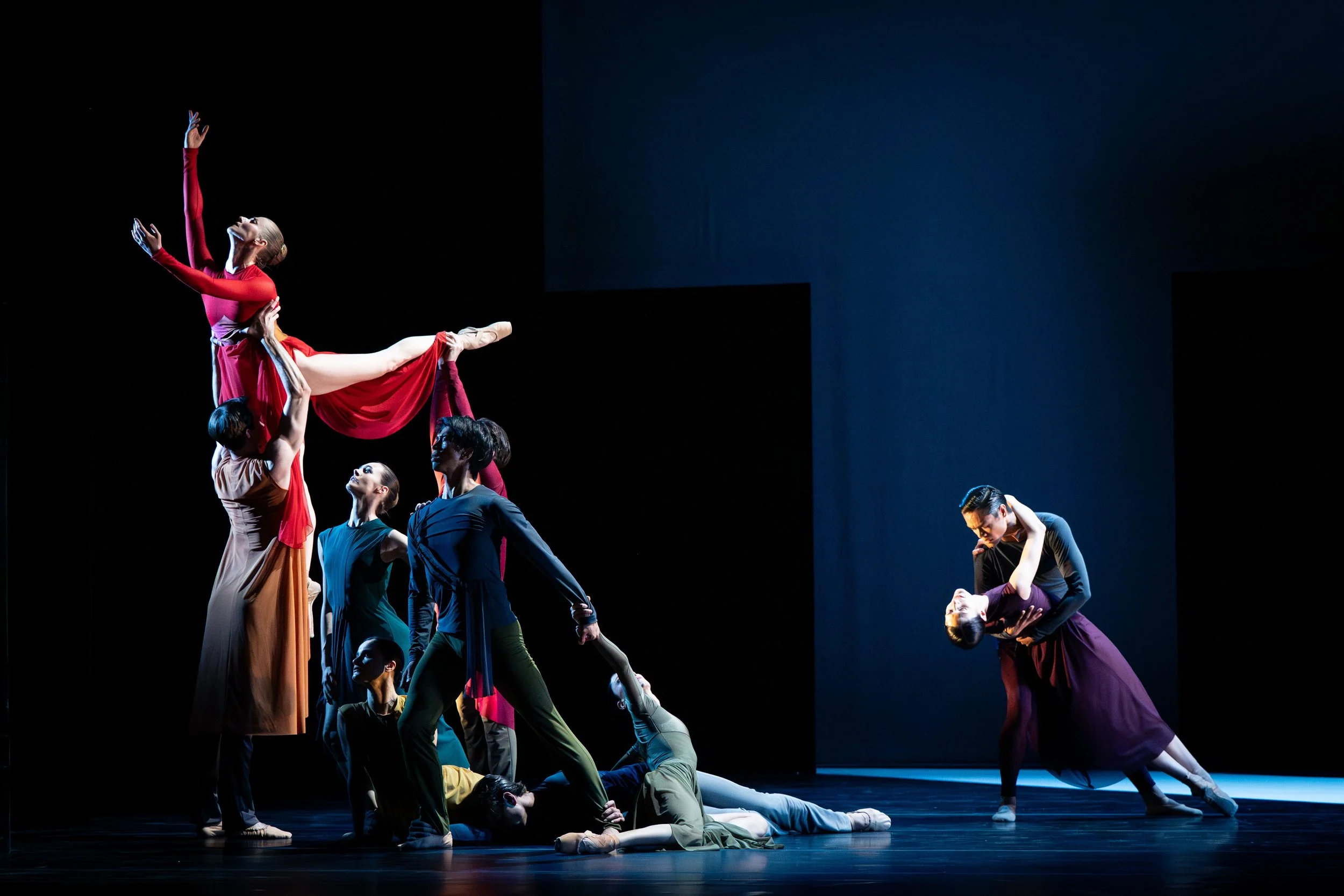
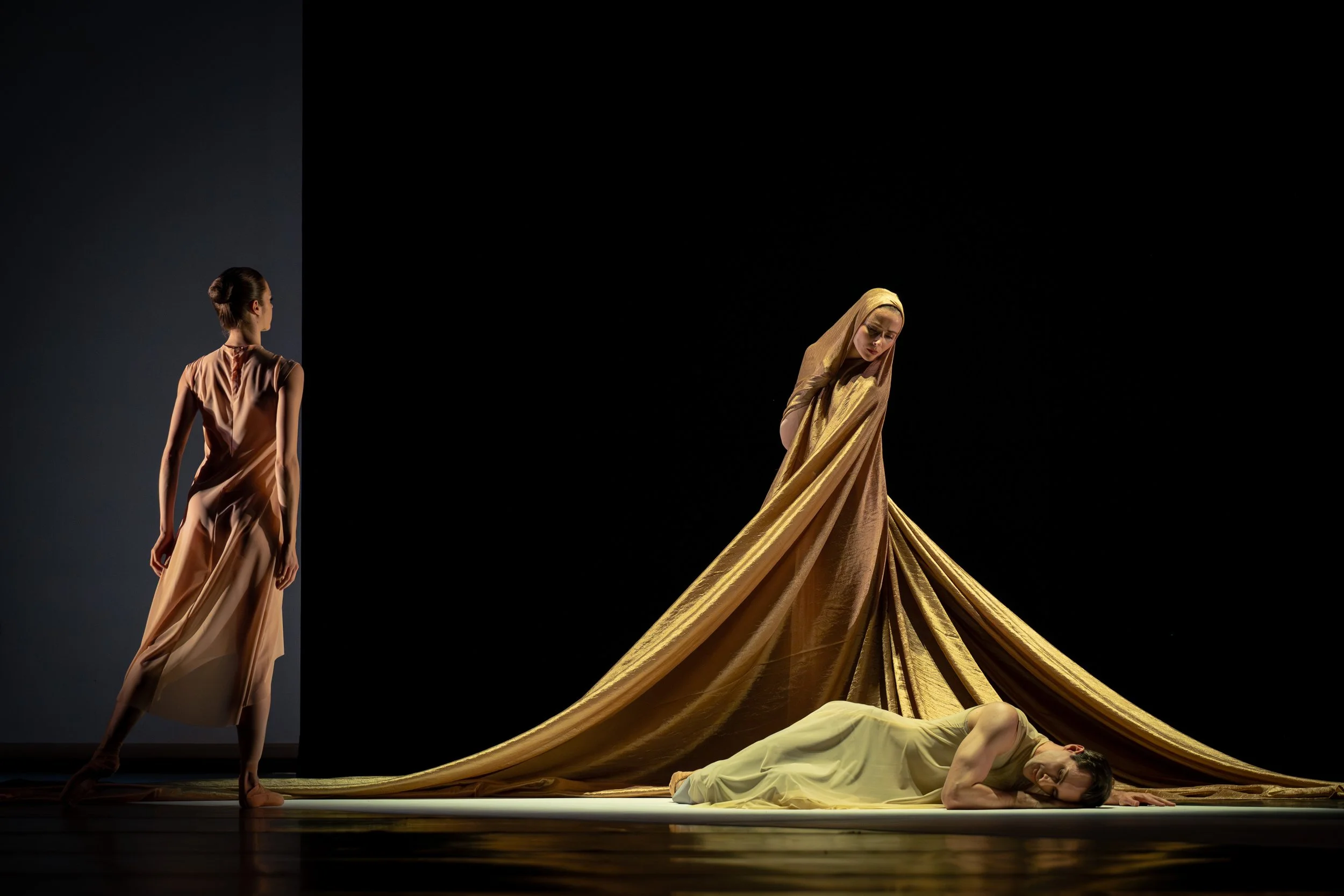
„Let me mingle tears with thee“ was the “icing on the cake“ to this very, very special evening.
And, after the show, getting to know Jessica Lang made it clear to me. I could immediately understand why the piece had touched me so emotionally. It was choreographed, directed, constructed, and idealised by a person. A real one who seems to want to „serve Art“ instead of just taking the laurels given to her because of her success.
Everything around and in the work was, a word I seldom use, consistency.
Her intense „relation“ with Giovanni Battista Pergolesi’s Stabat mater is not „from yesterday“. In different levels she has worked, researched, and listened (in the truest sense of the word) to it many, many times before.
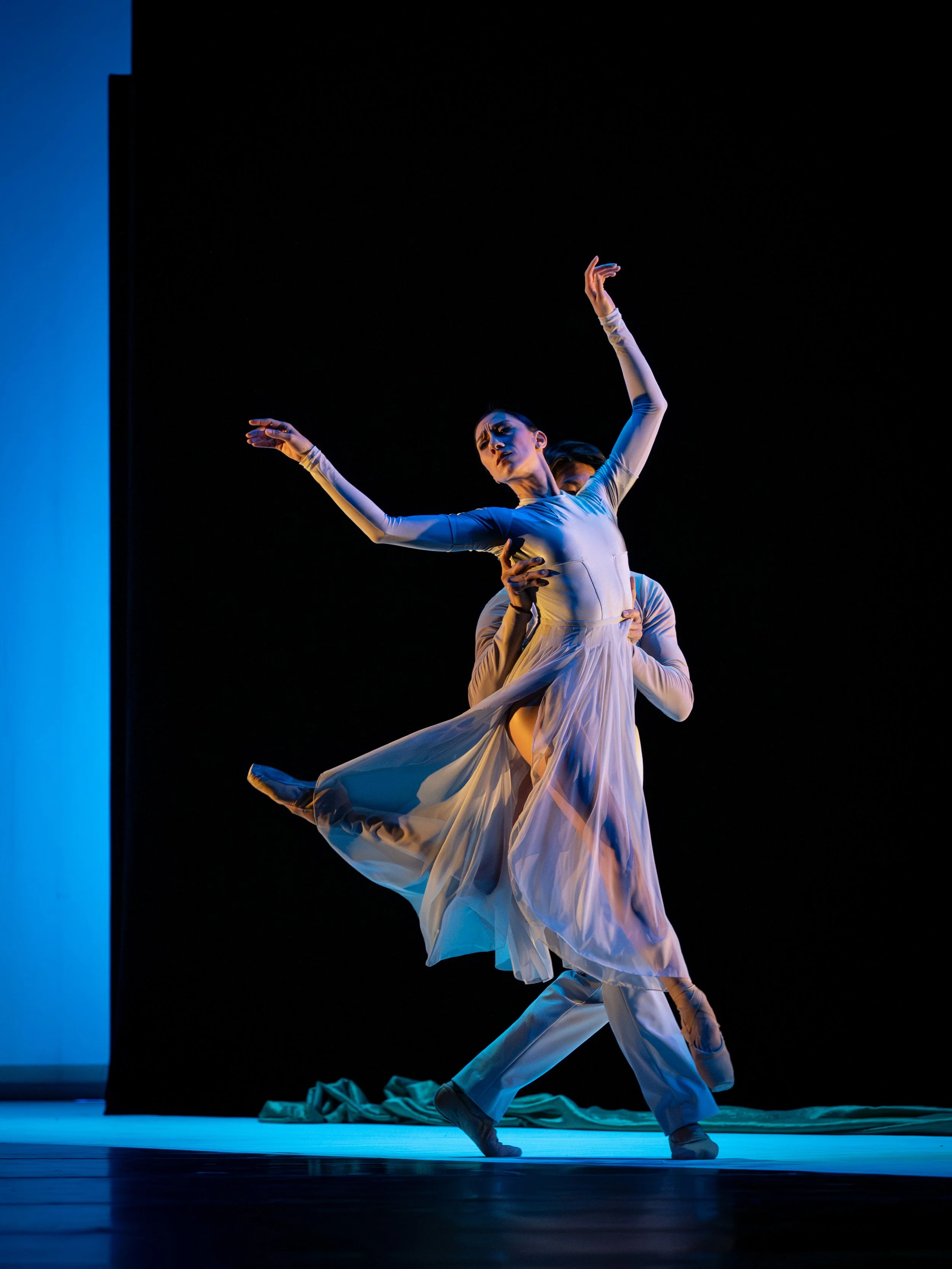
A prodigious work of such depth has been formed. A work of such delicacy, so fitting to the context, that made my eyes moist – yes, it touched me to see the Opera House be turned into a „temple“, one in which we all witnessed an oration that sounded nearly like a prayer. Yes, I cried for a short while; something that happened only once before during a performance. But things, moments of true beauty still do that to me – and I was amazingly happy to realise that I still belong to the human race…
Thank you, Jessica!
Copyright: Ashley Taylor/ Vienna State Ballet
It would be unfair to mention this or the other dancer. All shared the stage equally, as a Corps de Ballet – or, should I say, Stars of the first incandescence? Real teamwork, a joint effort, as I haven’t seen one in the contemporary sector for a long while. I’ll mention all names and make an exception of mentioning a single name extra because of a very special „conquest“:
Ioanna Avraam
Elena Bottaro
Olga Esina
Ketevan Papava
Rosa Pierro
Giorgio Foués
Masayu Kimoto
Godwin Merano
Zsolt Török
Géraud Wielick
Every one of them a “Star” in their own right: beautifully cast, perfectly rehearsed and, most of all, presently interacting with each other and projecting the result of this complex interaction into the auditorium.
As I mentioned before, just a single name: I was so happy to see a single dancer from the Corps de Ballet „mingling“ with Half-Soloists, Soloists and Principals, and so „at home“ with great confidence, just to find out that he learned the role in only two days because he had to replace a dancer, who unfortunately had an accident.
We are talking about Godwin Merano, and I wish to officially congratulate him for such a beautiful performance!
Copyright: Ashley Taylor/ Vienna State Ballet
Worth mentioning too are the sets by Carolyn Wong and Jessica Lang and the costumes by Jillian Lewis (Fascinating, in fact phenomenal and very difficult: the use of those huge drapes, which offer so many possibilities, sometimes as part of the set, sometimes turning the dancers into „Madonnas“ and even magically „removing“ Ioanna Avraam from the stage!)
Perhaps the best „new“ contemporary piece that I have seen in years.
Last but not least: The amazing, meticulous, wonderful work of Maestro Robert Reimer. It has been a long time since I last experienced such care with dancers. Adapting to their “Bio Rhythm”, Tempo, etc. It made me think of the wonderful Kevin Rhodes, who worked for 10 years very close to Dominique Mayer and Manuel Legris in Vienna - and later at La Scala.
Special mention to the “angelic” voices of Anita Götz (Soprano) and Jasmin White (Contralto). Written words cannot do justice to their Astistry. Perhaps only one: Divine.
The audience also thought so, and as I mentioned before, a strong applause that was somehow „translated to“ me as: „Yes, I see“. It seems that this was an evening „packed“ with discoveries.
Copyright: Ashley Taylor/ Vienna State Ballet
Highly recommendable.
Ricardo Leitner
a t t i t u d e
Vienna, May 10th, 2026