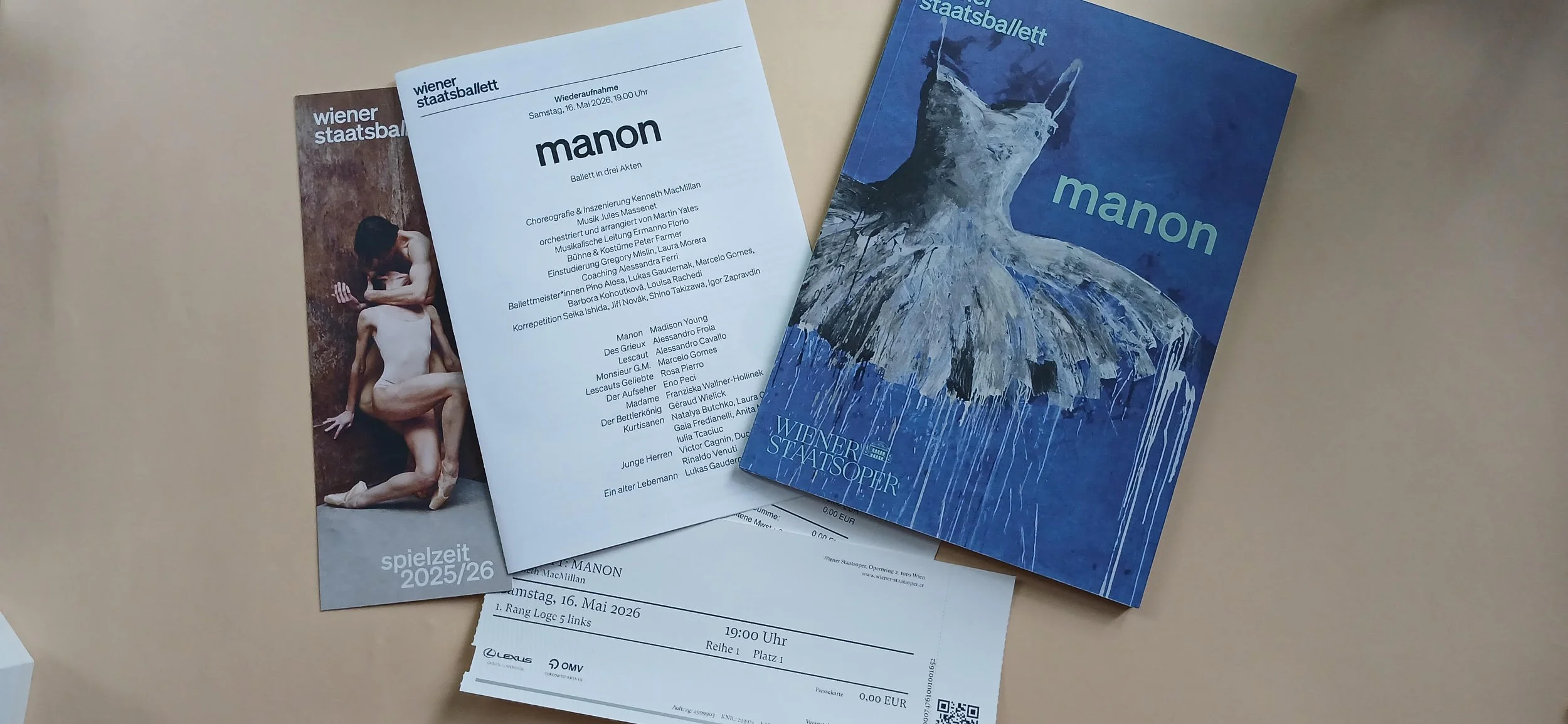
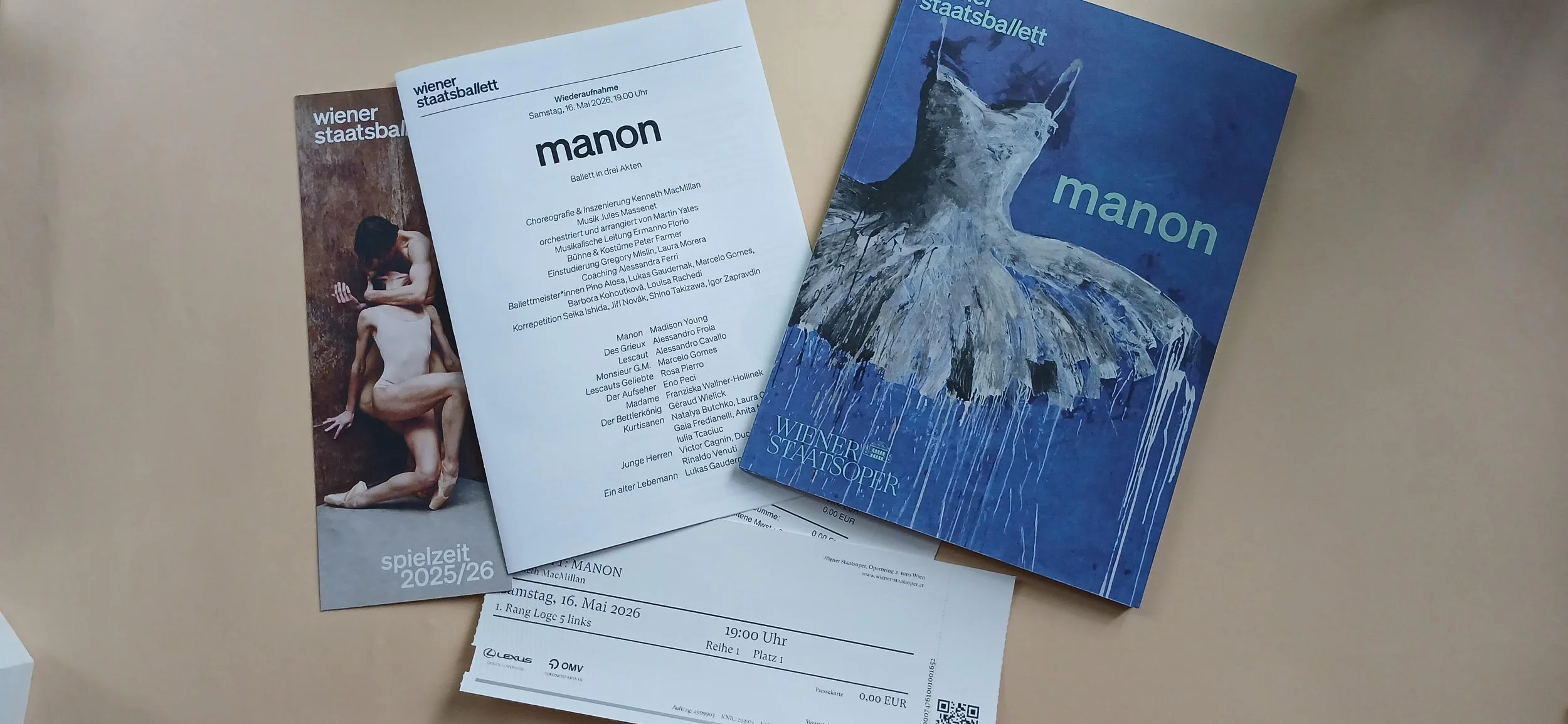
„Manon“, revisited: Vienna State Ballet (Wiener Staatsballett), May 16th, 2026
„Manon“, revisited: Vienna State Ballet (Wiener Staatsballett), May 16th, 2026
A première can be something very exciting, but sometimes, a (good) „revival“can be even more. After meeting so many people I have not seen in quite a while (The Ballet Connoisseurs are back to watch substantious performances) and after such a long time of not seeing this ballet at the Vienna State Opera (and guessing that the coaching by Alessandra Ferri – who worked directly with Sir Kenneth MacMillan – would be outrageously brilliant), I started thinking of this evening as a very happy revival, in fact, a most fortunate one for the public.
Copyright: a t i t u d e / Ricardo Leitner
The result did not quite live up to my expectations, and to describe my reaction to the whole piece, I would rather summarise it into four simple words: Not yet quite there. Not yet giving (total) justice to the tiniest details that are part of this treasure of Dramaturgy in which “Manon” was brilliantly (and lovingly) created.
Why do I write this when the audience went into a very loud sort of frenzy during the curtain calls? It will take a short while to explain and make it plausible for you, but one thing I can already „reveal“: The third act always rectifies and makes up for anything „gauche“ that might have happened (or not) before, during the ballet. It always does. It sort of “erases” everything that has happened before. It is the last impression left with the public. And, I must add, one with deep intensity: Beginning with the beautifully staged, „passing on review“ of her (Manon’s) life just before she dies, till her physical, real passing away. Which, by the way, should be in the Desert from New Orleans but for visual reasons was moved to the more „photogenic“ and mysterious Swamps landscape – otherwise how could you have all that mist and poetic tragedy that it brings along with it, on stage?)
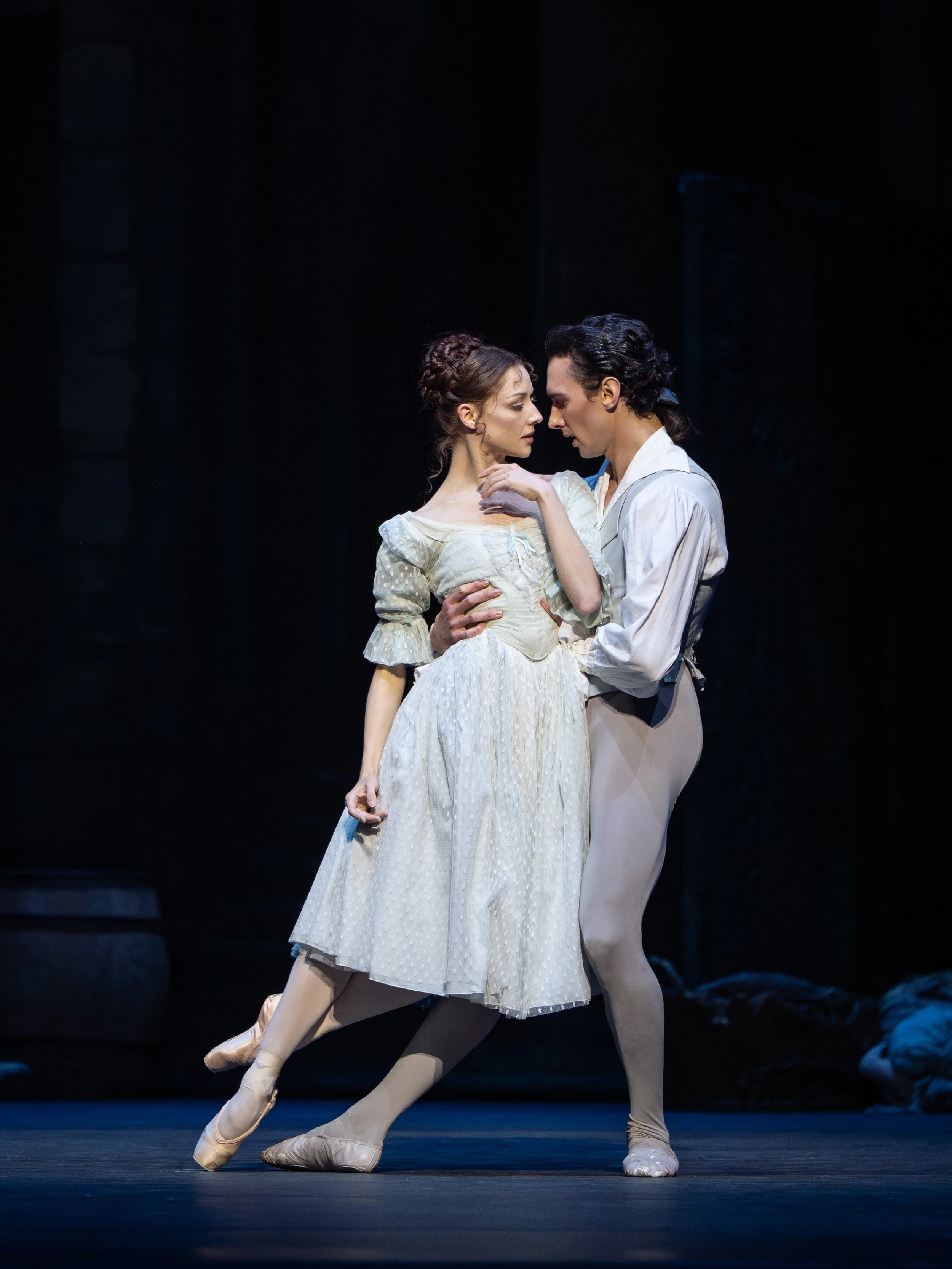
Both main characters, played by Madison Young and Alessandro Frola (Were they not giving yesterday their dèbuts in these roles on the Vienna stage?), played their roles, mostly, with great technical expertise. But I see room enough to make it even better. Room for much improvement. The problem lies in the psychological construction of the parts. Very complex parts.
Copyright: Ashley Taylor / Vienna State Ballet
Mr Frola’s Des Grieux started well, with that single purity of youth, with the wide-eyed admiration from a young boy towards a beautiful girl, that contains much of the balance between the Yin and Yang features of someone who has finished his teens, supported by his excellent technique (marvellous jumps, strenght, good partnering), his danseur-noble physique (very willowy, elongated) which enables him to play such roles, and, of course, his marvellous arabesques (The role was written for Anthony Dowell and his innate bodily attributes). But his „subtle growing up“ during the course of the “play”, remained nonexistent. Or sometimes, just to be revealed, a bit too late, as during the bedroom scene in the second part of the first act. It seems that there was not enough time for the main roles’ dancers to construct the complexity of their characters completely and be able to project them. I have no question that this will change. As you see, it will come, but not yet quite there. But there is still work to be done.
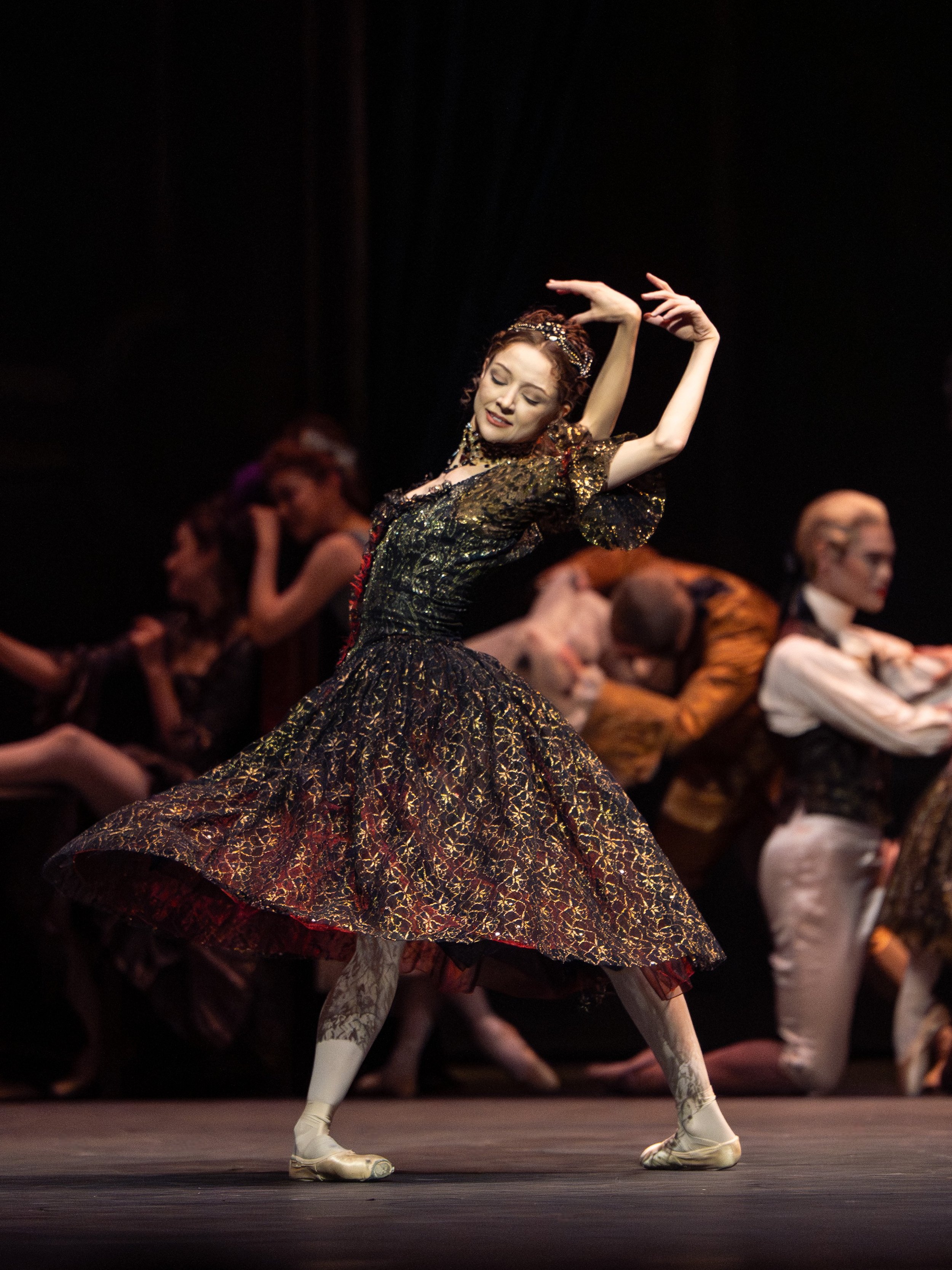
A similar situation happens with Miss Young’s construction of Manon. A character I see, as the first „Lola-Lola“ (Dietrich in „The Blue Angel“) and Lulu (Louise Brooks in „Pandora’s Box”). The lyrics Dietrich sings in the above-mentioned film fit both characters like gloves - and also Manon: „Männer umschwirren mich wie Motten um das Licht, und wenn sie verbrennen, dafür kann ich nichts“ (Lyrics English version: “Men cluster to me, like moths around the flame, and when their wings burn, I know I am not to blame”). Manon may have been „an innocent child“, sometime in her life, but she was „no good“ from an early age on (So don’t blame Lescaut, her brother. He just „watered“ the seed inside her!). She is „wide-eyed“, ambitious, mischievous, and, being completely amoral, she has neither moral principles, nor standards, nor conscience. I am sure she either loves or is madly passionate about Des Grieux and his insane idolatry of hers. She is honest about that. But, honestly, it also “suited her” very well. It suited her well to have somebody to look over her as he did until the very end. I see in her character not a typical heroine of an 18th-century novel, but a character with many mistakes and faults. Exactly as Emma in „Madame Bovary“ more than 120 years later. It is needless to mention that both books caused huge scandals, not only in France but also because they also portray “real” persons, and in a way, forced people to recognise and identify with the points they had “in common” with the characters.
Copyright: Ashley Taylor / Vienna State Ballet
Miss Young, technically and practically near perfection, used her musicality, lines, (fascinating) bourrées, and pinpoint precision amazingly. No question. But she failed to unite in one person (and at the same time) all contradictions and different sides of Manon, the character. There are glimpses of course of „wide-eyeness“ to be seen (much too pure and innocent for a girl who had „a bad seed“, as people would say when referring to her „kind“. Le us be frank: Manon was never in her life a “Rebecca of Sunnybrook Farm”), and of her wickedness, her ambition, her capacity to love/desire, her mischievous ways. But those “glimpses” come separately, as if they were „qualities“ designed to suit different parts of the choreography.
No.
One cannot forget that all these characteristics belong to one single soul. All of them inhabit her - at the same time. And there was no trace of them, altogether. They have to coexist. This makes the character a very complex one to portray. It is difficult for someone who is not all this to portray such a “Mélange d’émotions. This is a reason why it is not yet quite there.
One should mention Miss Young’s fearless dancing. She is a brilliant, courageous dancer who, before throwing herself in the air, trusts her partners (and she has quite a few in „Manon“) immensely.
No fears. That’s good.
Copyright: Ashley Taylor / Vienna State Ballet
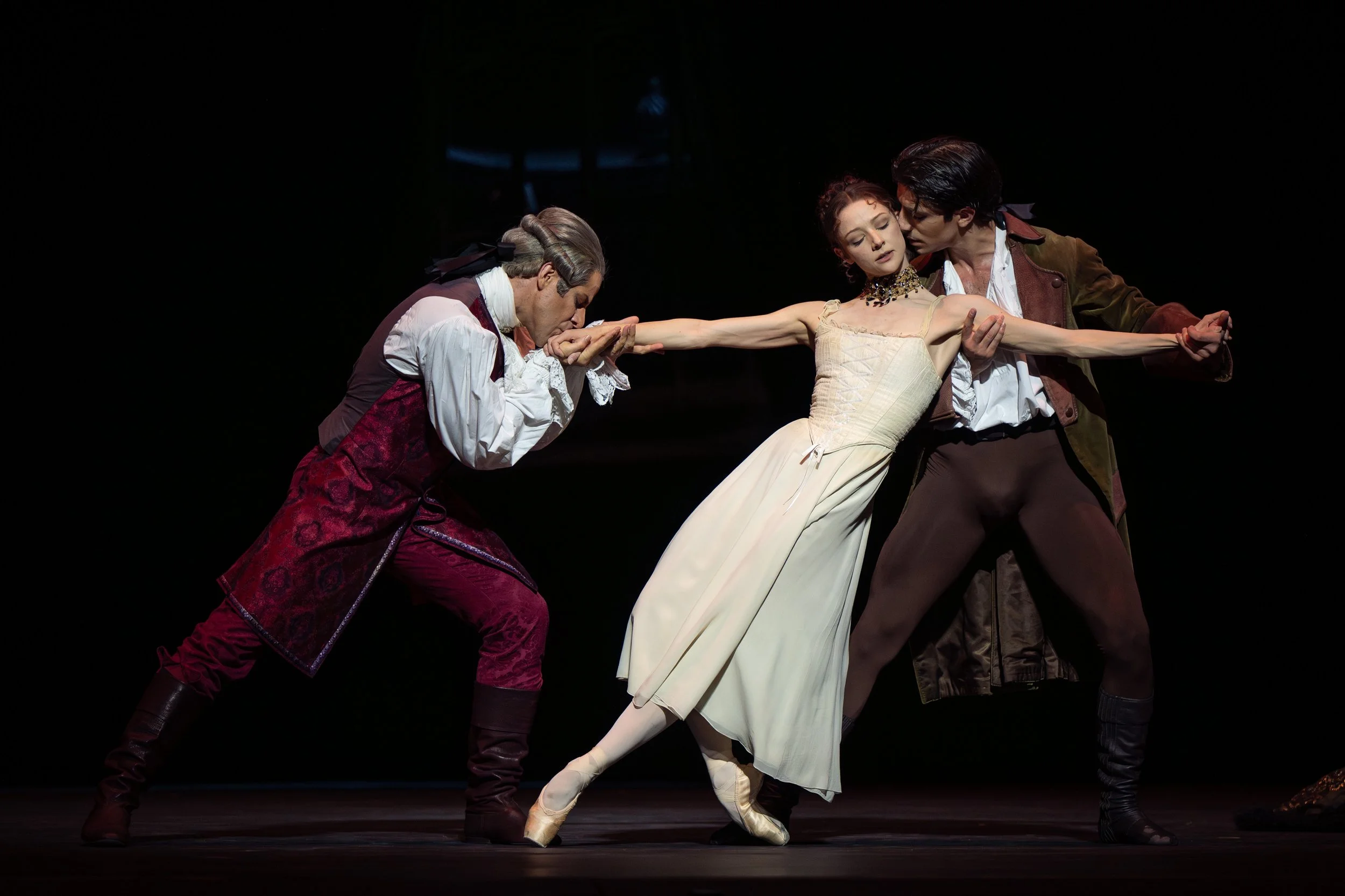
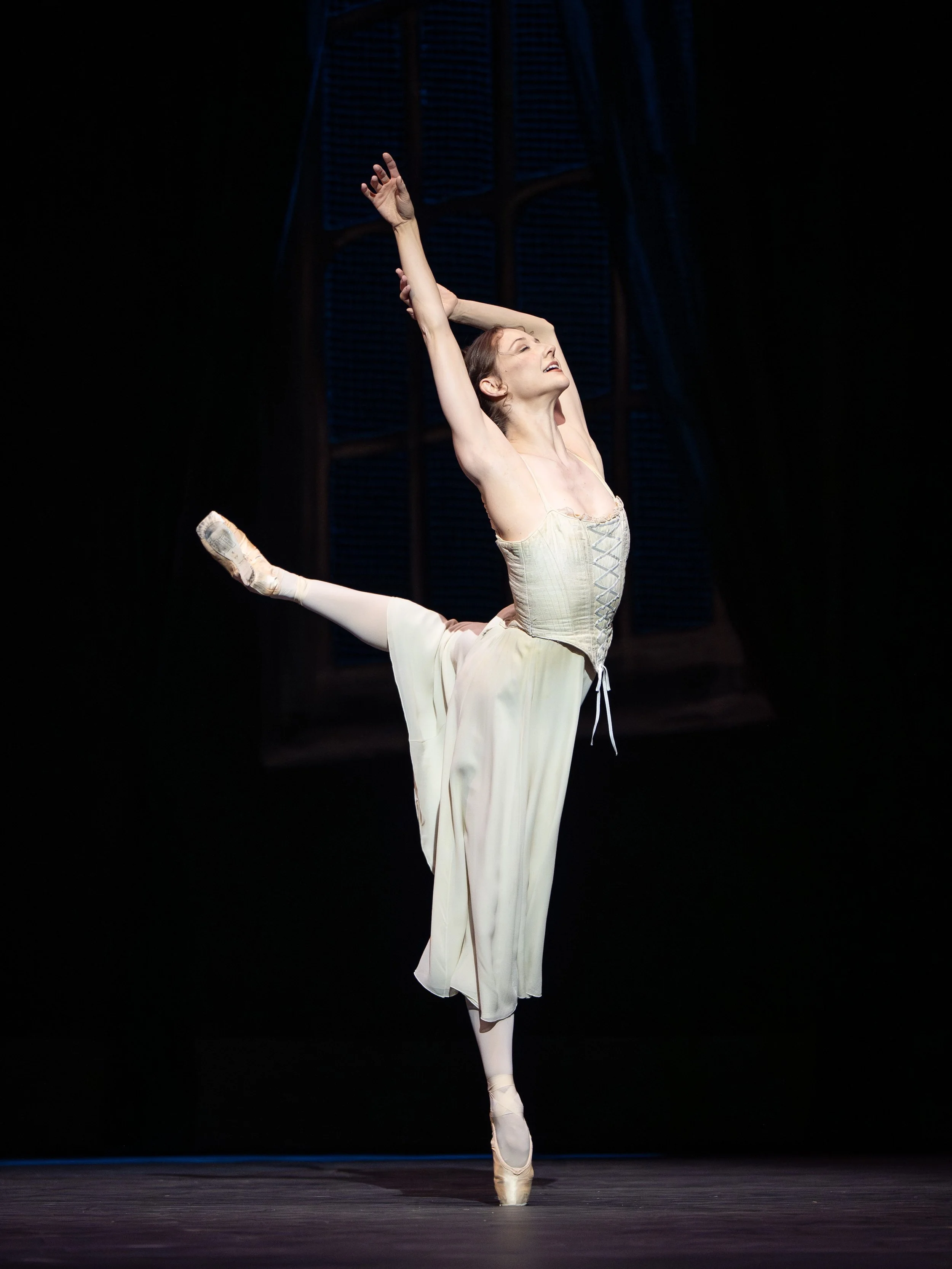
I always „judge the technical quality“ of any Manon in two parts of the show: First, the subtle „trio“ (I cannot call it a pas de trois) with Manon, Monsieur G.M. and Lescaut, which contains the subtlety of a very incestuous vision of his towards Manon, his own sister. A kind of voyeurism „between the lines“. And second, her first solo variation in the first part of the second act, the one in which she is (mysteriously and very sensually) presenting herself to Monsieur G.M. Unfortunately, „sex-appeal“ (also underlined by the way she should have caressed the floor much more) was completely forgotten in yesterday’s performance. Yes, Manon should also be “sensual”.
Copyright: Ashley Taylor / Vienna State Ballet
I am curious about the next show with Miss Young and Mr Frola, as I am sure that when the „technical side“ becomes, in a stronger way, part of their muscle memory, they will be able to travel further in the complicated, contradictory, very subjective world of Manon and Des Grieux. Both extremely talented, sensitive and intelligent dancers will, dramaturgically speaking, conquer these roles. I am looking forward to seeing this.
One question arose (and if you know the answer, please leave a comment - attitude is the only ballet platform which gives its readers the chance to comment on every post):
Towards the end of this solo, Manon executes alternating petite battements en tournant (also called double front frappés).
The position of the back is somehow intriguing:
Miss Young (freshly coached by Laura Morera/Royal Ballet and Alessandra Ferri, who just “happened” to work with the great MacMillan) leaned forward, but I have also seen other „variations of this theme”.
Sylvie Guillem, whose performance of Manon was never one of her best, performs the petite battements with an erect body, with a (light) insinuation to the back, but neither really bending to the front nor lying to the back as other dancers.
The brilliantly sensitive Iryna Tsymbal, one of the best Manons I have ever seen, who leans back (which I personally prefer).
The question is: How was it originally choreographed by Sir Kenneth MacMillan?
Copyright: Ashley Taylor / Vienna State Ballet
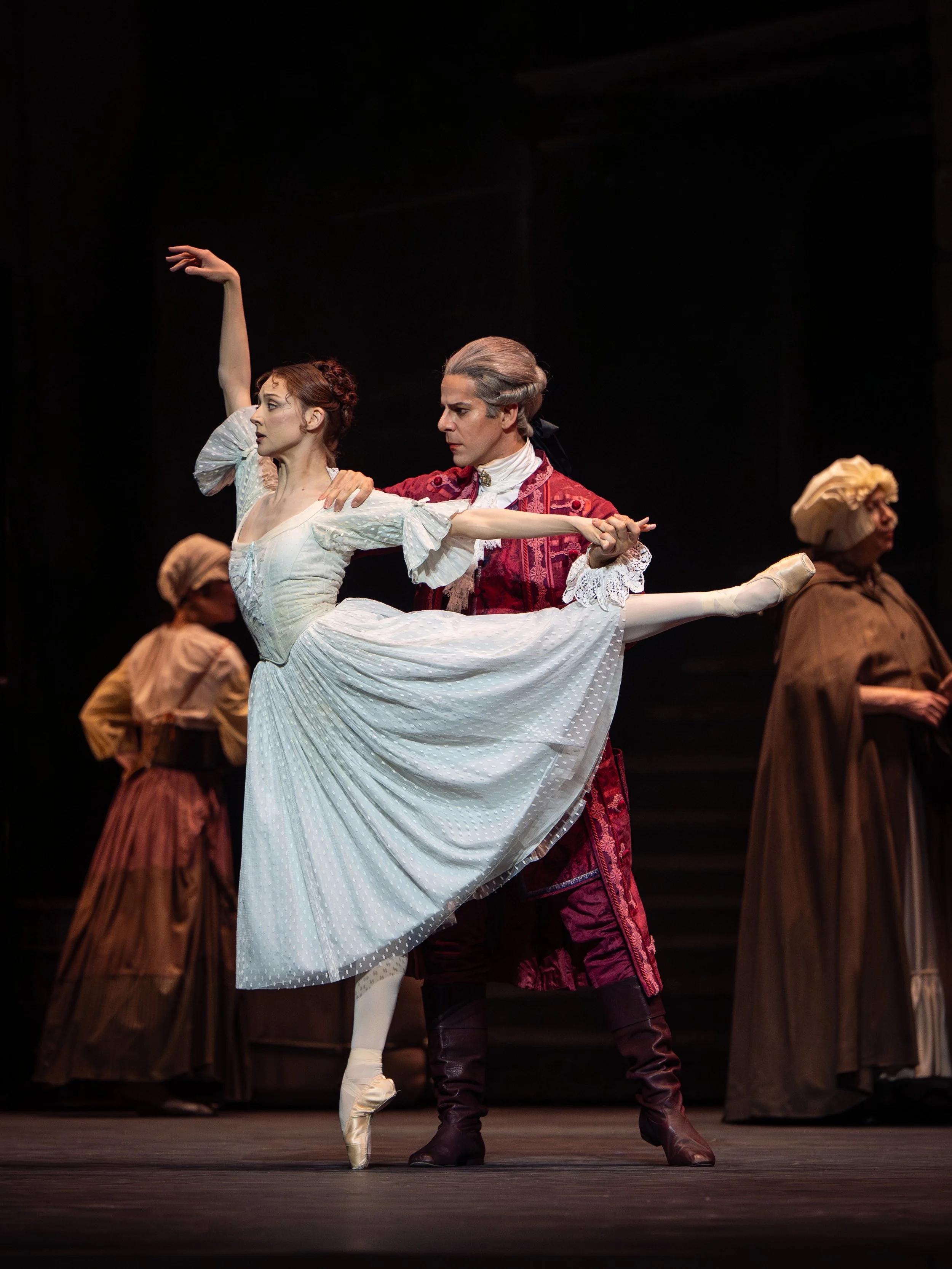
Marcelo Gomes as Monsieur G.M. partially „stole the show“. But what else to expect from a principal of the ABT for 20 years? What else can one say about someone who knows this ballet inside and out and gave life, inummeral times, to Des Grieux (and Lescaut) on stage? From a brilliant Artist who definitely knows „his way around“ (and inside) a character? I always like “to lie back and put my feet up” and relax while having a „story beautifully told“ to me. Mr Gomes tells us stories. And this is what people are looking for when they enter a Theater, an Opera House: To enjoy a narrative, have a story told, even abstract ones, which will enrich their feelings. As I say, there’s nothing more beautiful than having a beautiful story told. Beautifully. Think of that.
Franziska Wallner-Hollinek exaggerated tremendously, giving, as a result, a quite histrionic picture of “Madame”. One can call her performance “a bit over the top”. One that should be a bit contained.
Copyright: Ashley Taylor / Vienna State Ballet
Rosa Pierro (dèbut?), a dancer I began to admire not long ago, gave another proof of her tremendous versatility. The way she interpreted Lescaut’s Mistress was palpable, comprehensible and at times terribly funny. She never exaggerates, never thinks she is funny. She is not laughing with the audience; she holds herself back and lets the audience laugh at her. This is the secret of true comedy. All this, combined with strong technique and a most expressive stage presence, adorned with beauty, makes me even more curious about what we can expect of Miss Pierro in the future.
Copyright: Ashley Taylor / Vienna State Ballet
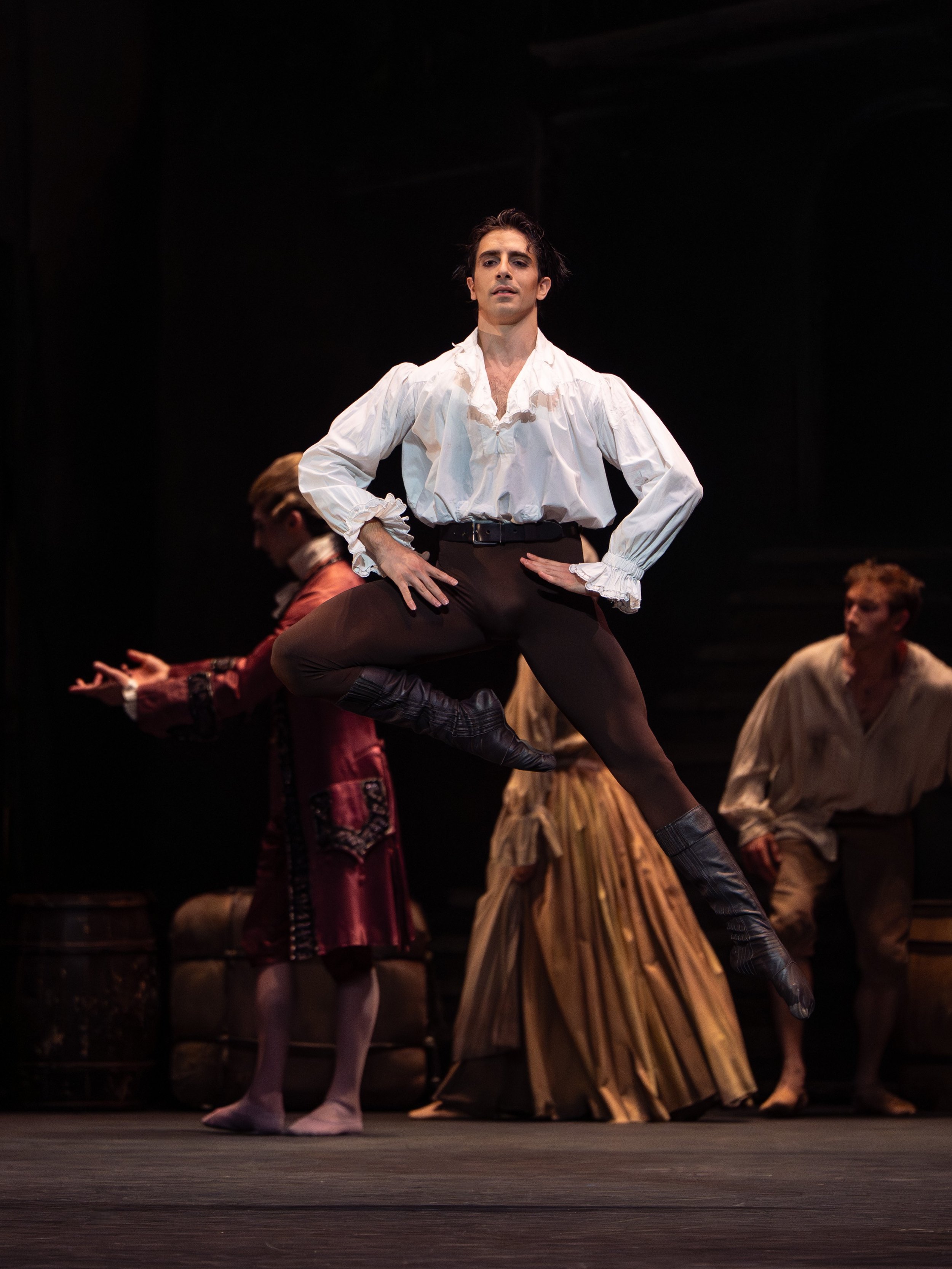
Alessandro Cavallo (another dèbut?): a strong dancer, a strong actor, a strong presence on stage, gave us a very „complete“interpretation as Lescaut. Not only technically, a part in which he excelled, but structurally. This unique quality of projecting a „story“ to the public is not so obvious anymore. In Mr Cavallo’s case, it is admirable. As I have heard, all dancers were asked to read the book. And I think that is so good. The details in which characters are described in the book are necessary to compose a „person“ on stage, not only a shade.
By the way, have I ever told you that while in London I had not only the chance to see Dowell as Des Grieux and David Wall as Lescaut but also Wall as Des Grieux and Dowell as Lescaut? Yes, they exchanged roles. Dowell was perhaps the best Lescaut I have ever seen)
Eno Peci as „The Gaoler“ (The Warden): Once more, one can see, and feel, the difference that it makes by knowing the role wholeheartedly (and having danced it often, as this is Mr Peci’s case). The Warden and Manon. Perhaps the most „explicit sex scene“ that exists in the ballet world. Its implications are not even „disguised“ (as Lescaut’s incestuous voyeurism) but quite clear. More than clear, in fact (I am not a „prude“ but I always wondered if children should watch this show). Mr Peci, one of those members of the Company you can rely on. When he is on stage, there is absolute sureness that Artistry, Professionalism, Presence, Interpretation, and Emotion are guaranteed. All these priceless qualities are worth an exclamation: Bravo!
Once more I thought (for the hundredth time?) MacMillan’s choreography is so rich. Not only in its psychological approach to the principals’ roles but also in the opportunity it gives to the corps de Ballet. I caught myself observing a member of the Corps, for example, Céline Janou Weder, in the 2nd act: there she was, going to a table, finding a man, chatting with him, being invited to take a seat, a drink, and all flirty and talkative. A story within a story. This is what I call richness. There were many „stories“ going on at the same time that could be interrupted anytime, frozen, for example, when Manon dances her fist solo in this act. Exactly the one I have mentioned above. Now I have to ask you (And I have to borrow the idea of a sentence from a Cinema Critic, who happens to be a very good friend of mine: Roberto Souza): „Why isn’t life like that? Why can't you use „Pause“, „Stop“, „Slow motion“, „Rewind“ and (very important) „fast forward“ to avoid disagreeable moments?”
There is enough time today, and I wish to, once more, „talk a bit“ about smaller parts, be danced by soloists, demi-soloists, or Corps de Ballet Dancers. This is important because they do contribute immensely not only to the dynamic of the show but to its „storytelling “ Pouvoir.
Copyright: Ashley Taylor / Vienna State Ballet
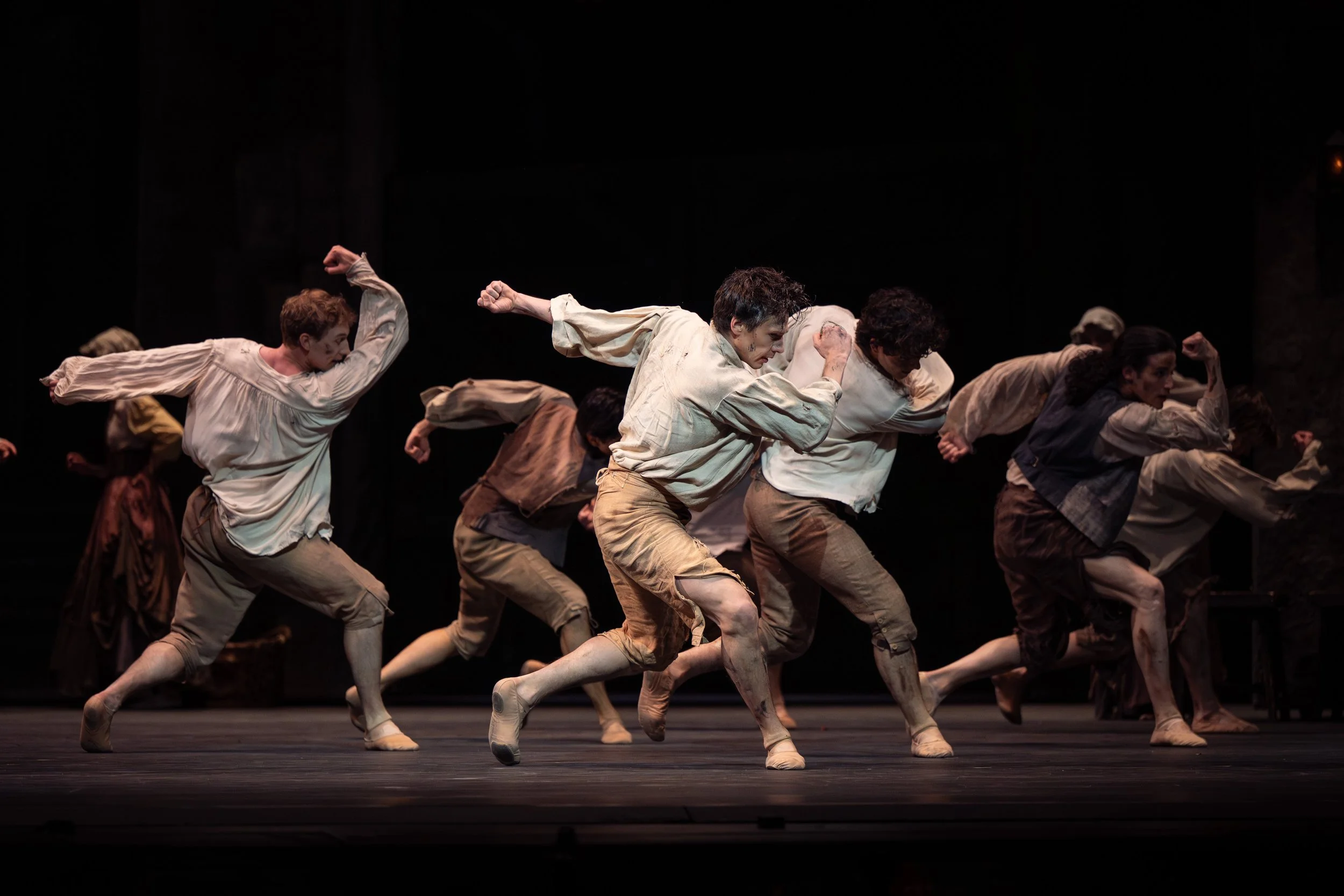
The beggar King was beautifully inhabited by Géraud Wielick, who never seems to lose his „boyish appeal“. Mr Wielick gave a very vivacious, precise performance. Unfortunately, by the end of his principal variation, he was a bit „in trouble“ as the boys who were supposed to lift him made a bit of a mess. Things like this can happen.
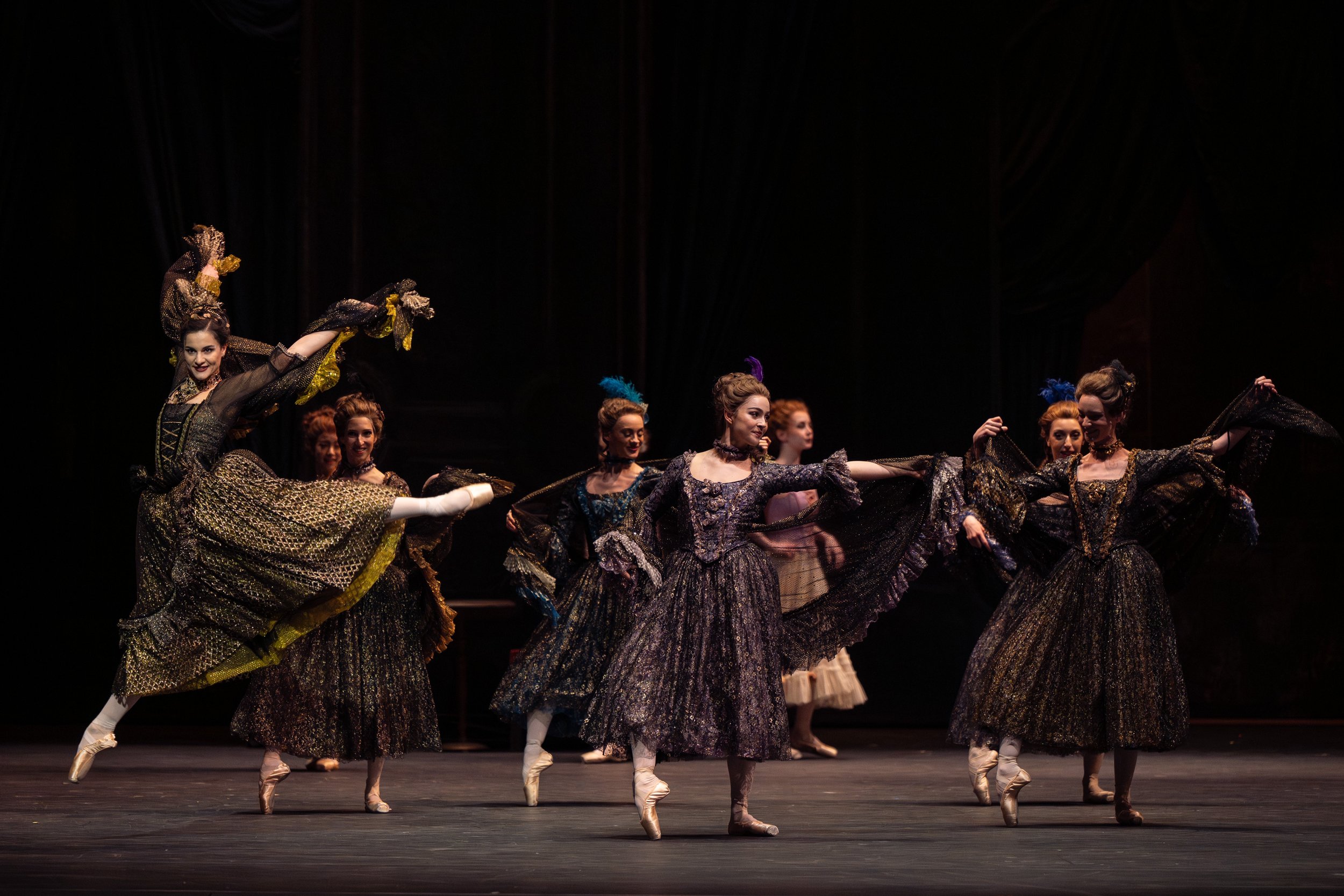
The Courtisans, Natalya Butchko, Laura Cislaghi, Gaia Fredianelli, Anita Manolova and Iulia Tcaciuc, were delicious. We must underline the word „delicious“ when we examine carefully the „momento giocoso“ between Miss Fredianelli and Miss Tcaciuc. These moments, with the right Artists, can be such fun – and get another kind of attention. The attention the piece deserves. Bravo.
Copyright: Ashley Taylor / Vienna State Ballet
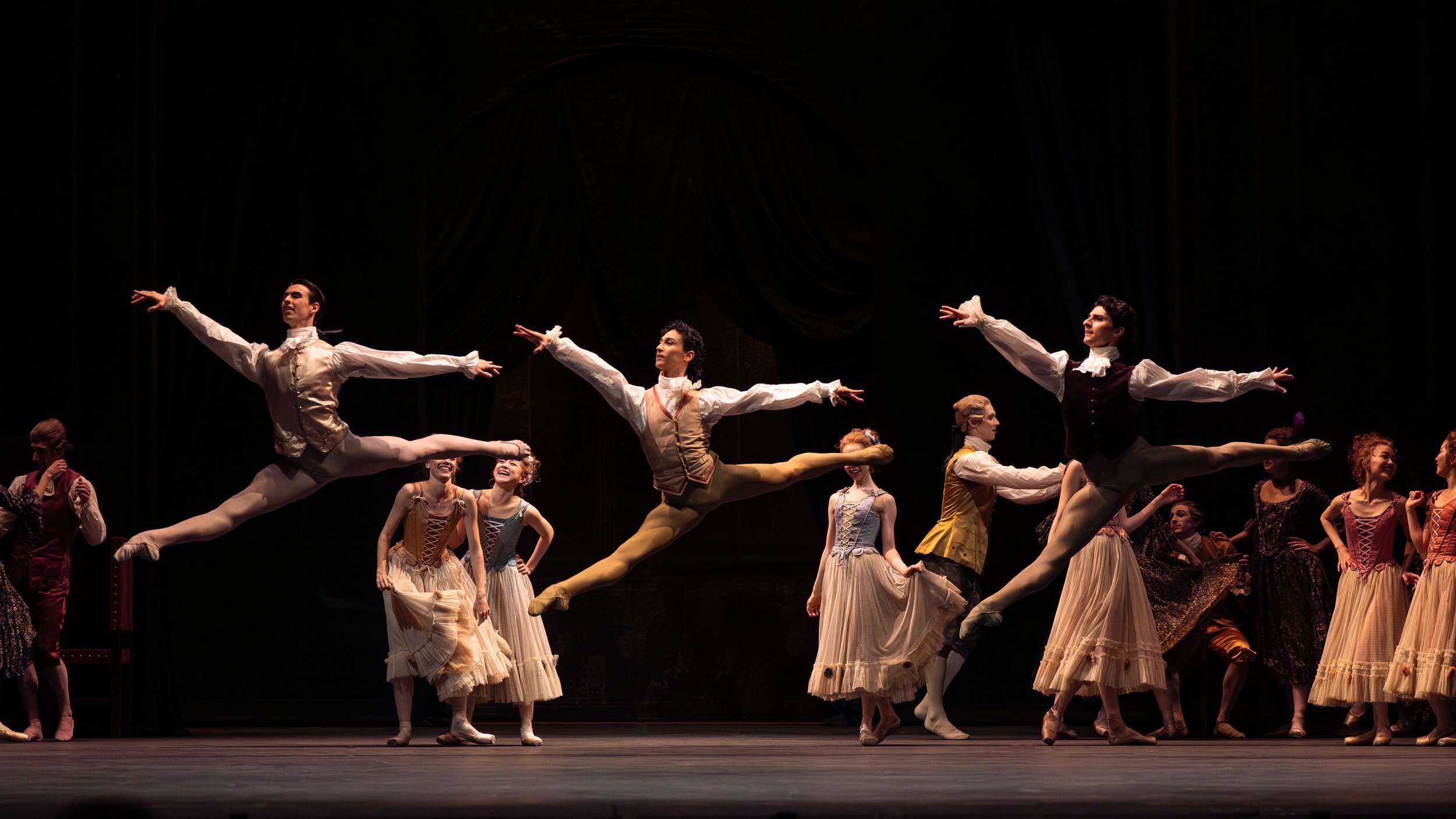
I still must mention the coordination, energy and unison with which „The three dancing Gentlemen“, Victor Cagnin, and the dancers that I much appreciated at the last Première at the Volksoper „American Signatures“: Duccio Tariello and Rinaldo Venuti. To watch their joy on stage is joy at its best.
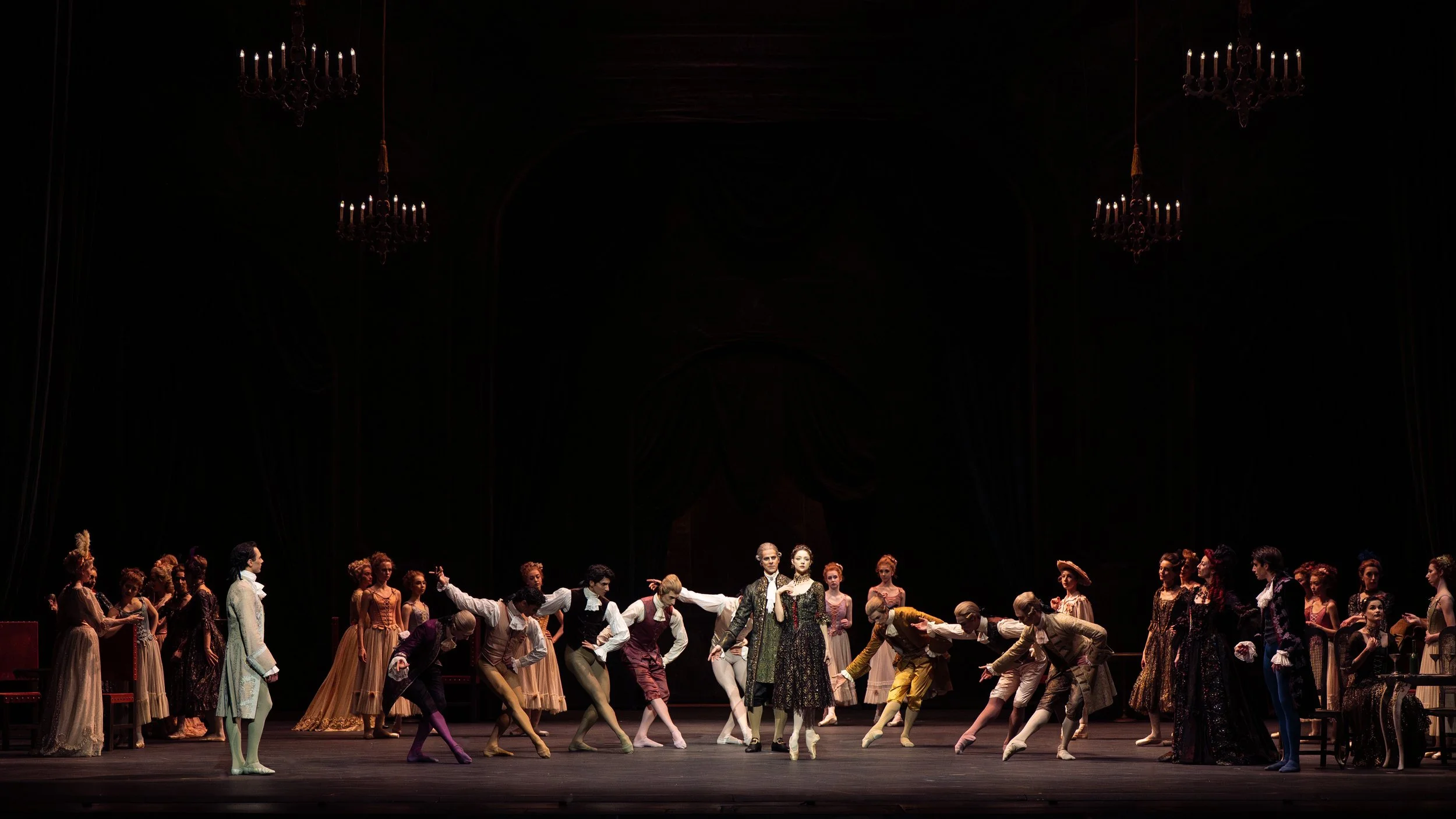
No need to mention the costumes and the wonderful sets, as I have done this a few dozen times.
Ermanno Florio’s conducting was surprisingly good. “Surprisingly”, especially because he never looks at the stage to adjust his tempo to the dancers – he forces them to dance at his tempo. Once more, I must say: I surely miss Kevin Rhodes’ work here at the Opera, the best Ballet conductor that I have experienced. Ever.
Copyright: Ashley Taylor / Vienna State Ballet
The predicate: A show to be seen, either with this or the upcoming casts. A classic of the 20th Century by one of the greatest, most sensitive classical choreographers of all time. A very fortunate revival. Very recommended.
Ricardo Leitner
a t t i t u d e
Vienna, May 17th, 2026