Victor Caixeta – Principal, Vienna State Ballet (Wiener Staatsballett): An Interview, Part 1
Victor Caixeta – Principal, Vienna State Ballet (Wiener Staatsballett): An Interview, Part 1
Even at the risk of repeating myself (again), I stick to my principles and have to make it, once more, quite clear that for me an interview is not only a very personal and intimate „thing“ between the person who is being interviewed and I but also a precious chance to penetrate the Artist’s mind, soul and feelings in the very valious time given to us to talk… I want to underline the word „valious“ this time, for an aspect of it had never been so clear to me as this time. This „underlining“ accentuates the moment’s uniqueness, for it cannot be repeated.
Mr Caixeta and I had met previously, a couple of times before our interview, somehow creating bonds, and (very) slowly „captivating“ each other, just as the Fox and the little Prince did, at Saint-Exupéry’s Masterpiece, as if unconsciously getting a bit closer and „warming up “ to the meeting during which we would talk more about him. On the literary level, we could say that when other persons are „captivated“, they cease to be strangers and become part of the subjective history. Unique and irreplaceable. And that is exactly what I aim for in my interviews: a certain Subjectivism that will bring our readers to „fly a bit higher“ than just reading facts.
Whenever it is possible, and if the opportunity presents itself, I like to meet „the subject of my interview“ before we „sit down and talk earnestly“. It is „easier“. Over the course of many years, I had to conduct interviews without ever seeing the interviewees before: Julio Bocca, Isabelle Ciaravolla, Mathieu Ganio, Matthew Ball, etc. It all went wonderfully well (Herewith, I just mean the sympathy side. Bot the interview itself. You know, I am not one to write „critiques“ about my own critiques, much less one to praise my own work!), but nobody said that the contrary would also have been possible. It can happen. I must say it is much more relaxing to go to an interview knowing what to expect! That’s human. In our case today, it was a pleasure, in advance, to know that I was going to meet (and exchange ideas) with a person blessed with such humble, polite and uncomplicated ways that contrast very strongly with his very critical views, principles and Professionalism.
Once more, and to make it quite clear: When I, just above, mentioned this interview and wrote „talk about him“, I did not mean his „biography“, not at all. On the internet, you can find information about where and when he was born, where he grew up, and at what age he started doing ballet classes, where he further „went to school“ etc et al.
There is no necessity of mentioning those facts in an interview.
It is not difficult to find the answers to questions, as they can be easily found on many Internet platforms and (very) many interviews.
I believe in setting a singular, unique „tone“ to such an experience. All elements must be in „unison“to achieve a certain level of relaxation and to be able to feel freely and with confidence. Not only to ask questions but also to answer them, without having to put up a front. It is a certain kind of teamwork, and it will not work if both parts are not feeling „at ease“ („Trust“ also has much to do with it).
I also believe in not repeating information that has been written many times before. My readers do not deserve any boring, repetitious mention of already known facts. That would be like writing what is mentioned in a programme while writing critiques. And I am sure that you know what I mean.
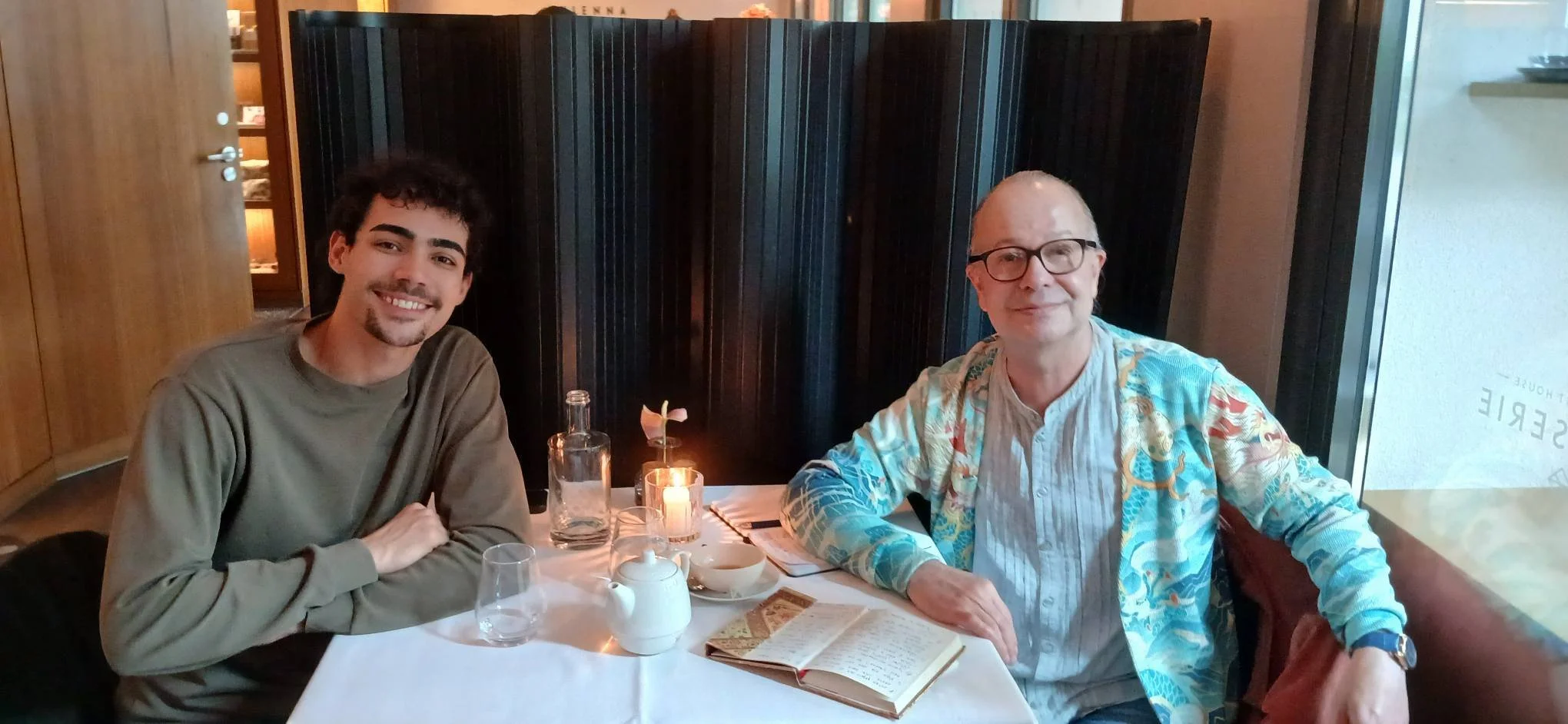
We met at the Stage door of the State Opera in the late afternoon and walked slowly to a nearby Café, in fact, one very near the Opera where I customarily make my interviews. It did not take us long to „start“.
I must add that this was the first interview ever that I have conductedan interview in my mother tongue, as we both speak Portuguese. It felt somewhat unusual; I would not say „strange“. But unusual it was, certainly.
„Dear Victor, we have talked before about information and how the „circumstances“ to get it have changed through the years. How do you feel about that; I mean too much information (and at the same time the lack of it) and how do you think it affects a dancer?“
He does not have to reflect much and says knowingly, „Well, Socialmedia and the way we are daily „bombed“ by it nearly frightens me, it is overwhelming! Massive!“, and you can plainly see that he feels deeply what he is talking about „On the other hand, it is more than beautiful to experience the Information that you get, while reading a book. We, all the different casts in the production of MacMillan’s „Manon“, are reading the book by Prévost, preparing for the roles.
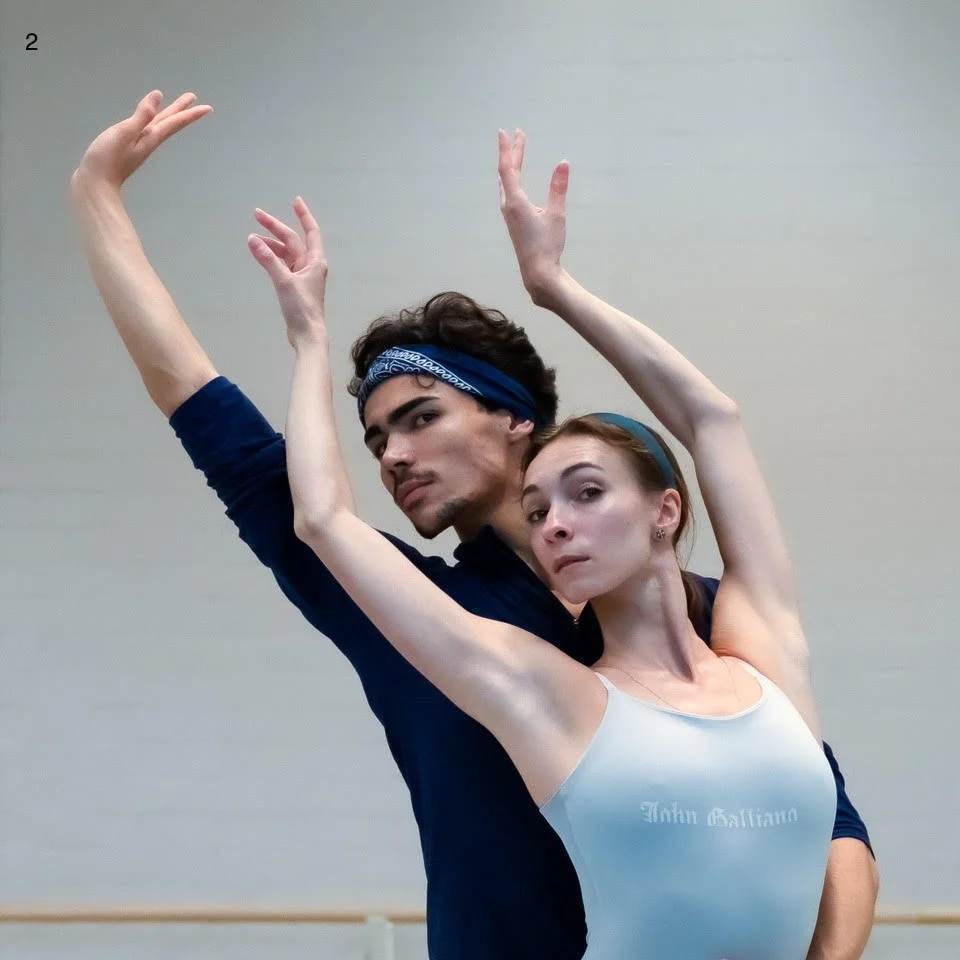
Olga Smirnova and Mr Caixeta (Copyright HET)
In Holland (Note: HET), we worked very closely with the coaches, who accompanied us whenever we were preparing for a ballet we had never danced before. Here we are having the wonderful experience of working with Alessandra (Note: Ferri), who worked directly with Sir Kenneth MacMillan and tells us what he told her and Marcelo (Note: Gomes): Incredible coaching based on pure knowledge and experience, giving it to us to keep us on the right direction, to keep us on the right track! It makes me think of the kind of intensive coaching that we had in Russia (Note: at the Mariinsky).”
„Different techniques – and I am not even thinking of pirouettes, jumps, Manéges etc. (Unfortunately, just what all people label as „technique“) but heads, and neck/heads angles, hands and and and… you may call it style… feelings, nuances, delicacy (the “little things”, some may say). Well, how do you react adapting yourself to those different „techniques“, „styles“?“
He thinks for a second and says quite firmly, „I must go back and mention Russia once more: There everything works, functions very differently from Europe. Here one has much more time to prepare for a role. There are 30 ballet performances a month at the Mariinsky, 4 different ballets per week.
So... many different, as mentioned by you, necks, heads, hands, and „intentions – apart from the whole „rest“ of the technique. But there are wonderful coaches, and, without them and their invaluable knowledge, it would be impossible to keep the high level of the performances!“
„I can imagine that the beginning of your career must have been a very exhaustive one… „, I add.
„With passing of time and a certain „savoir-faire“ concerning the repertory, it gets to be a bit „easier“ (Although it is never easy), but, one thing for sure, when you are very young, you don’t know the roles well“, he seems to be thinking strongly of the past, of the days in Russia while I, for a second, „take a trip“ and think back on what I felt reading „Anna Karenina“ when I was 17 and when I read it again during the Lockdown (Note: Covid) and how I thought „Oh, I only I could have known then all I know now!“—another fact: Age vs. Experience.
He startles me as he makes a „jump“ with his thoughts. This makes me think how deeply he was thinking about the roles and the affirmative. “When you are very young, you don’t know the roles well“ that he had just articulated: „In Russia, it comes additionally that the customary ballet public always wants to be surprised, taken aback“. And with the passing of time, it gets to be more and more difficult to keep surprising them“, he concludes, and makes me think of how taken aback I was with an „elder“ Baryshnikov’s interpretation of Albrecht, not anymore the innocent boy but a smirking, somehow cynical „playboy“. But I think Mr Caixeta was thinking more of the technical side when he mentioned it!
„There is an expression: „It’s so nice to come home to“. What do you prefer? Now? Narrative or abstract ballets? Where do you feel more „at home“?
I think I had barely finished the word „home“, when he answered in the speed of thunder-lightning,
„Narrative. Surely! And „Onegin“, by the way… “
„Wow… and why do you say „surely“ so emphatically?“
„It is simply wonderful to see how the audience reacts to our storytelling!“
Well, for those who are familiar with „a t t i t u d e“ and my work and ideas, there is no necessity to explain that I like that. Very much!
„Are there other roles with which you also feel such a strong connection?“
„Definitely“, he smiles, „Romeo… and what a role! He „walked into my life” at the right time. Leonid Lavrovsky’s „Romeo and Juliet“ (Note: choreographed and staged in 1940!). I had my début in it, at the Mariinsky, when I was 20 years old, and the story became so real to me that I cannot forget the feeling of slowly preparing, becoming the role. Let’s be honest: I was a boy dancing another boy… I had never experienced before how it felt to „tell a story“, such a story. To „stay“ in the role, the whole time, is also a challenge…”
„When you say „stay in the role“ – how is it when you are off stage during such a „dense“ role like Romeo, between scenes, changing, having your make-up touched up?“
“From my experience, when you do these storytelling ballets, there is much need for acting skills. Naturally, you get more “into the role” as the acts „go by“. Usually by Act 3 I believe I’m actually this person who I am playing. This also happened in Manon, and maybe that’s why it left me with such an emotional impression/repercussion, even days after my dèbut…
But to answer your question, the breaks are so short, and it’s hard for me to disconnect from what I’m doing. I usually don’t chat with anyone during performances, don’t check my phone, and keep the concentration going until the very last second…”
„Is there a role you would like to dance very much for the first time?“, my curiosity makes me ask.
„Definitely, Spartacus!“, an answer that took me by surprise (I am not a real lover of this Ballet). „There is one my „sides“ that misses very much this type of ballets, this kind of roles“, he explains, „When I was young (Note: Mr Caixeta turned shortly 27 years old), I simply adored „technical stuff“ and I mean, as you refer to it, Ricardo, the „bravura stuff“, not the „fine technique“ that defines style… My first challenge in this „department“ was, as mentioned before, Romeo. There was no time in Russia for Spartacus as I was still too young for it. I left the country, for obvious reasons, in 2022!“
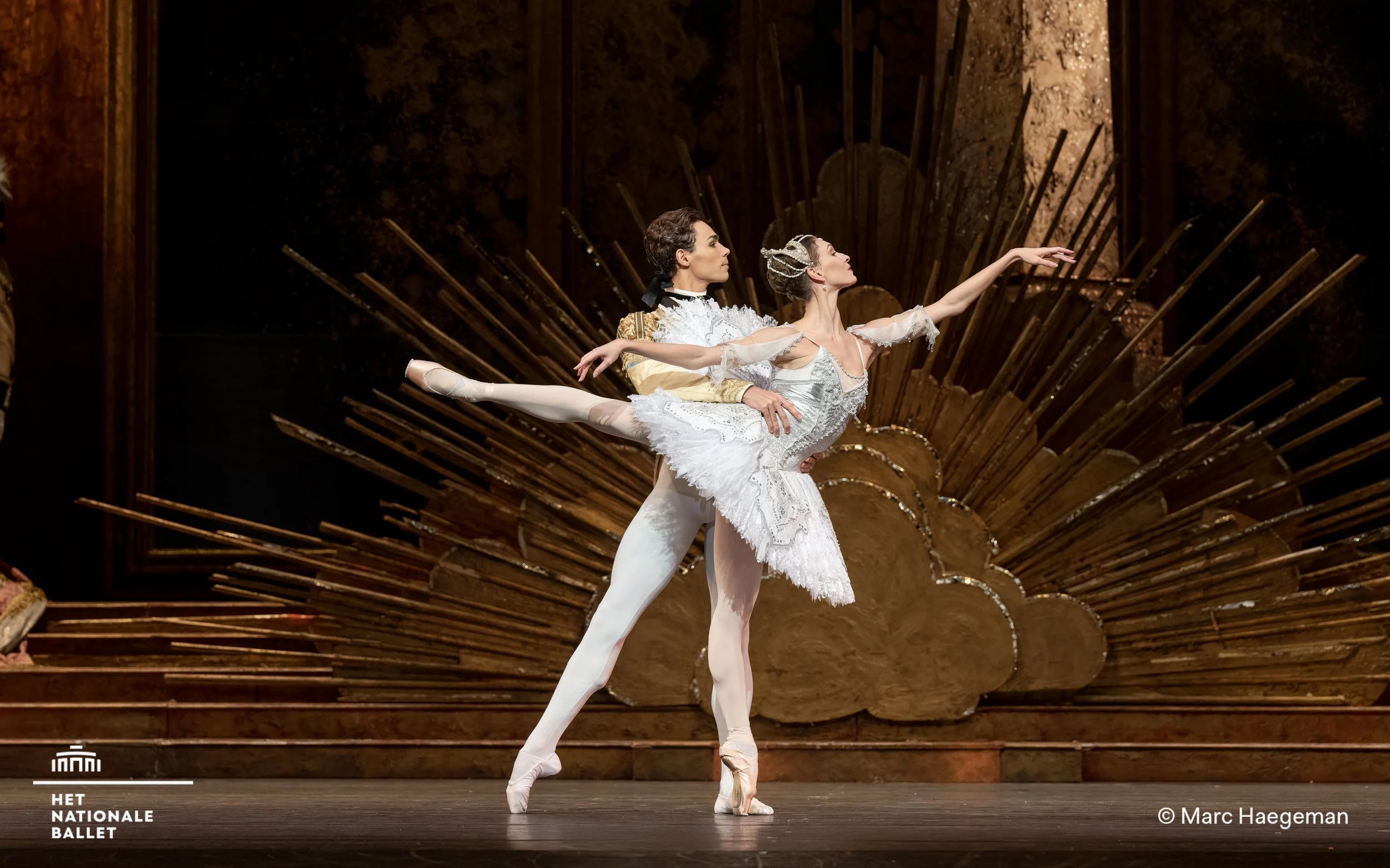
„A very unusual question, but is there any role which you don’t wish to dance again?“, I ask with a smile, thinking of another interview some time ago. One with Davide Dato in which I made this same question (I think it was the only time I asked this before), and he openly and humorously revealed his absolute distaste for a role: Basil in Nureyev’s „D.Q.“. The gist of the matter is that only a short time after that, he was (again) cast for it – dancing and interpreting it marvellously! A serious professional is a serious professional. There is nothing like it. That is also a quality I would like to implicitly include in the picture you are forming of Mr Caixeta, by reading our quite laid-back conversation. Seriousness is definitely a very strong part of his „Persona“ – Please do not misunderstand me, not that he is not also fun and humorous. But his visions about his work are connected to a deep understanding of his tasks, daily routine and obligations, not only towards the public but towards himself. Admirable.
His answer is simple: „Until now I was extremely lucky. Everything „came“ at the right moment. I am quite satisfied, very content in fact. Of course there are roles you like more, in which you feel more at home, but this happens to every dancer!“ (Or Actor, Singer, Musician… to every performer, in fact!)
„But even with all the luck that you mention, there must be something… perhaps a case of miscasting?“, I insist.
„Well, physically, that’s possible. I am very long-limbed, and I feel that in „Rubies“, still in Russia, another more „compact“ dancer would have had more possibilities!“, he admits.
To be continued on September 14th.