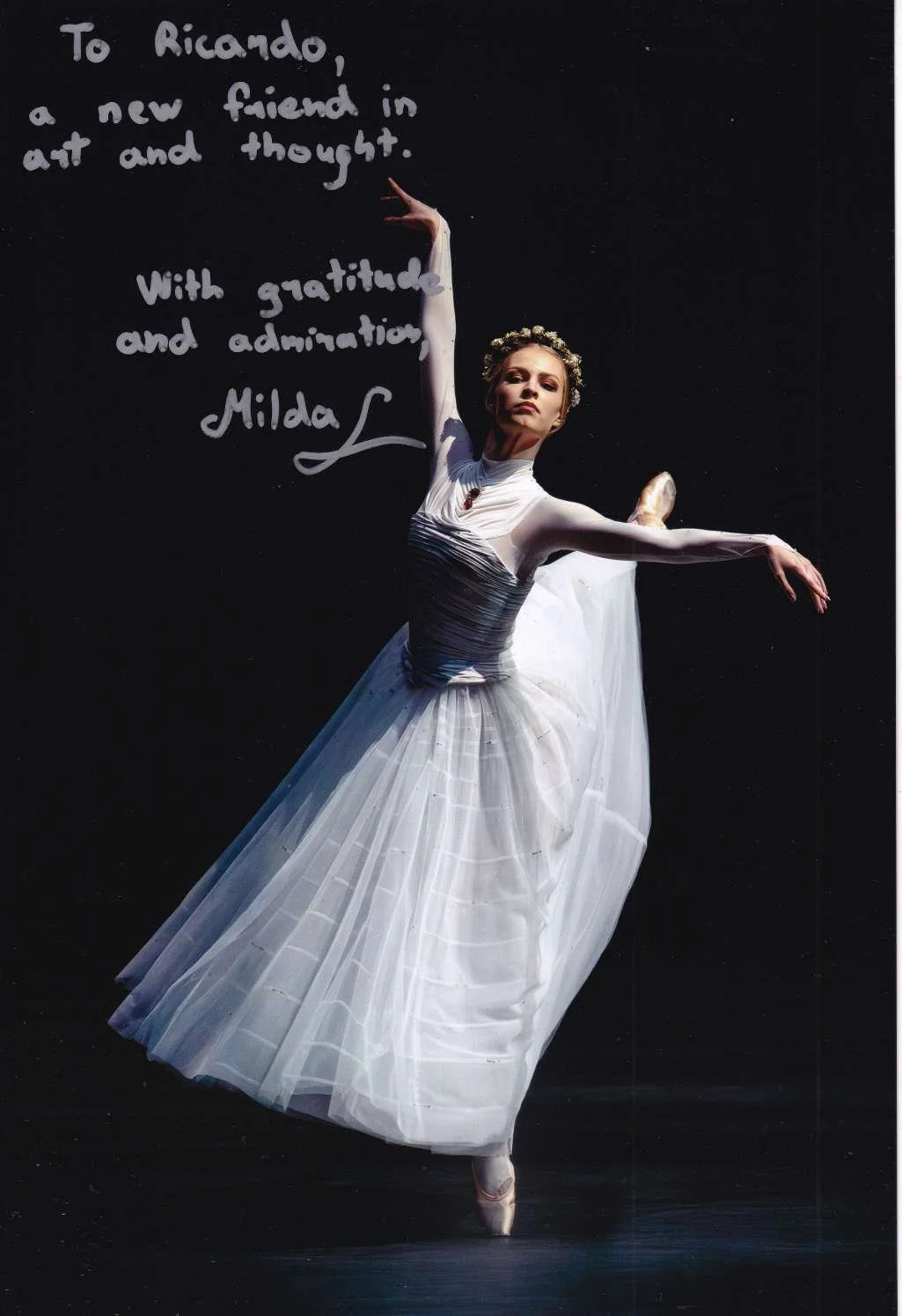
Milda Luckuté, Vienna State Ballet (Wiener Staatsballett): An interview, Part 2
Milda Luckuté, Vienna State Ballet (Wiener Staatsballett):
An interview, Part 2
(The first part of this Interview went online on October 5th. You can scroll back to last week to read it)
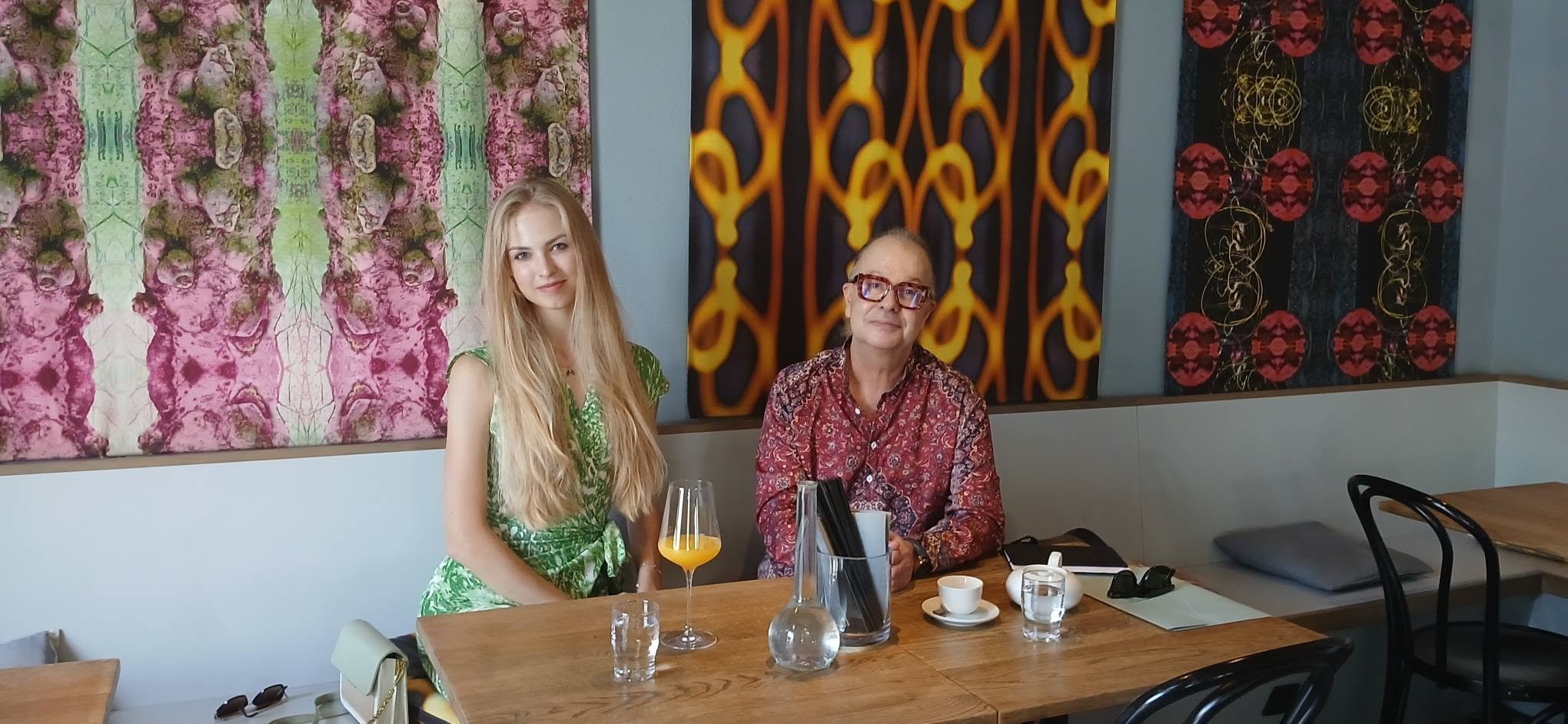
„Can you remember what your “nicest“ experience on stage has been up to now? Think of it freely… and the reason is, as the French would say: „On s’en fout“!“
“Definitely: It was in „Raymonda“ at a school performance (Editor’s Note: The Royal Ballet), and I remember it well, because it was the first time I was aware of my relationship with the audience. Unforgettable!“
And I caught myself thinking of how humble she is and how the „Service“ that she is doing for Art is more important than anything else. Others would have mentioned Ballets in which they „shone as a gem“. No. Miss Luckuté thinks differently.
„And are there other Royal Ballet Memories, which you would like to share with us? Something that might be an inspiration for dancers who are still, right now, students?“, I ask, not quite expecting the beautiful, rich information that she was to come up with! A real present
She opens her bag, searching for a while among her „things“, finds a notebook, opens it and gives it to me. Her Diary – can you imagine the kind of trust that this young girl is giving me as „a present“ (Editor’s Note: It made my day!). It was opened in 2021. She was 17 years old and at the Royal Ballet School. Here is her text on that particular day, concerning her choice for the „Lynn Seymour Award for Expressive Dance“):
„ I have chosen the variation from Carmen Suite firstly as a way for me to challenge myself as an artist of expression. Probably because of my height, look and cultural background, people often perceive me as a soft, elegant dancer and roles of that nature are indeed easier for me, so I wanted to prove (mostly to myself) that I can create a role that isn’t that natural or comfortable for me. Carmen is a strong, independent woman who knows her worth and how to use her femininity to survive her difficult life situation. Her presence has to be radiating towards the audience and beyond, which is emotionally exhausting. It is a great challenge to find the golden line between not enough power, flirting, projection towards the audience and the edge where it becomes too vulgar; it is easy to overdo it to the point where it has no emotional impact or excitement for the spectators anymore. This ability to find the most impactful intensity of acting and expression is one of the biggest challenges of a ballet dancer that I find very admirable and want to learn to achieve. The original Carmen for this production was Maya Plisetskaya, who had a countryside house in the same village as me with her husband Rodion Schedrin, who composed the music for Carmen Suite after Georges Bizet. Plisetskaya’s version of Carmen was the one I remember very well watching when I was little, and even then it had a strong emotional impact on me. While learning this solo, I chose Diana Vishneva’s interpretation because I thought that she is the closest to what is described in Prosper Mérimée’s novella ‘Carmen’, but I cannot say that I tried to replicate her completely. I watched a lot of dancers, tried to find what I like or don’t like about their interpretations and tried to find my own way of expressing the character of this powerful woman. The music helped me a lot since the melody dictates the choreographic and artistic nuances of the solo. Learning it has been a challenge, but at the same time a priceless opportunity to grow and improve as an artist“
„A theme you may be tired of listening to and be asked about, but I would like to tell this to my readers: Height. You are unusually quick for your height, especially in times when dancers „slow down“ and are not as quick anymore as we were in the 70s and 80s… Is this a problem (apart from finding the right partner)?“, I ask, even though this may be considered a „delicate question “.
Obviously, Milda has not thought about it for the first time and has, with a broad smile, an immediate answer, which proves to us that she has already many thoughts about it and, on hand of concrete information, is totally aware of her body type. „Physically, I’d say‚ Placement, finding balance and your own axis“, and she adds, „It is a fact that you, being tall and longer than the average dancer, have longer limbs, so your nerves are longer too, but thinner. It takes longer for „information to arrive at its proper place“. This is how I think. And the way I think is not based on official medical reports. It is pure instinct! It is a known fact that the nerve signals take longer to get to your extremities. This means that the awareness of the body is different. It is „harder“ to have this precise awareness of your body when you are tall. That is why „footwork “ is, at this moment, my main goal“.
Her very direct answer makes me think of Marjorie Lawrence when she began “restoring” her voice after she was struck with polio. A statement that has no “medical background” but that carries her honest will to be able to sing again: “I will have to use other muscles… perhaps muscles you have never heard of, Dr King! (Editor’s note: Her husband, by the way). But the voice is there, and this is what counts… “. Yes, the honest will of an Artist… It can be not only surprising but also mesmerising at the same time!
„Could you tell me which ballets, up to now, you have felt more „at home“ in up to now?“, I ask, changing the subject abruptly.
Once more she does not have to think for long: „The Balanchine Ballets, and I mean the Dark Angel, even corps de ballet in “Serenade” in Dresden at the Semper Oper! (Editor’s Note: where she also performed solos in „The Nutcracker“ and „The Sleeping Beauty“, playing the Lilac Fairy)
„And, not long ago, you danced „Rubies“ and „Diamonds“ here in Vienna in the same evening. Quite tiring, I must say. Was this casting a planned thing?“, I must ask curiously.
„No, but initially I had to jump in because a Dancer went on sick leave. But to make a long story short: This was a great experience which I’m very grateful for
„Corps de Ballet status but doing many solos: „Callirhoe“, „Giselle“, „Balanchine“… I appreciate very much Miss Ferri’s trust and encouragement towards you. How does this feel?“
„First of all, I am very grateful. I want to add that whatever I do, I want to feel that I deserve it. And I have been working in this direction all the time“.
It made me feel good, happy and more „at ease” to listen to this statement. To be very honest, I look forward to a future with dancers who think this way.
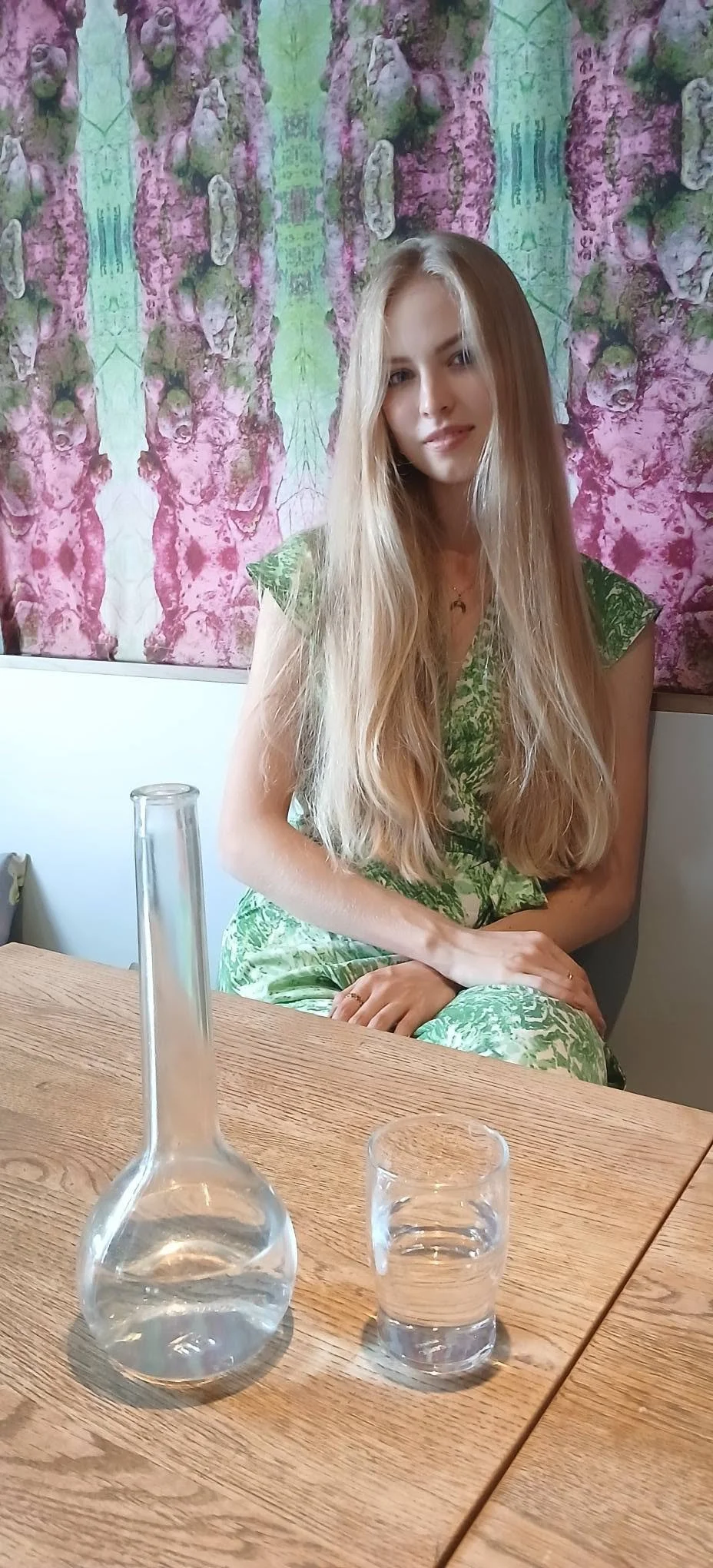
„You are an extremely versatile dancer („Giselle“, „Rubies“, „Diamonds“, and „Callirhoe“, as mentioned before, and “voluptously delicious” in the opening scene of „Die Fledermaus“ – La Chauve-Souris, just to name a few); are you aware of that? Many Dancers, and, for example, even in the Royal Ballet, play the gamut (As Dorothy Parker once said of Katherine Hepburn), from „A to B“. Your range is much wider. Can you explain that? Am I connecting this question with a very well-known fact which we have mentioned before today? The „Baltic State of mind“? I ask, while outrageously smiling!
She thinks for a while and then comes up with a (for me) quite surprising, no, better said, revealing answer that gives me not only much to think about (because also, as a critic, I have to constantly „update“ my knowledge and „ballet baggage “ according to the developments of the Art form) but also enriches me as a person who researches and researches ballet to keep pace with the times: „I had a very early realisation as a child: Time is limited. That is also why, coincidence, chance, accident or not, I „landed“ in Ballet... The many lives I could live, the immense range of feelings and emotions that I could feel. Such richness. That explains it all, doesn’t it?“ It does, Milda. Oh yes, it does.
„Well, regarding these different „lives“, you must have a favourite Ballet, among the ones you have danced up to now, do you?“, I ask quickly.
„Oh yes“, she laughs, as one can see and feel that she is „remembering“, quite vividly, situations that to comment „Physically I would say Mr B.’s ‘ Rubies ‘, but emotionally… definitely Myrtha… The complexity and the character’s depth is so profound that it made me search for a better understanding more than I have ever done before“. It is so important to be surrounded by emotion… So important!“
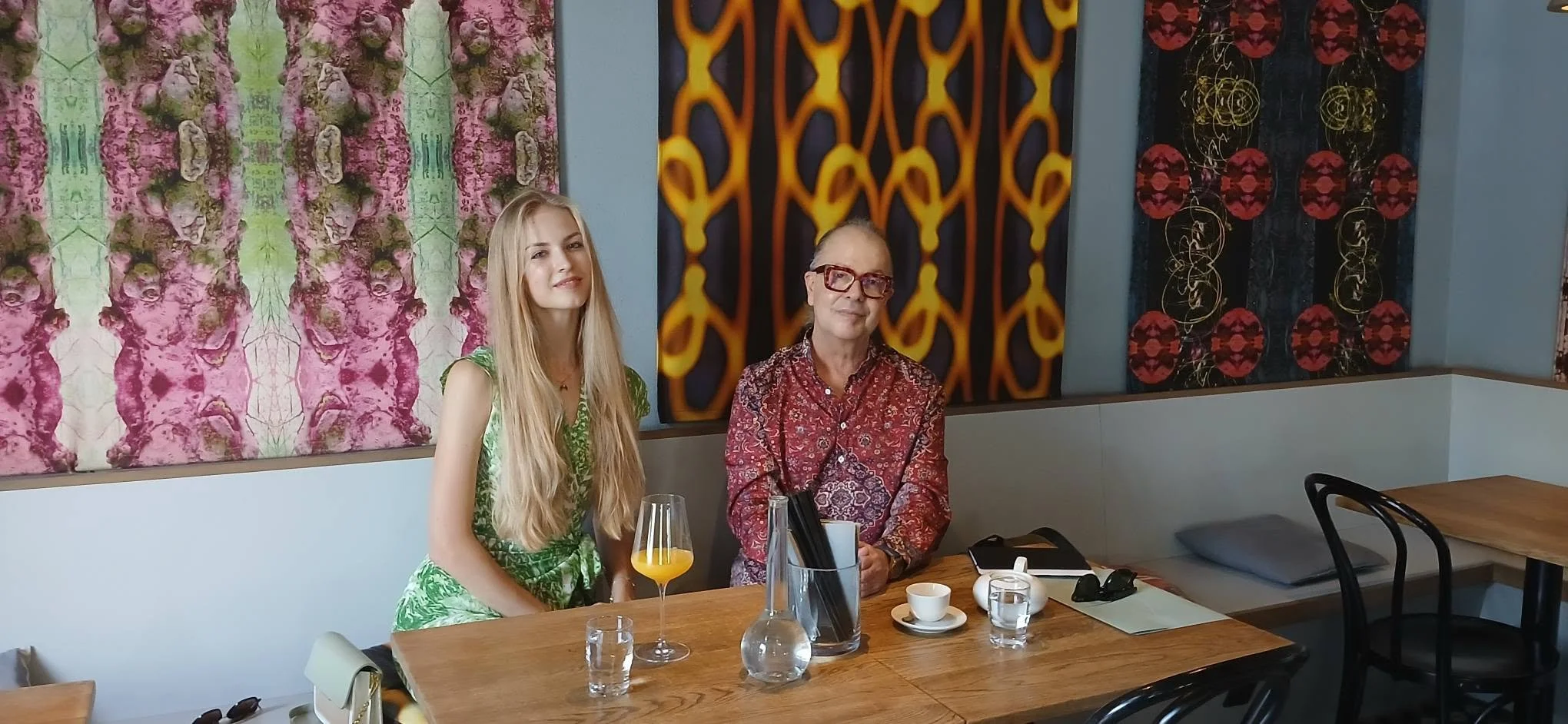
„My last question for today – I kept the „best“ (surely for me, because it interests me very much!): Where do you feel that Milda, the person, not only the Ballerina, is more „at home“? In narrative, storytelling ballets or in abstract ones?”
„ The other day, coincidentally, I was thinking about why I find abstract work easier even though I prefer narrative ballets… I think by preparing for an acting role, I create such a clear image in my head of what that character is (and moves) like that any play and experimentation with the boundaries of my movement reaches a danger point of clashing with my view on the identity of the character.
While portraying a character, I allow myself freedom to organically react in the moment with the intention of making said character “breathe”, yet it’s not as far that I allow myself to go (movement-wise) in comparison to a work with no storyline. Hence, I feel physically more “at home” in non-narrative choreography. My body likes a certain sense of unpredictability, and I simply cannot allow myself to go too far if it puts my understanding of the character at risk.“
This answer, to be very honest (And I mean it), just „made my day“ (I really mean it!).
Thank you, Milda, for such a „treat“ to visit your mind and be invited to share feelings, thoughts, dreams, inspirations…
Amazing is the intellectual maturity of this dancer, who is only „a child“ (for me, obviously). A dancer who is only 22 years old but carries such praise and care and attention and love, combined with spirit openness, analytic thoughts, interests and LOVE for what she does… Lots of love.
About that, I am more than 100% sure. And this is what counts the most. This very early intellectual maturity, which she has achieved not only because of her nature but also because of her surroundings, her family and her teachers, is a most rewarding element for me: The writer, a person who, as I always say, has the unique chance and honour to penetrate the mind, the heart and the soul of the person who is being interviewed. And this, during a space of time that will never repeat itself in the future.
We may (hopefully) have a chance to talk again in the future, but this interview, these precious moments, cannot be repeated. They are „saved“ for the future in written words that reveal the uniqueness and singularity of the moments during which we had a tremendously interesting „give and take“. And this is the way I like to refer to a fruitful conversation. Yes, fruitful in the purest and most basic sense of the word: producing good, helpful, profitable results, and/or bearing fruit and crops in abundance. I like to think of it this way.
Yes, the colour purple (There is a beautiful Nobel-Prize book called that!) makes more than sense. This whole interview never, not even for a single second, contradicted the symbolism of „purple“.
There is no real “coincidence” in the fact that some of my by me very respected persons in the “culture business” were made aware of young talents by my critiques during the last years. With great joy, I claim to say that I was made aware of this fact as a writer - and as a gentleman whom I respect very much because of his sensibility and knowledge of “the film department”- who said to me (about Miss Luckuté) the following sentence: “I was so curious about her, by the way you wrote (many times) about her, that I found videos and material about her on the internet, Ricardo. I fell in love with her! A brilliant dancer!”. I am particularly glad to thank this very intelligent man publicly for his never-ending “searches” in the world of Art. His name? Sorry… Mr Roberto Souza fom Rio de Janeiro.
As a last „word“, I must say that „concerning Art“ nowadays, there are fewer and fewer moments that make you think, that make you understand more than that, as I just experienced interviewing Miss Lukuté, rewarding you immensely with joy for having thought, for having understood.
Yes, I had just that. A joy.
I will leave you today with that.
Best regards
Ricardo Leitner
a t t i t u d e
Vienna, September 13th, 2026.